

Exploring Hemp Terpene Profiles for Wellness Results
Hemp terpene profiles are the specific combinations of aromatic compounds in a hemp plant that determine its scent, flavor, and therapeutic effects. Exploring hemp terpene profiles gives you a direct path to selecting products that match your wellness goals, whether that means calming anxiety, reducing inflammation, or sharpening focus. Terpenes like myrcene, limonene, and caryophyllene are not just responsible for how hemp smells. They actively shape how it works in your body through what researchers call the entourage effect, where terpenes amplify and modulate cannabinoid activity to produce more targeted outcomes than cannabinoids alone.
What are the major hemp terpenes and their wellness benefits?
Terpene profiles in hemp are built from a handful of dominant compounds, each with distinct physiological effects backed by clinical research. Understanding these compounds is the foundation of any practical hemp strain terpene guide.
- Myrcene is the most abundant terpene in most hemp cultivars. It produces sedating, muscle-relaxing effects and contributes the earthy, musky aroma common in indica-leaning products. Myrcene is the go-to terpene for users targeting sleep support or physical tension relief.
- Limonene carries a bright citrus scent and is associated with mood elevation and stress relief. It is frequently dominant in products marketed for daytime use or anxiety support.
- Caryophyllene is the only terpene that binds directly to CB2 receptors in the endocannabinoid system. This makes it particularly relevant for discomfort relief and anti-inflammatory applications, and it is common in products targeting physical recovery.
- Pinene produces the sharp, pine-forward aroma found in some hemp flower and is linked to alertness, memory retention, and bronchodilation. It pairs well with limonene in focus-oriented profiles.
- Linalool is the floral, lavender-scented terpene most associated with calming effects. Products high in linalool are well suited for stress reduction and sleep preparation.
- Humulene is less discussed but scientifically significant. Research confirms that humulene suppresses appetite by increasing Interleukin-8 (IL-8) and inhibiting COX-2 enzymes, providing both anti-inflammatory and metabolic support benefits. This makes it a strong secondary terpene in wellness-focused formulations targeting inflammation or weight management.
The hemp terpene benefits you experience depend heavily on which terpenes dominate a given product and how they interact with each other. High cannabinoid percentages without significant terpene profiles often indicate lower-quality hemp, since terpenes are primary drivers of the entourage effect, flavor, and sensory complexity.
Pro Tip: When reading a product description, look for terpene names listed in order of concentration. The first two or three terpenes on that list define the product’s dominant effect profile.
How do extraction methods influence hemp terpene profiles and quality?
Extraction method is as important as strain choice when it comes to preserving the terpene complexity that makes hemp products effective. Heat is the primary enemy of terpene integrity, and the difference between methods is significant.

| Extraction Method | Monoterpene Preservation | Best For | Limitation |
|---|---|---|---|
| Cold trap collection | High (40-50% more monoterpenes) | Preserving pinene, limonene, ocimene | Higher production cost |
| Steam distillation | Moderate to low | Sesquiterpenes like caryophyllene | Degrades heat-sensitive compounds |
| CO2 extraction | Moderate | Full-spectrum oils | Requires precise pressure control |
| Solvent extraction | Variable | Broad-spectrum products | Residual solvent risk |
Cold trap extraction recovers 40 to 50% more monoterpenes than traditional steam distillation. That gap matters because monoterpenes like pinene and limonene are the most volatile and the most likely to be destroyed by heat during processing. A product that loses these compounds in extraction will smell flat and deliver a narrower range of effects.
The monoterpene-to-sesquiterpene ratio on a Certificate of Analysis (COA) is a reliable indicator of extraction quality. Profiles weighted heavily toward caryophyllene and humulene with low monoterpene counts may reflect heat damage during processing, not a naturally occurring terpene distribution. This is a detail most consumers miss entirely.
Pro Tip: When evaluating a hemp oil or concentrate, check the COA for the ratio of limonene and pinene (monoterpenes) versus caryophyllene and humulene (sesquiterpenes). A healthy ratio signals careful, low-heat extraction.
How to read hemp terpene profiles for your wellness goals
Reading a terpene profile accurately is a practical skill that pays off quickly. The process is straightforward once you know what to look for.
-
Locate the COA. Every reputable hemp product should have a third-party Certificate of Analysis available. This document lists terpene compounds by name and percentage. If a brand does not publish COAs, that is a disqualifying factor.
-
Check total terpene percentage. A total terpene content of 2% or higher is the industry benchmark for premium hemp flower. Products below this threshold are generally lower in aromatic complexity and therapeutic depth.
-
Identify dominant and secondary terpenes. The top two or three terpenes by percentage define the product’s primary effect direction. A profile led by myrcene and linalool signals a calming, sleep-supportive product. A profile led by limonene and pinene signals an energizing, focus-oriented product.
-
Match the profile to your goal. Use this framework as a starting point:
- Calm and sleep: myrcene, linalool, caryophyllene
- Focus and energy: limonene, pinene, ocimene
- Anti-inflammatory and recovery: caryophyllene, humulene, myrcene
- Mood support: limonene, linalool, terpinolene
-
Check the harvest date. Terpenes degrade over time, especially with light and heat exposure. A product harvested more than 12 months ago will have a diminished terpene profile regardless of what the original COA showed. Freshness directly affects potency.
-
Track your responses. Keeping detailed notes matching dominant terpene profiles to your personal responses is the fastest way to identify what works for you. Note the dominant terpenes, the product form, the dose, and the effect you experienced. Over time, patterns emerge that make future selection much more precise.
Terpene profiles can differ significantly even within products sharing the same strain name due to genetics, cultivation conditions, and processing. Strain names lack standardization across the industry, which means a product labeled “Sour Diesel” from two different growers can have entirely different terpene compositions. The COA is always the authoritative source.
What are common terpene profile categories and how do they shape product selection?
Terpene profiles in hemp cluster into recognizable categories that inform both product formulation and consumer preference. Understanding these categories helps you navigate product selections more efficiently.
| Profile Category | Dominant Terpenes | Aroma | Best Use Case |
|---|---|---|---|
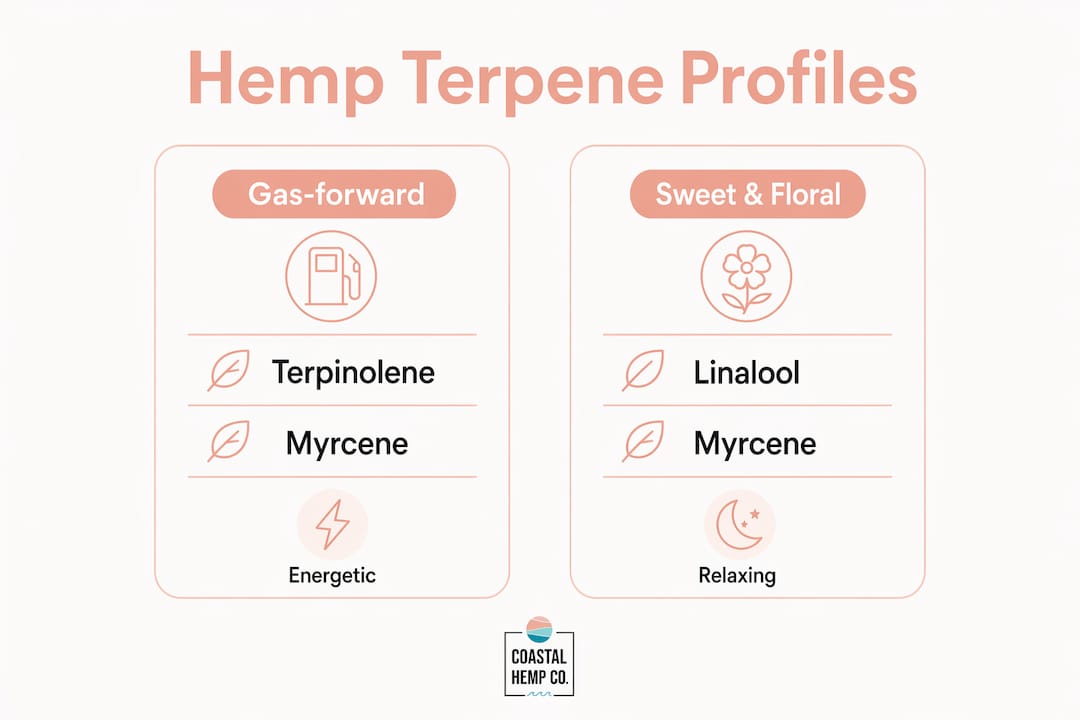
| Gas-forward | Terpinolene, myrcene, caryophyllene | Fuel, earth, spice | Evening relaxation, stress relief |
| Tropical fruit-forward | Limonene, ocimene, terpinolene | Citrus, mango, tropical | Daytime use, mood support |
| Sweet and floral | Myrcene, linalool, pinene | Floral, pine, sweet | Calm focus, anxiety relief |
| Earthy and herbal | Myrcene, humulene, caryophyllene | Earth, hops, wood | Anti-inflammatory, recovery |
| Citrus and bright | Limonene, pinene, ocimene | Lemon, pine, fresh | Energy, mental clarity |
Gas-forward profiles are common in THCA concentrates and live resin products, where terpinolene and myrcene dominate and produce a heavy, sedating effect with a pungent aroma. Tropical fruit-forward profiles, built around limonene and ocimene, are popular in gummies and beverages because they deliver an uplifting sensory experience alongside mood-supportive effects. You can explore how terpenes function in cannabis drinks to understand how these profiles translate across different product formats.
Sweet and floral profiles, anchored by linalool and balanced myrcene, are the most versatile for wellness applications. They work well in oils, capsules, and sleep-focused gummies because the effect profile is calming without being heavily sedating. Formulation also matters here: heat-stable sesquiterpenes like caryophyllene survive baking and cooking better than volatile monoterpenes, which is why edible formulations often skew toward earthier, spicier profiles.
Genetic variation within hemp strains directly correlates to differences in terpene content, with specific single nucleotide polymorphisms (SNPs) linked to terpene biosynthesis pathways. This means two plants from the same seed stock can produce meaningfully different terpene profiles depending on growing conditions, soil composition, and harvest timing. For consumers, this reinforces why COA verification is the only reliable method for confirming what you are actually getting.
Key takeaways
Terpene profiles, not strain names or cannabinoid percentages alone, are the most reliable guide to predicting and personalizing hemp’s wellness effects.
| Point | Details |
|---|---|
| Terpenes drive the entourage effect | Myrcene, limonene, and caryophyllene each produce distinct effects that amplify cannabinoid activity. |
| 2% terpene content signals quality | Total terpene concentration at or above 2% is the industry benchmark for premium hemp flower. |
| Extraction method affects terpene integrity | Cold trap extraction preserves 40-50% more monoterpenes than steam distillation, protecting key aromatic compounds. |
| COAs are the only reliable source | Strain names are not standardized; third-party lab reports confirm actual terpene composition. |
| Personal tracking improves outcomes | Logging dominant terpenes and your responses accelerates identification of profiles that work for you. |
Why terpene profiles matter more than potency numbers
I have spent a lot of time reviewing hemp products, and the single most common mistake I see is consumers fixating on THC or CBD percentages while ignoring the terpene breakdown entirely. A product with 25% THCA and a flat terpene profile will often deliver a less nuanced experience than one with 18% THCA and a rich, well-preserved terpene composition. The terpenes are doing more work than most people realize.
What I find genuinely useful is treating the terpene profile as a functional map. When someone tells me they tried a hemp product and it made them anxious instead of calm, the first thing I ask is what the dominant terpene was. Terpinolene-heavy profiles, for example, can be stimulating for some people even when the product is marketed as relaxing. That mismatch between marketing and actual terpene composition is avoidable if you read the COA first.
The industry is moving in a good direction on this. More brands in 2026 are publishing full terpene breakdowns rather than just cannabinoid percentages, and the conversation around extraction quality is becoming more mainstream. Cold trap extraction is still the gold standard for preserving volatile monoterpenes, and I think consumers who understand this will start demanding it as a baseline expectation rather than a premium feature.
My practical advice: start with one wellness goal, identify the two or three terpenes most associated with that goal, and then find products where those terpenes appear in the top three positions on the COA. Keep notes for at least four or five products before drawing conclusions. The pattern recognition that comes from that process is more valuable than any single product recommendation.
— John
Discover terpene-focused hemp products at Coastalhemp
Coastalhemp partners with top growers and brands to bring you hemp products with transparent terpene data and verified COAs. Whether you are looking for a calming myrcene-dominant oil or a recovery-focused caryophyllene-rich concentrate, the selection at Coastalhemp is built around quality you can verify.

Explore premium hemp products including THCA live resin dabs that preserve full terpene profiles for maximum therapeutic effect, alongside terp-infused hemp wraps for an enhanced sensory experience. Every product listing includes lab documentation so you can match terpene profiles to your specific wellness goals before you buy.
FAQ
What are hemp terpenes and why do they matter?
Hemp terpenes are aromatic compounds produced in the plant’s resin glands that influence scent, flavor, and therapeutic effects. They work alongside cannabinoids through the entourage effect to produce more targeted wellness outcomes than cannabinoids alone.
How do I find the terpene profile of a hemp product?
Look for a third-party Certificate of Analysis (COA) linked on the product page. The COA lists each terpene by name and percentage, with total terpene content above 2% indicating a premium-quality product.
Which terpene is best for sleep and relaxation?
Myrcene and linalool are the most consistently associated with calming and sleep-supportive effects. Products where these two terpenes appear at the top of the COA are the strongest candidates for evening or sleep use.
Does the extraction method affect terpene quality?
Cold trap extraction preserves 40 to 50% more monoterpenes than steam distillation, making it the superior method for maintaining the full aromatic and therapeutic complexity of a hemp terpene profile.
Can two products with the same strain name have different terpene profiles?
Yes. Strain names are not standardized across the hemp industry, and genetics, growing conditions, and processing all influence the final terpene composition. Always verify the actual terpene profile through a COA rather than relying on strain names alone.



Comments