

THCA Gummy Effect Types: What to Expect and How to Choose
Most THCA gummies will not get you high. Raw THCA is non-psychoactive because it does not bind to CB1 receptors the way THC does. The exceptions matter, though: a gummy can become intoxicating if the manufacturer applied heat during production, if the formula intentionally blends in active THC or THC analogs, or if the product is mislabeled and contains more Δ9-THC than the label shows. Understanding these THCA gummy effect types before you buy is the difference between a relaxing wellness experience and an unexpected psychoactive one.
- Heat-activated manufacturing: Some producers deliberately decarboxylate THCA during processing, converting it to THC. The gummy is then functionally a THC edible, regardless of what the label says.
- Intentional cannabinoid blends: Products like THC+THCA or THCA+THCV combinations contain psychoactive cannabinoids by design. The THCA label is accurate, but the full formula is not non-intoxicating.
- Mislabeled THC content: Lab testing of hemp-derived products has found misleading labeling and inconsistent potency across the market. Always verify with a third-party Certificate of Analysis (COA).
One legal note: hemp-derived THCA products exist in a complex regulatory space in the United States. State rules vary significantly, and a product legal under the 2018 Farm Bill at the federal level may be restricted or prohibited in your state. Check COAs and your state’s current law before purchasing.
This article is general educational information, not medical or legal advice. Confirm current rules with a qualified professional or your state’s regulatory authority for your specific situation.
Table of Contents
- What THCA is and why it usually does not intoxicate you
- How THCA gummies are made and why some will get you high
- The main types of THCA gummies and what each one does
- What people actually report feeling from THCA gummies
- Dosing guidance and safety considerations
- How to read a COA for THCA gummies
- THCA gummy legality in the United States
- How to choose trustworthy THCA gummies
- Key Takeaways
- What Coastalhemp’s approach to THCA products actually reflects
- Lab-tested THCA gummies, available now at Coastalhemp
- Useful sources
- FAQ
What THCA is and why it usually does not intoxicate you
THCA, or tetrahydrocannabinolic acid, is the natural acidic precursor to THC found in raw cannabis and hemp plants. The plant synthesizes THCA first. THC only forms when THCA loses its carboxyl group through heat or prolonged light exposure, a process called decarboxylation. Eat a raw THCA gummy and your digestive system does not generate enough heat or the right conditions to meaningfully convert THCA to THC. Gastric temperature and blood pH actually favor keeping THCA in its stable carboxylate form.
| Feature | THCA | THC |
|---|---|---|
| Psychoactive | No (raw) | Yes |
| CB1 receptor binding | Minimal | Strong agonist |
| Primary molecular targets | PPARγ, TRP channels | CB1, CB2 receptors |
| Activated by | Heat/decarboxylation | Already active |
| Stability | Thermally unstable | Relatively stable |
| Typical route to intoxication | Requires conversion | Direct consumption |
The biological targets THCA does engage are worth understanding. Preclinical research shows THCA activates PPARγ, a nuclear receptor involved in inflammation and neuroprotection, and modulates TRP channels, which play roles in pain signaling and temperature regulation. These mechanisms can produce real wellness effects, including reduced inflammation-related discomfort and neuroprotective activity, without triggering the euphoria tied to CB1 activation.
“THCA displays an active pharmacological profile in vitro and in animal models, with potential immunomodulatory and neuroprotective activity distinct from THC — yet it remains generally non-intoxicating when consumed in its raw, unheated form.”
Adapted from peer-reviewed review of acidic cannabinoids, PMC
The honest caveat: most of the evidence for THCA’s wellness effects comes from cell studies and animal models. A systematic review published in the Journal of Cannabis Research notes unique biological activities for acidic cannabinoids but flags chemical instability and a lack of controlled human trials. Consumer reports and anecdotal data fill much of the gap right now.
How THCA gummies are made and why some will get you high
The production process is where most of the risk lives. Hemp plants are harvested while THCA is still in its acidic, non-decarboxylated form. Processors then extract cannabinoids using methods like CO2 or ethanol extraction, which preserve the acidic form when done cold. The extract is infused into a gummy matrix, typically a gelatin or pectin base with flavoring and sweeteners.

The problem is what happens next. Gummy production involves heat at multiple stages: cooking the base, setting the mold, and sometimes a curing step. If temperatures climb high enough for long enough, THCA begins converting to THC. Decarboxylation research shows THCA-A converts to Δ9-THC in a first-order reaction, with the rate accelerating sharply above 100°C. A manufacturer who does not carefully control temperature at every step can inadvertently decarboxylate a meaningful portion of the THCA before the product ever reaches you.
Beyond accidental conversion, some products are intentionally heat-activated. The label may say “THCA gummy,” but the formula was designed to deliver a THC-equivalent experience. Research confirms that when users experience a high from a THCA-labeled gummy, it is almost always because THCA converted during manufacturing or the product contains added psychoactive cannabinoids. Physiological digestion alone rarely converts enough THCA to cause a standard high.
Pro Tip: Before buying any THCA gummy, request the COA and look specifically at the Δ9-THC line, not just the THCA line. A product with high THCA and near-zero Δ9-THC is genuinely raw. One with elevated Δ9-THC alongside THCA has already undergone partial decarboxylation.
The main types of THCA gummies and what each one does
Understanding the product category you are buying into changes how you interpret the effects you feel. These are the primary formulation types on the market:
- Raw THCA isolate gummies: Made with purified THCA extract and no other active cannabinoids. These are the most likely to remain non-psychoactive. Effects tend toward mild relaxation and reduced physical discomfort. Onset can be slower because there is no THC driving the experience.
- Live THCA gummies (live resin or live sugar): Produced from flash-frozen plant material to preserve the full terpene and cannabinoid profile. The Jelly THCA Live Sugar Blend Gummies are a good example of this category. The terpene content adds nuance to the effect profile, often described as more rounded and plant-forward than isolate versions.
- Full-spectrum or broad-spectrum hemp blends: Contain THCA alongside CBD, CBG, CBN, and trace cannabinoids. The entourage effect from multiple compounds can modulate how THCA’s effects feel, though the psychoactive risk remains low if Δ9-THC stays within legal limits.
- Heat-activated THCA/THC gummies: Deliberately decarboxylated during production. These are functionally THC edibles. Expect a full psychoactive experience with onset typically 30–90 minutes after consumption.
- Multi-cannabinoid blends (THCA + THCV, THCA + THC): Products like Enjoy Skinny Gummies THC + THCV combine THCA with other active cannabinoids for targeted effect profiles. THCV, for example, is associated with appetite modulation and a more stimulating quality. These blends require careful COA review because multiple psychoactive compounds may be present.
- Microdose or nano-emulsified formulations: Use smaller cannabinoid doses or nano-particle technology to improve bioavailability and speed onset. Nano formulations can produce effects in 15–30 minutes rather than the typical 45–90 minutes for standard edibles.
A note on marketing language: “raw” does not guarantee zero decarboxylation, “live” refers to the extraction method rather than the psychoactivity level, and “isolate” means the THCA was purified but says nothing about what else was added to the gummy formula afterward. The COA is the only reliable source of truth.
What people actually report feeling from THCA gummies
The reported experience splits cleanly based on whether the product is truly raw or contains converted/added THC.
Non-psychoactive effects (raw THCA gummies):
- Physical relaxation without mental cloudiness
- Reduced inflammation-related discomfort, particularly in joints and muscles
- Mild nausea relief
- A general sense of calm that users associate with THCA gummy benefits for stress
Psychoactive effects (heat-activated or blended products):
- Euphoria and altered sensory perception consistent with THC edibles
- Heightened appetite
- Time distortion and increased introspection
- Sedation at higher doses
Onset and duration depend heavily on formulation. Standard gummies processed through the digestive tract typically take from less than an hour to just over an hour to produce noticeable effects, with peak effects in a few hours and lasting several hours in total. Nano-emulsified products can produce effects more quickly, often within a half hour. Fat content in the gummy matrix and the consumer’s own stomach contents at the time of ingestion both influence how quickly cannabinoids absorb.
Individual variability is real. Research shows that gut microbiome composition and dietary fat intake can modestly influence decarboxylation and absorption of acidic cannabinoids, meaning two people eating the same gummy may notice meaningfully different effects. Body weight, metabolic rate, and prior cannabinoid tolerance add further variation.
Onset and duration by gummy type:
- Raw THCA isolate: onset about an hour or so, duration several hours
- Live THCA blend: onset less than an hour to around an hour, duration several hours
- Nano-emulsified: onset under an hour, duration a few hours
- Heat-activated/THC-containing: onset under an hour to about an hour, duration several hours
Dosing guidance and safety considerations

Start lower than you think you need to. For a truly raw THCA gummy with no measurable Δ9-THC, a conservative first dose is a small amount of THCA. Wait through the full expected onset window before considering a second dose. If the product contains any measurable Δ9-THC, treat it like a THC edible and start with a low dose of total THC.
Safe dosing steps:
- Read the COA before consuming. Confirm Δ9-THC levels and total THCA per serving.
- Start with the smallest serving size listed on the label, or half of it.
- Wait 90 minutes minimum before assessing effects.
- Record what you feel: onset time, intensity, duration, and any side effects.
- Increase the dose by small increments only after two or three consistent sessions at the starting dose.
Common side effects from THCA gummies are generally mild: dry mouth, mild dizziness, and occasional GI upset. If the product contains active THC, additional effects include anxiety, elevated heart rate, and impaired coordination. Severe anxiety or tachycardia that does not resolve warrants medical attention.
Pro Tip: If you take prescription medications, particularly sedatives, blood thinners, or drugs metabolized by CYP450 enzymes (a large category that includes many antidepressants and anticonvulsants), consult your prescribing clinician before adding any cannabinoid product. Cannabinoids can inhibit or induce CYP enzymes and alter drug plasma levels.
Alcohol amplifies the sedative and psychoactive effects of any THC-containing product. Avoid combining the two, especially when trying a new product for the first time.
How to read a COA for THCA gummies
A Certificate of Analysis is the single most important document you can review before buying any hemp-derived cannabinoid product. Here is what to check:
| COA Field | What to Look For | Red Flag |
|---|---|---|
| Issuing lab | ISO 17025 accreditation | No accreditation listed |
| Batch/lot number | Matches your product packaging | Missing or generic |
| THCA (mg/serving) | Matches label claim | Significantly over or under |
| Δ9-THC (mg/serving) | Below 0.3% by dry weight for hemp | Any measurable amount in a “raw” product |
| Total THC | THCA × 0.877 + Δ9-THC | Higher than expected for product type |
| Residual solvents | Below state/USP limits | Any detectable chlorinated solvents |
| Pesticides | ND (not detected) or below action limits | Any prohibited pesticide detected |
| Heavy metals | Below USP limits | Lead, arsenic, cadmium, mercury above limits |
| Microbials | ND for pathogens (Salmonella, E. coli) | Any pathogen detected |
| COA date | Within 12 months | Older than 12 months |
The total THC calculation matters for legal compliance. Labs use the formula: Total THC = (THCA × 0.877) + Δ9-THC. The 0.877 factor accounts for the molecular weight lost when THCA decarboxylates. A product with 10 mg THCA and 0.5 mg Δ9-THC per serving has a potential total THC of approximately 9.3 mg if fully decarboxylated. For hemp legal compliance, the 0.3% threshold applies to Δ9-THC by dry weight of the plant material, not the finished product, but total THC is what determines psychoactive potential in your hand.
Red flags that should stop a purchase:
- No lab name or accreditation number on the COA
- COA dated more than 12 months ago
- Unusually high Δ9-THC for a product marketed as “raw” THCA
- No batch number linking the COA to a specific production run
- Lab results that show only cannabinoid potency with no contaminant panels
If a COA raises doubts, contact the vendor directly and ask for the raw chromatogram data. A reputable seller will provide it.
THCA gummy legality in the United States
Hemp-derived cannabinoids, including THCA, are federally legal under the 2018 Farm Bill when the finished product contains no more than 0.3% Δ9-THC by dry weight. That baseline, however, does not mean every THCA gummy is legal everywhere.
- Processing changes legal status: A gummy that was heat-activated during manufacturing may contain Δ9-THC above the 0.3% threshold, making it a controlled substance under federal law regardless of the “hemp-derived” label.
- State laws vary significantly: Several states have enacted restrictions on hemp-derived THC analogs and high-potency cannabinoid products that go beyond federal rules. What is legal to buy online and ship to one state may be prohibited in another.
- FDA regulatory caution: The FDA has not approved hemp-derived cannabinoids as dietary supplements or food additives and has issued warnings about health claims. Products making specific medical claims are operating in a gray area.
- Buyer responsibility: Confirming legality in your state is your responsibility. Check your state’s department of agriculture or cannabis regulatory authority for current guidance.
- COAs as legal documentation: A current COA showing Δ9-THC below 0.3% by dry weight is the primary document demonstrating federal hemp compliance. Keep it accessible if you are purchasing online and shipping across state lines.
When in doubt, contact the vendor’s support team and ask for state-specific shipping policies. Reputable retailers will know which states they cannot ship to and will tell you upfront.
How to choose trustworthy THCA gummies
Third-party lab testing is the non-negotiable starting point. A COA from an ISO 17025-accredited lab, matched to the batch number on your product, is the only way to verify that what is on the label reflects what is in the gummy. No COA means no purchase.
Beyond the COA, look for clear ingredient lists that name every cannabinoid in the formula, not just the headline compound. A product that lists “hemp extract” without specifying cannabinoid content is giving you less information than you need to make an informed decision. Batch numbers on the packaging that correspond to the COA confirm the test was run on the actual production run you are buying, not a different batch from six months ago.
Coastalhemp curates its inventory with these standards in mind. The Jelly THCA Live Sugar Blend Gummies are a strong example of what a well-documented live THCA product looks like: clear formulation, live resin extraction for full terpene retention, and lab testing you can verify. For consumers interested in multi-cannabinoid formulations, the Celestial Wellness THCv Gummies show how a blended product can be presented with transparent labeling and a defined cannabinoid profile.
Transparent sourcing matters too. Knowing whether the hemp was grown domestically, under what agricultural standards, and how the extract was processed gives you a fuller picture of product quality than the label alone provides.
Pro Tip: Ask the vendor for the raw chromatogram from the potency panel, not just the summary report. The chromatogram shows every peak the instrument detected, including cannabinoids that might not appear on a simplified summary COA. If a vendor cannot or will not provide it, that tells you something.
Key Takeaways
THCA gummies are non-psychoactive in their raw form, but manufacturing choices, added cannabinoids, and mislabeling can make them behave like THC edibles — always verify with a COA before consuming.
| Point | Details |
|---|---|
| Raw THCA is non-psychoactive | THCA does not bind CB1 receptors; it only intoxicates after decarboxylation to THC. |
| Manufacturing is the main risk | Heat during production converts THCA to THC; physiological digestion alone rarely does. |
| Start with a conservative dose | Begin at 5–10 mg THCA for raw products; treat any Δ9-THC content like a THC edible. |
| COA is non-negotiable | Verify Δ9-THC levels, batch numbers, lab accreditation, and contaminant panels before buying. |
| Coastalhemp’s curated selection | Products like the Jelly THCA Live Sugar Blend Gummies come with lab documentation and clear cannabinoid profiles. |
What Coastalhemp’s approach to THCA products actually reflects
The hemp market has a transparency problem, and most consumers feel it before they can name it. You buy a product labeled “THCA gummy,” expect a mild, non-intoxicating experience, and end up somewhere you did not plan to be. Or the opposite: you want the full effect and get nothing because the product was underdosed and the COA was six months old.
The conventional wisdom in this space is to trust the label. That is the wrong instinct. Labels in the hemp-derived cannabinoid market are marketing documents first. The COA is the actual product specification. Any brand that makes it easy to find, read, and verify that document is doing something most of the market is not.
What gets underestimated is how much the formulation type changes the experience. A raw isolate gummy and a live THCA blend are not interchangeable, even at the same milligram count. Terpene content, extraction method, and the presence of minor cannabinoids all shape what you feel. Consumers who understand those distinctions make better purchasing decisions and have more consistent experiences. That is the real value of education in this category: not just knowing whether THCA gets you high, but knowing which product type matches what you are actually looking for.
Lab-tested THCA gummies, available now at Coastalhemp
Coastalhemp stocks a carefully selected range of hemp-derived gummies, from raw THCA live sugar blends to multi-cannabinoid formulas, each backed by third-party lab documentation. The difference between buying here and buying from an unknown online source is simple: you can verify what you are getting before it arrives.
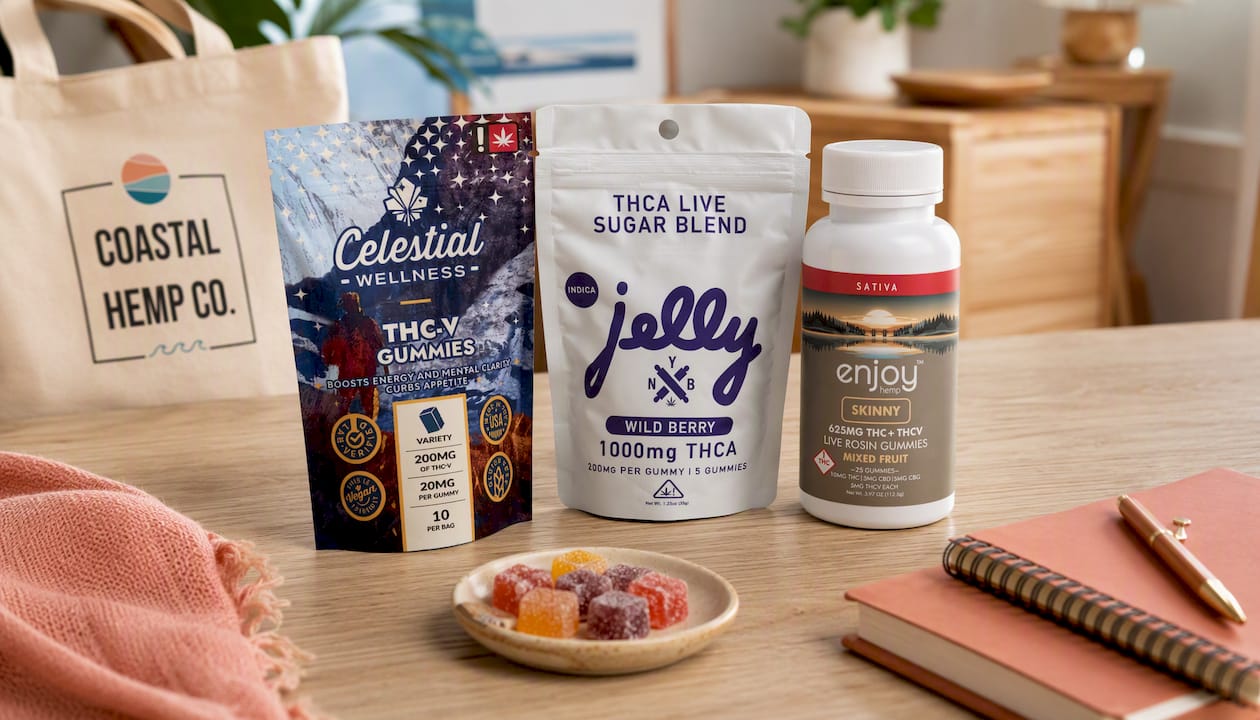
The Jelly THCA Live Sugar Blend Gummies deliver a full-terpene live resin experience with clear potency labeling. For a blended approach, the Enjoy Skinny Gummies THC + THCV combine cannabinoids with a defined profile and COA transparency. And if THCV is on your radar, the Celestial Wellness THCv Gummies offer a 200 mg option with a focused cannabinoid formula.
Fast shipping, responsive customer support, and COA availability on request are standard. Browse the full selection at Coastalhemp and reach out to the support team with any dosing or lab-testing questions before you order.
Useful sources
-
Tetrahydrocannabinolic acid is a potent PPARγ agonist with neuroprotective activity (PMC) — Preclinical study establishing THCA’s PPARγ activity and neuroprotective potential. Supports the “what is THCA” and “reported effects” sections. Cell and animal data only.
-
Critical Review of THCA-A: Novel Therapeutic Perspectives (PMC) — Peer-reviewed review of THCA’s pharmacological profile, including immunomodulatory and neuroprotective activity. Also covers detection of THCA in biological matrices post-consumption, relevant to drug-testing concerns. Supports the BLUF, chemistry, and COA sections.
-
Therapeutic potential of acidic cannabinoids: an update (Springer/Journal of Cannabis Research) — Systematic review noting unique biological activities for acidic cannabinoids alongside a frank acknowledgment of limited controlled human trial data. Best source for contextualizing therapeutic claims vs. evidence gaps.
-
Decarboxylation Study of Acidic Cannabinoids (Liebertpub) — Kinetic study of THCA-A decarboxylation at various temperatures. Directly supports the manufacturing section and explains why heat control during gummy production is critical.
-
Partial Decarboxylation, Metabolic Transformation, and Physiological Implications (Preprints) — Preprint examining how stomach acid, blood pH, and liver metabolism interact with acidic cannabinoids. Primary evidence that physiological digestion alone rarely converts enough THCA to cause intoxication. Supports the manufacturing and dosing sections.
-
What Is THCA? Effects, Uses, and Differences vs. THC (WebMD) — Consumer-facing health summary confirming that raw THCA is unlikely to cause a high, while smoking or vaping converts it to THC. Useful for the BLUF and FAQ sections as a medically reviewed reference.
-
How to Read a COA (New York Office of Cannabis Management) — State regulatory guidance on interpreting COA fields. Supports the COA section and provides institutional backing for the total THC calculation explanation.
FAQ
Do THCA gummies get you high?
Raw THCA gummies typically do not produce a high because THCA does not activate CB1 receptors. According to WebMD, THCA is non-intoxicating when consumed without heat; intoxication occurs only when THCA converts to THC through decarboxylation.
What are the different types of THCA edibles?
The main types are raw THCA isolate gummies, live THCA (live resin or live sugar) gummies, full-spectrum hemp blends, heat-activated THCA/THC gummies, multi-cannabinoid blends (such as THCA + THCV), and nano-emulsified microdose formulations. Each type carries a different effect profile and legal risk level.
What do THCA gummies feel like?
A truly raw THCA gummy typically produces physical relaxation, mild relief from inflammation-related discomfort, and a calm mental state without euphoria. If the product contains converted or added THC, the experience shifts to a standard THC edible effect: euphoria, altered perception, and possible sedation.
What are the strongest THCA gummies?
Potency depends on total THCA content per serving and whether the product contains any Δ9-THC. High-potency live THCA blends and multi-cannabinoid formulas tend to deliver the most pronounced effects. Always verify total cannabinoid content on the COA rather than relying on milligram claims on the label alone.
Can THCA gummies show up on a drug test?
Yes. Lab research confirms that THCA and trace THC are detectable in biological matrices after consumption. Standard drug tests screen for THC metabolites, and any product with measurable Δ9-THC or that undergoes partial decarboxylation in the body carries a real risk of a positive result.


Comments