

Daily Hemp Edibles for Wellness: Benefits and Safety Guide
For most healthy adults, taking hemp-derived edibles daily is a reasonable wellness practice when you use conservative doses, choose lab-tested products, and stay aware of the key safety caveats. The benefits of hemp edibles daily range from modest improvements in sleep and anxiety to nutritional support from hempseed-based foods. The evidence is promising but uneven, and a few situations require a clinician’s sign-off before you start.
Before you begin a daily hemp routine: If you take prescription medications, especially blood thinners, antiseizure drugs, or certain antidepressants, consult your physician first. CBD inhibits cytochrome P450 liver enzymes and can meaningfully alter how those drugs are metabolized. This is the single most important safety check for daily use.
Quick reference:
- Likely benefits: improved sleep onset, reduced anxiety, pain and inflammation support, nutritional value from hempseed
- Top safety caveats: drug interactions via CYP450 inhibition, liver concerns at high doses, pregnancy/breastfeeding contraindication, product mislabeling risk
- Conservative daily benchmark: the UK advisory committees set a provisional acceptable daily intake (ADI) for pure CBD at 0.15 mg/kg body weight per day, which equates to about 10 mg per day for a 70 kg adult
- Non-negotiable: always verify a current Certificate of Analysis (COA) from an independent lab before buying
The FDA has approved only one CBD-derived prescription drug, Epidiolex, for specific rare epilepsy syndromes. For everything else, the clinical evidence is still building. That does not make daily hemp edibles inadvisable. It means you should calibrate your expectations and choose products with verifiable quality controls, which is exactly what Coastalhemp prioritizes.
Table of Contents
- How hemp edibles work in your body
- Evidence-backed benefits you can realistically expect
- Risks, side effects, and who should avoid daily use
- Practical daily dosing guidance: start low, track carefully
- How to pick safe, reliable hemp edibles
- How to build hemp edibles into a daily wellness routine
- Where the evidence stands: an honest assessment
- Key Takeaways
- Why cautious optimism is the right stance on daily hemp use
- Coastalhemp’s lab-tested daily edibles
- Useful sources for further reading
- FAQ
How hemp edibles work in your body
Hemp edibles reach the bloodstream through the digestive tract, which makes them fundamentally different from inhaled or sublingual products in both onset time and duration. Understanding that difference matters a lot for daily dosing.

Once swallowed, cannabinoids like CBD, CBG, and CBN pass through the gut wall and undergo first-pass metabolism in the liver before entering systemic circulation. That process slows onset considerably. Gummies and other ingestibles typically take 1–3 hours to produce noticeable effects, and effects can persist for several hours afterward. Tinctures absorbed sublingually bypass some of that first-pass metabolism and act faster, usually within 15–45 minutes. For a deeper look at what happens during that metabolic process, the hemp edibles metabolism breakdown is worth reading before you set your daily timing.
The endocannabinoid system (ECS) is the physiological target. The ECS is a network of receptors (CB1 and CB2) and signaling molecules that help regulate mood, sleep, pain perception, immune response, and appetite. Cannabinoids in hemp interact with this system, though not identically:
- CBD binds indirectly to CB1 and CB2 receptors and modulates serotonin and vanilloid pathways; it is non-intoxicating
- CBG (cannabigerol) acts on CB1/CB2 receptors and shows early evidence for anti-inflammatory and neuroprotective effects; non-intoxicating
- CBN (cannabinol) has mild sedative properties and is often paired with THC in sleep-focused formulas
- Delta-9 THC at federally compliant levels (≤0.3%) produces minimal psychoactivity in most adults but contributes to the entourage effect in full-spectrum products
- THCV is a minor cannabinoid with appetite-modulating properties, currently under early investigation
Common edible formats and what to expect:
- Gummies: 1–3 hour onset, effects lasting 4–8 hours; most popular daily format
- Lozenges/mints: slightly faster than gummies due to partial sublingual absorption
- Tincture-based edibles (added to food or drink): onset varies with fat content of the meal
- Hempseed foods (seeds, oil, protein powder): no cannabinoid activity; nutritional benefits from omega fatty acids, complete protein, and fiber
That last category is worth separating clearly. Hempseed foods do not contain meaningful CBD or THC. Their daily advantages are nutritional, not cannabinoid-related. Both categories can be part of a daily routine, but they work through entirely different mechanisms.
Evidence-backed benefits you can realistically expect
The strongest clinical evidence for CBD sits in one narrow area: prescription-grade CBD (Epidiolex) for rare epilepsy syndromes. For the daily wellness benefits most people are actually seeking, the evidence is moderate to limited but consistently directional.
Sleep (moderate evidence) Several studies show CBD and CBN may reduce sleep onset time and improve subjective sleep quality, particularly in people whose poor sleep is driven by anxiety. The mechanism likely involves ECS modulation and serotonin pathway effects. Effects tend to be subtle rather than sedative. Evidence grade: moderate.
Anxiety and stress (moderate evidence) CBD’s interaction with 5-HT1A serotonin receptors is the most plausible mechanism for its calming effects. Human trials show reduced anxiety in acute stress scenarios, though long-term RCT data is limited. Healthline’s review of existing studies notes promise for anxiety but flags the need for larger trials. Evidence grade: moderate. For a deeper look at the science behind these effects, Coastalhemp’s hemp calming effects explainer covers the mechanisms clearly.
Pain and inflammation (moderate evidence) CBD’s anti-inflammatory properties are well-documented in preclinical research. Human trials for chronic pain show modest improvements, particularly for neuropathic and inflammatory pain. Consumer gummies rarely match the doses used in clinical trials, which limits direct translation. Evidence grade: moderate.

Neuroprotection (limited evidence) Preclinical data suggests cannabinoids may have neuroprotective properties, but human trials are sparse and early-stage. Evidence grade: limited.
Cardiovascular markers (limited evidence) Some small studies suggest CBD may reduce resting blood pressure and oxidative stress markers. The data is preliminary and not sufficient to make clinical claims. Evidence grade: limited.
Hempseed nutrition (strong evidence for nutritional value) Hempseed is a nutritionally complete food, providing all essential amino acids, omega-3 and omega-6 fatty acids in a favorable ratio, and soluble fiber. These benefits are well-established and do not depend on cannabinoid activity. Evidence grade: strong for nutritional claims specifically.
A note on clinical trial limits: Most clinical trials use purified CBD or specific pharmaceutical formulations, not consumer gummies. The doses, purity levels, and delivery mechanisms in trials rarely match what is in a retail edible. That gap means you should treat consumer-grade benefits as plausible and directional, not clinically proven.
Pro Tip: Set a specific, measurable goal before starting daily hemp edibles, whether that is falling asleep faster, rating your anxiety lower on a 1–10 scale, or reducing reliance on a specific OTC pain reliever. Without a baseline, it is nearly impossible to know whether the product is working.
Risks, side effects, and who should avoid daily use
CBD is generally well tolerated at moderate doses, but “well tolerated” does not mean risk-free. Reported side effects include dry mouth, diarrhea, reduced appetite, drowsiness, and fatigue. Most are dose-dependent and resolve when intake is reduced.
Drug interactions via CYP450 inhibition
This is the most clinically significant risk for daily users. CBD inhibits cytochrome P450 enzymes that metabolize a wide range of prescription drugs. The result can be higher-than-expected blood levels of those drugs, or in some cases lower efficacy. Drug classes with documented interaction potential include:
- Blood thinners (e.g., warfarin): CBD slows warfarin metabolism, raising bleeding risk
- Antiseizure medications (e.g., clobazam, valproate): interaction is well-documented; Epidiolex’s own prescribing information flags this
- Certain antidepressants (SSRIs, TCAs): CYP2D6 inhibition can elevate drug levels
- Immunosuppressants (e.g., tacrolimus, cyclosporine): narrow therapeutic window makes any interaction clinically meaningful
- Some statins and beta-blockers: metabolized via CYP3A4, which CBD also inhibits
Who should consult a clinician before any daily use:
- Anyone taking prescription medications from the categories above
- Pregnant or breastfeeding individuals (safety data is insufficient; avoid)
- People with liver disease or elevated liver enzymes (CBD is hepatically metabolized)
- Children and adolescents (outside of physician-supervised epilepsy treatment)
- Organ transplant recipients on immunosuppressive therapy
Product mislabeling is a real and documented problem. Harvard Health and independent researchers have flagged that many hemp and CBD products do not accurately reflect their labeled potency or THC content. A product that claims 10 mg CBD per gummy may contain significantly more or less. Always request a current, batch-specific COA from an ISO 17025-accredited lab before committing to daily use.
Practical daily dosing guidance: start low, track carefully
A conservative daily benchmark for pure CBD is 0.15 mg/kg body weight per day, or about 10 mg daily for a 70 kg adult, based on the UK advisory committees’ provisional ADI. That figure is a cautionary reference point, not a therapeutic target. Many people use higher amounts without incident, but the risk of adverse drug interactions increases meaningfully above 70 mg/day.
Practical dosing steps:
- Start at 5–10 mg CBD per day and hold that dose for at least one week before adjusting
- Wait for full onset before deciding a dose is ineffective; edibles take 1–3 hours
- Titrate slowly: increase by 5 mg increments, no more than once per week
- Track every dose with time, amount, and a simple effect rating (see tracking template below)
- Do not stack products without accounting for total daily cannabinoid load
Conservative dosing reference table:
| Benchmark | Daily CBD Amount | Notes |
|---|---|---|
| Provisional ADI (70 kg adult) | ~10 mg/day | UK advisory committees; cautionary reference, not therapeutic dose |
| Common starting dose | 5–10 mg/day | Widely recommended starting point for new daily users |
| Drug-interaction signal threshold | Above 70 mg/day | Increased risk of CYP450-mediated interactions; consult clinician |
| FDA-approved Epidiolex dose | Physician-determined | Prescription only; not applicable to consumer edibles |
COA checklist for daily users:
- Potency confirmed (CBD, THC, and other cannabinoids per serving)
- THC at or below 0.3% delta-9 (federal hemp definition)
- Residual solvents: below detection or within acceptable limits
- Heavy metals: lead, arsenic, cadmium, mercury tested and within limits
- Mycotoxins and pesticides: tested and clear
- Lab name and ISO 17025 accreditation visible
- Batch number matches the product in hand
Simple daily tracking template:
- Date and time of dose
- Product name and mg per serving
- Total mg taken
- Goal (sleep, anxiety, pain)
- Effect rating 1–10 at 2 hours and 6 hours
- Any side effects noted
Consistency in dosing and tracking is what separates people who get clear results from those who give up after two weeks. The ECS responds to regular input, and individual variation in metabolism means your effective dose may look different from someone else’s.
How to pick safe, reliable hemp edibles
Product quality matters more for daily users than for occasional ones. Cumulative exposure amplifies the consequences of mislabeled potency or undetected contaminants.
Buying checklist:
- COA present, recent (within 12 months), and batch-specific
- Clear mg per serving for each cannabinoid (not just “hemp extract”)
- Third-party lab name and accreditation visible on the COA
- Batch number on the product matches the COA
- Transparent ingredient list with allergen disclosures
- No vague “proprietary blend” language hiding cannabinoid amounts
Red flags to walk away from:
- No COA, or a COA that cannot be verified by batch number
- Claims of curing or treating specific diseases (a regulatory violation under FDA rules)
- Very high doses per serving (50+ mg CBD) with no clinical rationale
- THC content above 0.3% delta-9 in states where only hemp-compliant products are legal
- No contact information or customer support for COA requests
The legal baseline: Under the 2018 Farm Bill, hemp is defined as Cannabis sativa L. with 0.3% or less delta-9 THC by dry weight. Products meeting that threshold are federally legal, but state laws vary and some states impose stricter limits or require additional licensing. Always check your state’s current rules, particularly for products containing Delta-8 or THCA, which are regulated differently across jurisdictions.
How to build hemp edibles into a daily wellness routine
Your routine should match your primary goal. Sleep support, daytime anxiety management, and nutritional supplementation each call for a different approach.
Sleep-focused routine Take a low-dose gummy containing CBD and CBN approximately 1–2 hours before your target sleep time, accounting for the 1–3 hour edible onset. A 5–10 mg CBD dose is a reasonable starting point. Track sleep onset time and subjective sleep quality on a simple 1–10 scale each morning. Avoid taking it with a heavy meal, which can delay absorption further.
Daytime anxiety and mood support A microdose of 5 mg CBD or a CBD + CBG formula taken with lunch tends to work well for daytime calm without sedation. The goal is a subtle reduction in baseline tension, not a noticeable effect. Coastalhemp’s hemp stress relief microdosing guide covers this approach in detail, including how to track mood changes over a two-week baseline period.
Nutritional supplementation with hempseed Two to three tablespoons of hulled hempseed added to a smoothie, yogurt, or salad delivers complete protein, omega-3 fatty acids, and fiber with no cannabinoid activity. This is the most evidence-backed daily hemp habit and requires no dosing caution.
Tracking prompts for any routine:
- Sleep quality: rate 1–10 each morning
- Anxiety level: rate 1–10 at a consistent time daily (e.g., mid-afternoon)
- Pain or discomfort: rate 1–10 before and after dose
- Energy and focus: note any changes at 2 hours post-dose
On tolerance: Physiological tolerance to cannabinoids can develop with daily use. Some people report needing higher doses over time to reach the same effect. If you notice that happening, a scheduled two-week break often resets sensitivity. Escalating doses without a break increases both exposure and interaction risk.
Where the evidence stands: an honest assessment
The clearest clinical evidence for CBD is in epilepsy. Epidiolex’s approval by the FDA for Dravet syndrome and Lennox-Gastaut syndrome represents the only high-quality, large-scale human trial data for any cannabinoid product. For daily wellness applications, the picture is more nuanced.
Sleep and anxiety have the most consistent directional evidence from human studies, though most trials are small, short-term, and use pharmaceutical-grade CBD rather than consumer gummies. Pain and inflammation research is promising in preclinical and observational data but lacks large RCTs. Cardiovascular and neuroprotective claims remain early-stage.
Harvard Health’s overview of CBD products captures the honest position well: there is enough evidence to justify cautious, informed use, but not enough to make definitive therapeutic claims for most conditions.
The heterogeneity of consumer products is a persistent problem. Consumer gummies rarely match the doses or purity levels used in clinical trials, which makes it genuinely difficult to extrapolate study results to a retail product. That is why COA verification and conservative dosing are not optional extras for daily users. They are the foundation of responsible use.
Coastalhemp’s commitment to third-party testing and COA availability reflects this reality. Knowing exactly what is in your product is the prerequisite for drawing any meaningful conclusion about whether it is working.
This article provides general wellness information, not medical advice. Consult a qualified healthcare professional before starting daily hemp edible use, especially if you take prescription medications or have an existing health condition.
Key Takeaways
Daily hemp edibles can support sleep, anxiety, and nutritional goals for most healthy adults when used at conservative doses with verified, lab-tested products.
| Point | Details |
|---|---|
| Conservative daily benchmark | The provisional ADI for pure CBD is about 10 mg/day for a 70 kg adult; stay below 70 mg/day to reduce drug interaction risk. |
| Strongest evidence | Prescription CBD (Epidiolex) for epilepsy is the only FDA-approved use; sleep and anxiety show moderate evidence in smaller trials. |
| Biggest risk | CYP450 drug interactions; anyone on blood thinners, antiseizure meds, or immunosuppressants must consult a clinician first. |
| COA is non-negotiable | Always verify a batch-specific COA from an ISO 17025-accredited lab before daily use to confirm potency and contaminant testing. |
| Coastalhemp daily options | Coastalhemp carries lab-tested edibles for sleep, daytime calm, and microdosing, with COAs available for every product. |
Why cautious optimism is the right stance on daily hemp use
The hemp wellness space has a credibility problem that is largely self-inflicted. Overclaiming has been rampant, and it has made genuinely health-conscious adults skeptical of products that, at the right dose and quality level, do have real utility.
The conventional wisdom in wellness circles tends to split into two camps: enthusiasts who treat hemp edibles as a cure-all, and skeptics who dismiss the entire category because the clinical trial data is not yet definitive. Both positions miss the actual picture.
What the evidence actually supports is a narrower, more honest claim: daily hemp edibles, particularly CBD-dominant products at conservative doses, can produce meaningful improvements in sleep quality and anxiety for many adults, especially those whose symptoms are mild to moderate and not driven by a condition requiring pharmaceutical intervention. That is not a small thing. Sleep and anxiety are among the most common wellness complaints in the U.S., and the side effect profile of low-dose CBD compares favorably to many OTC alternatives.
The gap that matters is not between hemp and pharmaceuticals. It is between well-made, lab-verified products and the large portion of the market that is mislabeled, underdosed, or contaminated. Choosing the right product is more consequential than choosing the right cannabinoid. A 10 mg gummy from a brand with a current, batch-specific COA from an ISO 17025 lab is a fundamentally different product from a 10 mg gummy with no third-party verification, even if the label looks identical.
The practical takeaway: approach daily hemp edibles the way you would approach any evidence-informed wellness habit. Set a clear goal, start conservatively, track your results, and verify your product. That framework produces useful data about whether hemp is working for you specifically, which is ultimately the only data point that matters.
Coastalhemp’s lab-tested daily edibles
Coastalhemp sources products from trusted brands that meet consistent quality standards, with COAs available so you know exactly what you are taking before you commit to a daily routine.
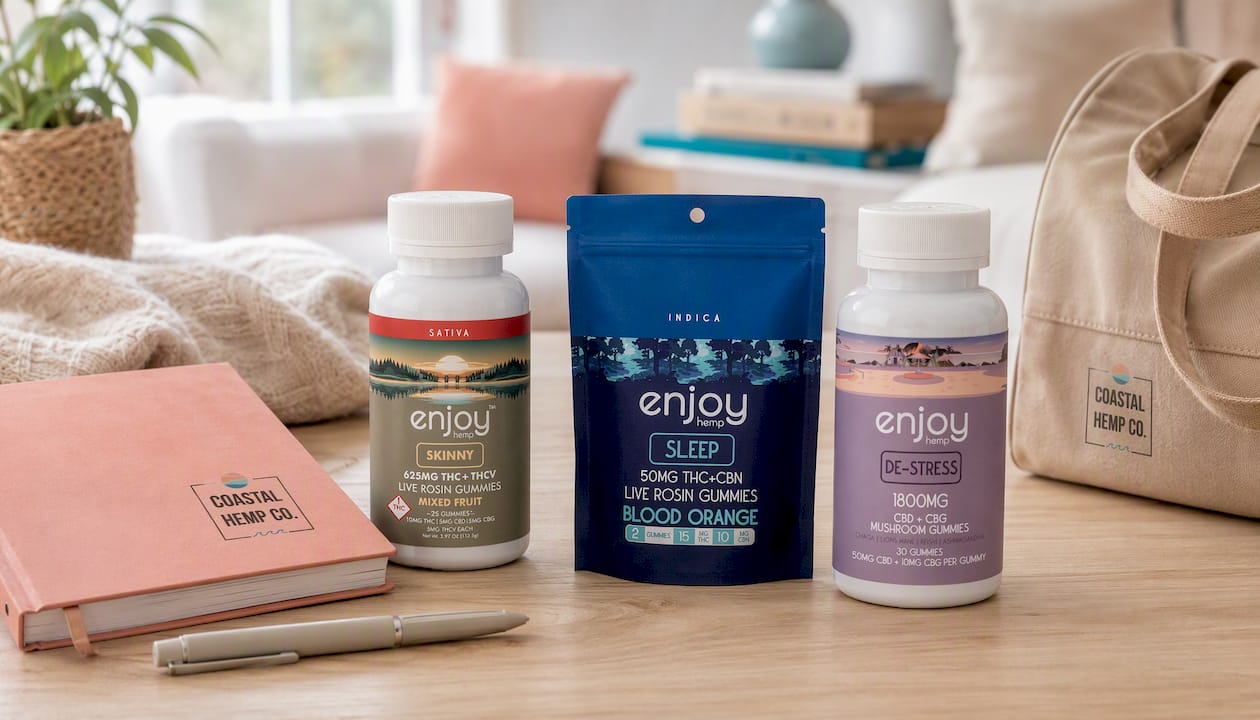
Three products stand out for daily-use scenarios:
Enjoy Skinny Gummies THC + THCV combine low-dose THC with THCV, a minor cannabinoid with appetite-modulating properties. These are positioned for daytime use and microdosing routines where you want functional support without sedation.
Enjoy Sleep Gummies THC + CBN pair THC with CBN in a two-pack format designed for nightly use. CBN’s mild sedative properties complement THC’s relaxation effect, making this a practical option for the sleep-focused routine outlined above.
Enjoy De-Stress Gummies CBD + CBG + Mushroom Blend combine cannabinoids with functional mushroom ingredients for daytime stress support. The adaptogenic mushroom component adds a second mechanism alongside the ECS pathway, which makes this a good fit for adults managing chronic low-level stress.
All three are available with COA documentation. Browse the product pages, review the lab results, and reach out to Coastalhemp’s support team with any questions about dosing or ingredient specifics before you start.
Useful sources for further reading
These primary sources back the claims in this article and are worth bookmarking for ongoing reference:
-
FDA regulation of cannabis and CBD products: — The FDA’s official position on CBD, including the Epidiolex approval and why broader health claims lack regulatory backing. Essential reading for understanding the legal and clinical context.
-
Harvard Health: Can CBD gummies help you sleep?: — Covers onset timing, duration, and the evidence for sleep applications specifically. Useful for calibrating expectations on edible timing.
-
PMC review: CBD and drug interactions: — Peer-reviewed analysis of CYP450 inhibition and specific drug classes affected. The most detailed source on interaction mechanisms for daily users on prescription medications.
-
Harvard Health: CBD products are everywhere. But do they work?: — Balanced overview of the evidence landscape, including what the research supports and where claims outrun the data.
-
PMC: Hemp as food and nutritional supplement: — Peer-reviewed review of hempseed’s nutritional profile, including amino acid completeness and omega fatty acid ratios.
FAQ
Can you take hemp gummies every day?
Yes, for most healthy adults daily use at conservative doses is considered reasonably safe. The key caveats are drug interactions via CYP450 inhibition and the need for lab-verified products; anyone on prescription medications should consult a clinician first.
What do hemp gummies actually do for your body?
Hemp gummies deliver cannabinoids like CBD, CBG, or CBN to the endocannabinoid system, which regulates mood, sleep, pain, and immune response. Effects at typical consumer doses tend to be subtle, with the most consistent evidence pointing to modest improvements in sleep onset and anxiety reduction.
Can you eat hemp every day for nutritional benefits?
Hempseed foods (seeds, oil, protein powder) are safe for daily consumption and provide complete protein, omega-3 fatty acids, and fiber. These nutritional benefits are distinct from cannabinoid effects and are well-supported by peer-reviewed research.
Is 10 mg of CBD a day enough to notice a difference?
For many new users, 10 mg/day matches the provisional ADI benchmark and is a reasonable starting dose. Effects at this level are typically subtle; some people need higher doses before noticing a consistent change, while others respond well at lower amounts. Tracking your response over two to four weeks gives you the clearest answer.
How long before daily hemp edibles start working consistently?
Most people report that consistent daily use over two to four weeks produces more stable effects than single doses, likely because the ECS responds to regular cannabinoid input. Individual metabolism, product quality, and dose consistency all affect how quickly you notice results.


Comments