
Hemp Stress Relief Microdosing Guide for 2026
What is hemp microdosing and how do you start?
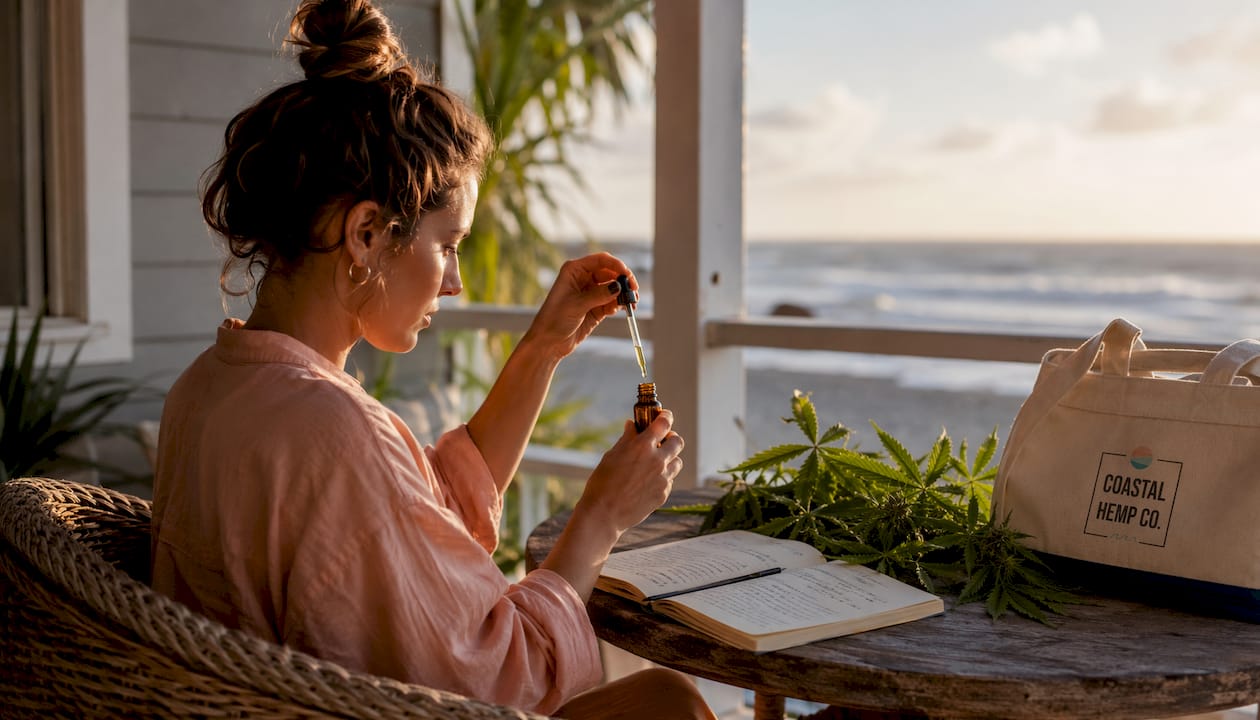
Hemp microdosing means taking small, controlled amounts of cannabinoids multiple times throughout the day rather than one large serving. The goal is not to feel a noticeable shift. It is to maintain a steady cannabinoid baseline that supports your endocannabinoid system (ECS) without sedation or cognitive fog.
Most protocols spread the daily dose across three or four sessions. For beginners, starting at 1–10 mg per dose and tracking your response over the first week gives you a clean baseline to build from.
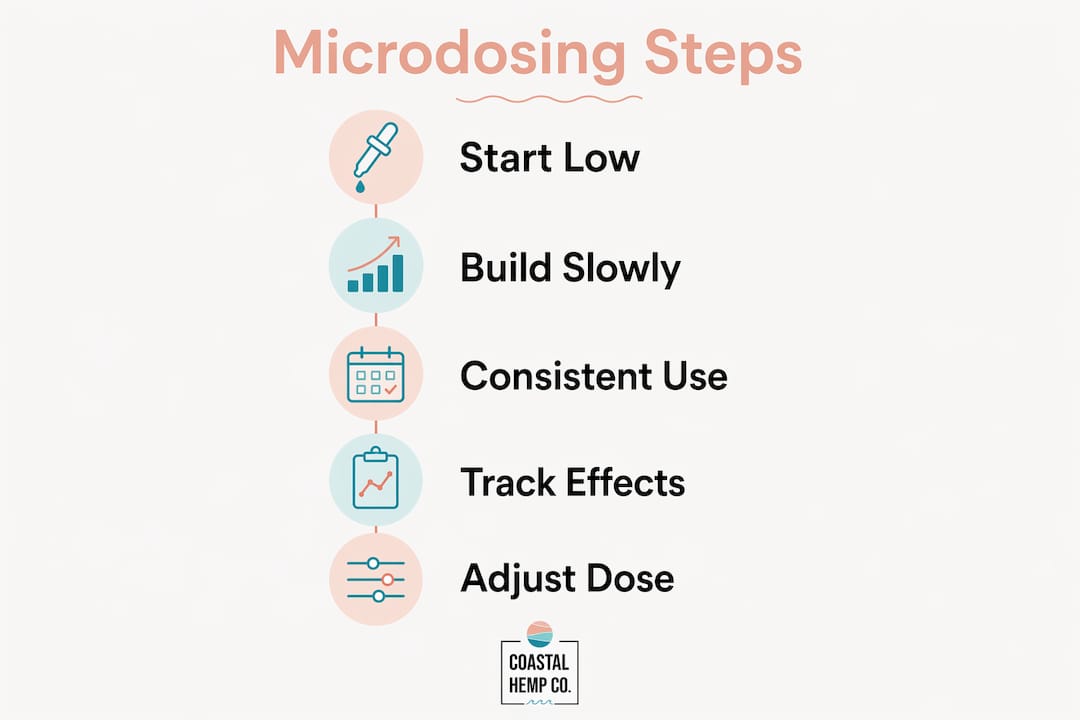
Key starting steps:
-
Begin with a low dose of CBD or CBG in the morning
-
Add a second small dose midday if stress increases
-
Keep a simple daily log of mood, timing, and how you feel
-
Increase by 1 mg at a time only after two stable days at the current dose
-
Stop increasing when you notice subtle, positive calm without drowsiness
Table of Contents
- How cannabinoid dosing science explains the biphasic effect
- How to build consistency and track your ideal microdose
- When to take your doses for maximum stress relief
- Coastalhemp products built for microdosing stress relief
- What you need to know about hemp’s legal status
- What long-term safety data actually shows
- How hemp microdosing differs from CBD-only products
- Drug interactions and health conditions to consider
- Which delivery method fits your microdosing routine?
- How to source high-quality hemp products
- What to realistically expect, and what to watch for
- Coastalhemp makes microdosing practical and accessible
- Key Takeaways
- FAQ
How cannabinoid dosing science explains the biphasic effect
Cannabinoids do not follow a linear dose-response curve. Research from the University of Illinois at Chicago found that 7.5 mg THC reduced stress in a controlled setting, while 12.5 mg produced the opposite effect, increasing anxiety and negative mood. This biphasic pattern is why precision matters more than volume.
| Dose Range | Likely Effect |
|---|---|
| Low dose | Subtle calm, no impairment |
| Moderate dose | Mild anxiety relief, clear-headed |
| Higher dose | Variable effects |
| Highest doses | Risk of sedation or increased anxiety |
Spreading doses throughout the day keeps cannabinoid levels stable and avoids the receptor oversaturation that blunts effectiveness over time. For a deeper look at the science of hemp’s calming effects, Coastalhemp’s resource library covers the ECS mechanisms in plain language.
Pro Tip: If you feel drowsy or foggy after a dose, reduce by 2.5 mg increments rather than stopping entirely. Oversaturation, not the cannabinoid itself, is usually the cause.
How to build consistency and track your ideal microdose
Consistent dosing supports ECS homeostasis better than infrequent spikes. Skipping days or changing amounts too often makes it nearly impossible to identify what is actually working. Think of it as building a foundation, not chasing a feeling.
A simple two-line nightly log works well: note what you took and when, then note how you felt by late afternoon. After seven days, patterns become clear.
Common mistakes to avoid:
- Inconsistent timing (random doses create blood-level fluctuations)
- Dose stacking (adding extra doses before the previous one has fully absorbed)
- Quitting after two or three days before cumulative effects build
- Switching format, dose, and timing in the same week
- Not logging, which turns the whole process into guesswork
Microdosing typically requires 1–2 weeks of consistent daily use before stable calming benefits emerge. Patience here is not optional.
Pro Tip: Set phone reminders at fixed times for each dose. A schedule removes the decision fatigue of “should I take one now?” and keeps your ECS input steady.
When to take your doses for maximum stress relief
Timing a dose 30–60 minutes before a known stress trigger consistently outperforms dosing after stress has already spiked. Morning commutes, back-to-back meetings, and social events are predictable. Work with that predictability.
Practical timing routines by stress pattern:
- Morning-heavy stress: 5 mg tincture at wake, 3–5 mg before first meeting
- Afternoon tension: 5 mg at 2:00 PM, skip if evenings are calm
- Social or travel days: 5–10 mg at 90 minutes before the event
- All-day baseline support: 5 mg at 9:00 AM, 12:00 PM, and 3:00 PM
Avoid dosing after 5:00–6:00 PM unless you have tested that timing without morning grogginess. Late stacking is the most common cause of next-day fog.
Coastalhemp products built for microdosing stress relief
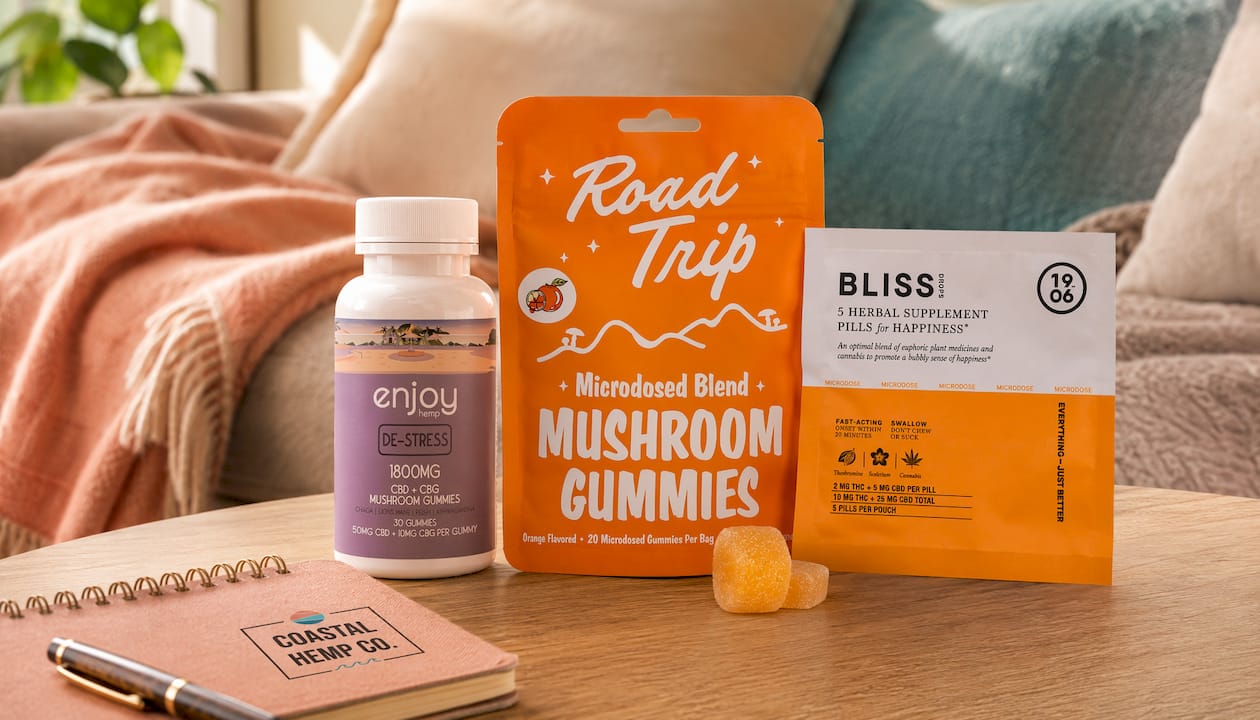
Coastalhemp partners with respected growers and tests every product for consistency, which matters when you are working with doses as small as 5 mg. Three products stand out for microdosing routines:
-
Enjoy De-Stress Gummies combine CBD, CBG, and adaptogenic mushrooms in a single gummy. The CBG addition targets mental clarity alongside the calming CBD baseline, and the mushroom blend supports the body’s stress response at a cellular level. Customers report reduced tension without the sedation common with CBD-only products.
-
Road Trip MicroDosed Mushroom Gummies are designed specifically for on-the-go use. Each piece delivers a precise, low dose suited to the 1–10 mg microdosing window, making them practical for commutes, travel, or any day when you need calm without impairment.
-
Bliss Pouch 1906 Drops 10mg offer fast-acting, precision-dosed drops for acute stress moments. The 10 mg format fits cleanly into a split-dose routine and absorbs quickly for situational support.
Coastalhemp’s quality assurance and grower partnerships mean you can repeat what works, dose after dose.
What you need to know about hemp’s legal status
Hemp-derived CBD products containing less than 0.3% THC are federally legal in the United States under the 2018 Farm Bill. State laws vary, and a handful of states impose additional restrictions on specific cannabinoids like delta-8 THC. Before purchasing, confirm your state’s current rules, particularly for any product containing trace THC. For guidance on choosing hemp over cannabis products, Coastalhemp’s blog covers the key legal distinctions clearly.
What long-term safety data actually shows
Short-term CBD use in healthy adults appears well-tolerated. A systematic review and meta-analysis found that CBD was associated with a higher risk of diarrhea compared to placebo, while headache, fatigue, and dizziness showed no significant difference from placebo groups. Gastrointestinal sensitivity tends to be dose-dependent, which is another reason microdosing at lower levels reduces risk. Long-term human data beyond 90-day study windows remains limited, so ongoing monitoring and periodic check-ins with a healthcare provider are reasonable practice.
How hemp microdosing differs from CBD-only products
Standard CBD products deliver a single cannabinoid. Hemp microdosing, particularly with full-spectrum or broad-spectrum formulas, introduces multiple cannabinoids, including CBG, CBN, and trace terpenes, that work together through what researchers call the entourage effect. CBG, for example, targets focus and mental clarity alongside CBD’s calming properties. Products like the Enjoy De-Stress Gummies illustrate this difference directly: the CBD plus CBG plus mushroom combination addresses stress from multiple biological pathways rather than one.
Drug interactions and health conditions to consider
CBD inhibits certain liver enzymes in the CYP450 pathway, which metabolizes many common prescription medications including blood thinners, antidepressants, and anticonvulsants. At microdosing levels, the interaction risk is lower, but it is not zero. Anyone taking prescription medications should consult a clinician before starting a hemp regimen. Pregnant or breastfeeding individuals, children, and those who are immunosuppressed should avoid CBD products until more targeted safety data is available.
Which delivery method fits your microdosing routine?
Tinctures and oils absorb in 15–45 minutes and last 3–5 hours, making them the best choice for acute, anticipated stress. Gummies and capsules take 45–90 minutes but provide steadier 5–7 hour coverage, ideal for baseline support. Vapes act in under 10 minutes but last only 1–3 hours, useful for rapid spikes when you have already tested your response. Combining a morning tincture for fast onset with a midday gummy for sustained coverage is a practical approach for controlled hemp dosing throughout the day. CBD pre-rolls are another option; CBD pre-rolls offer near-immediate onset for those who prefer inhalation over edibles.
How to source high-quality hemp products
Third-party Certificates of Analysis (COAs) are the baseline requirement. A COA from an independent lab confirms cannabinoid potency, the absence of pesticides, and heavy metal levels. Beyond that, look for brands that list the exact milligrams per serving (not just per bottle), use clear extraction methods, and maintain consistent batch-to-batch results. Coastalhemp’s grower partnerships and product testing address each of these criteria directly.
What to realistically expect, and what to watch for
Most people notice subtler stress responses, less shoulder tension, and fewer racing thoughts after consistent microdosing over time. You will not feel dramatically different after a single dose. That is the point. The benefits accumulate quietly. Side effects at microdose levels are generally mild: occasional dry mouth, minor digestive sensitivity, or slight drowsiness if a dose is too large or too late in the day. If any side effect persists, reduce the dose before stopping entirely.
Coastalhemp makes microdosing practical and accessible
Finding the right hemp product for daily stress relief takes more than reading a label. Coastalhemp curates a focused selection of quality-tested products built specifically for the 1–10 mg microdosing range, from the CBD plus CBG mushroom blend in the Enjoy De-Stress Gummies to the precision drops in the Bliss Pouch. Every product ships fast, comes with transparent lab testing, and is backed by a team that understands the difference between a wellness routine and a quick fix.
Coastalhemp’s catalog is designed for people who want calm clarity, not sedation. Browse the full stress relief collection and find the format that fits your daily routine.
Key Takeaways
Hemp microdosing works best when doses stay within the 1–10 mg range, timing aligns with predictable stress triggers, and consistency is maintained for at least 1–2 weeks.
| Point | Details |
|---|---|
| Start low and build slowly | Begin at 1–10 mg per dose and increase by 1 mg only after two stable days. |
| Biphasic dosing matters | 7.5 mg THC reduced stress in research; 12.5 mg increased anxiety in the same study. |
| Consistency over 1–2 weeks | Stable calming benefits typically emerge after 1–2 weeks of daily microdosing. |
| Match delivery method to need | Tinctures act in 15–45 minutes for acute stress; gummies provide 5–7 hours of steady coverage. |
| Coastalhemp for quality assurance | Coastalhemp’s tested products, including Enjoy De-Stress Gummies and Road Trip Gummies, are built for the microdosing range. |
FAQ
What is hemp microdosing?
Hemp microdosing means taking small amounts of cannabinoids, typically 1–10 mg per dose, multiple times daily to maintain a steady endocannabinoid baseline without sedation or impairment.
How long before hemp microdosing reduces stress?
Most people notice consistent calming benefits after 1–2 weeks of daily use. Single-dose effects are subtle by design.
Can hemp microdosing interact with medications?
Yes. CBD inhibits CYP450 liver enzymes that metabolize many prescription drugs. Consult a clinician before starting if you take any regular medication.
What is the best product format for microdosing?
Tinctures offer the fastest onset (15–45 minutes) for situational stress, while gummies provide longer, steadier coverage. Combining both formats works well for all-day support.
Is hemp microdosing legal in the United States?
Hemp-derived CBD products with less than 0.3% THC are federally legal under the 2018 Farm Bill. State-level rules vary, so confirm local regulations before purchasing.


Comments