

Choosing Hemp Over Cannabis Products: Your 2026 Guide
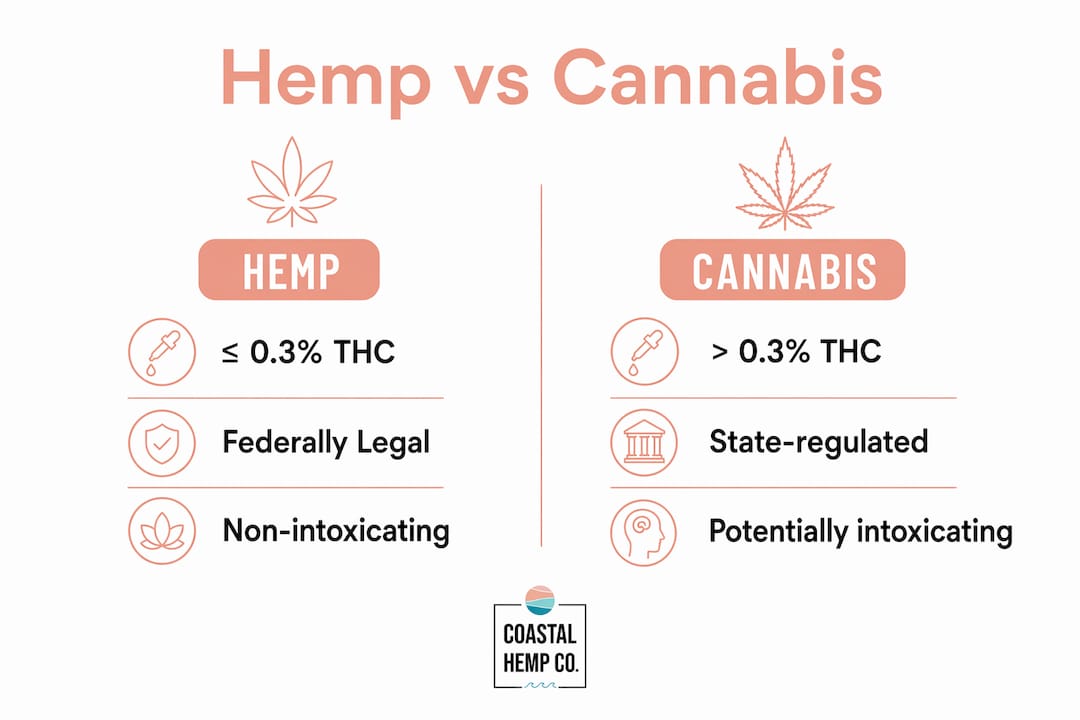
Hemp is legally defined as Cannabis sativa containing no more than 0.3% delta-9 THC on a dry weight basis, making it federally distinct from marijuana under the 2018 Agriculture Improvement Act. Choosing hemp over cannabis products means selecting cannabinoid options that stay within this federal threshold, giving you access to CBD, CBG, CBN, and compliant delta-9 THC without the legal risks tied to marijuana. State laws add complexity, and product quality varies widely. This guide covers the legal framework, health evidence, product selection criteria, and practical usage tips you need to make a confident, compliant choice.
What legal factors should you consider when choosing hemp products?
Federal law permits hemp-derived products under the 2018 Farm Bill, provided total delta-9 THC stays at or below 0.3% by dry weight. That single threshold is the line between a federally legal product and a federally controlled substance. Understanding it protects you from accidental legal exposure.

The federal picture is clear. The state picture is not. Hemp-derived CBD is federally legal, but individual states maintain authority to restrict or ban its sale, possession, and use. Idaho, for example, prohibits all THC regardless of source. Kansas and South Dakota have historically imposed tight restrictions. Before you purchase, check your state’s current rules because the patchwork changes frequently.
New federal regulations proposed to take effect in november 2026 will limit total THC in finished hemp products to 0.4 milligrams per serving. That shift moves enforcement from testing the raw plant to testing the finished product. Many current products on shelves may not meet that standard, so staying current on regulatory updates is not optional.
Third-party lab testing is the most reliable way to verify compliance. A Certificate of Analysis, or COA, confirms cannabinoid content, confirms the absence of pesticides and heavy metals, and shows the product matches its label. Always request a COA before buying.
Key legal checkpoints before purchasing:
- Confirm the product shows 0.3% delta-9 THC or less on its COA
- Verify your state’s current hemp and CBD regulations
- Check that the COA comes from an accredited, independent laboratory
- Review the label for total milligrams of THC per serving, not just percentage
Pro Tip: Carry your COA and original product packaging when traveling across state lines. Law enforcement documentation helps avoid seizure because officers cannot visually distinguish hemp from marijuana.
| Legal factor | What to know |
|---|---|
| Federal THC limit | 0.3% delta-9 THC by dry weight under the 2018 Farm Bill |
| State authority | States can restrict or ban hemp products despite federal legality |
| Proposed 2026 rule | Finished product limit of 0.4 mg THC per serving |
| COA requirement | Third-party lab report confirms compliance and ingredient accuracy |
| Travel risk | Carry documentation; hemp and marijuana look identical to officers |
How do the health effects of hemp compare to cannabis products?
Hemp products are generally non-intoxicating. Products with 0.3% delta-9 THC or less do not produce the psychoactive “high” associated with marijuana. That distinction matters most to adults who want the potential benefits of cannabinoids without impaired cognition or mood alteration.
The entourage effect describes how over 500 compounds in cannabis plants, including cannabinoids, terpenes, and flavonoids, interact to shape therapeutic outcomes. No single compound acts in isolation. This means a broad spectrum hemp oil with CBD, CBG, and trace terpenes may produce different effects than an isolate product with CBD alone. Product formulation matters as much as cannabinoid concentration.
The clinical evidence for cannabinoids is more limited than popular marketing suggests. A systematic review of randomized controlled trials00015-5) found no strong evidence that cannabinoids effectively treat anxiety, PTSD, OCD, bipolar disorder, or opioid use disorder. Some improvement in sleep was noted. That finding does not mean hemp products have no value. It means the evidence base is still developing, and expectations should be calibrated accordingly.
“Clinicians face real challenges advising patients on cannabinoids due to variability in formulations, lack of high-quality trials, and regulatory complexities. Limited standardized dosing and inconsistent evidence make guidance difficult across the board.”
Dosage control and product standardization directly affect your experience. Consistent dosing practices reduce variability and help you track what is actually working. Without a standardized dose, you cannot reliably compare results across products or sessions.
What the current evidence supports:
- Hemp-derived CBD shows the most consistent signal for sleep quality improvement
- Non-intoxicating hemp products are generally well tolerated at moderate doses
- Compound synergy, not isolated CBD concentration, drives most therapeutic effects
- No cannabinoid has demonstrated strong efficacy for major anxiety disorders in RCT-level evidence
- Product formulation and bioavailability affect how much cannabinoid reaches your system
What key factors should guide your choice of hemp products?
The right hemp product depends on your wellness goal, your tolerance for THC, and the delivery method that fits your routine. Hemp-derived cannabinoids include CBD, CBG, CBN, and compliant delta-9 THC, each with distinct effects and appropriate use cases.
Oils and tinctures offer the most dosage control. You can measure drops precisely and adjust incrementally. Broad spectrum CBD oil, such as Coastalhemp’s organic broad spectrum oil, delivers multiple cannabinoids without isolating a single compound, which supports the entourage effect. Onset typically runs 15–45 minutes when taken sublingually.
Gummies provide consistent, pre-measured doses and are easy to incorporate into a daily routine. Coastalhemp’s sleep gummies with THC and CBN combine cannabinoids specifically formulated for relaxation and sleep onset. For consumers interested in appetite and metabolic wellness, THC and THCV gummies offer a targeted cannabinoid combination.
Topicals work locally and do not enter the bloodstream in meaningful amounts. They suit joint discomfort and skin concerns but will not produce systemic effects. Vapes deliver fast onset but carry respiratory considerations and require careful sourcing to avoid unregulated additives.
Pro Tip: Always verify that the product’s COA matches the batch number on the label. Mislabeled or outdated lab reports are a common quality gap in the hemp market.
| Product type | Primary benefit | Onset time | Best use case |
|---|---|---|---|
| CBD oil or tincture | Dosage precision | 15–45 minutes | Daily wellness, stress support |
| Hemp gummies | Consistent dosing | 30–90 minutes | Sleep, relaxation, appetite |
| Topicals | Localized relief | 10–20 minutes | Muscle and joint discomfort |
| Vapes | Fast onset | 2–10 minutes | Acute stress, fast relief needs |
Criteria for selecting a quality hemp product:
- Source: grown in the United States under regulated agricultural conditions
- Extraction: CO2 or ethanol extraction methods preserve cannabinoid integrity
- Third-party testing: COA from an accredited lab, current within 12 months
- Label transparency: milligrams per serving listed clearly, not just percentage
- Ingredient list: no undisclosed additives, artificial fillers, or synthetic cannabinoids
How to effectively use hemp products for stress relief and wellness
Start with the lowest effective dose and increase gradually. This approach, often called “start low and go slow,” is the standard recommendation across cannabinoid research because individual responses vary significantly based on body weight, metabolism, and endocannabinoid system sensitivity. Rushing to a high dose before your body adjusts produces inconsistent results and wastes product.
Timing matters as much as dose. CBD oil taken sublingually in the morning supports daytime calm without sedation. CBN-containing gummies taken 30–60 minutes before bed align with their sedative profile. Match the product’s cannabinoid profile to the time of day and the specific outcome you want.
Step-by-step approach for new hemp users:
- Choose a product type that fits your routine (oil for precision, gummies for convenience)
- Start at the manufacturer’s lowest recommended dose
- Hold that dose for five to seven days before adjusting
- Keep a simple log: dose, time, and how you felt two hours later
- Increase by the smallest available increment if no effect is noticed
- Consult a healthcare provider before combining hemp products with prescription medications
Monitor for side effects, which are generally mild but real. Dry mouth, mild fatigue, and changes in appetite are the most commonly reported. These typically resolve as your body adjusts. If they persist, reduce your dose.
Common pitfalls to avoid:
- Switching products too quickly before a dose has time to work
- Buying products without a current, batch-specific COA
- Assuming a higher milligram count always means stronger effects
- Ignoring state-specific laws when purchasing online or traveling
- Expecting immediate results from products with 30–90 minute onset windows
Legal compliance is a prerequisite, not an afterthought. Confirm your product meets the federal 0.3% THC standard and your state’s rules before you begin any wellness routine.
Key takeaways
Hemp products offer federally compliant access to cannabinoids, but legal variability, product quality, and realistic health expectations determine whether they actually work for you.
| Point | Details |
|---|---|
| Federal legal threshold | Hemp must contain 0.3% delta-9 THC or less under the 2018 Farm Bill. |
| State law variability | State rules can restrict hemp products even where federal law permits them. |
| Evidence-based expectations | Current research supports sleep improvement; evidence for anxiety disorders remains limited. |
| Product selection criteria | Prioritize COA-verified, US-grown products with transparent milligram labeling. |
| Dosing strategy | Start at the lowest dose and hold for five to seven days before adjusting. |
What I’ve learned from watching consumers navigate hemp vs. cannabis
Most people who come to hemp products do so because they want the benefits of cannabinoids without the legal exposure or psychoactive effects of marijuana. That motivation is sound. The mistake I see most often is treating hemp as a guaranteed therapeutic solution rather than a regulated plant extract with a developing evidence base.
The legal and scientific landscape around hemp-derived THC is genuinely unsettled. Pending federal legislation could redefine what qualifies as hemp and lower allowable THC limits further. Consumers who buy products today without understanding that risk may find their preferred products reformulated or pulled from shelves. Staying informed is not paranoia. It is basic consumer protection.
My practical recommendation is simple. Buy from brands that publish current, batch-specific COAs. Start with a broad spectrum oil or a well-formulated gummy from a source you can verify. Give any product at least two weeks at a consistent dose before drawing conclusions. And if you are managing a specific health condition, loop in your doctor. Hemp products are a complement to a wellness routine, not a replacement for clinical care.
— John
Quality hemp products worth knowing about
Coastalhemp partners with vetted growers and top brands to bring federally compliant hemp products to consumers who care about what they put in their bodies.
Every product in the Coastalhemp catalog comes with third-party lab verification and transparent labeling. The broad spectrum CBD oil suits daily wellness routines with precise dosing. The sleep gummies with THC and CBN are formulated for nighttime relaxation. For consumers exploring cannabinoid wellness more broadly, Coastalhemp’s full range reflects a commitment to quality, compliance, and real results. Visit Coastalhemp to browse the full selection and find the right product for your goals.
FAQ
What is the legal difference between hemp and cannabis?
Hemp is legally defined as Cannabis sativa with 0.3% delta-9 THC or less by dry weight under the 2018 Farm Bill. Cannabis above that threshold is classified as marijuana and remains federally illegal.
Are hemp products legal in every US state?
No. Hemp-derived CBD is federally legal, but individual states can restrict or ban its sale and possession. Always check your state’s current laws before purchasing.
Do hemp products get you high?
Hemp products with 0.3% delta-9 THC or less are generally non-intoxicating. They do not produce the psychoactive effects associated with marijuana.
What should I look for on a hemp product label?
Look for total milligrams of each cannabinoid per serving, a batch-specific COA from an accredited third-party lab, and a clear list of ingredients with no undisclosed additives.
How long does it take for hemp products to work?
Onset depends on the delivery method. Sublingual oils typically take 15–45 minutes, while gummies take 30–90 minutes. Vapes act within 2–10 minutes but carry additional respiratory considerations.


Comments