

What Is Hemp Derived Delta-9 THC: 2026 Guide
Hemp-derived delta-9 THC is defined as delta-9 tetrahydrocannabinol extracted from hemp plants that contain no more than 0.3% THC by dry weight, as established by the 2018 Farm Bill. This is the same psychoactive compound found in marijuana. The only difference is the plant it comes from and the legal threshold that governs its sale. If you are curious about what is hemp derived delta-9, this guide covers the chemistry, the law, the product formats, and the real-world effects you can expect.
What is hemp-derived delta-9 THC and how does it differ from marijuana THC?
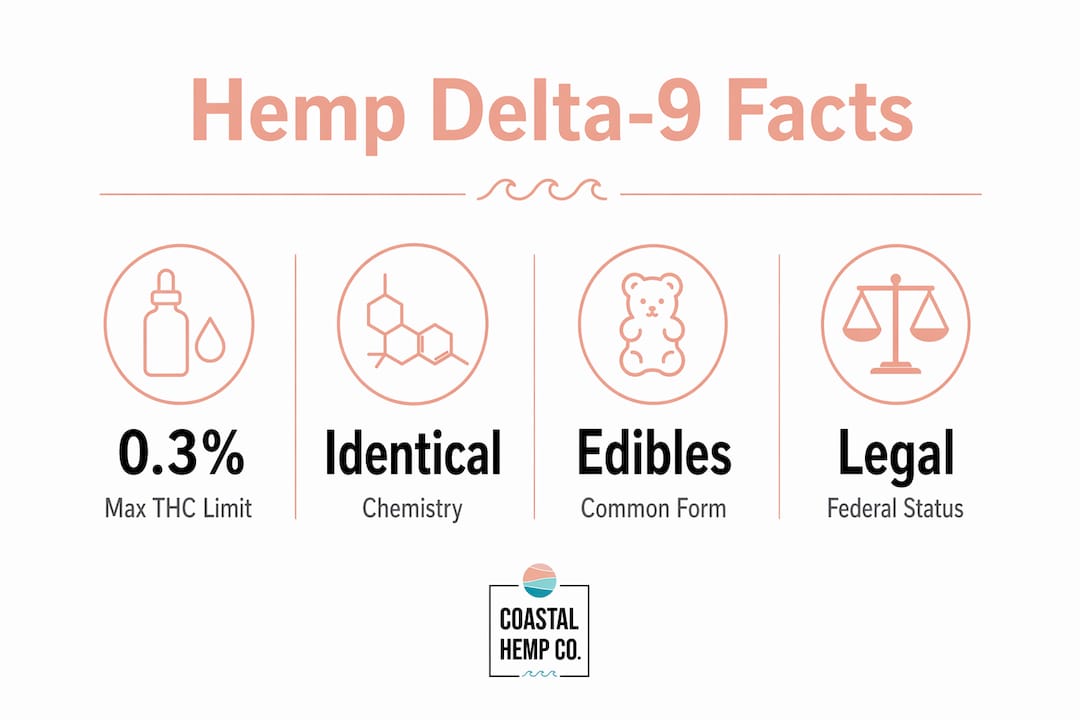
Hemp-derived delta-9 THC and marijuana-derived delta-9 THC are chemically identical molecules. The plant source determines legality, not molecular structure. This distinction matters because it means the psychoactive effects you experience from a hemp-derived delta-9 gummy are the same as those from a marijuana product with an equivalent dose.

The 2018 Farm Bill drew the legal line at 0.3% delta-9 THC by dry weight. Hemp plants at or below that threshold are federally legal. Marijuana plants exceed it, placing them under the Controlled Substances Act. That single number is the entire basis for the hemp-derived delta-9 market.
One more distinction worth knowing: high-quality hemp-derived delta-9 is naturally extracted from hemp without chemical synthesis. This sets it apart from delta-8 and delta-10 THC, which are typically produced through chemical conversion of CBD. Natural extraction is a quality signal buyers should look for when evaluating products.
Chemical identity vs. legal identity
The molecule itself carries no legal status. Courts and regulators classify THC based on concentration and plant source. A product with 10mg of hemp-derived delta-9 in a 3.5-gram gummy is federally legal. The same 10mg in a 0.5-gram product would exceed the 0.3% threshold and become illegal under federal law. The math, not the molecule, determines compliance.
Key compliance factors for hemp-derived delta-9 products:
- Plant source: Must be certified hemp, not marijuana
- THC concentration: Must not exceed 0.3% delta-9 THC by dry weight
- Lab verification: A Certificate of Analysis (COA) from a third-party lab confirms compliance
- Extraction method: Natural extraction from hemp is preferred over chemical conversion
Third-party lab testing with publicly available COAs is the standard for reputable producers. Always check the COA before purchasing any hemp-derived cannabinoid product. Understanding the hemp vs. marijuana differences in more depth helps clarify why these compliance rules exist.
What product types contain hemp-derived delta-9 THC?
Hemp-derived delta-9 products are almost exclusively heavy edibles. Gummies, beverages, tinctures, and chocolates dominate the market. This is not a coincidence. It is a direct result of the dry-weight compliance math.
Here is why flower and vapes are commercially unviable at legal limits:
- Gummies and edibles: A 5-gram gummy can legally contain up to 15mg of delta-9 THC while staying under the 0.3% threshold. This makes gummies the most practical and popular format.
- Beverages: Liquid products with significant volume can contain meaningful doses of delta-9 while remaining compliant. Hemp-infused drinks have grown steadily as a result.
- Tinctures: Oil-based tinctures with carrier oils add weight, making it easier to include compliant doses of delta-9 THC.
- Chocolates and other confections: Dense, heavy food matrices work well for the same reason as gummies.
- Flower and vapes: A gram of hemp flower at the 0.3% limit contains only about 3mg of THC. That dose is too low for meaningful psychoactive effects, making flower and vape products commercially pointless for delta-9 specifically.
The dry-weight math is the single biggest factor shaping what hemp-derived delta-9 products look like on shelves. Brands that understand this design products around it. Brands that do not end up with underdosed or non-compliant products.
Pro Tip: When evaluating a hemp-derived delta-9 product, divide the total THC milligrams by the product’s total weight in grams, then multiply by 100. The result should be 0.3% or less. If a brand cannot show you this calculation backed by a COA, skip it.
Also, check the 2026 buyer’s guide for hemp relaxation products for a practical comparison of formats currently available.
What are the effects and benefits of hemp-derived delta-9 THC?
Hemp-derived delta-9 THC produces the same psychoactive effects as marijuana-derived delta-9 at equivalent doses. Consumers report relaxation, mild euphoria, altered sensory perception, and increased appetite. At higher doses, some people experience anxiety or disorientation, which is why starting low matters.
The therapeutic potential of delta-9 THC is well-documented. Reported benefits include:
- Stress and anxiety relief: Low to moderate doses produce calming effects for many people
- Sleep support: Delta-9 THC is widely used to reduce time to sleep onset
- Pain management: Users report reduced perception of chronic and acute pain
- Appetite stimulation: Delta-9 activates appetite pathways, useful for people with appetite suppression
- Mood elevation: Mild euphoria is a consistent reported effect at moderate doses
Full-spectrum hemp products that combine delta-9 with CBD offer a more balanced experience. The entourage effect describes how CBD can reduce the anxiety sometimes associated with higher THC doses. This is why many experienced consumers prefer full-spectrum products over isolated delta-9. Exploring hemp terpene profiles adds another layer to understanding how cannabinoids and terpenes work together.
Delta-9 vs. delta-8 and delta-10 THC
Delta-9 THC is the primary psychoactive cannabinoid in cannabis. Delta-8 THC produces milder psychoactive effects and is typically synthesized from CBD rather than extracted naturally. Delta-10 THC is even less potent and also synthetically derived in most commercial products. If you want the full psychoactive experience that delta-9 delivers, neither delta-8 nor delta-10 is a direct substitute.
Pro Tip: First-time users should start with 5mg or less of hemp-derived delta-9 and wait at least 90 minutes before considering a second dose. Edibles absorb more slowly than inhaled products, and the delayed onset catches many new users off guard.
One critical fact: drug tests cannot distinguish hemp-derived delta-9 from marijuana-derived delta-9. If you are subject to workplace or legal drug testing, hemp-derived delta-9 carries the same risk as marijuana.
Is hemp-derived delta-9 legal in 2026?
Hemp-derived delta-9 THC remains federally legal in 2026 under the framework established by the 2018 Farm Bill. The 0.3% dry weight threshold still applies. However, 2026 federal law updates have expanded the definition of “total THC” to include delta-8, delta-9, and THCA combined. Products must stay under 0.3% total THC by dry weight to maintain compliance.
This change complicates formulation for brands that previously combined multiple cannabinoids freely. A product with 0.2% delta-9 and 0.2% delta-8 now exceeds the total THC limit. Consumers buying multi-cannabinoid products should verify that the COA reflects total THC, not just delta-9 alone.
| Jurisdiction | Hemp-Derived Delta-9 Status | Key Restriction |
|---|---|---|
| Federal (USA) | Legal | Max 0.3% total THC by dry weight |
| Most U.S. states | Legal | Follows federal framework |
| Idaho | Restricted | Zero THC tolerance for hemp products |
| Iowa | Restricted | Low THC hemp products only |
| Minnesota | Regulated | Age restrictions and potency caps apply |
State laws vary significantly. Idaho enforces a zero-tolerance THC policy. Iowa restricts hemp products to very low THC concentrations. Minnesota has implemented age restrictions and potency caps on hemp-derived cannabinoids. Always verify your state’s current rules before purchasing.
Key Takeaways
Hemp-derived delta-9 THC is federally legal, chemically identical to marijuana THC, and primarily available in edible formats due to the 0.3% dry weight compliance rule.
| Point | Details |
|---|---|
| Same molecule, different source | Hemp-derived delta-9 is chemically identical to marijuana delta-9; plant source determines legality. |
| Dry weight math drives product formats | Gummies and beverages dominate because heavy formats allow compliant doses of 10mg or more. |
| 2026 total THC rule | Federal law now counts delta-8, delta-9, and THCA together toward the 0.3% limit. |
| Drug tests cannot tell the difference | Hemp-derived delta-9 will trigger a positive result on standard drug tests. |
| COAs are non-negotiable | Always verify third-party lab results before purchasing any hemp-derived delta-9 product. |
What I have learned about buying hemp-derived delta-9 safely
The biggest mistake I see new buyers make is treating hemp-derived delta-9 as a mild or consequence-free product because it is legal. It is not mild. At equivalent doses, it produces the same effects as marijuana delta-9. The legal status does not change the pharmacology.
My strongest recommendation is to buy only from brands that post third-party COAs publicly and show total THC calculations, not just delta-9 alone. The 2026 total THC rule makes this more important than ever. A brand that only shows delta-9 on its lab report is either uninformed or hiding something.
The entourage effect is real and worth paying attention to. Full-spectrum products that pair delta-9 with CBD tend to produce smoother, more manageable experiences. If you are new to delta-9, a full-spectrum gummy at 5mg is a better starting point than an isolate product at the same dose.
Finally, be honest with yourself about drug testing. I have spoken with people who assumed “legal hemp” meant “safe for drug tests.” It does not. Hemp-derived delta-9 and marijuana delta-9 are the same molecule. Any test that screens for THC metabolites will flag both equally.
— John
Coastalhemp’s hemp-derived delta-9 products
Coastalhemp partners with vetted brands and growers to bring lab-tested hemp-derived delta-9 products to consumers who want quality they can verify.

Every product in the Coastalhemp catalog comes with accessible COA documentation so you can confirm potency and total THC compliance before you buy. For a full-spectrum experience that pairs delta-9 with CBD, the organic full-spectrum CBD oil from Celestial Wellness is a well-reviewed option. Consumers looking for a gummy format with a cannabinoid blend can check out the Jelly THCA Live Sugar Blend Gummies for a potent, lab-verified choice. Coastalhemp ships fast and keeps pricing accessible for health-conscious shoppers who do not want to compromise on transparency.
FAQ
What is hemp-derived delta-9 THC?
Hemp-derived delta-9 THC is delta-9 tetrahydrocannabinol extracted from hemp plants containing no more than 0.3% THC by dry weight, as defined by the 2018 Farm Bill. It is chemically identical to marijuana-derived delta-9 THC.
Is hemp-derived delta-9 legal to buy?
Hemp-derived delta-9 is federally legal in the United States when products contain no more than 0.3% total THC by dry weight. Some states, including Idaho and Iowa, impose stricter restrictions.
Will hemp-derived delta-9 show up on a drug test?
Yes. Drug tests cannot distinguish hemp-derived delta-9 from marijuana-derived delta-9, and both will produce a positive result on standard THC screenings.
Why are hemp-derived delta-9 products mostly gummies and beverages?
The 0.3% dry weight limit means only heavy product formats can contain enough THC for noticeable effects. A gram of hemp flower at the legal limit contains only about 3mg of THC, which is too low for most consumers.
How is hemp-derived delta-9 different from delta-8 THC?
Delta-9 THC is more potent and is naturally extracted from hemp. Delta-8 THC is milder and typically produced through chemical conversion of CBD, making it a synthetic derivative in most commercial products.



Comments