

Hemp Edibles for Recreational Use: 2026 Guide
Hemp edibles for recreational use are federally legal cannabis-alternative products that deliver cannabinoid effects through food formats, provided they contain no more than 0.3% THC by dry weight under the 2018 Farm Bill. These products include gummies, chocolates, infused drinks, and hemp-infused snacks that adults 21 and older can purchase without a prescription. The category has expanded rapidly, with brands like Coastalhemp offering everything from WYLD THC gummies to live resin delta-9 options. What most buyers do not realize is that 2026 brings a significant regulatory shift that changes how product legality is measured, and understanding that shift is the difference between buying a compliant product and unknowingly purchasing one that falls outside federal law.
What federal laws define legal hemp edibles in 2026
Federal law defines hemp as cannabis containing no more than 0.3% delta-9 THC by dry weight, a threshold established by the 2018 Farm Bill that separates hemp from marijuana under the Controlled Substances Act. This distinction is what makes recreational hemp treats legally purchasable across most of the United States without a medical card or dispensary visit. The practical effect is that any compliant edible product sits outside the federal drug scheduling that governs marijuana, giving consumers access through online retailers and specialty stores.
The regulatory picture changes substantially in 2026. Effective November 12, 2026, the legal definition shifts to a total THC including THCA limit of 0.3% on a dry weight basis. This is a meaningful change because THCA converts to delta-9 THC when heated, meaning products that previously passed testing under the delta-9 standard alone may no longer qualify. Producers and consumers both need to understand that the new measurement requires more sophisticated lab analysis.
The 2026 amendment also addresses cannabinoids like delta-8 THC. Intoxicating cannabinoids beyond delta-9 are now factored into the total THC calculation, which closes a regulatory gap that allowed some products with significant psychoactive potential to remain technically compliant. This matters for recreational users because it directly affects which products remain on shelves and which formulations manufacturers must reformulate.
| Legal Standard | Pre-2026 Rule | Post-November 12, 2026 Rule |
|---|---|---|
| THC measurement | Delta-9 THC only | Total THC including THCA |
| Cannabinoids covered | Delta-9 THC | Delta-9, THCA, delta-8, and others |
| Testing method | Standard delta-9 analysis | Comprehensive cannabinoid panel |
| Consumer impact | Broader product availability | Stricter compliance requirements |
One point that surprises many buyers: product potency in milligrams does not determine federal legality. A 100mg delta-9 gummy can be fully compliant if it is manufactured from hemp extract that meets the concentration percentage threshold. Legality is about the ratio of THC to total dry weight, not the absolute milligram count per serving.
How to choose the best hemp edibles for recreational use
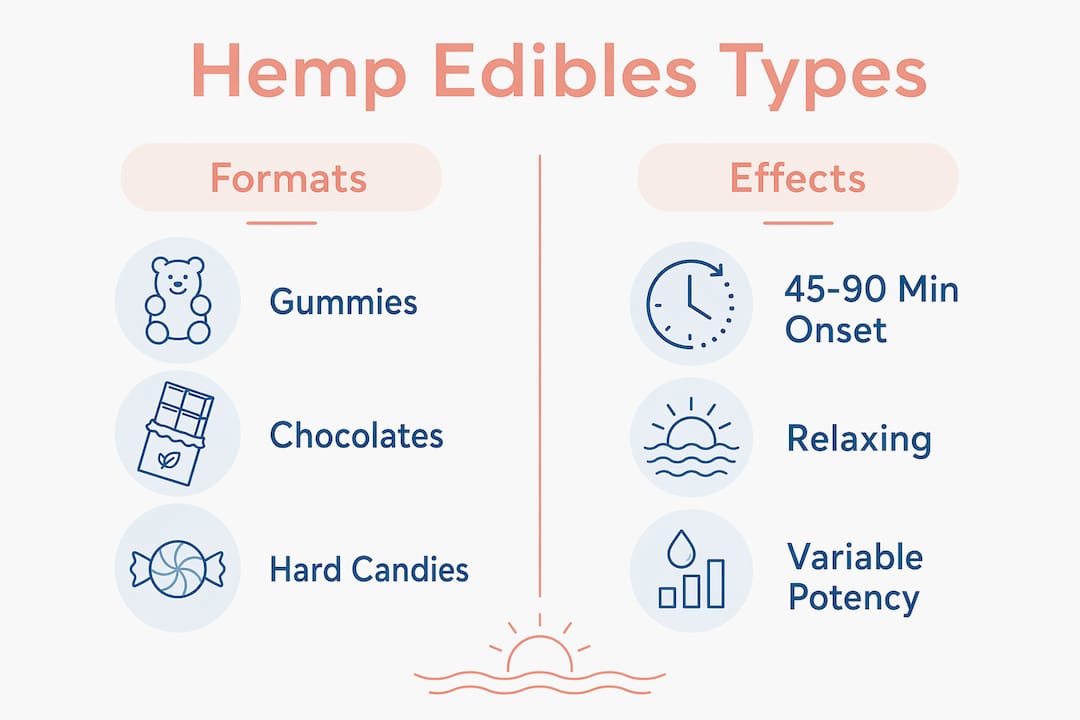
Recreational hemp edibles come in several distinct formats, and the format affects both onset time and the overall experience. Gummies, chocolates, drinks, and snacks each deliver cannabinoids through the digestive system, but drinks and fast-acting syrups like delta-9 THC mixers tend to absorb more quickly due to their liquid form. Gummies remain the most popular format because they offer precise dosing and a long shelf life.
Cannabinoid profile is the most important factor to evaluate when selecting a product. A gummy containing only CBD produces non-intoxicating relaxation effects. A product combining delta-9 THC with CBD or CBN produces a more sedating, psychoactive experience. THCv gummies represent a newer category that some users describe as producing a cleaner, more energetic effect compared to standard delta-9 products. Matching the cannabinoid profile to the intended occasion, whether that is a social gathering or a quiet evening at home, is the most reliable way to get the experience you want.
Selecting the right product: key criteria
- Potency per serving: Beginners should start with 5mg to 10mg of delta-9 THC per serving. Experienced users may prefer 25mg or higher.
- Certificate of analysis (COA): Always verify that the product has a current third-party COA confirming THC concentration and ingredient purity. Trusted brands provide these documents publicly.
- Cannabinoid blend: Single cannabinoid products are predictable. Blended products with CBD, CBN, or THCv offer more nuanced effects.
- Onset format: Standard gummies take 45 to 90 minutes to activate. Fast-acting formats like delta-9 syrups can produce effects in 15 to 30 minutes.
- Ingredient transparency: Look for products with recognizable ingredients and no artificial fillers that could mask cannabinoid content.
| Product Type | Onset Time | Best For | Potency Range |
|---|---|---|---|
| Standard gummies | 45 to 90 minutes | Relaxation, social use | 5mg to 100mg per piece |
| Fast-acting syrups | 15 to 30 minutes | Quick effect onset | 200mg per bottle |
| Chocolates | 30 to 60 minutes | Discreet consumption | 5mg to 50mg per piece |
| CBN nighttime gummies | 60 to 90 minutes | Sleep and deep relaxation | 5mg to 25mg per piece |
Purchasing from reputable online retailers or licensed stores reduces the risk of buying mislabeled or non-compliant products. Coastalhemp partners with established growers and brands, which means the products listed on their platform carry verifiable sourcing and lab documentation. This is particularly relevant as the 2026 regulatory changes push lower-quality producers out of the market.
How to safely consume hemp edibles and optimize your experience
Edible onset timing is the single most misunderstood aspect of hemp edible consumption. Unlike smoking or vaping, which deliver cannabinoids to the bloodstream within minutes, edibles must pass through the digestive system before effects begin. Edible effects are delayed compared to inhalation methods, and overconsumption frequently occurs when users assume the product is not working and take an additional dose.
A structured approach to dosing eliminates most negative experiences:
- Start with a low dose. For first-time users, 5mg of delta-9 THC is the standard starting point. This amount produces mild relaxation without overwhelming psychoactive effects in most adults.
- Wait the full onset window. Allow at least 90 minutes before considering a second dose. Digestive absorption varies based on body weight, metabolism, and whether you have eaten recently.
- Eat a light meal beforehand. Consuming edibles on an empty stomach accelerates onset and intensifies effects. A small meal before consumption produces a more gradual, manageable experience.
- Choose your setting deliberately. Social settings with familiar people are the most comfortable environment for first-time or infrequent users. Avoid high-stress or unfamiliar environments when trying a new product.
- Stay hydrated. Water does not reduce THC effects, but dehydration amplifies discomfort. Keep water available throughout the experience.
- Do not mix with alcohol. Combining alcohol with hemp-derived THC significantly intensifies psychoactive effects and increases the likelihood of nausea or anxiety.
Pro Tip: Store hemp edibles in a cool, dark location in their original labeled packaging. Unlabeled edibles left in common areas create serious accidental ingestion risks, particularly in households with children or pets.
For experienced recreational users, higher potency options like 100mg live resin delta-9 gummies offer a more pronounced effect, but even experienced users benefit from splitting doses across a session rather than consuming a full serving at once. Live resin extracts preserve a broader terpene profile than distillate-based products, which many users report produces a more complete and enjoyable experience.
For relaxation-focused occasions, CBN and CBD nighttime gummies offer a non-intoxicating or lightly intoxicating alternative that promotes sleep and reduces anxiety without the full psychoactive profile of delta-9 products. This makes them well-suited for users who want the cannabis edibles benefits of relaxation without significant impairment.
Common mistakes to avoid with hemp edibles
The most frequent error recreational users make is redosing too early. Because edible onset can take up to two hours, many users consume a second serving at the 45-minute mark and then experience a combined effect that is far stronger than intended. This is the primary cause of uncomfortable hemp edible experiences, and it is entirely preventable by following the 90-minute rule.
Label misreading is the second most common problem. A product labeled “100mg” may contain 100mg of hemp extract, not 100mg of delta-9 THC. Always locate the specific cannabinoid milligram count per serving, not the total extract weight. Products that obscure this information or fail to provide a COA should be avoided regardless of price or branding.
Drug testing is a concern many recreational users underestimate. Hemp-derived THC can trigger positive results on standard drug screenings, because most workplace tests detect THC metabolites without distinguishing between hemp-derived and marijuana-derived sources. Recreational users subject to employment drug testing should factor this into their consumption decisions.
Additional pitfalls to watch for:
- State-level restrictions: Federal legality does not override state law. Several states restrict or prohibit hemp-derived THC products regardless of federal compliance. Verify your state’s current rules before purchasing.
- Non-compliant products: The 2026 regulatory shift will push some products out of compliance. Purchase only from brands that update their COAs to reflect total THC testing under the new standard.
- Unverified online sellers: Third-party marketplaces frequently list hemp edibles without current lab documentation. Buying directly from brand websites or established retailers like Coastalhemp reduces this risk.
Always verify that any hemp edible product you purchase includes a current certificate of analysis from an accredited third-party laboratory. This single step eliminates the majority of quality, safety, and compliance risks associated with recreational hemp edible use.
Key takeaways
Hemp edibles for recreational use are legally accessible to adults 21 and older, but the 2026 shift to total THC measurement requires buyers to verify product compliance more carefully than before.
| Point | Details |
|---|---|
| Legal threshold in 2026 | Total THC including THCA must not exceed 0.3% dry weight after November 12, 2026. |
| Dosing for beginners | Start at 5mg to 10mg delta-9 THC and wait 90 minutes before considering more. |
| COA verification | Always confirm third-party lab results before purchasing any hemp edible product. |
| Drug testing risk | Hemp-derived THC produces positive drug test results on standard workplace screenings. |
| Product format matters | Fast-acting syrups onset in 15 to 30 minutes; standard gummies take 45 to 90 minutes. |
What I’ve learned from watching the hemp edible market evolve
The hemp edible category has changed more in the past three years than in the decade before it. When the 2018 Farm Bill passed, most products on the market were CBD-only gummies with modest effects and inconsistent quality. The introduction of delta-8 THC products changed consumer expectations overnight, and the industry has been playing catch-up with regulators ever since.
What strikes me most about the 2026 regulatory shift is that it is genuinely protective for consumers, even if it creates short-term market disruption. The old delta-9-only testing standard allowed products with significant THCA content to pass compliance checks, which meant some products were far more potent than their labels suggested. The total THC standard closes that gap and forces producers to be honest about what they are selling.
The quality gap between brands is still wide. Some producers invest in full-panel COAs, transparent ingredient sourcing, and consistent manufacturing. Others cut corners on testing and rely on consumers not knowing what to look for. My consistent advice is to treat the COA as non-negotiable. If a brand cannot produce a current, third-party lab report showing total THC levels, the product is not worth the risk regardless of how appealing the packaging or price point looks.
Hemp edibles are a genuinely useful social alternative for adults who want the relaxation and mild euphoria associated with cannabis without the legal complexity of marijuana in states where it remains restricted. The key is approaching them with the same informed mindset you would apply to any other consumable product. Know what you are buying, know how much you are taking, and give the product time to work before making any decisions about dosing.
— John
Explore hemp edibles at Coastalhemp
Coastalhemp carries a curated selection of compliant, lab-tested hemp edibles suited to every recreational preference and experience level.

Whether you are looking for a mild social option or a higher-potency experience, the Coastalhemp product catalog includes WYLD THC gummies, live resin delta-9 options, THCv gummies, and fast-acting syrups, all sourced from trusted growers with full COA documentation. Every product on the platform meets current federal standards, and the team updates listings as the 2026 regulatory changes take effect. For users new to edible hemp products, Coastalhemp’s product pages include detailed cannabinoid breakdowns and dosing guidance to help you make an informed choice from the start.
FAQ
Are hemp edibles legal to buy without a prescription?
Hemp edibles are federally legal for adults 21 and older without a prescription, provided they contain no more than 0.3% total THC by dry weight. State-level restrictions may apply, so verify local laws before purchasing.
Will hemp gummies show up on a drug test?
Yes. Hemp-derived THC triggers positive results on standard drug screenings because tests detect THC metabolites regardless of the source. Recreational users subject to workplace testing should account for this before consuming.
How long do hemp edibles take to work?
Standard hemp gummies and chocolates take 45 to 90 minutes to produce effects because they are processed through the digestive system. Fast-acting liquid formats like delta-9 syrups can onset in 15 to 30 minutes.
What does the 2026 hemp definition change mean for edibles?
Effective November 12, 2026, the legal definition shifts to total THC including THCA, meaning products that previously passed delta-9-only testing may no longer comply. Buyers should confirm that products carry updated COAs reflecting the new total THC standard.
How much should a first-time user take?
A starting dose of 5mg to 10mg of delta-9 THC is appropriate for most first-time users. Wait at least 90 minutes before considering any additional amount, as edible effects are delayed and overconsumption is the most common cause of negative experiences.



Comments