

Hemp Alternative Dosage Best Practices: 2026 Guide
Hemp alternative dosage best practices are defined as a structured, low-to-high titration approach that accounts for body weight, metabolism, product format, and desired wellness outcome. Whether you are using CBD tinctures, THCA gummies, or functional mushroom edibles, the same core principle applies: start low, increase slowly, and track your results. The industry term for this process is cannabinoid titration, and it is the standard method recommended across hemp supplement dosing guides in 2026. Getting this right means fewer side effects, faster results, and a regimen that actually fits your life.
1. Hemp alternative dosage best practices start with a weight-based framework
Body weight is the most reliable starting point for calculating your initial hemp dose. Common frameworks recommend 1 to 6 mg of CBD per 10 pounds of body weight, which gives you a practical range rather than a single fixed number. This matters because two people taking the same product can experience completely different effects based on their size alone.
Here is a simple breakdown by weight group:
| Body Weight | Starting Dose | Upper Starter Range |
|---|---|---|
| Under 130 lbs | 11 mg or less | Up to 15 mg |
| 130 to 230 lbs | 18 mg or less | Up to 22 mg |
| Over 230 lbs | 23 mg or less | Up to 30 mg |
Beyond weight, you also need to factor in your goal. Starting doses for stress typically range from 10 to 15 mg daily, while sleep support often calls for 15 to 25 mg. Anxiety responds well to moderate sublingual doses with a faster onset. These are starting points, not permanent prescriptions.
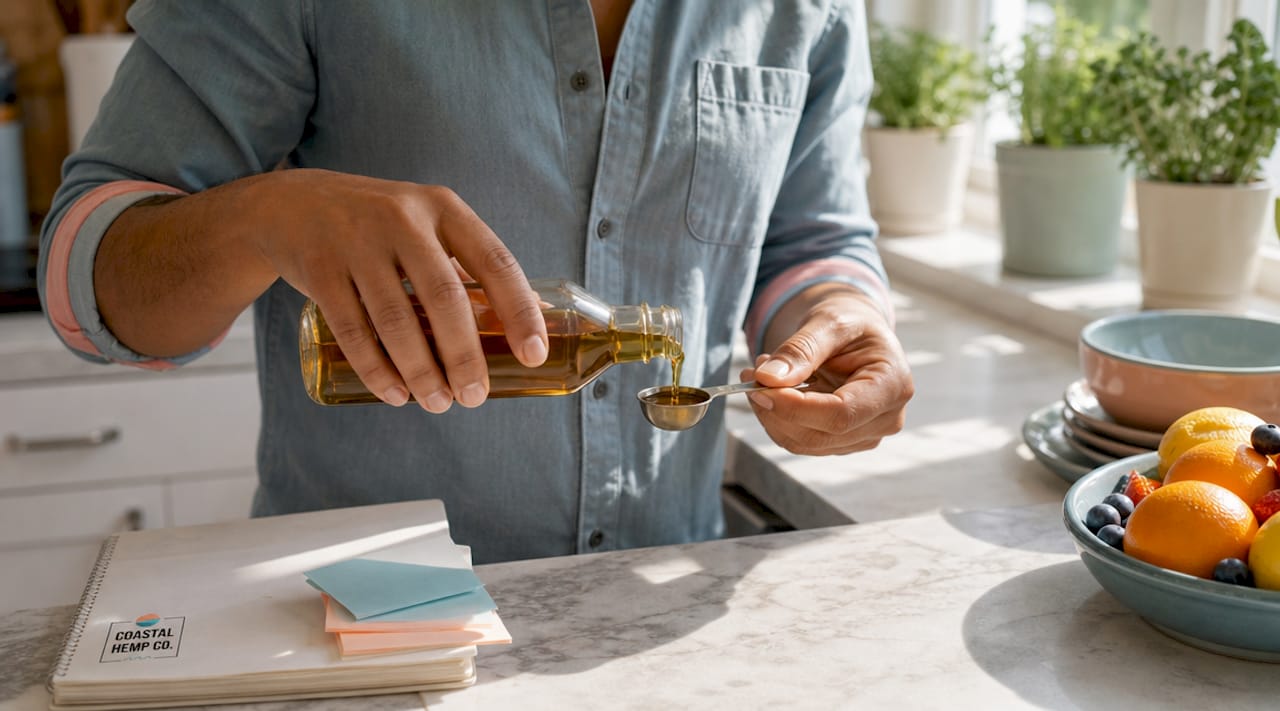
Microdosing is another framework worth knowing. The microdose range sits at approximately 0.02 to 0.05 mg per kilogram of body weight, while a therapeutic dose runs 0.15 to 0.30 mg per kilogram. Microdosing works well for people who want subtle, functional effects throughout the day without sedation or strong psychoactive influence.
2. How delivery methods affect your dose and timing
The format you choose changes everything about how your dose performs. Tinctures carry roughly 35% bioavailability, meaning more of the active compound reaches your bloodstream compared to soft gels or capsules. Edibles and gummies pass through the digestive system, which slows onset and reduces the percentage of the compound that becomes active.
Here is how the main formats compare:
- Sublingual tinctures: Onset in 15 to 45 minutes. High bioavailability. Best for precise dosing and faster stress relief.
- Gummies and capsules: Onset in 45 to 90 minutes. Lower bioavailability. Better for sustained, longer-lasting effects. See the hemp edibles guide for format-specific advice.
- Topicals: Localized effect only. No systemic absorption. Not suitable for stress or mood-related goals.
- Water-soluble hemp: Emerging format with higher bioavailability than standard oils. Onset is faster than edibles. Useful for balanced hemp beverages and on-the-go dosing.
The practical implication is straightforward. If you take a gummy and feel nothing after 30 minutes, do not take another one. The compound is still processing. Doubling up too early is one of the most common mistakes new users make, and it leads to overshooting the effective dose.
Pro Tip: If you are switching from tinctures to edibles, reduce your dose by 20 to 30 percent initially. The slower onset and different absorption rate mean your previous dose may feel stronger in edible form.
3. Titration timing and how to track your progress
Skipping titration and starting at a high dose increases the risk of side effects and makes it nearly impossible to identify what dose is actually working. The correct approach is to begin at 5 to 10 mg daily and increase by 5 mg increments only after 3 to 5 days at the current dose with no meaningful effect.
Follow this sequence for clean, reliable titration:
- Set a baseline dose based on your weight and goal using the framework above.
- Hold that dose for 3 to 5 days before making any changes. Resist the urge to adjust early.
- Keep a dosage journal. Log the time, dose, product, food intake, and how you felt two hours later. This data is what separates guesswork from a real protocol.
- Increase by 5 mg if you notice no effect after the hold period. Increase by 10 to 20 percent if you are working with weight-based milligram-per-kilogram calculations.
- Evaluate at the 4 to 6 week mark. A new dosing regimen needs at least 4 to 6 weeks to show its full effect, particularly for chronic stress or sleep issues.
- Note the time of day. Morning doses work well for daytime stress management. Evening doses, especially with CBN-containing products like nighttime gummies, are better suited for sleep support.
- Account for food. CBD taken with a meal containing healthy fats significantly improves absorption. Fat-soluble cannabinoids process more efficiently when paired with avocado, olive oil, or nuts.
Pro Tip: Dose at the same time each day under the same conditions. Consistent timing gives you cleaner data on what is working. Changing multiple variables at once makes it impossible to know what caused a shift in effect.
4. Side effects and safety considerations
High doses over 300 mg daily may cause drowsiness, dry mouth, or digestive discomfort. Most users never approach that threshold, and most side effects are mild and manageable through simple dose adjustments. Knowing what to watch for keeps you safe and in control.
Common side effects and how to manage them:
- Drowsiness: Usually a sign the dose is too high or taken at the wrong time. Reduce by 5 mg or shift to an evening dose.
- Dry mouth: Increase water intake. This is a known cannabinoid receptor response and typically fades with consistent use.
- Digestive discomfort: Often tied to the carrier oil in tinctures or the sugar content in gummies. Try a different product format or take with food.
- Lightheadedness: Usually occurs when standing quickly after a dose. Rest for a few minutes. This is more common with higher doses.
Drug interactions are a real concern. Hemp-derived cannabinoids are metabolized by the CYP450 enzyme system in the liver, the same pathway used by many prescription medications including blood thinners and antidepressants. If you take any prescription medication, consult a healthcare provider before starting a hemp supplement regimen. This is not optional advice.
Product quality also determines safety. Always choose products with a current Certificate of Analysis from an independent third-party lab. The COA confirms cannabinoid content, confirms the absence of pesticides and heavy metals, and verifies that THC levels are within legal limits.
5. Personalizing your dose based on lifestyle and individual factors
Dosing hemp alternatives is less about fixed numbers and more about an adaptive process tailored to personal responses and changing conditions. Metabolism speed, body composition, stress levels, and concurrent medications all shift your effective dose over time.
Key factors that require dose adjustment:
- Fast metabolism: You may need slightly higher doses or more frequent dosing intervals because cannabinoids clear your system faster.
- Tolerance buildup: Regular users sometimes notice diminishing effects after several weeks. A 48 to 72 hour tolerance break often restores sensitivity without requiring a permanent dose increase.
- Concurrent medications: Some medications slow cannabinoid metabolism, making lower doses more potent. Others speed it up, reducing effectiveness.
- Activity level: High-intensity training increases metabolic rate and may reduce the duration of effects. Athletes often find they need to dose closer to their activity window.
- Stress fluctuations: Acute stress periods may call for a temporary dose increase. Return to your baseline once the stressor passes.
“Consistent timing and conditions for dosing provide cleaner data on effects than frequent or large dose changes, improving personalization accuracy.” Source: THCA Dosing Demystified
The most effective personalization tool is your dosage journal. Body signals like sleep quality, mood stability, and energy levels tell you more than any standard chart. Treat those signals as data and adjust accordingly.
Key takeaways
Effective hemp alternative dosage is a personalized, incremental process that requires consistent tracking and patience to produce reliable wellness results.
| Point | Details |
|---|---|
| Start with weight-based dosing | Use 1 to 6 mg per 10 lbs of body weight as your initial calculation. |
| Match format to your goal | Tinctures offer faster onset; edibles provide longer-lasting effects. |
| Titrate slowly over weeks | Increase by 5 mg every 3 to 5 days and evaluate fully at 4 to 6 weeks. |
| Track everything consistently | Log dose, timing, food, and effects to build a reliable personal protocol. |
| Consult a provider for medications | CYP450 interactions make professional guidance necessary for prescription users. |
What I have learned about hemp dosing after years of watching people get it wrong
I have seen the same mistake repeated constantly. Someone tries a hemp product, feels nothing on day two, doubles the dose, feels too much on day three, and quits by the end of the week. They blame the product. The product was fine. The process was broken.
The science on cannabinoid titration is clear, but the patience it requires runs against how most people approach new supplements. We are conditioned to expect fast, obvious results. Hemp alternatives, particularly for stress and sleep, often work subtly at first. The shift happens gradually, and if you are not tracking it, you miss it entirely.
What actually works is treating your dosing protocol the way a good clinician would treat a new medication. You set a starting point, hold it long enough to gather real data, and adjust based on what you observe. The Coastalhemp journal has covered this approach across multiple product categories, and the pattern holds whether you are using a broad-spectrum CBD oil or a functional mushroom edible.
One thing I want to push back on is the idea that higher doses are always better. Most people find their sweet spot well below 50 mg daily. Going higher without a clear reason adds cost and side effect risk without proportional benefit. The goal is the minimum effective dose, not the maximum tolerable one.
The evolving user communities around hemp in 2026 are getting smarter about this. More people are sharing dosage journals, comparing notes on product formats, and asking better questions before they buy. That is the right direction.
— John
Find the right hemp products and dosing support at Coastalhemp

Coastalhemp carries a curated range of hemp-derived products built for real wellness goals, from broad-spectrum CBD mint oil for precise sublingual dosing to mushroom gummies for adaptogenic support. Every product on the site comes with third-party lab testing and clear potency information so you can apply the dosage frameworks in this guide with confidence. Whether you are starting your first hemp regimen or refining an existing one, Coastalhemp gives you the product quality and transparency to do it right. Browse the full catalog and use the dosing information on each product page as your starting reference point.
FAQ
What is the best starting dose for hemp alternatives?
Most adults start at 5 to 10 mg daily and increase by 5 mg every 3 to 5 days until they find their effective dose. Body weight, product format, and wellness goal all influence where your ideal dose lands.
How long does it take for hemp alternatives to work?
Tinctures typically take 15 to 45 minutes to produce effects, while edibles and capsules take 45 to 90 minutes. For chronic stress or sleep issues, consistent daily use for 2 to 4 weeks is often needed before full effects are apparent.
Does body weight determine your hemp dose?
Body weight is a reliable starting framework. The standard guideline is 1 to 6 mg of CBD per 10 pounds of body weight, adjusted upward or downward based on metabolism, tolerance, and the potency of the specific product.
Can you build a tolerance to hemp alternatives?
Yes. Regular users can develop tolerance over time, which reduces the perceived effect at a consistent dose. A 48 to 72 hour break from dosing often resets sensitivity without requiring a permanent dose increase.
When should you consult a doctor about hemp dosing?
Consult a healthcare provider before starting hemp supplements if you take any prescription medications, particularly blood thinners, antidepressants, or anti-seizure drugs. Hemp-derived cannabinoids interact with the CYP450 enzyme system and can affect how those medications are metabolized.



Comments