
THCA vs THC: Science First Checklist to Verify Total THC
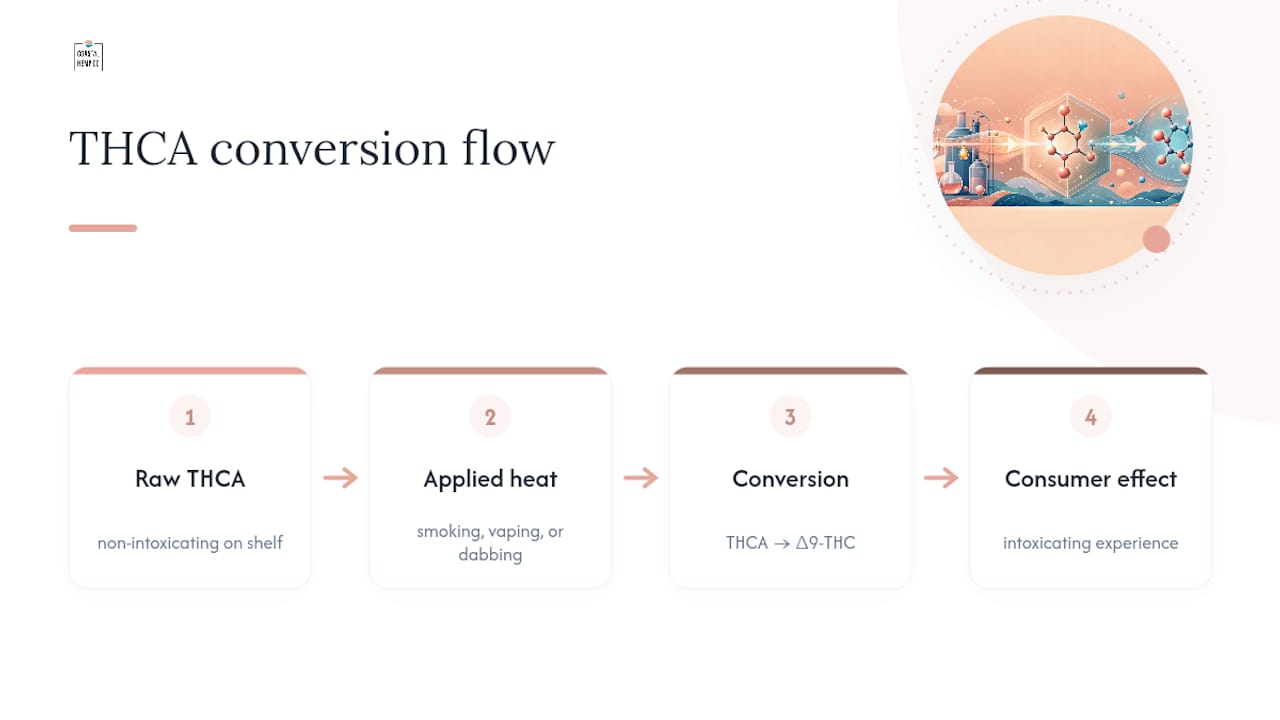
THCA is not THC. It is the non-intoxicating acidic compound found in raw and fresh cannabis, and it does not typically get you high on its own. THC, specifically Δ9-THC, is the psychoactive compound your body actually feels, and it only forms after THCA loses a carboxyl group through heat, a process called decarboxylation. Smoke it, vape it, or bake it into an edible, and that conversion happens fast.
TL;DR:
- Most heated consumption methods convert only part of THCA into psychoactive THC, meaning some products may still contain unconverted, non-intoxicating THCA after use.
- Regulatory definitions are shifting toward calculating total THC, which includes potential conversion from THCA, risking non-compliance for products previously considered legal.
- Laboratory reports should separately list Δ9-THC, THCA, and total THC; relying on only one number can mislead consumers about a product’s actual potency and effects.
- Without proper decarboxylation, raw cannabis or THCA concentrates used in edibles produce unpredictable, weak effects because most THCA remains unconverted.
- Consuming THCA products with the understanding that heating will produce THC is crucial, and storing them in cool, dark places helps delay their conversion to intoxicating THC.
Table of Contents
- THCA vs THC: The Core Differences at a Glance
- How Heat Turns THCA Into THC
- Why THC Gets You High and THCA Usually Doesn’t
- What the Research Actually Says About Medical Benefits
- Is THCA Legal? How Regulations Treat Conversion
- Buying and Using THCA Products Safely
- Why Consumer Education Matters More Than Marketing Claims
- Ready to Explore Tested THCA Products?
- Sources
- FAQ
- Coastalhemp’s Take on the THCA Craze
THCA vs THC: The Core Differences at a Glance
The molecular difference sounds small: one extra carboxyl group. The practical difference is the whole story. That single structural detail decides whether a compound gets you high, how it shows up on a lab report, and even whether a hemp product stays on the right side of federal law.
Raw cannabis plants produce THCA, not THC, as their dominant cannabinoid. THC only becomes the primary compound after heat strips away that carboxyl group. Here’s how the two stack up side by side:
- Chemical structure: THCA carries an extra carboxyl ring (COOH group) attached to its molecular structure; THC lacks it. That group is what makes THCA too bulky to fit snugly into your body’s cannabinoid receptors.
- Psychoactivity: THCA is generally non-intoxicating in its raw form. THC is the compound responsible for the euphoric, mind-altering “high” associated with cannabis.
- Where each is found: Fresh, undried, and unheated cannabis flower is loaded with THCA. Cured flower still holds plenty of THCA, but any heat source (a lighter, an oven, direct sunlight over time) starts converting it to THC.
- Legal status: Federal and many state cannabis laws are written around Δ9-THC specifically, which is why hemp-derived, high-THCA products have occupied something of a gray zone. Regulatory language is shifting to close that gap, which we cover in detail further down.
- Detection: Lab reports and drug screens can pick up both compounds, and heating a sample during either use or testing can convert THCA into detectable THC.
This is why “THCA or THC” is not really a fair either/or question. They are stages of the same molecule, and how you use a product decides which one your body actually receives. A jar of high-THCA flower and a jar of high-THC flower can, in theory, be biochemically identical raw material at two different points in time.
How Heat Turns THCA Into THC
Decarboxylation is the chemical reaction that removes the carboxyl group from THCA, reshaping the molecule so it fits into your body’s CB1 receptors the way THC does. Without that step, THCA is molecularly too large and the wrong shape to bind efficiently, which is the main reason it doesn’t produce a noticeable high on its own.
Temperature and time both matter, and the relationship isn’t linear. Laboratory data shows THCA converting to THC in roughly 30 minutes at 230°F (110°C), with conversion happening dramatically faster at higher temperatures, the kind you hit almost instantly with a lighter flame or a vape coil.
| Method | Approximate temperature | Time to convert |
|---|---|---|
| Baking (for edibles) | 230°F (110°C) | roughly 30 minutes |
| Vaping | higher temperatures | Seconds |
| Smoking | very high temperatures reached when smoking | Nearly instant |
| Room temperature storage | Ambient | Weeks to months (slow, partial) |
Smoking and vaping convert THCA almost immediately, but not completely. Depending on the method and equipment, somewhere between 30% and 70% of the THCA in a given sample may actually convert to THC during a single session, with the rest passing through unconverted. That’s part of why THCA can still turn up in blood or urine samples even after someone has smoked or vaped a product, not just eaten raw flower.
For edibles, this cuts the other way. Raw cannabis added straight to a recipe without a decarboxylation step first will produce a weak, unpredictable edible because most of the THCA never converts. That’s why serious edible-makers decarb their flower in the oven before infusing butter or oil, and it’s why store-bought THC edibles are made from already-decarbed extract rather than raw plant material.
Pro Tip: If you’re storing THCA flower or concentrate and want to keep it non-intoxicating for as long as possible, keep it cool, dark, and sealed. Heat, light, and time all nudge the conversion process along even without an open flame.
Why THC Gets You High and THCA Usually Doesn’t
The high from THC starts with a lock-and-key problem. THC’s molecular shape fits neatly into CB1 receptors, concentrated heavily in the brain and central nervous system, and that binding triggers the cascade of effects most people recognize as being “high”: altered perception, euphoria, changes in appetite, and shifts in short-term memory.
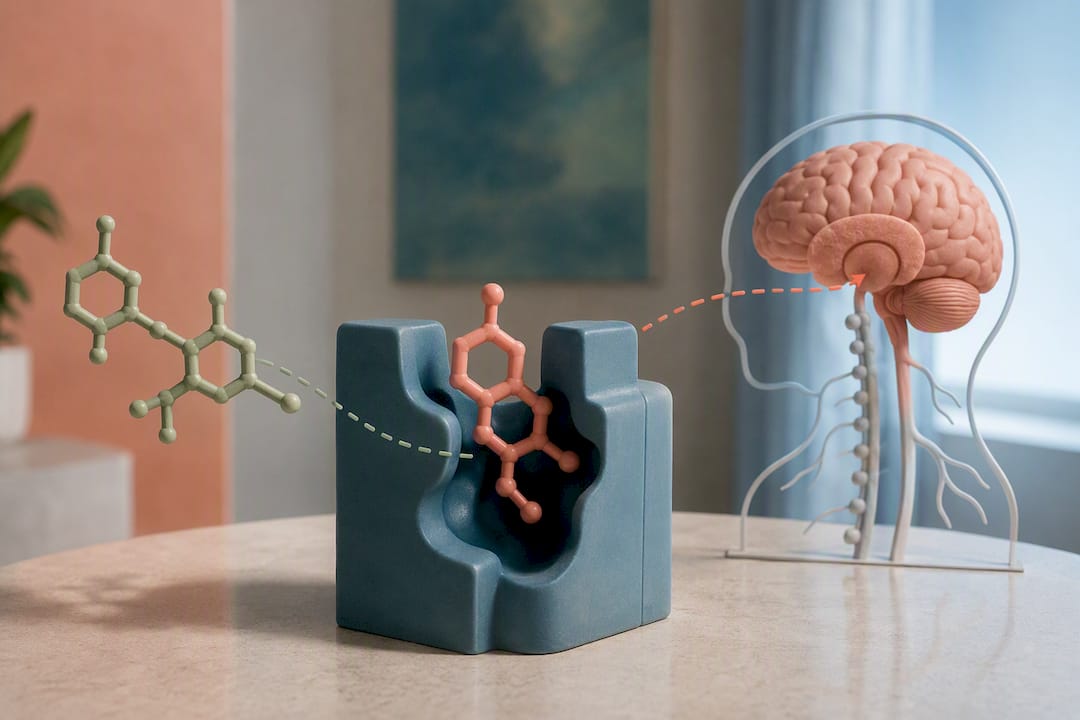
THCA’s extra carboxyl group changes its shape just enough to block that fit. It doesn’t bind CB1 receptors with anywhere near the same efficiency, which is the core reason raw cannabis and unheated THCA products don’t typically produce intoxication.
That doesn’t mean THCA is biologically inert. Here’s what current research actually shows about each compound’s activity in the body:
- THCA appears to interact with other molecular targets tied to inflammatory pathways, based on in vitro and limited animal research, separate from the CB1 pathway THC dominates.
- THC’s psychoactive and physiological effects are well documented by public health authorities, including its potential for dependence and measurable impairment.
- Standard drug tests are built around detecting THC metabolites, but because smoking and vaping only partially convert THCA, unconverted THCA can also be present in a user’s system for a window after use.
- Individual metabolism, body fat percentage, frequency of use, and the specific product consumed all shift how quickly THC clears the body and how strong the impairment feels at a given dose.
One detail surprises a lot of people: heating a THCA sample during standard gas chromatography lab testing will itself convert some THCA into THC, purely as an artifact of the testing method. That’s exactly why reputable labs report Δ9-THC, THCA, and a separate calculated “total THC” figure that accounts for what decarboxylation would produce. A certificate of analysis that only lists Δ9-THC and skips THCA and total THC is giving you an incomplete picture of what a product will actually do once it’s heated.
Impairment risk, in practice, comes down to conversion percentage and individual sensitivity. Someone dabbing a THCA concentrate at high heat is going to convert far more of it to THC in a single hit than someone who nibbles a piece of unheated, raw cannabis leaf. Same starting compound, very different outcomes.
What the Research Actually Says About Medical Benefits
THC has decades of clinical use behind it. It’s the active compound in FDA-approved medications used for chemotherapy-induced nausea and appetite stimulation, and it has a substantial body of research behind its role in certain pain contexts. That track record is why THC remains the benchmark against which every other cannabinoid gets measured.
THCA’s research picture looks different: promising, but early. A comprehensive review of Δ9-tetrahydrocannabinolic acid A found signals of anti-inflammatory, neuroprotective, and immunomodulatory activity in laboratory and animal studies. None of that rises to the level of the human clinical trial data supporting THC’s established uses.
That inconsistency in terminology is a bigger problem than it sounds. When older studies say “cannabis” or “THC” without specifying whether the tested material was raw, decarbed, or a mixture of both, it becomes hard to credit any specific benefit to THCA itself rather than to trace THC formed during preparation or storage.
Here’s a fair summary of where the evidence actually stands for each compound:
- THC: Established clinical support for nausea control, appetite stimulation, and specific pain applications, backed by human trials and FDA-approved formulations.
- THCA: Early-stage in vitro and animal evidence for anti-inflammatory and neuroprotective activity, with essentially no large-scale human clinical trials to confirm those effects at typical consumer doses.
- Shared uncertainty: Even government health bodies acknowledge the research gap. The National Center for Complementary and Integrative Health notes that research on many individual cannabinoids, including compounds like THCA, remains limited and ongoing.
- Sample size problem: Much of the preclinical work on THCA comes from small animal studies or cell cultures, not the randomized, controlled human trials that anchor THC’s clinical reputation.
None of this means THCA is a dead end. It means the honest answer to “is THCA stronger than Δ9-THC” for therapeutic purposes is that we don’t yet have enough human data to say. THCA shows real promise in early research. It just hasn’t earned the same clinical track record THC has built over fifty years of study.
Is THCA Legal? How Regulations Treat Conversion
Cannabis law in the United States was largely written around Δ9-THC by name, which created an opening: hemp-derived products that test low on Δ9-THC but high on THCA have been sold as compliant, even though heating them produces the same intoxicating compound regulators intended to restrict. That gap is exactly why THCA flower and concentrates became such a fast-growing category in hemp retail.
Regulators have started closing it. Several proposed and enacted rules now calculate compliance using “total THC,” a figure that accounts for what a product’s THCA would become after decarboxylation, rather than measuring Δ9-THC alone. That shift can push a product that was legal on paper into a gray zone or outright non-compliance, depending on how a given jurisdiction defines the calculation.
A few practical realities follow from this:
- Check the total THC figure, not just Δ9-THC, on any certificate of analysis before assuming a THCA-heavy product is automatically compliant in your state.
- Understand that drug tests target THC metabolites, and because smoking or vaping converts a meaningful share of THCA into THC, using a “THCA product” doesn’t guarantee a clean test.
- Track your own state’s specific rules, since THCA legality varies by jurisdiction and is actively being revisited as regulators catch up to the total-THC issue.
- Favor labs that report Δ9-THC, THCA, and calculated total THC separately, since a report listing only one of those numbers isn’t giving you the full compliance picture.
For a deeper look at how these shifting definitions affect product availability, Coastalhemp’s guide to hemp derived THCA products walks through what’s changed heading into 2026. If drug testing is your main concern, the hemp alternatives drug test guide breaks down detection windows in more detail.
Buying and Using THCA Products Safely
Chemistry and regulation only matter if they change what you actually do at checkout. Start with the paperwork: any THCA product worth buying should come with a current certificate of analysis showing Δ9-THC, THCA, and total THC as separate line items, not a single vague “THC” number.
- Buy only from vendors that publish third-party lab reports for the specific batch you’re purchasing, not a generic report for the product line.
- If you want the calming or anti-inflammatory potential researchers associate with unconverted THCA, avoid heating the product entirely and start with a small amount to gauge your own response.
- Store THCA concentrates and flower in a cool, dark, airtight container. Heat, light, and time all accelerate conversion even without a flame.
- Skip THCA products altogether if you’re subject to workplace drug testing, plan to drive soon after use, or have a health condition where cannabinoid interactions are a concern, since even partial conversion can register on a screen or produce mild impairment.
Pro Tip: If you’re new to THCA and unsure how a product will affect you once heated, treat your first dose the way you’d treat a new THC edible: start low, wait at least an hour before taking more, and never combine it with driving or operating machinery.
Coastalhemp’s guide on THCA gummy effects covers dosing specifics for edible formats, where conversion has already happened during manufacturing and the potency is more predictable than raw flower.
Why Consumer Education Matters More Than Marketing Claims
The THCA market grew largely because of a legal technicality, not because consumers fully understood the chemistry behind it. That’s a problem worth naming plainly: a lot of the marketing around “non-intoxicating THCA flower” has quietly skipped over the fact that lighting it on fire defeats the entire premise.
Coastalhemp built its approach to hemp-derived cannabinoids around partnerships with growers and brands willing to publish full lab data, including total THC figures, not just the Δ9 number that makes a product look compliant on paper. That transparency matters because the gap between what a label claims and what a product actually delivers is exactly where consumers get burned, sometimes literally failing a drug test they thought they’d avoided.
Products like the Habit THCA Sauce Ceramic Coil Cartridge, Trippy Sugar THCa Diamonds, and the Modern Herb THCa Live Resin Pod Starter Kit are sold with the understanding that vaping or dabbing these forms will convert THCA into THC. Coastalhemp lists lab reports for shoppers to check total THC, Δ9-THC, and THCA content before they buy, not after.
Ready to Explore Tested THCA Products?
Plenty of hemp shops will sell you a THCA product with a vague label and call it a day. Coastalhemp’s difference is straightforward: every THCA listing links to a batch-specific lab report showing Δ9-THC, THCA, and calculated total THC, so you know what you’re buying before it ever gets near heat.
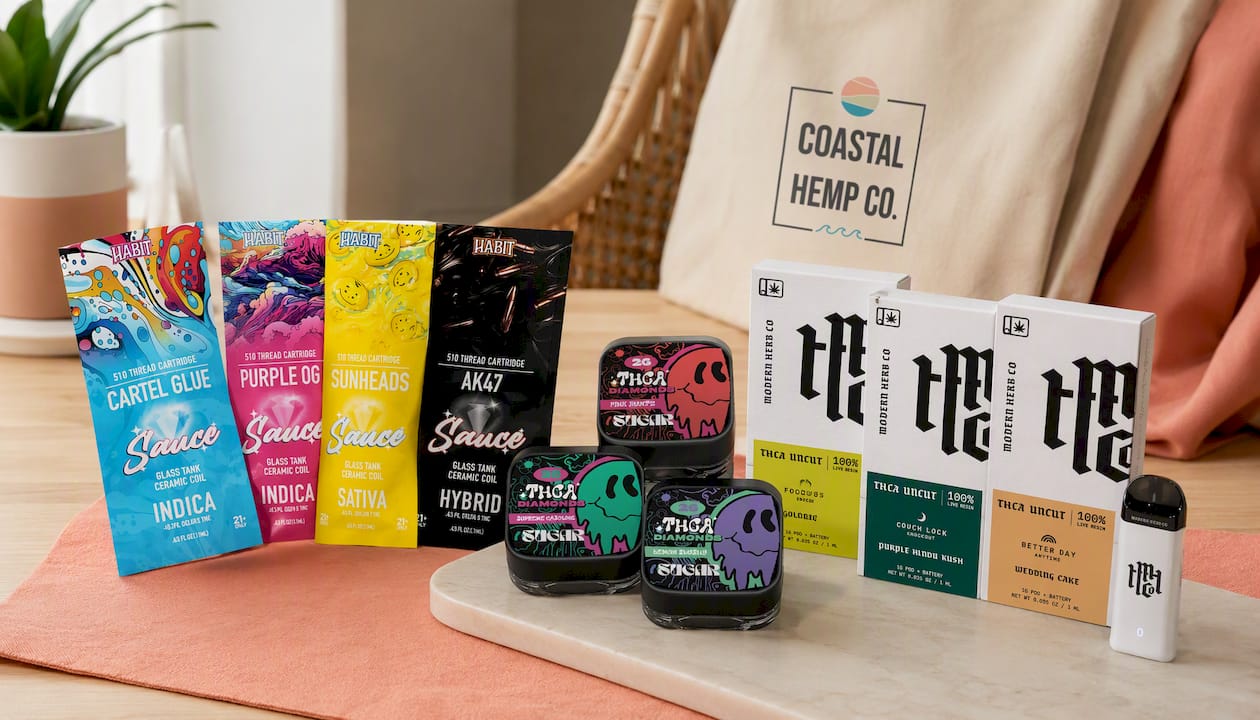
If you’re leaning toward something for vaping, the Habit THCA Sauce Ceramic Coil Cartridge is built for smooth, controlled sessions with clear potency data on file. Prefer concentrates? The Trippy Sugar THCa Diamonds offer a potent, dabbable option for experienced users who want to know exactly what they’re working with. New to THCA entirely? The Modern Herb THCa Live Resin Pod Starter Kit is designed as an entry point, pairing simple equipment with the same lab transparency Coastalhemp applies across its catalog.
Before you buy any THCA product, anywhere, pull up the certificate of analysis and check for total THC. Then browse Coastalhemp’s current lineup and pick the format that fits how you actually plan to use it.
This article is general information, not a substitute for advice from a qualified doctor. Consult a qualified healthcare professional about your own circumstances before acting on anything here.
Sources
FAQ
Is THCA the Same Thing as THC?
No. THCA is the acidic precursor found in raw cannabis, while THC (specifically Δ9-THC) is the psychoactive compound produced once THCA loses a carboxyl group through heat, a process called decarboxylation.
Does THCA Get You High?
Raw, unheated THCA is generally non-intoxicating because its molecular shape doesn’t bind well to CB1 receptors. Heating it through smoking, vaping, or baking converts a meaningful portion into THC, which does cause a high.
Is THCA Stronger Than Delta 9 THC?
Not in the way most people mean “stronger.” THCA doesn’t produce intoxication on its own, so it isn’t more psychoactive than Δ9-THC. Its potential benefits sit in early-stage anti-inflammatory and neuroprotective research rather than potency for getting high.
Which Is Stronger, Delta 8 or Delta 9?
Delta 9 THC is generally considered the more potent psychoactive compound, producing stronger intoxicating effects, while Delta 8 THC tends to produce milder, more subtle effects.
Can THCA Show Up on a Drug Test?
Yes. Because smoking or vaping only partially converts THCA into THC, unconverted THCA and THC metabolites can both be present in the body, and standard screens target those metabolites. For more on detection windows, see Coastalhemp’s hemp alternatives drug test guide.
How Long Does It Take THCA to Convert to THC?
Lab data shows conversion in about half an hour at moderate heating temperatures, while the higher temperatures used in smoking or vaping can convert THCA to THC much faster, in seconds.
Coastalhemp’s Take on the THCA Craze
The THCA boom happened for a legal reason, not a scientific one. Once retailers realized they could sell high-potency products that tested “compliant” on Δ9-THC alone, the market flooded with THCA flower and concentrates marketed as some kind of loophole product, non-intoxicating on the shelf, fully psychoactive the moment someone lit it.
What gets lost in that marketing is that THCA was never designed to stay THCA. It’s a precursor. Cannabis plants produce it as a stable, non-intoxicating form specifically because raw plant material needs to survive sunlight, oxidation, and time without immediately converting. The moment a consumer applies heat, which is the entire point of smoking, vaping, or dabbing, the product stops being the thing the label technically described.
That’s not an argument against THCA products. It’s an argument against selling them without honest total-THC data. A THCA cartridge, diamond, or resin pod is a perfectly reasonable product for an adult who understands that vaping it will produce a THC-level experience despite the label emphasizing THCA. The problem is retailers who let customers believe otherwise, either through vague labeling or certificates of analysis that conveniently omit the total-THC calculation.
The honest path forward is transparency, not avoidance. THCA research is genuinely interesting, and the early anti-inflammatory signals deserve more human trials, not less attention. But consumers deserve to know, before they buy, exactly what a product will do once it meets heat. That’s a labeling standard, not a chemistry problem, and it’s entirely solvable if brands choose to solve it.
— John


Comments