
What Is the Hemp Plant? A Buyer's Guide
Under U.S. federal law), hemp is Cannabis sativa L. containing no more than 0.3% delta-9 THC on a dry weight basis (7 U.S.C. §1639o). That single threshold is what separates a legal hemp gummy from a controlled substance. Before you buy any hemp-derived edible or concentrate online, pull up the product’s Certificate of Analysis (COA), confirm the delta-9 THC reading, and verify the lab is a real third-party facility. That step takes two minutes and protects you from mislabeled products.
One regulatory change every shopper needs to know: starting November 12, 2026, the federal definition shifts from delta-9 THC alone to total THC, which includes THCA. Products that currently pass the 0.3% delta-9 test may not pass the new total-THC test. More on what that means for your cart below.
- Current rule: ≤0.3% delta-9 THC on a dry weight basis
- Rule effective Nov 12, 2026: ≤0.3% total THC (delta-9 + THCA combined) on a dry weight basis
- New exclusion: final hemp-derived cannabinoid products may not exceed a very low amount of THC per container
- Also excluded after Nov 12, 2026: cannabinoids synthesized outside the cannabis plant
Table of Contents
- What is the hemp plant, botanically speaking?
- Which cannabinoids and compounds will you see on labels?
- How are hemp products made, from plant to edible?
- Is hemp legal in the U.S., and what changes in 2026?
- How to choose safe hemp products online: a buyer checklist
- What does the science actually say about hemp-derived products?
- Hemp cultivation and its environmental footprint
- Key Takeaways
- Why quality and transparency define the hemp buying experience
- Lab-tested hemp edibles worth exploring at Coastalhemp
- Useful sources
- FAQ
What is the hemp plant, botanically speaking?
Hemp and marijuana are the same species, Cannabis sativa L. The legal distinction is purely chemical: hemp stays at or below the 0.3% THC threshold; marijuana exceeds it. Growers achieve this by selecting cultivars bred for low THC and, depending on the intended use, high CBD, high fiber yield, or high seed oil content.
Key plant parts and their product relevance:
- Flowers (buds): Trichomes on the flower surface concentrate cannabinoids and terpenes. Flowers are the primary source for extracts used in edibles, tinctures, and concentrates.
- Leaves: Contain lower cannabinoid levels; sometimes used in broad-spectrum extracts.
- Stalk and fiber: Used for textiles, paper, and construction materials, not for edibles.
- Seeds: Rich in omega fatty acids and protein; hemp seed oil is a nutritional product but contains negligible cannabinoids.
For wellness edibles and concentrates, flower quality drives potency. Seed oil, while nutritious, is not a cannabinoid source. When a product claims CBD or THCA content, the extract should come from flower, not seed. You can learn more about hemp vs. marijuana differences and how cultivar selection affects what ends up in your product.
Pro Tip: For edibles and extracts, ask whether the cannabinoid source is flower-derived or seed-derived. Flower-derived extracts carry the terpene and cannabinoid profiles that actually influence effects; seed oil does not.
Which cannabinoids and compounds will you see on labels?
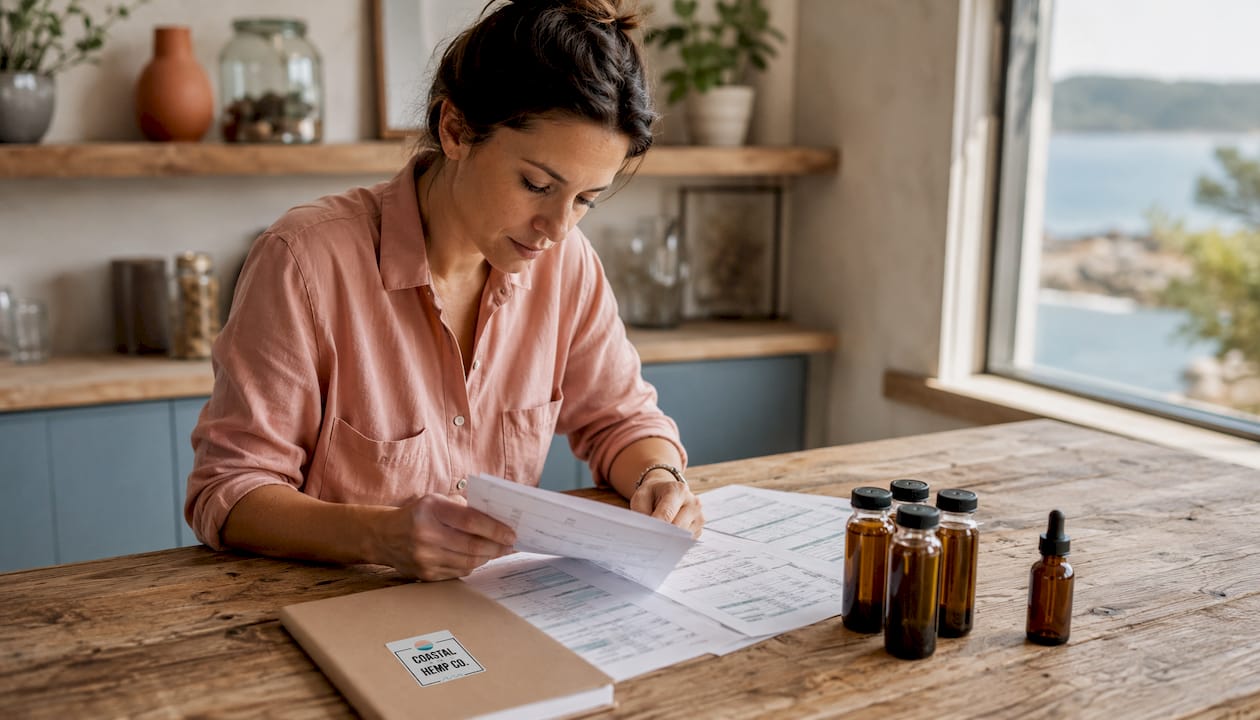
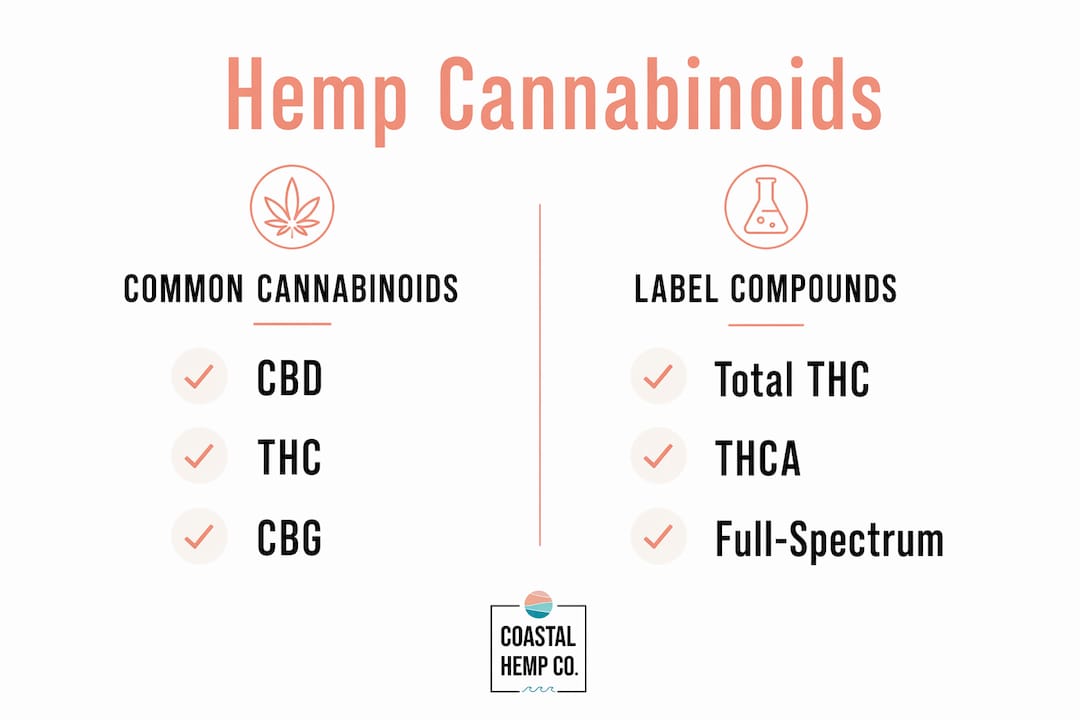
Reading a hemp product label confidently starts with knowing what each compound name actually means.
Major cannabinoids:
- CBD (cannabidiol): Non-psychoactive; most studied for anxiety and sleep support.
- Delta-9 THC: The primary psychoactive cannabinoid; federally limited to ≤0.3% in hemp.
- THCA (tetrahydrocannabinolic acid): The acidic, non-decarboxylated precursor to delta-9 THC. Raw THCA is not psychoactive, but it converts to delta-9 THC when heated, which is why total-THC testing accounts for both.
- Delta-8 THC: A THC isomer with milder psychoactive effects; present in trace amounts naturally but often produced from CBD via chemical conversion.
- THCv (tetrahydrocannabivarin): Associated with appetite suppression and alertness at lower doses.
- CBG (cannabigerol): A minor cannabinoid studied for focus and anti-inflammatory properties.
- CBN (cannabinol): A mildly sedating cannabinoid often marketed for sleep.
Terpenes are the aromatic compounds that give each cultivar its scent and may modulate perceived effects. Myrcene tends toward relaxation, limonene toward mood lift, and linalool toward calm. Explore hemp terpene profiles for a deeper breakdown.
Label terms decoded: Full-spectrum extracts contain the full range of cannabinoids and terpenes from the plant, including trace delta-9 THC. Broad-spectrum removes delta-9 THC while retaining other cannabinoids and terpenes. Isolate is a single purified compound, typically CBD, with no other plant material. Full-spectrum products are generally considered to produce stronger combined effects due to the entourage effect, while isolates offer predictable, single-compound dosing.
How are hemp products made, from plant to edible?
The extraction method determines purity, potency, and contaminant risk. Here is how the most common methods compare:
| Extraction Method | Common Contaminant Risk | Typical Product Uses | Output Type |
|---|---|---|---|
| CO2 extraction | Low; no solvent residue | Tinctures, vape distillates, edibles | Full-spectrum oil or isolate |
| Ethanol extraction | Low-moderate; ethanol residue if incomplete | Full-spectrum oils, tinctures | Full-spectrum or broad-spectrum |
| Hydrocarbon (butane/propane) | Higher; residual solvents if not purged | Live resin, THCA concentrates | Full-spectrum concentrate |
| Lipid/olive oil infusion | Very low; no solvents | Home infusions, basic tinctures | Full-spectrum, low potency |
CO2 and ethanol are the most common methods for commercial edibles. Hydrocarbon extraction produces the live resin and THCA diamond concentrates you will see in higher-potency products. Lipid infusion is simple but yields lower cannabinoid concentrations.
Extraction outputs map directly to product formats: distillates and isolates go into gummies and capsules for precise dosing; full-spectrum oils become tinctures; live resin and THCA concentrates are used in vape cartridges and dab products. Functional mushroom blends combine hemp extracts with adaptogenic mushroom powders in the same edible base.
Pro Tip: When buying gummies, ask whether the maker used distillate, isolate, or full-spectrum oil. Then request a COA that includes solvent-residue and pesticide screens, not just cannabinoid potency. A potency-only COA misses the contaminant picture entirely.
Is hemp legal in the U.S., and what changes in 2026?
Hemp is federally legal under 7 U.S.C. §1639o. The 2018 Farm Bill removed hemp from the Controlled Substances Act’s Schedule I, making hemp-derived products federally accessible and subject to USDA and FDA oversight rather than DEA enforcement.
The current rule measures only delta-9 THC. That created what regulators called the “farm bill loophole”: products with high THCA but low delta-9 THC technically qualified as hemp even though heating them produced significant psychoactive THC.
Effective November 12, 2026, the federal hemp definition changes to a total THC limit of less than 0.3% on a dry weight basis, combining delta-9 THC and THCA. Final hemp-derived cannabinoid products will also be capped at 0.4 mg of THC per container. Cannabinoids that cannot be naturally produced by the cannabis plant, or that were synthesized outside the plant, are explicitly excluded.
For shoppers, this means high-THCA products currently on shelves may be reformulated or discontinued after November 2026. COAs issued before that date that only report delta-9 THC will not be sufficient to confirm compliance under the new rule. Look for COAs that report delta-9 THC, THCA, and calculated total THC separately. The 2026 federal THC update covers state-by-state implications in more detail.
How to choose safe hemp products online: a buyer checklist
Product labels often differ from actual contents, which makes independent verification non-negotiable.
Before you buy, check every product for:
- Third-party COA: Issued by an accredited lab, not the brand’s own facility. Confirm the test date is recent and the lot number matches the product you are ordering.
- Full cannabinoid panel: COA should list delta-9 THC, THCA, CBD, and total THC at minimum.
- Contaminant screens: Pesticides, heavy metals, residual solvents, and microbial contamination should all appear on the COA. A potency-only report is incomplete.
- Organic and GMP certifications: USDA Organic certification is meaningful and audited. “GMP-compliant” without a named certifying body is a marketing claim; look for NSF or similar third-party GMP verification.
- Dosage starting point: For edibles, 5–10 mg CBD-equivalent is a widely cited starting range. Increase gradually and wait at least two hours before redosing. Consult a clinician if you take medications, particularly blood thinners or antiepileptics, as cannabinoids can affect liver enzyme activity.
Storage and shelf life: Hemp edibles typically remain stable for 12–24 months when stored in a cool, dark place away from heat and humidity. Heat accelerates THCA decarboxylation, which can shift a product’s cannabinoid profile over time.
Pro Tip: Save COA PDFs and match the lot number on the COA to the lot number on your package. If a seller cannot provide a COA or the lab name is unfamiliar, treat that product as higher risk and look for sourcing transparency before purchasing.
What does the science actually say about hemp-derived products?
The honest answer is: promising in some areas, limited in others. Harvard Health notes moderate evidence for CBD’s effect on anxiety and sleep, but cautions that product quality is inconsistent and clinical data for many other claims remains mixed.
“Consumers often report benefits, but product testing and quality are inconsistent, so buyers should verify COAs.” — Harvard Health guidance on hemp-derived products
CBD’s most clinically supported application is Epidiolex, an FDA-approved drug for rare seizure disorders. For general wellness uses like anxiety, sleep, and pain, human trial data is growing but not yet definitive. Cannabinoids act on the endocannabinoid system’s CB1 and CB2 receptors, which modulate mood, sleep, and pain signaling. The mechanism is real; the dose-response in diverse human populations is still being mapped.
Common side effects include dry mouth, drowsiness, and, at higher doses, changes in liver enzyme levels. Delta-8 THC and delta-9 THC carry psychoactive effects that vary by dose and individual tolerance. Anyone on prescription medications should consult a clinician before adding hemp-derived cannabinoids to their routine.
This article is general information, not medical advice. Confirm current regulations and suitability for your situation with a qualified healthcare professional.
Hemp cultivation and its environmental footprint
Hemp is frequently cited as a low-input crop. It grows quickly, requires less water than many commodity crops, and its deep root system can help prevent soil erosion. Some growers use hemp in phytoremediation programs, where the plant absorbs heavy metals from contaminated soil, though this makes those plants unsuitable for consumption.
From a sustainability standpoint, hemp fiber and seed production have well-documented environmental advantages: lower pesticide use compared to conventional cotton, carbon sequestration during growth, and biodegradable end products. The cannabinoid-focused cultivation used for wellness products is more intensive, requiring controlled environments or careful outdoor management to maintain consistent cannabinoid profiles. Genetics, photoperiod, soil nutrients, and harvest timing all influence the final cannabinoid content, as phytocannabinoid research documents. Responsible sourcing from growers who publish their cultivation practices is one more signal of a trustworthy vendor.
Key Takeaways
Hemp is federally legal Cannabis sativa L. at ≤0.3% delta-9 THC today, shifting to a total-THC standard on November 12, 2026. This change makes COA verification the single most important step for any online hemp purchase.
| Point | Details |
|---|---|
| Federal definition | Hemp is Cannabis sativa L. with ≤0.3% delta-9 THC (7 U.S.C. §1639o); total-THC rule takes effect Nov 12, 2026. |
| COA verification | Always confirm a third-party COA with lot number, full cannabinoid panel, and contaminant screens before buying. |
| Start low on dosing | Begin at a low CBD-equivalent dose for edibles; wait two hours before increasing dose. |
| Label terms matter | Full-spectrum, broad-spectrum, and isolate describe different cannabinoid compositions with different buyer implications. |
| Coastalhemp products | Coastalhemp carries lab-tested edibles, THCA concentrates, and functional mushroom products with COAs available for review. |
Why quality and transparency define the hemp buying experience
The hemp market has matured considerably since 2018, but the gap between well-tested products and poorly labeled ones remains wide. What separates a trustworthy purchase from a risky one almost always comes down to one thing: whether the vendor treats COA transparency as a baseline standard rather than a marketing add-on.
Coastalhemp’s approach reflects that standard. Partnering with growers and brands who prioritize reproducible cannabinoid profiles, third-party lab verification, and clear dosing guidance is not a differentiator in a mature market. It is the minimum. Where Coastalhemp goes further is in product variety: carrying THCA gummies, functional mushroom edibles, CBD tinctures, and concentrates under one roof means buyers can match a product format to their specific wellness goal rather than settling for whatever a single-brand store offers.
The November 2026 total-THC change will likely thin the market. Vendors who have been relying on high-THCA formulations to stay technically within the delta-9 limit will need to reformulate or exit. Vendors who already test for total THC and publish those results will have nothing to change. That distinction is worth paying attention to when you choose where to shop.
Lab-tested hemp edibles worth exploring at Coastalhemp
Coastalhemp carries a curated range of lab-tested hemp products across every major format, from high-potency concentrates to functional mushroom edibles. Here are six products worth considering as starting points:
- Jelly THCA Live Sugar Blend Gummies | 3-Pack Bundle: Full-spectrum THCA gummies in a live sugar blend; best for experienced buyers seeking potent, terpene-rich edibles.
- Celestial Wellness | THCv Gummies | 200mg: THCv-forward gummies at 200 mg total; suited for buyers interested in alertness and appetite-modulating effects.
- Trippy Sugar THCa Diamonds 2G: A concentrate format for buyers who prefer dabbing; high THCA potency with a COA to review before use.
- Enjoyable Neuro Enhancer Gummies 2pk: A functional gummy combining neuro-support ingredients; good entry point for wellness-focused buyers new to hemp edibles.
- FLOAT Mushroom Hard Candy: Adaptogenic mushroom hard candy for on-the-go functional support without a high cannabinoid dose.
- FLOAT Mushroom Lollipops 50ct Box: Bulk mushroom lollipops for consistent daily use; practical for buyers who prefer a low-dose, steady routine.
Verify the COA for any product before your first order and start with the lowest recommended dose. Browse the full THCA flower and concentrates catalog or visit Coastalhemp to see current lab results and product availability.
Useful sources
- 7 U.S.C. §1639o — Federal hemp definition): The primary statutory text defining hemp under U.S. federal law; the authoritative reference for the 0.3% THC threshold.
- CRS brief: Hemp definition change to total-THC: Congressional Research Service analysis of the November 12, 2026 regulatory change; explains total-THC measurement and synthetic cannabinoid exclusions.
- Harvard Health: CBD products — do they work?: Accessible clinical evidence summary on CBD for anxiety, sleep, and pain; useful for setting realistic expectations.
- Harvard Health Blog: CBD — what we know and what we don’t: Covers product quality inconsistencies and the case for COA verification.
- UGA CAES Field Report: Hemp chemistry and lab results: A practical primer on THCA decarboxylation, total-THC calculation, and what to look for in a hemp lab report.
- PMC: Industrial hemp as functional food and nutraceuticals: Peer-reviewed review of hemp’s nutritional and nutraceutical applications and the current evidence gaps.
FAQ
What is the legal THC limit for hemp in the U.S.?
Currently, hemp must contain no more than 0.3% delta-9 THC on a dry weight basis under 7 U.S.C. §1639o. Starting November 12, 2026, the limit shifts to 0.3% total THC, which includes THCA.
How is hemp different from marijuana?
Hemp and marijuana are both Cannabis sativa L., distinguished legally by THC content. Hemp stays at or below the federal THC threshold; marijuana exceeds it and remains a Schedule I controlled substance under federal law.
What should a COA include for a hemp product?
A complete COA should list delta-9 THC, THCA, total THC, CBD, and other cannabinoids present, plus contaminant screens for pesticides, heavy metals, residual solvents, and microbial contamination, with a lot number matching the product.
What does “full-spectrum” mean on a hemp label?
Full-spectrum means the extract contains the full range of cannabinoids and terpenes from the plant, including trace delta-9 THC. Broad-spectrum removes delta-9 THC; isolate contains only a single purified compound, typically CBD.
What is a safe starting dose for hemp edibles?
A commonly cited starting range for edibles is 5–10 mg CBD-equivalent. Wait at least two hours before increasing the dose, and consult a clinician if you take prescription medications, particularly blood thinners or antiepileptics.


Comments