
Hemp Product Categories Explained: Your 2026 Guide
Hemp is defined as Cannabis sativa L. containing less than 0.3% delta-9 THC by dry weight under federal law, which places it in an entirely different legal class from marijuana. That single threshold determines what you can legally buy, ship, and use across most of the United States. Understanding what are hemp product categories explained properly means knowing that the plant produces far more than CBD oil. Hemp goods now span flower, edibles, concentrates, tinctures, topicals, and a wide range of industrial products, each serving a distinct purpose for wellness, recreation, or everyday use. Coastalhemp carries products across these categories, making it a practical starting point for any consumer building their hemp knowledge.
What are the main hemp product categories and how are they used?
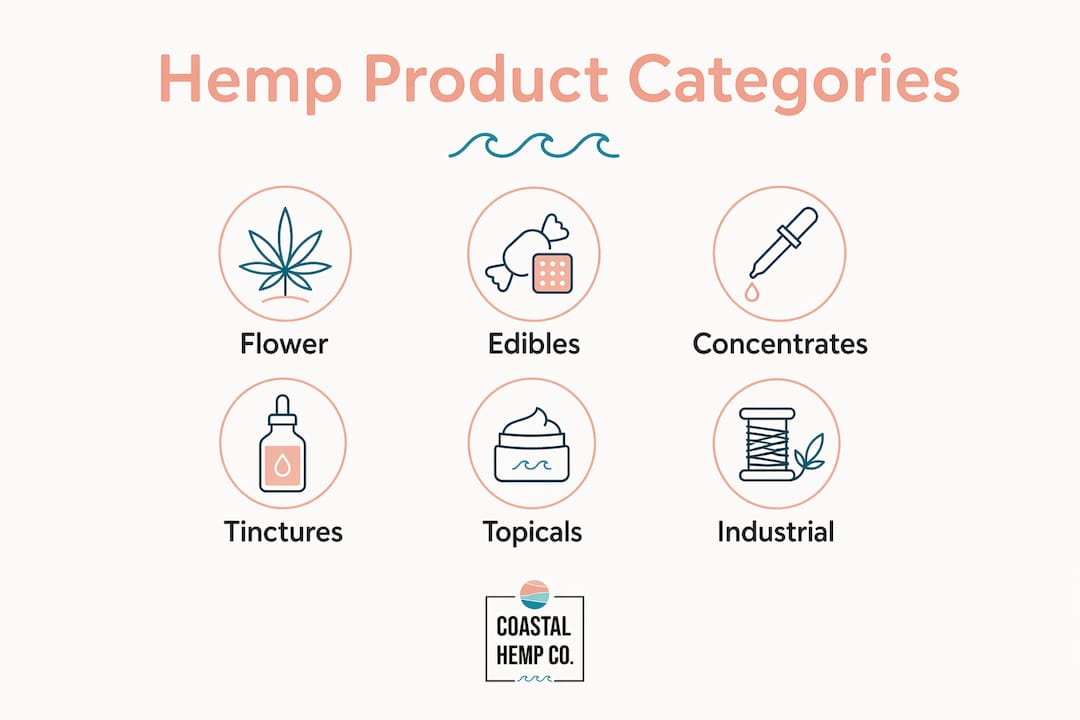
Hemp product classification starts with six core consumable categories. Each one delivers cannabinoids or plant compounds differently, and that delivery method changes how quickly you feel effects, how long they last, and what purpose the product serves best.
- Hemp flower is the raw, dried bud of the hemp plant. Consumers smoke or vape it for fast-acting effects, typically within minutes. Flower preserves the full natural profile of the plant, including cannabinoids, terpenes, and flavonoids.
- Edibles include gummies, beverages, chocolates, and capsules infused with hemp extracts. Effects take 30–90 minutes to appear because the extract passes through digestion first. Edibles are one of the most popular hemp product types for consumers who prefer a smoke-free experience.
- Concentrates are highly potent forms of hemp extract, including oils, waxes, shatter, and vape cartridges. They contain a higher cannabinoid concentration per dose than flower or edibles. Vape cartridges offer a middle ground between the speed of flower and the convenience of edibles.
- Tinctures are liquid extracts made with alcohol or carrier oils such as MCT oil or hemp seed oil. Consumers place them under the tongue for sublingual absorption, which delivers cannabinoids into the bloodstream faster than edibles. Tinctures are easy to dose precisely and blend well into daily routines.
- Topicals include balms, creams, salves, and lotions infused with hemp extract. They are applied directly to the skin for localized support, such as soothing sore muscles or moisturizing dry areas. Topicals do not enter the bloodstream in meaningful amounts, so they produce no systemic effects.
Pro Tip: If you are new to hemp products, start with a low-dose tincture or a single gummy. Both formats make it easy to control your intake and adjust gradually.
How do cannabinoids shape each hemp product type?
Cannabinoids are the active compounds in hemp that determine what a product actually does. The three most common ones found across categories of hemp products are CBD, CBG, and CBN, and each one fits a different use case.
-
CBD (cannabidiol) is the most abundant and researched cannabinoid in hemp. It acts indirectly on the body’s endocannabinoid system and produces no psychoactive effects. CBD appears in nearly every product category, from tinctures and gummies to topicals and flower, making it the foundation of most wellness-focused hemp goods.
-
CBG (cannabigerol) is sometimes called the “stem cell cannabinoid” because it is a precursor to other cannabinoids in the plant. CBG binds directly to CB1 and CB2 receptors and is associated with focus and daytime energy support. You will find it most often in daytime tinctures, capsules, and some specialty flower strains.
-
CBN (cannabinol) forms naturally as THC ages and breaks down. It is mildly psychoactive and is most often used in nighttime formulations designed for relaxation and sleep support. CBN gummies and tinctures are a growing segment of the hemp market.
Beyond individual cannabinoids, product labels often reference spectrum type. Full-spectrum products contain multiple cannabinoids and terpenes that work together in what researchers call the entourage effect. Broad-spectrum products remove THC while keeping other compounds. Isolates contain only one purified cannabinoid, typically CBD. Full-spectrum formulas generally provide broader wellness support than isolates, though isolates suit consumers who need to avoid all THC.
Pro Tip: Check the product label for the specific cannabinoid milligrams per serving, not just the total milligrams in the bottle. A 1,000mg bottle with 30 servings delivers roughly 33mg per dose, which is a meaningful difference from a 500mg bottle with the same serving count.
What industrial hemp product categories exist beyond wellness?
Hemp’s usefulness extends well past consumable goods. Hemp stalks and fibers serve a wide range of industrial applications that have nothing to do with cannabinoids. This part of the market is often overlooked by wellness consumers, but it represents a significant portion of total hemp production.
- Textiles and clothing made from hemp fiber are durable, breathable, and require fewer pesticides to grow than conventional cotton. Hemp fabric is used in everything from workwear to high-end fashion.
- Construction materials include hempcrete, a mixture of hemp hurds and lime used as insulation and wall fill. Hempcrete is lightweight, breathable, and has a lower carbon footprint than standard concrete.
- Paper and packaging derived from hemp fiber can be produced more quickly than tree-based paper because hemp grows to harvest in roughly 90–120 days.
- Bioplastics made from hemp cellulose are being developed as a biodegradable alternative to petroleum-based plastics.
- Hemp seeds and seed oil are nutritional products distinct from cannabinoid extracts. Hemp seeds are rich in protein and omega fatty acids. Hemp seed oil, pressed from the seeds, contains no significant CBD or THC and is used in cooking and cosmetics.
| Hemp product type | Primary use | Cannabinoid content |
|---|---|---|
| Hemp flower | Smoking, vaping | High |
| Edibles and tinctures | Oral consumption | Moderate to high |
| Topicals | Skin application | Low to moderate |
| Hemp seed oil | Cooking, cosmetics | None |
| Hemp fiber and textiles | Clothing, construction | None |
The distinction between hemp seed oil and hemp extract matters more than most labels make clear. Products marketed with “hemp oil” may contain only seed oil, which carries no cannabinoid benefits. Consumers focused on wellness need to verify that a product contains actual hemp extract, not just pressed seeds.
How do you choose high-quality hemp products across categories?
Product quality varies significantly across the hemp market. Third-party lab testing is the most reliable way to confirm what is actually in a product. A certificate of analysis, or COA, shows the cannabinoid profile, potency per serving, and results for contaminants like pesticides, heavy metals, and residual solvents.
Reading labels critically is a skill worth developing. The phrase “hemp extract” on a label should be followed by a specific milligram amount. Vague claims like “contains hemp” or “infused with hemp oil” often signal low cannabinoid content or seed oil fillers. Savvy consumers inspect ingredient lists closely, since marketing claims can mask what is actually inside the product.
- Look for a scannable QR code or batch number that links to a current COA.
- Confirm the COA is from an accredited third-party lab, not an in-house test.
- Check that the THC level stays at or below the federal 0.3% limit for hemp.
- Verify the cannabinoid milligrams per serving match what the label claims.
- Review the hemp product certifications the brand holds, such as USDA Organic or GMP compliance.
Pro Tip: If a brand does not publish COAs on its website or make them available on request, treat that as a red flag. Transparent brands share lab results without hesitation.
Understanding hemp-derived cannabinoids versus traditional cannabis products also helps consumers make sharper decisions. Hemp-derived THCA, for example, is legal under federal hemp law but converts to psychoactive THC when heated. Knowing this prevents surprises and helps you pick the right product for your needs.
Key Takeaways
Hemp product categories span flower, edibles, concentrates, tinctures, topicals, and industrial goods, and choosing correctly requires understanding cannabinoid content, spectrum type, and third-party lab verification.
| Point | Details |
|---|---|
| Legal definition matters | Hemp must contain less than 0.3% delta-9 THC by dry weight under federal law. |
| Six core categories | Flower, edibles, concentrates, tinctures, topicals, and industrial goods each serve distinct purposes. |
| Cannabinoids drive effects | CBD, CBG, and CBN each target different wellness needs, from focus to sleep support. |
| Spectrum type shapes results | Full-spectrum products use the entourage effect; isolates offer single-cannabinoid precision. |
| COAs confirm quality | Third-party lab results are the only reliable way to verify cannabinoid content and product safety. |
What I’ve learned from watching the hemp market grow
The hemp market has matured faster than most wellness categories, and that speed has created both opportunity and confusion. When I look at how consumers approach hemp products today versus just a few years ago, the biggest shift is not in the products themselves. It is in consumer expectations around transparency.
The most common mistake new consumers make is treating all hemp products as interchangeable. A CBD isolate gummy and a full-spectrum THCA flower product are not the same thing in any meaningful way. They differ in cannabinoid profile, legal status depending on your state, and the experience they produce. Treating them as equivalent is like treating aspirin and ibuprofen as the same because both reduce pain.
What I find genuinely encouraging is the trend toward combining cannabinoids intentionally. Products that pair CBD with CBG for daytime use, or CBD with CBN for nighttime support, reflect a more sophisticated understanding of how hemp works. That kind of formulation thinking produces better results than single-cannabinoid products for most consumers.
My advice for anyone entering this space: start with the hemp vs. marijuana differences to get your legal bearings, then focus on one product category at a time. Trying five different formats at once makes it impossible to know what is working. Pick a tincture or a gummy, stay consistent for two to three weeks, and evaluate from there.
— John
Coastalhemp’s selection covers every category worth knowing
Coastalhemp partners with top growers and brands to carry products across every major hemp category, from flower and tinctures to edibles and topicals. Every product in the catalog is backed by third-party lab testing, so you can check COAs before you buy.

If you want to sample multiple categories without committing to full-size products, the monthly mystery box delivers a curated mix of hemp wellness and recreational goods each month. For consumers focused specifically on edibles, the edibles mystery box is a practical way to try gummies, chocolates, and infused snacks from vetted brands. Budget-conscious shoppers can also browse the bargain bin for discounted products across categories without sacrificing quality or lab transparency.
FAQ
What is the legal definition of hemp?
Hemp is legally defined as Cannabis sativa L. with less than 0.3% delta-9 THC by dry weight under 7 U.S.C. 1639o. This federal threshold separates hemp from marijuana under U.S. law.
What are the main hemp product categories?
The main categories are flower, edibles, concentrates, tinctures, topicals, and industrial goods such as fiber and textiles. Each category uses different parts of the plant and serves a different purpose.
What is the difference between full-spectrum and isolate hemp products?
Full-spectrum products contain multiple cannabinoids and terpenes that work together through the entourage effect. Isolates contain only one purified cannabinoid, typically CBD, with no other plant compounds.
How do I know if a hemp product is high quality?
Look for a current certificate of analysis from an accredited third-party lab. The COA should confirm cannabinoid potency per serving and show clean results for pesticides, heavy metals, and solvents.
Is hemp seed oil the same as hemp extract?
Hemp seed oil is pressed from hemp seeds and contains no significant CBD or THC. Hemp extract is derived from the plant’s flowers and leaves and contains active cannabinoids. The two are not interchangeable for wellness purposes.


Comments