
Hemp Product Certifications Explained: 2026 Consumer Guide
Hemp product certifications are verified documents that confirm a product’s safety, potency, and legal compliance before it reaches your hands. Without them, you have no reliable way to know what you are actually consuming. The hemp market has grown rapidly, and with that growth comes a wide range of product quality. Understanding hemp product certifications explained in plain terms gives you the tools to shop with confidence, avoid unsafe products, and get real value for your money. This guide covers Certificates of Analysis, USDA Organic certification, third-party lab testing, and the 2026 federal THC compliance rules every buyer should know.
What are hemp product certifications and why do they matter?
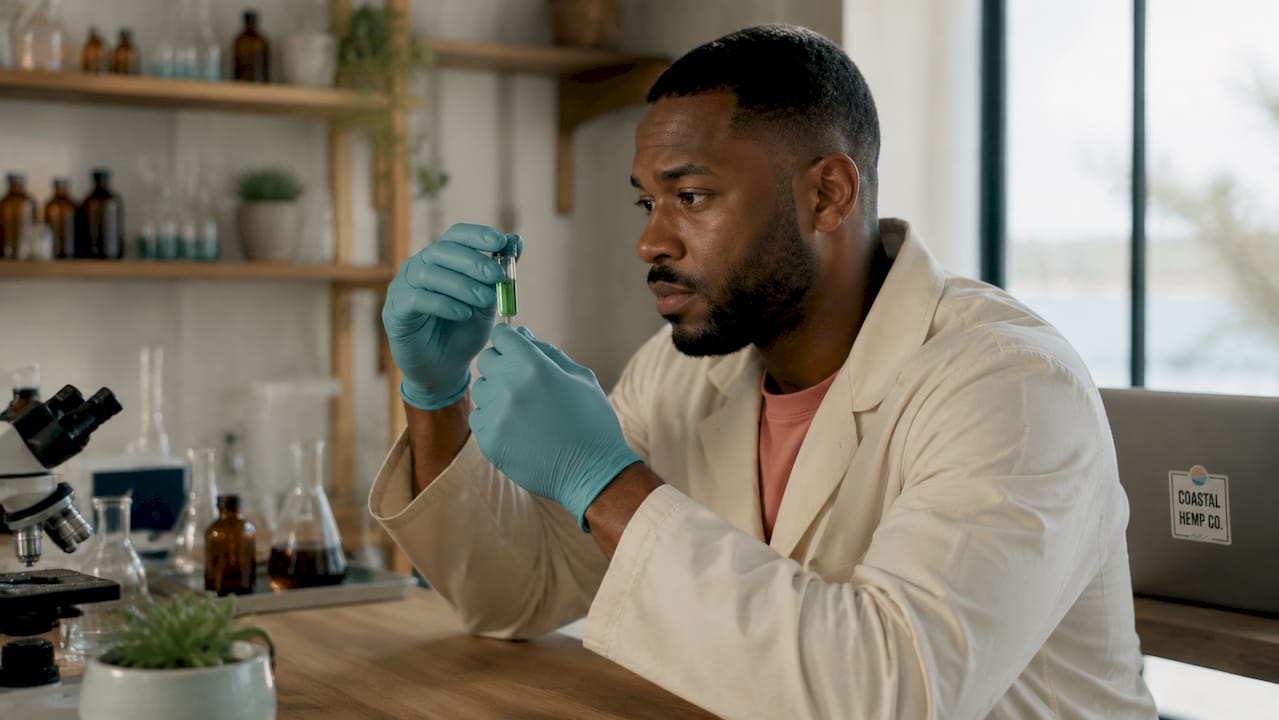
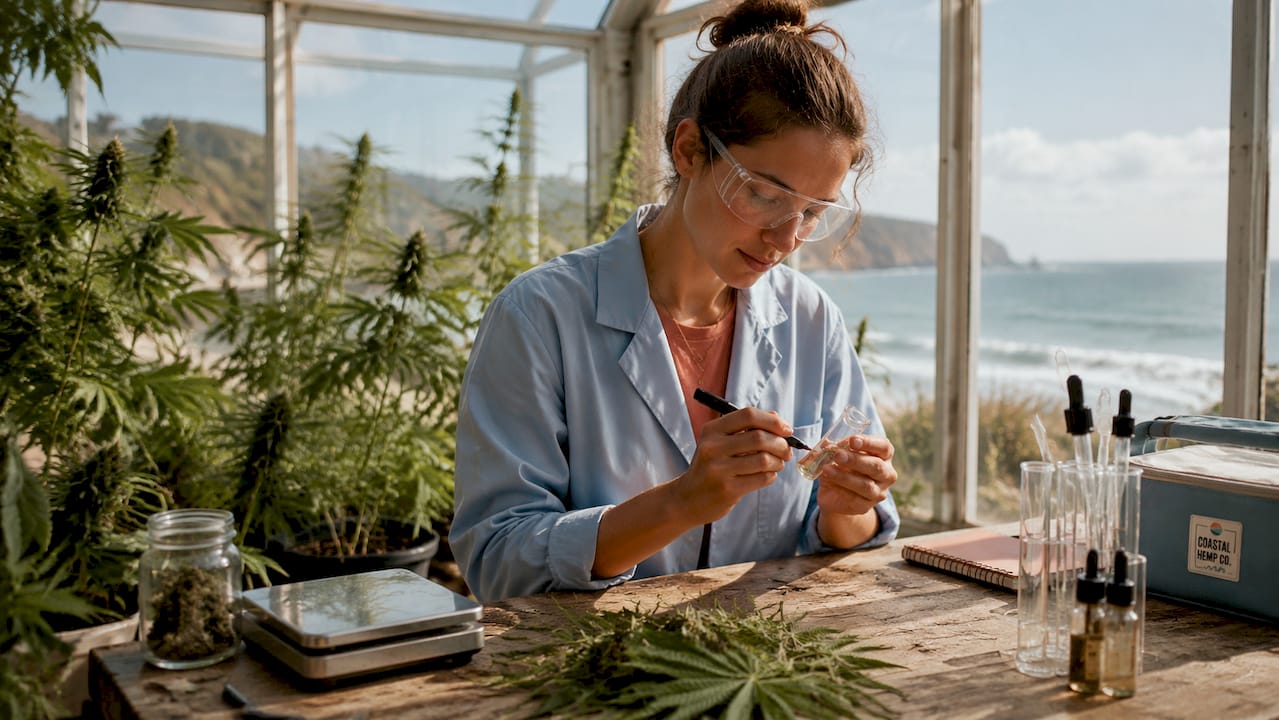
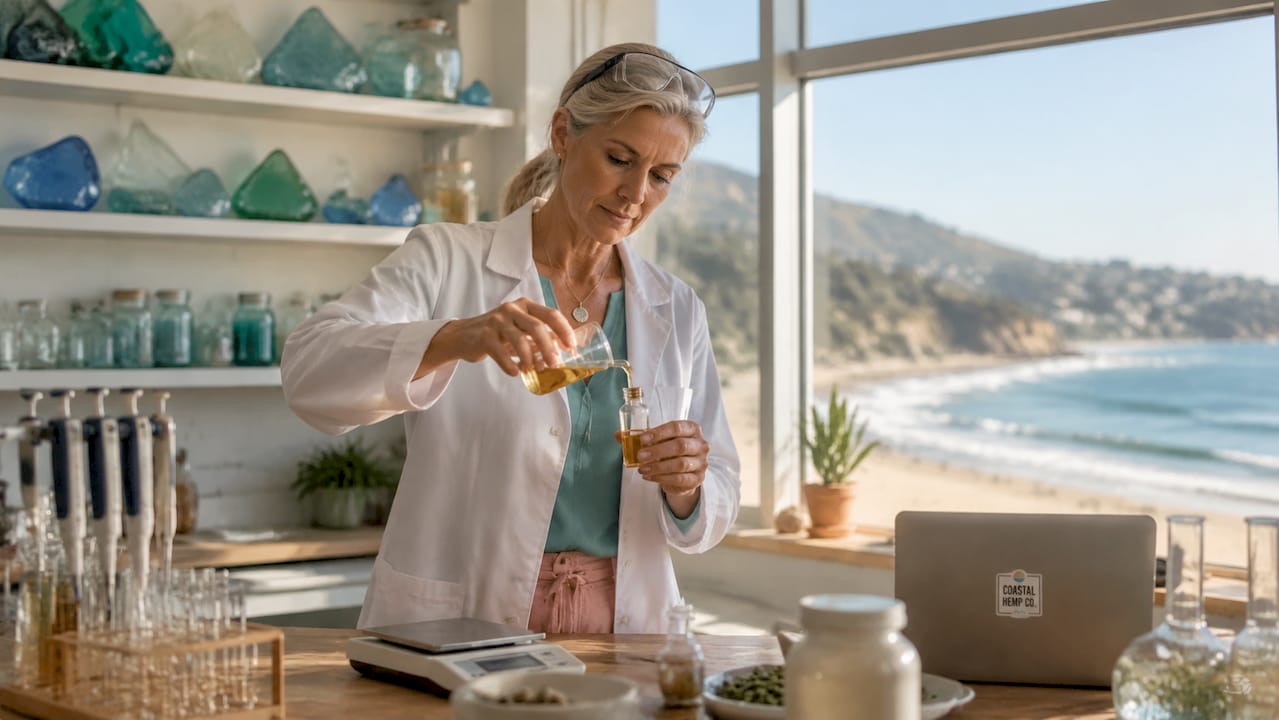
A hemp product certification is a formal record proving that a product meets specific quality, safety, or legal standards. The most critical document in this category is the Certificate of Analysis, or COA. A COA is a third-party lab report that verifies cannabinoid potency and screens for contaminants including pesticides, heavy metals, residual solvents, and microbial organisms.
Certifications matter because the hemp industry is not uniformly regulated at the retail level. A brand can print almost anything on a label without a COA to back it up. Third-party lab testing reduces commercial bias and increases trust because accredited labs follow strict standards and calibration protocols that in-house testing cannot match.
The two most important certifications to look for are a current COA from an ISO 17025 accredited lab and, where applicable, a USDA Organic seal. Together, they cover potency accuracy, contaminant safety, and farming practices.
How to read a Certificate of Analysis (COA)
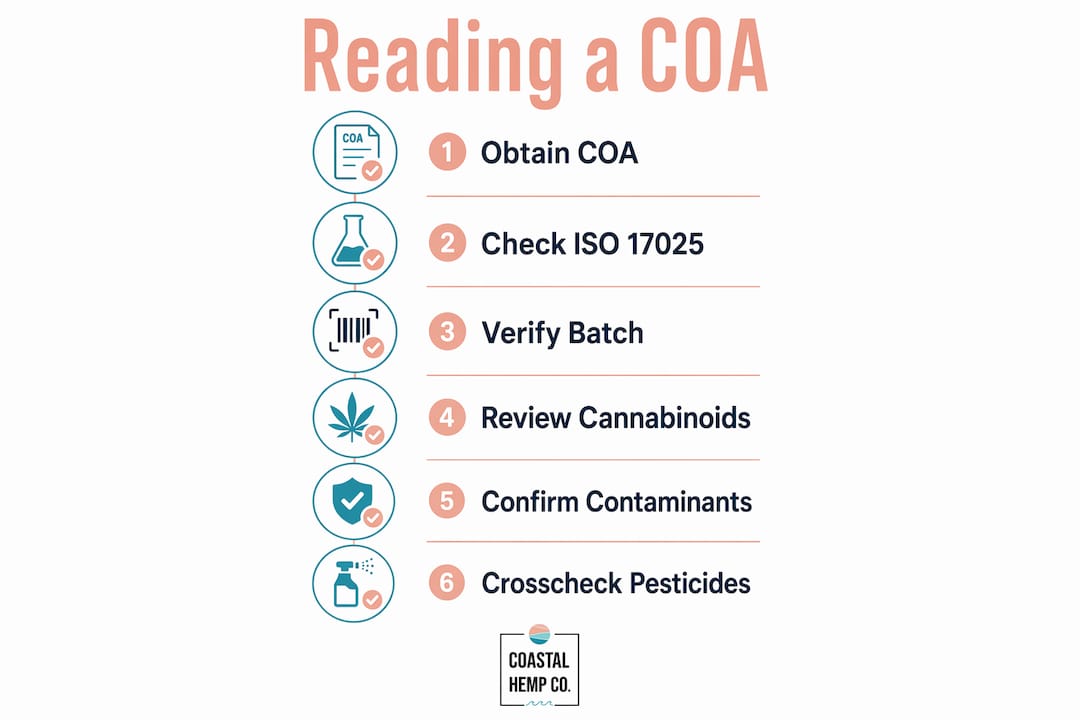
A COA is only useful if you know what to look for inside it. Complete COAs must include five test categories for comprehensive safety assurance: cannabinoids, pesticides, heavy metals, residual solvents, and microbials. A report that only shows cannabinoid potency tells you nothing about whether the product is safe to consume.
The five test panels every COA needs
- Cannabinoid panel: Lists all detected cannabinoids including CBD, delta-9 THC, THCA, CBG, and others with their concentrations.
- Pesticide panel: Confirms no prohibited agricultural chemicals are present above action limits.
- Heavy metals panel: Screens for lead, arsenic, cadmium, and mercury, which hemp plants absorb readily from soil.
- Residual solvents panel: Checks for leftover extraction chemicals like butane or ethanol in concentrate products.
- Microbial panel: Tests for harmful bacteria, mold, and yeast that can cause illness.
Reading THC numbers correctly
Federal compliance requires hemp products to have total THC at or below 0.3% dry weight. The formula used is: total THC equals delta-9 THC plus (THCA multiplied by 0.877). This calculation matters because THCA converts to delta-9 THC when heated. A product with low delta-9 THC but high THCA can still exceed the legal limit once consumed. You can learn more about how THC limits work across different cannabinoid types.
Lab accreditation: what ISO 17025 actually means
ISO 17025 accreditation assures scientific validity and objectivity in lab testing. Not all ISO 17025 accreditations are equal, though. Accreditation must match the testing type and is publicly verifiable on the accreditor’s website. A lab accredited for potency testing may not hold accreditation for heavy metals or microbials. Always check the scope of accreditation, not just whether the lab has a certificate on its wall.
Pro Tip: Look for the lab’s accreditation number on the COA, then search the International Accreditation Forum or A2LA directory to confirm the scope covers the specific tests you care about.
Red flags to watch for in a COA
Watch out for COAs that show only cannabinoid results with no contaminant panels, reports with no batch or lot number, and documents dated more than 12 months ago. COAs older than 12 months lose validity because product composition and contamination risk can change over time. Suspiciously round numbers across all cannabinoids can also signal a fabricated or manipulated report.
How USDA Organic certification applies to hemp
USDA Organic certification is federally enforced, not a marketing label a brand can self-apply. The USDA Organic seal signifies a federally audited and monitored farming and processing regimen. That distinction is significant because many hemp brands use the word “organic” loosely without holding any official certification.
To earn USDA Organic certification, a hemp farm must meet strict requirements:
- Three-year land history: The growing land must be free from synthetic pesticides and fertilizers for at least three years before certification.
- Approved inputs only: All fertilizers, pest controls, and processing aids must come from the USDA’s approved materials list.
- Annual inspections: Certified operations undergo yearly audits by an accredited certifying agent.
- Full supply chain compliance: Processing facilities handling organic hemp must also hold their own organic certification.
How to verify an organic claim
Verifying a brand’s organic claim via the USDA’s Organic Integrity Database is the best practice for consumers. The database is free, publicly accessible, and searchable by brand name or certificate number. If a brand claims USDA Organic but does not appear in the database, the claim is unverified.
Organic certification and COA data work together. An organic COA pesticide panel should show no detectable synthetic pesticide residues. If a brand claims organic status but its COA pesticide panel shows residues above action limits, that is a serious inconsistency worth investigating.
Pro Tip: Search the USDA Organic Integrity Database before you buy, not after. It takes under two minutes and confirms whether the certification is current or has lapsed.
Key hemp quality indicators beyond certifications
Certifications are the foundation, but several additional hemp sourcing quality indicators separate genuinely trustworthy products from mediocre ones.
- Third-party lab origin. The lab must be independent from the brand. In-house or brand-affiliated labs create conflicts of interest that undermine the reliability of results.
- Batch-specific COA matching. A COA is only valid if tied to the specific production batch you purchased. Match the lot number on your product packaging to the lot number on the COA exactly.
- Potency label accuracy. A 2026 study found products claimed 23.1% THC on labels but lab tests showed 18.1% on average. That 5% median discrepancy means you may be paying for potency that does not exist in the product.
- Full contaminant panel coverage. A COA covering only cannabinoids is incomplete. Demand reports that include all five panels described above.
- DEA-registered lab for THC testing. Labs testing for delta-9 THC compliance should hold DEA registration in addition to ISO 17025 accreditation.
- Hemp sourcing transparency. Brands that disclose their farm partners, growing regions, and extraction methods give you more context for evaluating quality. You can explore how hemp vs. marijuana differences affect cannabinoid content and COA readings.
Pro Tip: Ask the brand directly where their hemp is grown. Domestic American-grown hemp is subject to USDA oversight. Imported hemp may not meet the same standards.
How to verify hemp certifications before you buy
Verifying certifications takes less than five minutes per product. Follow these steps every time.
- Find the COA. Look for a QR code on the packaging or a lab results page on the brand’s website. Coastalhemp publishes lab test results directly on its site for easy access.
- Match the batch number. Compare the lot or batch number on your product to the one listed on the COA. A mismatch means the report does not apply to your product.
- Check the COA date. Confirm the report is dated within the past 12 months. Older reports do not reflect the current product batch.
- Verify lab accreditation. Find the lab’s name and accreditation number on the COA. Search the A2LA or Perry Johnson Laboratory Accreditation database to confirm the scope covers all five test panels.
- Confirm organic claims. If the product claims USDA Organic, search the brand name at the USDA Organic Integrity Database.
- Cross-check potency with the label. Compare the cannabinoid concentrations on the COA to what the label states. Significant discrepancies signal a labeling accuracy problem.
- Contact the lab if needed. Most ISO 17025 accredited labs will confirm whether a specific COA was issued by them. A legitimate lab will respond; an unaccredited one often will not.
| Verification Step | What to Check |
|---|---|
| COA availability | Publicly accessible with batch number visible |
| Lab accreditation | ISO 17025 scope covers all five test panels |
| COA date | Issued within the past 12 months |
| Batch number match | Matches product packaging exactly |
| Organic claim | Verified in USDA Organic Integrity Database |
Common certification misunderstandings to avoid
Consumers often assume a COA covers everything, but many reports lack full contaminant panels, which creates misleading safety assumptions. A potency-only COA is not a safety document. It tells you what cannabinoids are present, not whether the product is free from harmful substances.
Other common mistakes include:
- Ignoring lot number mismatches. A COA from a different batch is legally and scientifically irrelevant to your product.
- Assuming all ISO 17025 labs are equivalent. Accreditation scope varies. A lab accredited for potency testing may not be accredited for microbial or heavy metal testing.
- Trusting marketing language over documentation. Words like “clean,” “pure,” or “lab-tested” mean nothing without a verifiable COA to back them up.
- Overlooking 2026 THCA compliance changes. Federal enforcement now applies the total THC formula including THCA × 0.877. Products that were compliant under older interpretations may not be compliant today. Review hemp shipping regulations for the latest federal compliance context.
“A COA is only as trustworthy as the lab that issued it and the batch it was written for. Verify both before you trust either.”
If a brand cannot provide a current, complete COA from an accredited lab, that is a clear signal to look elsewhere.
Key takeaways
Hemp product certifications are only meaningful when they come from accredited, independent labs and cover all five safety panels, not just cannabinoid potency.
| Point | Details |
|---|---|
| COA completeness | Demand all five panels: cannabinoids, pesticides, heavy metals, solvents, and microbials. |
| Batch number matching | Always match the COA lot number to your product packaging before trusting the report. |
| Lab accreditation scope | Verify ISO 17025 accreditation covers the specific tests listed, not just potency. |
| USDA Organic verification | Confirm organic claims in the USDA Organic Integrity Database before purchase. |
| Potency label accuracy | Cross-check COA cannabinoid data against label claims to catch over-labeling. |
Why I think most consumers are checking the wrong thing first
When people ask me how to evaluate a hemp product, they almost always start with potency. How many milligrams? What percentage? That instinct is understandable, but it is the wrong starting point.
The first question should always be: does this product have a complete, current COA from an accredited lab? Potency numbers are meaningless if the product contains pesticide residues or heavy metals. I have seen COAs from brands with impressive cannabinoid profiles that had no pesticide panel at all. That is not a minor oversight. That is a fundamental gap in safety documentation.
The second thing I have noticed is how rarely consumers check the batch number. A brand can post a single COA on its website and technically claim its products are lab-tested. But if that COA is from a batch produced 18 months ago, it tells you nothing about what is in the bottle you just bought. Batch-specific verification is the detail that separates real transparency from the appearance of it.
The 2026 THCA compliance updates have added another layer of complexity. Products that looked compliant under older delta-9-only calculations may now exceed the total THC threshold once THCA is factored in. If you are buying THCA products specifically, that math matters more than ever.
My honest recommendation: spend two minutes on verification before every purchase. Check the COA date, match the batch number, and confirm the lab’s accreditation scope. It is a small habit that protects you from a surprisingly large number of problems.
— John
Coastalhemp’s commitment to certified hemp products
Coastalhemp partners with brands that take lab testing seriously. Every product listed on the site comes with publicly accessible COA documentation, and Coastalhemp works exclusively with third-party ISO 17025 accredited labs to verify potency and contaminant safety. Whether you are looking for USDA Organic options or products with full five-panel testing, the selection reflects a genuine commitment to transparency. The Jelly THCA Live Sugar Gummies are a strong example: lab-tested, batch-verified, and backed by documentation you can review before you buy. Explore the full range at Coastalhemp and shop with the confidence that comes from knowing exactly what is in your product.
FAQ
What is a Certificate of Analysis for hemp products?
A Certificate of Analysis is a third-party lab report that verifies a hemp product’s cannabinoid potency and screens for contaminants including pesticides, heavy metals, residual solvents, and microbial organisms. A complete COA must include all five test panels to be considered reliable for safety verification.
How do I know if a hemp COA is legitimate?
Confirm the issuing lab holds ISO 17025 accreditation with a scope that covers the tests listed in the report. You can verify accreditation status through public registries like A2LA, and you can contact the lab directly to confirm the COA was issued by them.
What does total THC mean on a hemp label?
Total THC is calculated as delta-9 THC plus THCA multiplied by 0.877. Federal law requires this combined figure to be at or below 0.3% dry weight for a product to qualify as legal hemp under 2026 regulations.
How can I verify a USDA Organic hemp claim?
Search the brand name or certificate number in the USDA Organic Integrity Database at organic.ams.usda.gov. If the brand does not appear with a current, active certification, the organic claim is unverified regardless of what the label says.
Why do hemp products vary so much in potency?
Potency variation comes from inconsistent farming conditions, extraction methods, and labeling practices. A 2026 study found a median discrepancy where products claimed 23.1% THC but tested at 18.1%, showing that label claims frequently exceed actual lab-verified potency.

Comments