

Hemp for Inflammation Relief: What the Science Says
Hemp is defined as a variety of Cannabis sativa cultivated specifically for low THC content, and it delivers inflammation relief through two distinct pathways: cannabinoids like CBD that interact with immune signaling, and hemp seed oils rich in anti-inflammatory fatty acids. These two mechanisms are often lumped together in marketing, but they work differently in the body and serve different purposes. Understanding which pathway applies to your situation is the first step toward choosing a product that actually works. This guide covers the science behind both, what clinical trials show, and how to select hemp products with realistic expectations.
How do cannabinoids in hemp reduce inflammation?
CBD, the primary non-intoxicating cannabinoid in hemp, reduces inflammation by influencing cytokine production, T cell activity, and immune cell migration. Cytokines are proteins that signal the immune system to ramp up or dial down its response. When CBD modulates these signals, it can reduce the intensity of inflammatory reactions without suppressing immunity entirely.
Full-spectrum cannabis oils add another layer through what researchers call the “entourage effect.” This refers to the combined action of multiple cannabinoids, terpenes, and flavonoids working together. Full-spectrum products are generally considered more effective than CBD isolates for inflammation because the whole-plant profile amplifies each component’s activity.
Clinical evidence, however, is mixed. A 2025 randomized controlled trial found that CBD-rich full-spectrum cannabis oil at 45 mg per day for 60 days did not produce statistically significant improvements in knee osteoarthritis pain compared to placebo. That result does not mean CBD is ineffective. It means the evidence is not yet strong enough to make definitive claims for specific conditions like osteoarthritis.
A 2026 scoping review analyzed 19 studies on topical CBD for osteoarthritis symptom management and found mixed results with an acceptable safety profile. The review concluded that variability in product types and dosing protocols is the main barrier to clear recommendations. No serious adverse events were documented in either study, which supports the general tolerability of hemp cannabinoid products.
- CBD influences inflammatory cytokines and immune cell behavior at the molecular level.
- Full-spectrum oils outperform isolates due to the entourage effect.
- Clinical trials show modest or non-significant pain outcomes for osteoarthritis specifically.
- Short-term or variable dosing is inconsistent with how trials measure efficacy.
- Topical CBD shows promise but needs standardized research before strong claims can be made.
Pro Tip: If you are evaluating a CBD product for inflammation, look for full-spectrum formulations and fixed daily doses consistent with clinical protocols, such as 45 mg per day, rather than products with vague “as needed” instructions.
What role do hemp seeds and hemp seed oil play?
Hemp seeds are a concentrated source of gamma-linolenic acid (GLA), alpha-linolenic acid (ALA), and other polyunsaturated fatty acids that support anti-inflammatory pathways in the body. GLA, in particular, is a precursor to anti-inflammatory prostaglandins. This makes hemp seed oil a nutritional tool rather than a drug-like intervention.
Preclinical research published in 2026 found that hemp seed consumption reduced colonic inflammation in mice by shifting macrophages from a pro-inflammatory M1 phenotype to an anti-inflammatory M2 phenotype. The study also observed improved gut barrier integrity and beneficial microbiota changes. These findings point to a meaningful mechanism, though human confirmation is still needed.
A 2026 human crossover trial confirmed that hemp product consumption raises blood levels of anti-inflammatory fatty acids including ALA, GLA, and EPA. That shift in fatty acid profile is consistent with hemp seed’s nutritional composition. The trial did not observe significant changes in lipids, glucose, or insulin, which means hemp seeds support inflammation pathways without disrupting cardiometabolic markers.
| Compound | Source | Anti-inflammatory role |
|---|---|---|
| GLA (gamma-linolenic acid) | Hemp seed oil | Precursor to anti-inflammatory prostaglandins |
| ALA (alpha-linolenic acid) | Hemp seed oil | Converts to EPA, supports immune modulation |
| EPA (eicosapentaenoic acid) | Converted from ALA | Reduces inflammatory signaling molecules |
| CBD (cannabidiol) | Hemp flower/extract | Modulates cytokines and immune cell activity |
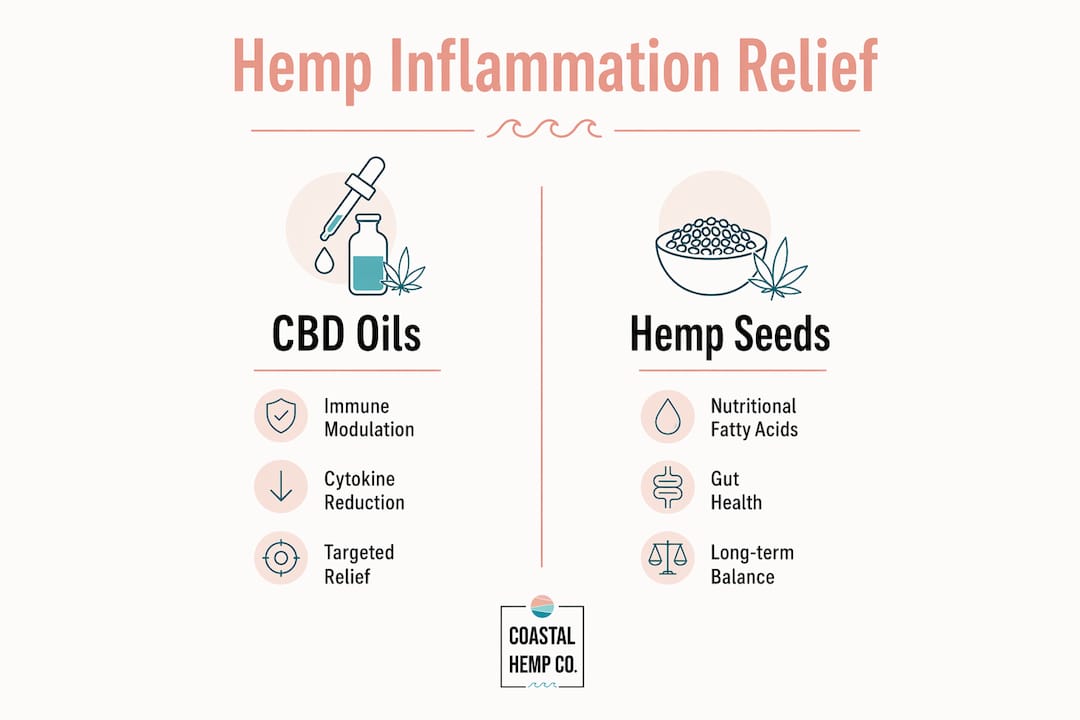
Hemp seed products and CBD oils serve different functions. Hemp seeds work through nutrition and gut health. CBD works through the endocannabinoid system. Combining both in a daily routine gives you coverage across multiple inflammation pathways.
Pro Tip: Add hemp seeds to smoothies or salads for consistent fatty acid intake. Use a separate CBD oil product for cannabinoid-specific effects. Treating them as interchangeable misses the point of each.
How to choose and use hemp products for inflammation
Selecting the right hemp product starts with identifying which pathway you want to target. CBD-rich oils and topical products like the Celestial Wellness CBD Relief Salve target cannabinoid pathways. Hemp seed supplements and hemp seed oil target nutritional and gut-health pathways. These are not the same product category, and using one does not replace the other.
Third-party testing is non-negotiable. A product without a certificate of analysis from an independent lab gives you no way to verify cannabinoid content, potency, or the absence of contaminants. Reputable brands publish these certificates publicly.
Dosing matters more than most consumers realize. The CANOA trial protocol used a fixed dose of 45 mg CBD per day for 60 days. That is a structured, consistent approach. Most consumer products suggest vague ranges that do not reflect how clinical evidence was generated. For hemp alternatives to chronic pain management, consistency over weeks is more meaningful than large occasional doses.
Regulatory context shapes what you can expect from product labels. The FDA’s 2026 enforcement policy does not target oral hemp-derived CBD products meeting dietary supplement criteria, but it does not approve them as treatments for inflammation either. That distinction matters when reading labels.
- Identify your target pathway: cannabinoid-based or nutritional hemp seed.
- Verify third-party lab testing before purchasing any product.
- Use consistent daily dosing rather than sporadic use.
- Read labels critically. Avoid products making disease treatment claims.
- Consult a healthcare provider if you are managing a diagnosed inflammatory condition.
“The main barrier to recommending cannabinoids for osteoarthritis is study variability in product types and dosing, not biological implausibility.” — Cannabis-Based Medicinal Products scoping review, 2026
For topical applications, products like the CBD Sports Cream 1000mg Menthol offer localized delivery. Topical CBD does not enter the bloodstream in significant amounts, which limits systemic effects but reduces the risk of interactions. For people managing joint or muscle inflammation in a specific area, topical products are a practical starting point. For more guidance on hemp dosing best practices, structured resources can help you build a consistent routine.
What are common mistakes when using hemp for inflammation?
The most common mistake is expecting fast, guaranteed results. Clinical trials show that even well-designed protocols using 45 mg CBD per day for 60 days produced no statistically significant advantage over placebo for knee osteoarthritis pain. That does not mean hemp is useless. It means results are modest and vary by individual, condition, and product quality.
Relying on marketing claims is a significant risk. An analysis of 1,090 CBD-specific ads found that 61.8% included prohibited therapeutic claims, with 985 documented violations. Inflammation was among the most common prohibited claims. When a product promises to “treat” or “cure” inflammation, that is a regulatory red flag, not a quality signal.
- Expecting immediate relief from a single dose sets unrealistic expectations.
- Buying products without third-party lab certificates risks inconsistent potency.
- Confusing hemp seed oil with CBD oil leads to mismatched product choices.
- Ignoring dosing consistency undermines any potential benefit over time.
- Skipping a healthcare provider conversation when managing a diagnosed condition is a real risk.
Pro Tip: Track your symptoms in a simple journal for the first 30 days of consistent hemp use. This gives you objective data to assess whether the product is working and helps your healthcare provider make informed recommendations.
Integrating hemp into broader inflammation management works best when it complements, not replaces, other evidence-based approaches. Anti-inflammatory nutrition, regular movement, and stress reduction each contribute to lowering systemic inflammation. Hemp for chronic stress management and hemp for mental clarity routine are legitimate supporting roles, but they work best alongside a broader wellness foundation.
Key Takeaways
Hemp reduces inflammation through two distinct pathways: cannabinoid-based immune modulation via CBD and nutritional anti-inflammatory support via hemp seed fatty acids like GLA and ALA.
| Point | Details |
|---|---|
| Two separate mechanisms | CBD targets immune signaling; hemp seed oil targets fatty acid pathways. Use both for broader coverage. |
| Clinical evidence is mixed | A 2025 RCT found 45 mg CBD/day for 60 days did not significantly outperform placebo for knee osteoarthritis pain. |
| Hemp seeds shift fatty acid profiles | A 2026 human trial confirmed hemp consumption raises ALA, GLA, and EPA levels without disrupting cardiometabolic markers. |
| Marketing claims are often misleading | 61.8% of CBD ads analyzed contained prohibited therapeutic claims. Always verify with third-party lab results. |
| Consistency beats high doses | Fixed daily dosing over weeks, not sporadic large doses, aligns with how clinical trials measure efficacy. |
What I’ve learned after years of watching the hemp market evolve
The hemp industry has a credibility problem, and it is largely self-inflicted. Brands overpromise, consumers get disappointed, and the genuinely useful science gets buried under hype. What I keep coming back to is this: hemp’s anti-inflammatory potential is real, but it is not a replacement for medical care or a quick fix for chronic conditions.
The most underrated insight from current research is the distinction between hemp seed nutrition and cannabinoid pharmacology. These are two separate tools. People who treat them as the same thing end up with neither working well. Hemp seed oil in your diet is a long-game nutritional strategy. CBD oil is a cannabinoid intervention that needs consistent dosing and realistic expectations.
Clinicians hesitate to widely recommend CBD for osteoarthritis not because the biology is implausible, but because the product and dosing variability in studies makes it hard to give clear guidance. That is an industry quality problem, not a science problem. The solution is buying from brands that publish lab results and use standardized formulations.
My honest recommendation: start with a full-spectrum CBD oil at a consistent daily dose, add hemp seeds to your diet for nutritional support, and give it at least 60 days before drawing conclusions. That timeline matches the best clinical evidence available. Anything shorter is not a fair test.
— John
Coastalhemp’s picks for natural inflammation support
Coastalhemp partners with vetted brands and growers to bring you lab-tested hemp products built for consistent, quality-controlled use.

The Celestial Wellness CBD Relief Salve is a topical option for localized inflammation, formulated for direct application to joints and muscles. For those looking for an edible cannabinoid option, the Celestial Wellness Full Spectrum CBD Oil delivers a whole-plant cannabinoid profile in a daily-use format. Every product Coastalhemp carries comes with third-party verification, so you know exactly what you are getting. If you are ready to build a consistent hemp routine backed by real quality standards, Coastalhemp is the place to start.
FAQ
Does hemp actually help with inflammation?
Hemp can support inflammation relief through two pathways: CBD modulates immune cytokines and cell activity, while hemp seed fatty acids like GLA and ALA support anti-inflammatory signaling. Clinical evidence is promising but mixed, particularly for conditions like osteoarthritis.
What is the difference between hemp seed oil and CBD oil for inflammation?
Hemp seed oil works through nutritional fatty acids that shift the body’s inflammatory balance over time. CBD oil works through the endocannabinoid system to modulate immune responses directly. They are not interchangeable.
How much CBD should I take for inflammation?
The best-documented clinical protocol used 45 mg of CBD per day for 60 days in a randomized controlled trial. Always consult a healthcare provider before starting a CBD regimen, especially if you manage a diagnosed condition.
Is topical CBD effective for joint inflammation?
Topical CBD shows an acceptable safety profile for osteoarthritis symptom management, but a 2026 scoping review of 19 studies found mixed evidence and called for standardized dosing before strong recommendations can be made.
How do I know if a hemp product is trustworthy?
Look for products with published third-party certificates of analysis. Avoid any product making disease treatment claims. Research shows 61.8% of CBD ads contain prohibited therapeutic claims, so skepticism is warranted when evaluating marketing language.



Comments