

Hemp Intoxicating Effects: Health and Safety Guide
Hemp-derived products can and do produce genuine intoxicating effects when they contain sufficient concentrations of psychoactive cannabinoids. This is not a fringe concern. Delta-8 THC, Delta-10 THC, THC-O, and high-milligram Delta-9 THC products are widely sold in convenience stores, gas stations, and online shops across the United States, often with minimal regulatory oversight. The FDA has documented thousands of exposure reports tied to hemp-derived intoxicants, and national poison-control centers recorded thousands of Delta-8 THC exposure cases in 2022 alone, with a substantial share requiring evaluation at a healthcare facility.
Quick reference:
- Who is most at risk: Adolescents, pregnant people, those with psychiatric conditions, and anyone unfamiliar with cannabinoid dosing
- What the effects feel like: Relaxation, mild euphoria, altered perception, and in higher doses, anxiety, paranoia, or nausea
- Immediate safety actions: Do not drive or operate machinery; keep all products secured away from children
Urgent safety callout: Seek emergency care immediately if you or someone else experiences severe confusion, difficulty breathing, chest pain, or unresponsiveness after using any hemp-derived intoxicant. Call 911 or contact Poison Control at 1-800-222-1222.
This article is general educational information, not medical or legal advice. Confirm current rules and any health concerns with a qualified professional or your state’s regulatory authority.
Table of Contents
- What “intoxicating hemp” means and how manufacturers produce it
- Which cannabinoids in hemp products cause intoxication
- What intoxicating hemp feels like and how long effects last
- Health and safety risks: contaminants, labeling gaps, and vulnerable populations
- U.S. legal status: the Farm Bill loophole and state-level responses
- Do hemp intoxicants cause positive drug tests and affect driving safety?
- Harm reduction and dosing guidance: how to use hemp intoxicants more safely
- What the science still doesn’t know about intoxicating hemp
- Key Takeaways
- A pragmatic view on hemp intoxicants and consumer safety
- Coastalhemp’s approach to tested, clearly labeled hemp products
- Useful sources and further reading
- FAQ
What “intoxicating hemp” means and how manufacturers produce it
The term “intoxicating hemp” refers to products derived from the Cannabis sativa L. plant that contain psychoactive cannabinoids in amounts sufficient to alter mood, perception, or cognition. Legally, hemp is defined under the 2018 Farm Bill as cannabis containing no more than 0.3% Delta-9 THC by dry weight. That threshold is a legal boundary, not a pharmacological safety guarantee.
The critical detail is the phrase by dry weight. Because the threshold is percentage-based, a heavier product can legally contain a much larger absolute milligram dose of THC. New York’s Office of Cannabis Management notes that a single 10-ounce beverage could legally contain hundreds of milligrams of THC (examples cited up to 840 mg per can) while remaining at or below 0.3% Delta-9 by dry weight. That is a pharmacologically significant dose by any clinical standard.
How manufacturers create intoxicating hemp products:
- Concentration: Extracting and concentrating naturally occurring cannabinoids from hemp biomass to produce potent oils, distillates, and resins
- Isomerization/cyclization: Chemically converting CBD into Delta-8 THC, Delta-10 THC, THC-O, or other isomers using acid catalysts or other reagents
- High-mg edible formulation: Blending concentrated or converted cannabinoids into gummies, beverages, chocolates, and capsules at doses that produce clear intoxication
- Vape cartridge production: Loading concentrated distillates into disposable or refillable inhalation devices
The manufacturing pathway matters because chemical conversion processes can introduce byproducts and residual reagents that are not present in naturally grown cannabis. The same plant species produces both a non-intoxicating CBD tincture and a potent Delta-8 gummy; the difference is entirely in the processing.
“The 0.3% Δ9 THC by dry weight metric is a legal threshold, not a safety benchmark. A legal product can still contain pharmacologically active and intoxicating total milligram doses, especially in edibles and beverages.” — New York Office of Cannabis Management
For a deeper look at how hemp and marijuana differ botanically and legally, the hemp vs. marijuana differences guide covers the key distinctions clearly.
Which cannabinoids in hemp products cause intoxication
Not all hemp cannabinoids are psychoactive. CBD, CBG, and CBN in typical doses do not produce the kind of intoxication associated with THC. The following cannabinoids are the primary drivers of hemp intoxicating effects in today’s market.
Common intoxicating cannabinoids:
- Delta-8 THC: — The most widely sold hemp-derived intoxicant; generally described by consumers as producing milder, more sedating effects than Delta-9 THC, though clinical evidence for this comparison is limited
- High-milligram Delta-9 THC: — Pharmacologically identical to cannabis-derived Delta-9 THC; the same receptor binding, the same intoxication profile, and the same clinical contraindications
The evidence base for most of these compounds is thin. Delta-9 THC has decades of pharmacological research behind it. Delta-8 has a growing but still limited clinical literature. THC-O, Delta-10, and HHC have almost no formal human safety data. Peer-reviewed public-health analysis has flagged that some synthetic isomers can be substantially more potent than Delta-9 at equivalent doses, meaning blended or mislabeled products carry genuinely unpredictable potency.
Pro Tip: Before purchasing any hemp-derived intoxicant, check whether the product’s certificate of analysis (COA) identifies all cannabinoids present, not just Delta-9 THC. A COA that tests only for Delta-9 tells you almost nothing about total intoxicating potential.
For a detailed breakdown of how different THC types compare, the delta types of THC guide is a useful reference.
What intoxicating hemp feels like and how long effects last
Hemp-derived THC produces psychoactive effects through the same endocannabinoid system pathways as cannabis-derived THC. The subjective experience depends on the specific cannabinoid, the dose, the route of administration, and individual factors including body weight, metabolism, and prior tolerance.
Typical acute effects at moderate doses:
- Relaxation and reduced anxiety
- Mild euphoria or mood lift
- Altered sensory perception (colors, sounds, time)
- Sleepiness or sedation (especially with Delta-8 or CBN-containing products)
- Increased appetite
Common adverse effects, particularly at higher doses:
- Anxiety and racing thoughts
- Paranoia or acute panic
- Dizziness and disorientation
- Nausea and vomiting
- Tremor or rapid heart rate
- Cognitive impairment and slowed reaction time
Dose-response is a real concern with hemp intoxicants. Because some isomers are marketed as “milder,” consumers sometimes take larger doses to compensate, which can push total THC intake well above a safe threshold. This is especially common with edibles, where delayed onset leads to premature redosing.
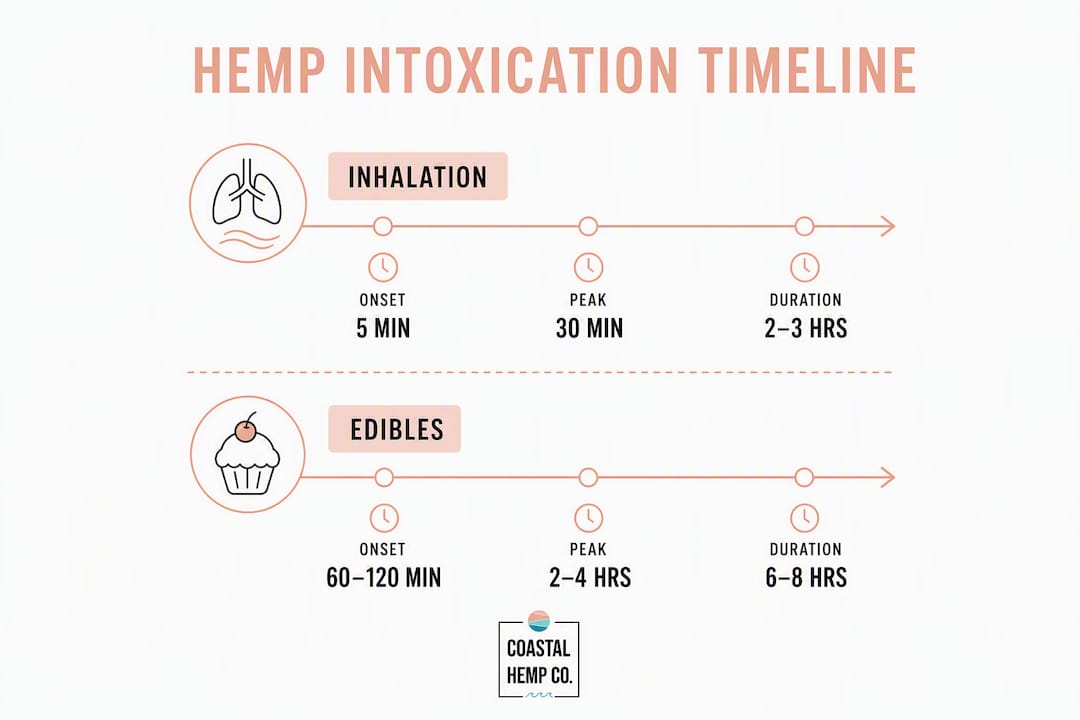
Onset, peak, and duration by route

| Route | Onset | Peak | Duration |
|---|---|---|---|
| Inhalation (vape, smoke) | 5 minutes | 30 minutes | 2–3 hours |
| Edibles/beverages | 30 minutes | 2–4 hours | 4–8 hours |
| Sublingual (tincture under tongue) | 45 minutes | 1–2 hours | 3–5 hours |
The edible window is the most clinically important timing issue. Many adverse events occur because a consumer takes a dose, feels nothing after 45 minutes, and takes a second dose, only to have both doses peak simultaneously. Clinician-facing guidance from CED Clinic recommends starting at a low dose and waiting the full onset window before considering any additional amount.
Pro Tip: With edibles, wait a full two hours before concluding that a dose “didn’t work.” Onset can be delayed significantly by food intake, individual metabolism, and product formulation.
Health and safety risks: contaminants, labeling gaps, and vulnerable populations
The safety concerns with intoxicating hemp go beyond the intoxication itself. The absence of federal product-specific regulation means that manufacturing quality, labeling accuracy, and contaminant testing vary widely across the market.
Documented safety risks:
- Inaccurate potency labeling: Independent lab analyses have found dose variance greater than 10% in a majority of sampled hemp Delta-9 products, and many COAs omit impurity testing entirely
- Toxic conversion byproducts: Isomerization processes can leave residual acids, solvents, and unknown reaction products in the final product
- Heavy metals and pesticides: Hemp is a bioaccumulator; without rigorous testing, contaminants from soil can concentrate in extracts
- Vape-related lung injury: Contaminated or adulterated vape cartridges have been linked to serious lung injury in prior outbreak investigations
- Misleading packaging: Public-health guidance documents potent edibles sold in packaging resembling ordinary snack foods, increasing accidental ingestion risk
The FDA’s data on Delta-8 exposures is striking: of the 2,362 cases reported to poison-control centers in 2022, a portion of those evaluated required hospitalization. These are not trivial reactions.
Populations at elevated risk:
- Adolescents and children: Developing brains are more sensitive to cannabinoid disruption; accidental pediatric exposures are a documented and growing concern
- Pregnant and breastfeeding people: THC crosses the placental barrier and is present in breast milk; no safe level of exposure has been established
- People with unstable psychiatric conditions: THC can precipitate or worsen anxiety disorders, psychosis, and mood episodes
- Those on interacting medications: THC is metabolized by CYP450 enzymes and can affect the blood levels of many common medications
- People with cardiovascular disease: Acute THC exposure can increase heart rate and blood pressure
Practical safety measures:
- Store all hemp intoxicants in child-resistant containers, out of reach and out of sight
- Purchase only products with batch-specific COAs from accredited third-party labs
- Avoid products that lack full-panel testing (cannabinoid potency, residual solvents, heavy metals, pesticides, microbials)
U.S. legal status: the Farm Bill loophole and state-level responses
The 2018 Farm Bill removed hemp from the Controlled Substances Act by defining it as Cannabis sativa L. with no more than 0.3% Delta-9 THC by dry weight. That single metric created the legal opening that the intoxicating hemp market now occupies. Peer-reviewed public-health analysis identifies the dry-weight rule as the specific lever manufacturers use to produce and sell psychoactive products outside the licensed cannabis regulatory framework.
The federal government has not yet enacted product-specific regulations for hemp-derived intoxicants. The FDA has issued warnings and guidance but has not finalized a regulatory framework for Delta-8, Delta-10, or other converted isomers. This leaves enforcement largely to states.
State-level responses vary significantly:
- Some states have banned Delta-8 THC and other converted isomers outright
- Others have set potency caps, packaging requirements, or age-verification mandates
- Several states allow open sale with minimal restriction
- A growing number are developing licensing frameworks modeled on cannabis regulation
“Because the federal government has not yet acted to regulate this aspect of the hemp industry, states are left to navigate a patchwork of approaches — some banning specific isomers, others setting potency caps, and many leaving the market largely unregulated.” — Ohio State University Moritz College of Law, Drug Enforcement and Policy Center
The legal distinction between hemp and cannabis is source-based and threshold-based, not pharmacological. Hemp-derived Delta-9 THC and cannabis-derived Delta-9 THC are the same molecule. The law treats them differently; the human body does not.
How to check your local rules:
- Visit your state’s cannabis control authority or department of health website
- Search for FDA consumer alerts on specific cannabinoids
- Check whether your state has enacted specific restrictions on Delta-8, Delta-10, or THC-O
Do hemp intoxicants cause positive drug tests and affect driving safety?
Yes. Hemp-derived THC products that contain Delta-8, Delta-9, or other THC isomers can produce positive results on standard urine and blood drug tests. Standard immunoassay tests screen for THC metabolites, primarily 11-nor-9-carboxy-THC (THC-COOH). These tests cannot distinguish between hemp-derived and cannabis-derived THC.
Common questions on testing:
- Can a “legal” hemp product still cause a positive test? Yes. A product compliant with the 0.3% dry-weight rule can still deliver enough total THC to produce detectable metabolite levels, especially with regular use.
- How long do THC metabolites stay detectable? Detection windows vary by frequency of use, body composition, and test sensitivity. Occasional users may clear metabolites in a few days; frequent users can test positive for several weeks.
- Does the test care where the THC came from? No. The metabolite is the same regardless of source.
Driving and workplace safety:
- Impairment from hemp-derived THC is functionally identical to impairment from cannabis-derived THC. Reaction time, divided attention, and decision-making are all affected.
- Driving while impaired by any THC-containing product is illegal in every U.S. state and carries the same DUI/DWI penalties as alcohol impairment.
- Follow your employer’s drug policy. Many workplace policies prohibit any detectable THC metabolites, regardless of the product’s legal status.
Safety callout: Do not drive, operate heavy machinery, or make high-stakes decisions while using any hemp-derived intoxicant. Impairment is the safety risk, not the legal classification.
Harm reduction and dosing guidance: how to use hemp intoxicants more safely
The single most effective harm-reduction strategy for hemp-derived intoxicants is the same one clinicians recommend for cannabis: start with a very low dose and wait longer than you think you need to before taking more.
Step-by-step harm-reduction guidance:
- Start low: For edibles, begin with 2.5–5 mg of total THC. For inhalation, one short inhalation is a starting point.
- Wait the full window: With edibles, wait at least two hours before assessing effects. With inhalation, wait 30 minutes.
- Choose single-ingredient, tested products: Products with a full-panel COA from an accredited lab give you the most reliable information about what you are actually consuming.
- Read the COA: Confirm the batch-specific certificate matches the product lot number. Check for cannabinoid potency, residual solvents, heavy metals, and pesticides.
- Avoid risky sources: Gas stations, unlicensed online retailers, and unbranded products are the highest-risk sources for mislabeled or contaminated products.
- Store safely: Keep all products in child-resistant packaging, in a locked location, away from children and pets.
- Do not mix with alcohol or other depressants: Combining THC with alcohol or sedatives significantly increases the risk of adverse effects.
Hemp alternative dosage best practices covers the clinical rationale for low-dose starting points in more detail.
Contraindications and drug interactions:
Clinicians advise against using hemp-derived THC if you are pregnant or breastfeeding, have a personal or family history of psychosis or schizophrenia, have unstable cardiovascular disease, or are taking medications with narrow therapeutic windows metabolized by CYP3A4 or CYP2C9. These are not absolute prohibitions for every person, but they are categories where the risk-benefit calculation shifts significantly.
Pro Tip: If you take prescription medications, ask your pharmacist specifically about cannabinoid interactions before using any hemp-derived intoxicant. THC can raise or lower blood levels of several common drugs, including blood thinners and antiepileptics.
“Hemp-derived Delta-9 THC is pharmacologically identical to cannabis-derived Delta-9 THC. Clinicians should treat all THC sources the same way when assessing dosing, contraindications, and drug interactions.” — CED Clinic clinical guidance
When to seek emergency care:
- Severe chest pain or palpitations
- Difficulty breathing or shortness of breath
- Loss of consciousness or unresponsiveness
- Signs of acute psychosis (hallucinations, severe disorientation, inability to communicate)
- Suspected ingestion by a child
Call 911 immediately for any of the above. For non-emergency concerns, Poison Control (1-800-222-1222) provides 24/7 guidance.
What the science still doesn’t know about intoxicating hemp
The intoxicating hemp market has grown faster than the research base that would normally inform consumer safety decisions. For Delta-9 THC, decades of pharmacological data exist. For most other hemp-derived intoxicants, the evidence is thin or absent.
Major evidence gaps:
- Toxicology of conversion byproducts: — The chemical byproducts of CBD isomerization are not fully characterized, and their health effects are unknown
- Population-level harm data: — Surveillance systems are not designed to capture hemp-specific exposures separately from cannabis exposures, making epidemiological analysis difficult
Methodological inconsistency compounds these gaps. Market and lab studies have found that labeling accuracy and COA completeness vary widely across products, making it difficult to draw reliable conclusions about what consumers are actually ingesting. Without standardized testing requirements, even well-intentioned research produces fragmented data.
“Peer-reviewed public-health analyses call for standardized testing requirements, potency caps, child-resistant packaging, and clearer labeling to reduce the systemic risks of intoxicating hemp products.” — PMC / Closing the Loophole on Hemp-Derived Cannabis Products
The hemp’s role in harm reduction resource outlines how responsible retailers can contribute to better consumer safety outcomes while the regulatory framework catches up.
Key Takeaways
Hemp-derived intoxicants can produce genuine psychoactive effects equivalent to cannabis, and the absence of federal product regulation means consumers bear most of the responsibility for safe use.
| Point | Details |
|---|---|
| Legal does not mean safe | The 0.3% Delta-9 dry-weight rule allows high-mg edibles; a single beverage could legally contain hundreds of milligrams of THC and still be compliant. |
| Poison-control data confirm real risk | In 2022, thousands of Delta-8 exposure cases were reported; a substantial portion required healthcare evaluation and some required hospitalization. |
| Edible timing is the top safety issue | Onset can take up to two hours; redosing before peak effects is the most common cause of adverse events. |
| Drug tests cannot distinguish sources | Standard tests detect THC metabolites regardless of whether the source was hemp-derived or cannabis-derived. |
| Coastalhemp prioritizes tested products | Coastalhemp carries products with batch-specific COAs and clear dosing information, supporting safer consumption choices. |
A pragmatic view on hemp intoxicants and consumer safety
The conversation around hemp intoxicants tends to split into two camps: those who dismiss the risks entirely because the products are “legal,” and those who treat any hemp-derived cannabinoid as categorically dangerous. Neither position serves consumers well.
The pharmacology is clear. Delta-9 THC is Delta-9 THC, regardless of whether it came from a licensed dispensary or a gas station gummy. The molecule binds the same receptors, produces the same intoxication, and carries the same clinical contraindications. The legal classification changes the regulatory environment around the product; it does not change what happens in the brain.
What makes the intoxicating hemp market genuinely more concerning than the licensed cannabis market is not the cannabinoids themselves. It is the combination of inconsistent testing, inaccurate labeling, novel synthetic isomers with unknown toxicology, and retail channels that place potent edibles next to candy and snacks. A consumer who buys a Delta-9 gummy from a licensed dispensary in a regulated state gets a product that has been tested, labeled accurately, and sold with age verification. A consumer who buys what looks like the same product from an unregulated online retailer or a convenience store gets none of those protections.
The practical guidance here is not to avoid hemp-derived intoxicants categorically. It is to apply the same scrutiny you would apply to any pharmacologically active product: know what you are taking, know the dose, understand the timing, and buy from sources that can demonstrate product quality through third-party testing. That is not a high bar. It is just the minimum standard for making an informed choice.
Coastalhemp’s approach to tested, clearly labeled hemp products
Coastalhemp was built around one principle: consumers deserve to know exactly what they are buying. That means partnering with brands that provide batch-specific COAs, labeling products with accurate cannabinoid content, and offering dosing guidance that reflects how these products actually work in the body.
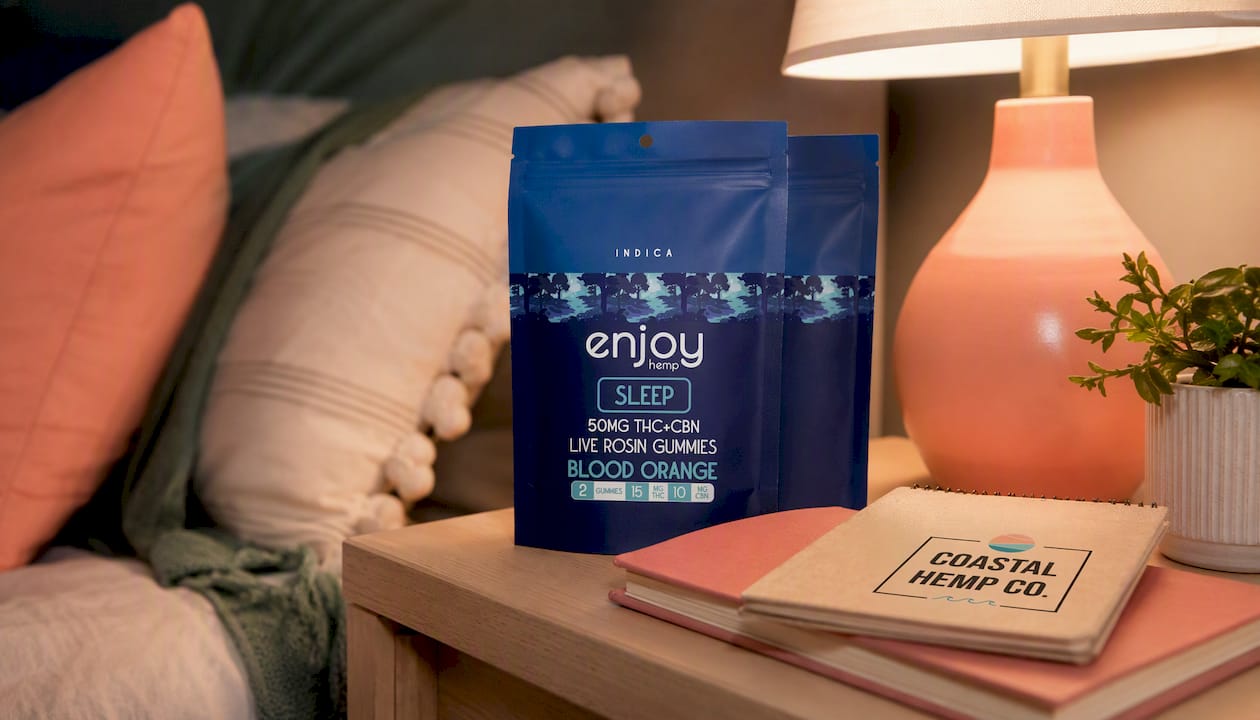
A good example of that approach is the Enjoy Sleep Gummies THC + CBN, a two-pack formulated with both Delta-9 THC and CBN for sleep support. The product is clearly dosed, third-party tested, and designed for the kind of controlled, low-dose use that the harm-reduction guidance in this article recommends. It is the type of product that makes the “start low” approach practical rather than theoretical.
If you are looking for hemp-derived products that prioritize transparency, Coastalhemp’s catalog covers edibles, vapes, concentrates, and functional mushroom gummies, all sourced from vetted brands. Browse the full selection at coastalhemp.co and use the dosing resources available there to make a well-informed choice.
Useful sources and further reading
The sources below are the primary references used in this article. Each is linked directly for verification.
| Source | Why it matters |
|---|---|
| FDA: 5 Things to Know About Delta-8 THC | Federal consumer alert with poison-control exposure data and safety warnings |
| NY Office of Cannabis Management: Cannabinoid Hemp Consumers | State-level guidance explaining the dry-weight loophole and high-mg product examples |
| PMC: Closing the Loophole on Hemp-Derived Cannabis Products | Peer-reviewed public-health analysis of the Farm Bill loophole and regulatory gaps |
| PMC: Potency and Safety Analysis of Hemp Delta-9 Products | Independent lab analysis documenting labeling inaccuracy and incomplete COA testing |
| City of Long Beach: Intoxicating Hemp | Local government consumer warning on converted cannabinoids and retail access |
| Marin Prevention Network: Intoxicating Hemp Products | Public-health guidance on youth exposure risk and misleading packaging |
| CED Clinic: Delta-9 THC Products | Clinician-facing guidance on dosing, onset, and contraindications |
| Ohio State Moritz Law: Considerations for Regulating Intoxicating Hemp | Policy analysis of state regulatory approaches to intoxicating hemp |
| MedlinePlus: Marijuana Intoxication | NIH-affiliated clinical reference for intoxication symptoms and effects |
| NIDA: Cannabis (Marijuana) | National Institute on Drug Abuse overview of cannabinoid pharmacology and effects |
FAQ
Does hemp get you buzzed?
Yes, hemp-derived products containing Delta-8, Delta-10, THC-O, or high-milligram Delta-9 THC can produce genuine intoxication, including euphoria, altered perception, and sedation.
What does hemp make you feel like?
Common effects include relaxation, mild euphoria, sleepiness, and altered sensory perception. At higher doses, adverse effects such as anxiety, paranoia, dizziness, and nausea are well documented.
What makes hemp intoxicating?
The presence of psychoactive cannabinoids, primarily THC isomers produced through chemical conversion of CBD or through concentration of naturally occurring THC, is what makes hemp products intoxicating. The 0.3% dry-weight rule allows high total milligram doses in edibles and beverages.
Can you get stoned off of hemp?
Yes. Hemp-derived Delta-9 THC is pharmacologically identical to cannabis-derived Delta-9 THC and produces the same intoxication. FDA data confirm that hemp-derived intoxicants have led to thousands of adverse exposure reports requiring medical evaluation.
Will hemp products show up on a drug test?
Yes. Standard drug tests detect THC metabolites and cannot distinguish hemp-derived from cannabis-derived THC. Regular use of any THC-containing hemp product can produce a positive result.


Comments