

Hemp's Role in Harm Reduction: A 2026 Safety Guide
Hemp is defined as a harm reduction tool when it serves as a safer substitute for more harmful substances like opioids, alcohol, or benzodiazepines. The role of hemp harm reduction has gained serious clinical attention, with 87% of medical cannabis patients reporting substitution of at least one substance, including 76% reducing opioid use and 42% cutting back on alcohol. That data shifts hemp from a wellness trend into a legitimate public health conversation. This guide covers the evidence, the real risks, and the practical steps for using hemp responsibly as part of a broader recovery or wellness plan.
How does hemp reduce opioid, alcohol, and drug use?
Hemp and harm reduction share a core principle: reduce overall damage, even when complete abstinence is not yet possible. The substitution evidence is compelling. Research shows that 76% of medical patients who use cannabis report replacing opioids, while 42% substitute it for alcohol and 38% for other prescription medications. Those numbers reflect real behavioral change, not just preference.
The mechanism behind this substitution connects to how cannabinoids interact with the body’s endocannabinoid system. CBD and low-dose THC both address the core symptoms that drive substance dependence: chronic pain, anxiety, and disrupted sleep. When those symptoms are managed, the pull toward more harmful substances weakens. You can read more about hemp’s calming science to understand how this works at a physiological level.

Veterans represent one of the most studied groups in this context. Roughly one-third of veterans in substance use disorder treatment report using cannabis, primarily to manage chronic pain, anxiety, and sleep disruption. That population faces compounding challenges, and hemp offers a lower-risk option when opioids carry serious addiction potential.
The strongest case for hemp as a harm reduction tool applies specifically to supervised opioid substitution. Clinical evidence supports this application most clearly when a physician monitors both the hemp use and the reduction in the primary substance. Unsupervised lifestyle use carries a weaker evidence base.
- Opioid substitution: 76% of medical patients report reduced opioid use when incorporating cannabis.
- Alcohol reduction: 42% substitute cannabis for alcohol, particularly for anxiety-driven drinking.
- Sleep and pain management: Hemp addresses the root symptoms that sustain dependence cycles.
- Veteran populations: One-third of veterans in SUD treatment use cannabis for pain and anxiety relief.
Pro Tip: If you are using hemp to reduce another substance, tell your doctor. Supervised substitution produces measurably better outcomes than self-managed approaches.
What are the safety concerns and demographic risks?
Hemp is not risk-free, and the impact of hemp on health varies significantly by age and gender. A 21-year analysis of FDA adverse event data found that older adults and women face higher neuropsychiatric risks from hemp use, while men show higher rates of seizure-related adverse events. That demographic variability matters when choosing a product and a dose.
The “hemp” label itself creates a safety problem. Product ingredient verification is critical because marketing claims often diverge from actual cannabinoid content. A product labeled as CBD-dominant may contain meaningful levels of delta-8 THC or other analogs that produce unexpected psychoactive effects. Reading a certificate of analysis (COA) from a third-party lab is the only reliable way to know what you are consuming.
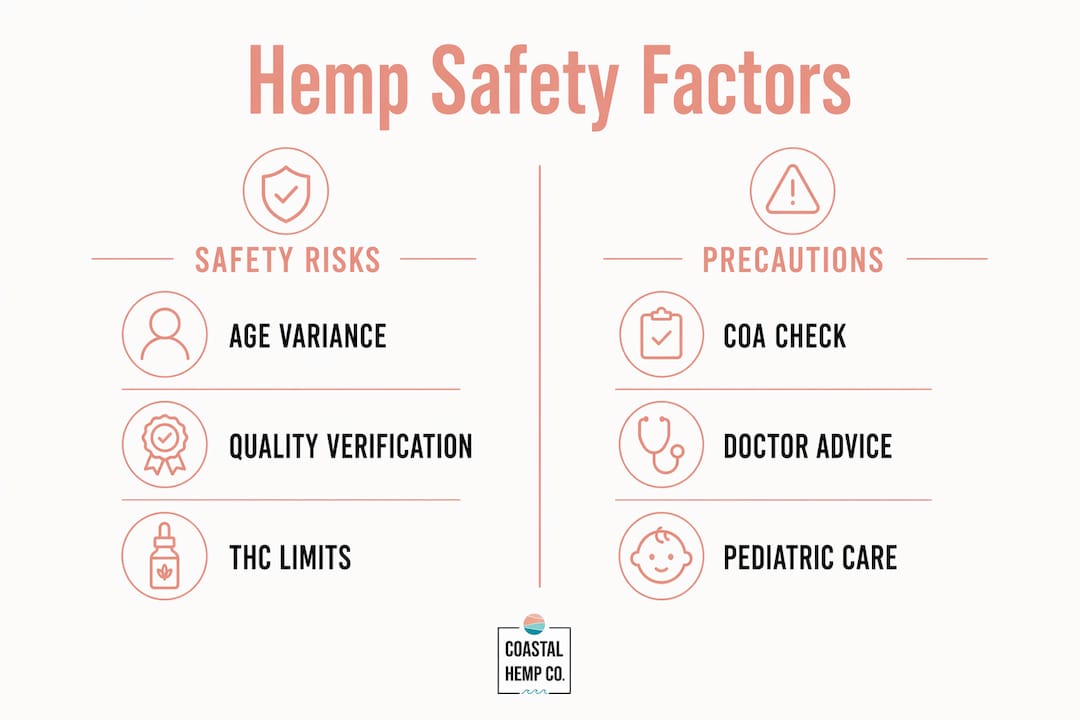
Pediatric safety is a specific regulatory concern. The American College of Medical Toxicology recommends THC limits of 5 mg per serving and 50 mg per container to reduce the risk of accidental ingestion by children. Severe toxicity has been documented in children exposed to doses above 60 mg. These limits also serve as a useful benchmark for adults managing their own intake.
| Risk Factor | Who Is Most Affected | What to Watch For |
|---|---|---|
| Neuropsychiatric reactions | Older adults, women | Mood changes, confusion, anxiety spikes |
| Seizure risk | Men | Sudden neurological symptoms |
| Pediatric toxicity | Children under 12 | Accidental ingestion of high-THC products |
| Mislabeled products | All consumers | Unexpected psychoactive effects from unlisted cannabinoids |
| Poly-substance interaction | People on prescription medications | Drug interactions with blood thinners, antidepressants |
Pro Tip: Always request a COA before purchasing any hemp product. A reputable brand publishes third-party lab results that confirm cannabinoid content and confirm the absence of pesticides and heavy metals.
How to implement hemp harm reduction safely in daily life
Safe implementation starts with a clear intention. Before using hemp as a harm reduction tool, identify the specific substance you are replacing. Vague goals like “feeling better” produce vague results. Concrete goals like “reduce evening alcohol use by replacing it with a low-dose CBD product” create a measurable framework.
Tracking is non-negotiable. Monitoring both the substance being replaced and hemp consumption confirms whether true substitution is occurring or whether hemp is simply being added on top of existing use. Adding hemp without reducing the primary substance is not harm reduction. It is poly-substance use, which carries its own risks.
Setting a “cannabis ceiling” is one of the most practical concepts in this space. Deliberate THC intake limits prevent the development of new dependencies and reduce the risk of impairment. A ceiling might mean capping daily THC at 10 mg, or limiting use to specific times of day. The ceiling should be set before you start, not after tolerance builds.
Here is a practical framework for getting started:
- Define the target substance. Name the specific drug, drink, or medication you are working to reduce.
- Choose the right hemp product. CBD-dominant products suit anxiety and sleep. Low-dose THC products may better address pain. Review hemp dosage best practices before selecting a format.
- Set your cannabis ceiling. Decide on a maximum daily THC dose before you begin. Write it down.
- Track both substances weekly. Log your hemp use and your target substance use side by side. Reduction in the target substance confirms the approach is working.
- Consult a clinician. A physician or pharmacist can flag drug interactions and help you interpret your tracking data.
- Recognize dependency warning signs. Craving hemp specifically, using it outside your planned windows, or increasing the dose to get the same effect are all signals to reassess.
- Integrate other wellness tools. Hemp works best alongside sleep hygiene, physical activity, and stress management practices, not as a standalone fix.
Understanding THC tolerance management is also worth studying early. Tolerance builds faster than most people expect, and managing it proactively keeps the harm reduction benefit intact over time.
Pro Tip: Use a simple notes app to log your daily hemp dose and your target substance use. After two weeks, the pattern becomes clear. Most people are surprised by how quickly substitution shows up in the data.
What is the broader public health context of hemp harm reduction?
Hemp harm reduction sits at the intersection of two competing pressures in public health: the need to expand access to safer alternatives and the need to protect vulnerable populations from new harms. Neither goal cancels the other. The challenge is building policy that holds both at once.
Current US hemp regulation struggles with this balance. The 2018 Farm Bill legalized hemp federally, but product safety standards remain inconsistent across states. The Baker Institute’s analysis of US hemp policy identifies the core tension clearly: balancing consumer access with public health requires THC limits, labeling standards, and age restrictions that many current state frameworks do not fully enforce.
Clinicians play a central role in making hemp harm reduction work at the population level. Research on veteran populations shows that clinicians should educate patients on cannabis evidence and policy rather than simply discouraging use. Patients who feel judged for using hemp often stop disclosing it to their doctors, which removes the medical oversight that makes substitution safe.
Key policy priorities that public health researchers currently support include:
- Standardized THC limits per serving and per container, aligned with American College of Medical Toxicology recommendations.
- Mandatory third-party lab testing and COA disclosure for all hemp products sold to consumers.
- Age-specific counseling protocols in clinical settings, given the documented demographic variability in adverse reactions.
- Tracking frameworks that distinguish true substitution from additive poly-substance use in clinical and research settings.
The international picture adds useful context. Several European countries have integrated cannabis into formal harm reduction programs alongside needle exchanges and opioid substitution therapy. The US is moving in a similar direction, but the pace varies sharply by state. For consumers, this means the quality and safety of available products depend heavily on where you live and where you shop.
Key Takeaways
Hemp serves as a clinically supported harm reduction tool when used with clear substitution goals, a defined THC ceiling, and medical supervision.
| Point | Details |
|---|---|
| Substitution rates are high | 87% of medical patients substitute hemp for at least one substance, including 76% for opioids. |
| Demographic risks vary | Older adults and women face higher neuropsychiatric risks; men face higher seizure risk from hemp use. |
| Set a cannabis ceiling | Capping daily THC intake prevents new dependencies and keeps harm reduction on track. |
| Track both substances | Monitoring hemp use alongside the target substance confirms true substitution, not additive use. |
| Product verification matters | Always check a third-party COA to confirm actual cannabinoid content before purchasing. |
My honest assessment of hemp as a harm reduction tool
I have followed the clinical literature on hemp and harm reduction closely, and the honest picture is more nuanced than either advocates or critics tend to admit. The substitution data is real. An 87% substitution rate among medical patients is not a rounding error. But the context behind that number matters enormously.
The patients driving those statistics are largely supervised, using hemp for specific medical conditions, and working within a framework that includes monitoring. That is very different from someone self-medicating anxiety with unverified gummies purchased online. Both situations involve hemp. Only one of them reflects the conditions under which the evidence was gathered.
What I find most useful about the harm reduction framing is that it removes the all-or-nothing pressure. Telling someone struggling with opioid dependence that they must achieve complete sobriety immediately has a poor track record. Offering a safer substitute while working toward that goal has a better one. Hemp fits that middle space well, particularly for pain and anxiety-driven use.
The part that concerns me is the lack of product standardization. Mislabeled products and inconsistent cannabinoid content mean that even well-intentioned consumers can end up consuming something very different from what they intended. Until labeling standards improve, the responsibility falls on the consumer to verify what they are buying. That is a real burden, and not everyone has the knowledge or access to do it well.
My practical advice: treat hemp as a tool with a specific job, not a general wellness supplement. Define the job, set limits, track results, and stay in contact with a clinician. That approach produces the outcomes the research actually supports.
— John
Coastalhemp products for a harm reduction-centered approach

Coastalhemp carries products designed for people who take their hemp use seriously. For those focused on controlled, low-dose THC intake, the Celestial Wellness THCv Gummies offer a cannabinoid profile suited to appetite regulation and mood support without heavy psychoactive load. THCv is gaining attention in wellness circles for its distinct effects compared to standard delta-9 THC. Coastalhemp also stocks full-spectrum CBD oils and functional mushroom edibles for readers who want to build a broader wellness stack. Every product in the catalog comes from vetted growers and brands, with lab testing to back the label claims. That consistency is exactly what harm reduction requires.
FAQ
What is the role of hemp in harm reduction?
Hemp serves as a safer substitute for more harmful substances like opioids and alcohol, reducing overall health risk. Research shows 87% of medical cannabis patients substitute hemp for at least one substance.
Can hemp reduce opioid use?
Yes. Clinical data shows 76% of medical cannabis patients report reduced opioid use after incorporating hemp. The effect is strongest under medical supervision for chronic pain management.
What are the main safety risks of using hemp for harm reduction?
Adverse reactions vary by age and gender, with older adults and women facing higher neuropsychiatric risks and men facing higher seizure risk. Product mislabeling also poses a significant risk, making third-party lab verification necessary.
What is a “cannabis ceiling” and why does it matter?
A cannabis ceiling is a self-imposed daily THC limit set before beginning hemp use. It prevents tolerance buildup and new dependencies, keeping hemp functioning as a harm reduction tool rather than becoming a new problem.
How do I know if hemp substitution is actually working?
Track your hemp use and your target substance use side by side each week. A genuine reduction in the target substance confirms substitution. If both are increasing, you are adding hemp rather than replacing the original substance.


Comments