
How Hydration Shapes Your Hemp Edible Experience
Hydration meaningfully changes how hemp edibles absorb, how quickly they take effect, and how intense the experience feels. The role of hydration in hemp edibles comes down to three overlapping mechanisms: THC’s lipophilic chemistry, CB1 receptor activity in salivary glands, and the way gastric fluid volume influences absorption timing. Three practical steps to improve your edible experience include drinking water before dosing, pairing your edible with a small amount of healthy fat, and avoiding alcohol or excess caffeine around your session. If you take medications that affect liver metabolism, or if you have a chronic health condition, consult a clinician before adjusting your edible routine.
Key Takeaways
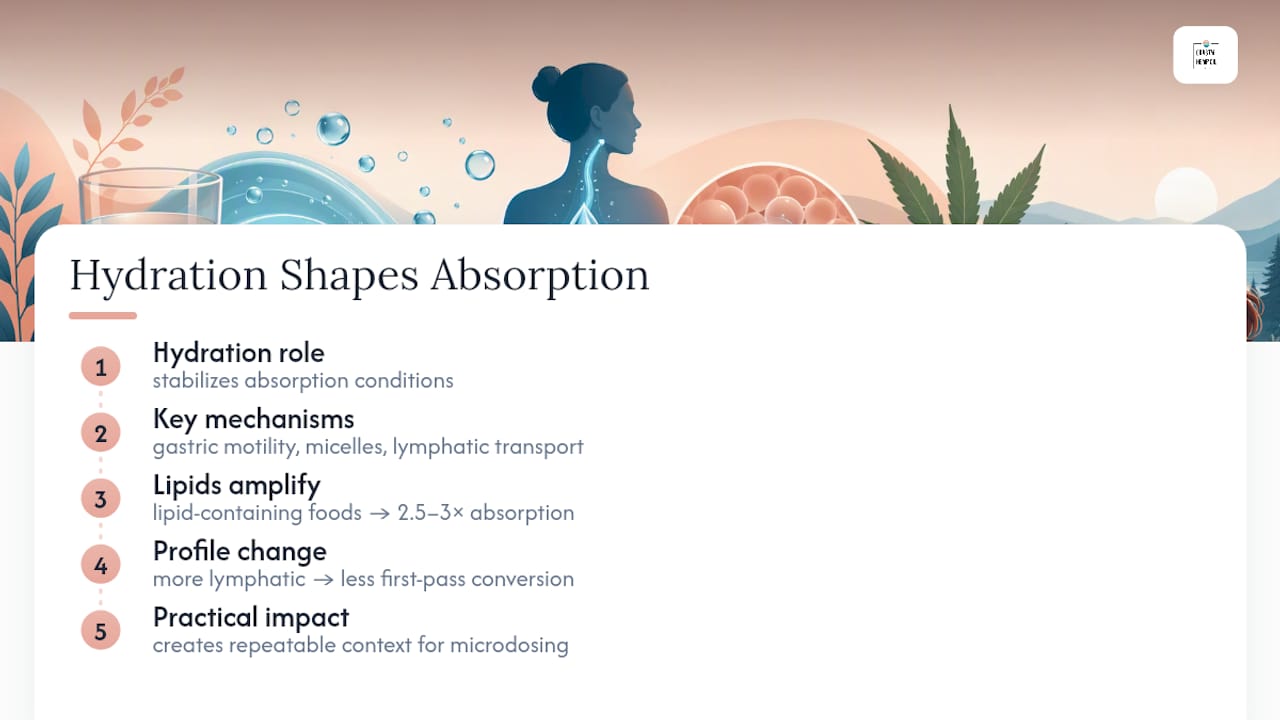
Hydration shapes hemp edible absorption and consistency more through gastric and metabolic conditions than through dehydration prevention — making routine more important than volume.
| Point | Details |
|---|---|
| Cottonmouth vs. dehydration | Dry mouth is a CB1 receptor effect, not a sign of fluid deficit; water helps symptoms but does not change the mechanism. |
| Fat increases absorption | Research documents a 2.5–3× rise in cannabinoid absorption when edibles are taken with lipid-containing food. |
| Hydration stabilizes onset | Adequate fluid supports gastric motility, reducing the delayed or variable onset that leads to accidental re-dosing. |
| Avoid alcohol and excess caffeine | Both worsen subjective dehydration and alter perceived edible intensity; skip alcohol entirely around dosing. |
| Coastalhemp for consistent dosing | Coastalhemp’s third-party tested edibles, including sleep and de-stress gummies, support the repeatable routines this guide recommends. |
This article is general information, not a substitute for advice from a qualified doctor. Consult a qualified healthcare professional about your own circumstances before acting on anything here.
Table of Contents
- Why cannabis causes “cottonmouth” and how it differs from real dehydration
- Do hemp edibles actually dehydrate you?
- How fat and hydration change what your body does with an edible
- How to recognize real dehydration vs. normal edible side effects
- A practical hydration and meal plan for consistent edible effects
- Who should be especially careful with edibles and hydration
- Quick answers to common questions about hemp edibles
- An editorial perspective on hydration and hemp edibles
- Coastalhemp carries products built for this kind of intentional use
- Sources
- FAQ
Why cannabis causes “cottonmouth” and how it differs from real dehydration
Dry mouth after cannabis is not a sign that your body is running low on water. It is a direct pharmacological effect. THC activates CB1 receptors in the salivary glands, suppressing saliva production through a mechanism called xerostomia. Your blood volume, electrolyte balance, and overall fluid status remain largely unchanged. That distinction matters practically: drinking water relieves the oral dryness temporarily, but it does not “fix” the underlying receptor activity causing it.
Systemic dehydration is a different condition entirely. It involves measurable changes in blood osmolality, reduced urine output, and in serious cases, elevated heart rate and confusion. Cottonmouth produces none of those. Several factors can make cottonmouth feel worse, including baseline saliva variance, certain antihistamines or antidepressants that already reduce salivary flow, and mouth breathing.
Key differences at a glance:
- Cottonmouth (xerostomia): caused by CB1 receptor suppression of salivary glands; relieved temporarily by water or saliva stimulants; not a sign of fluid deficit
- Systemic dehydration: involves blood-volume changes, concentrated urine, and physical symptoms like lightheadedness; requires actual fluid replacement
- Medications: antihistamines, tricyclic antidepressants, and diuretics can worsen dry mouth independent of cannabis use
- Baseline variance: some people produce less saliva naturally, making cottonmouth feel more pronounced at lower doses
Do hemp edibles actually dehydrate you?
For most healthy adults, hemp and cannabis edibles do not cause systemic dehydration. The pharmacology does not include a diuretic mechanism. What edibles do cause is cottonmouth, which occurs across all consumption methods — edibles, tinctures, patches, and capsules — confirming it is a systemic CB1 effect, not a product of smoke irritating the throat.
Inhalation methods (smoking, vaping) carry their own respiratory irritation and a faster onset, but they do not inherently dehydrate more than edibles. Edibles have a slower, more variable onset because they pass through the digestive system, and that delay is where hydration status actually plays a role: adequate gastric fluid supports motility and consistent absorption timing.
Real dehydration risk does appear under specific conditions:
- Alcohol co-use: alcohol is a genuine diuretic and can compound sedation; combining it with edibles raises both dehydration and impairment risk
- Caffeine in excess: high caffeine intake affects perceived hydration and can interact with subjective edible effects
- Exercise or heat exposure: physical activity while using edibles increases sweat loss; without deliberate fluid replacement, actual dehydration can develop
- Overconsumption: very high doses can cause nausea and vomiting, which creates real fluid loss
How fat and hydration change what your body does with an edible
THC is lipophilic, meaning it dissolves in fat rather than water. That single chemical property drives most of what changes when you eat an edible with or without food. In the small intestine, cannabinoids form mixed micelles with bile salts and dietary fats. Those micelles can be packaged into chylomicrons and transported through the lymphatic system, partially bypassing first-pass liver metabolism. The practical result: more THC reaches systemic circulation, and the ratio of THC to 11-hydroxy-THC shifts depending on how much hepatic processing occurs.
A 2025 research summary documented a 2.5–3× increase in intestinal cannabinoid absorption when edibles were ingested with lipid-containing foods. That is a mechanistic finding, not a universal guarantee — individual variation in gut transit time, bile production, and enzyme activity all influence the actual result. Some consumer-oriented summaries suggest a notable absorption enhancement when edibles are paired with appropriate hydration and meal context, though primary research on the exact figure is limited and should be treated as illustrative.
Hydration itself supports gastric motility and consistent nutrient absorption. Poor hydration can slow gastric emptying, which delays edible onset and makes it harder to distinguish a delayed response from a non-response — a common reason people re-dose too early.
| Condition | Reported absorption effect | Evidence level |
|---|---|---|
| Fasted / no fat | Baseline absorption | Mechanistic / clinical |
| With lipid-containing food | 2.5–3× increase | 2025 research summary |
| With hydration + meal context | notable enhancement (illustrative) | Industry/observational |
| Dehydrated / fasted | Delayed onset, variable absorption | Mechanistic / observational |
There is limited direct research isolating hydration as a single variable in edible pharmacokinetics. Most guidance combines mechanistic biochemistry with observational data, so consumer-level experimentation with consistent conditions remains the most practical approach.
Pro Tip: Keep a simple log for three to five sessions: same fat source (e.g., a tablespoon of nut butter or a small handful of nuts), same fluid intake (around 300 mL of water), same dose, and note onset time and duration. Consistency in those variables reveals your personal baseline far more reliably than any single session.
How to recognize real dehydration vs. normal edible side effects
Most post-edible discomfort is cottonmouth or mild dizziness, both of which resolve with rest and water. Knowing which symptoms signal something more serious helps you respond appropriately rather than either panicking or dismissing a real problem.
Typical edible side effects (usually manageable at home):
- Dry mouth and mild throat dryness
- Mild dizziness or lightheadedness, especially when standing quickly
- Temporary increase in heart rate
- Mild headache, often linked to dehydration or tension
Signs of systemic dehydration (act on these):
- Confusion or difficulty concentrating beyond typical cannabis effects
- Very dark or minimal urine output over several hours
- Persistent rapid heart rate not explained by anxiety
- Severe dizziness that does not improve with sitting or lying down
- Nausea and vomiting leading to fluid loss
Action steps:
- Mild symptoms: sit or lie down, sip water or an electrolyte drink, eat a light snack, rest in a cool space
- Moderate symptoms (persistent dizziness, headache, low urine): drink 500 mL of water with electrolytes, stop activity, monitor for 30 minutes
- Severe symptoms (confusion, fainting, vomiting): seek emergency care
If you take medications that affect fluid balance or liver function, or if you have a chronic condition, consult a clinician before using edibles, and contact one promptly if symptoms feel disproportionate to your dose.
A practical hydration and meal plan for consistent edible effects
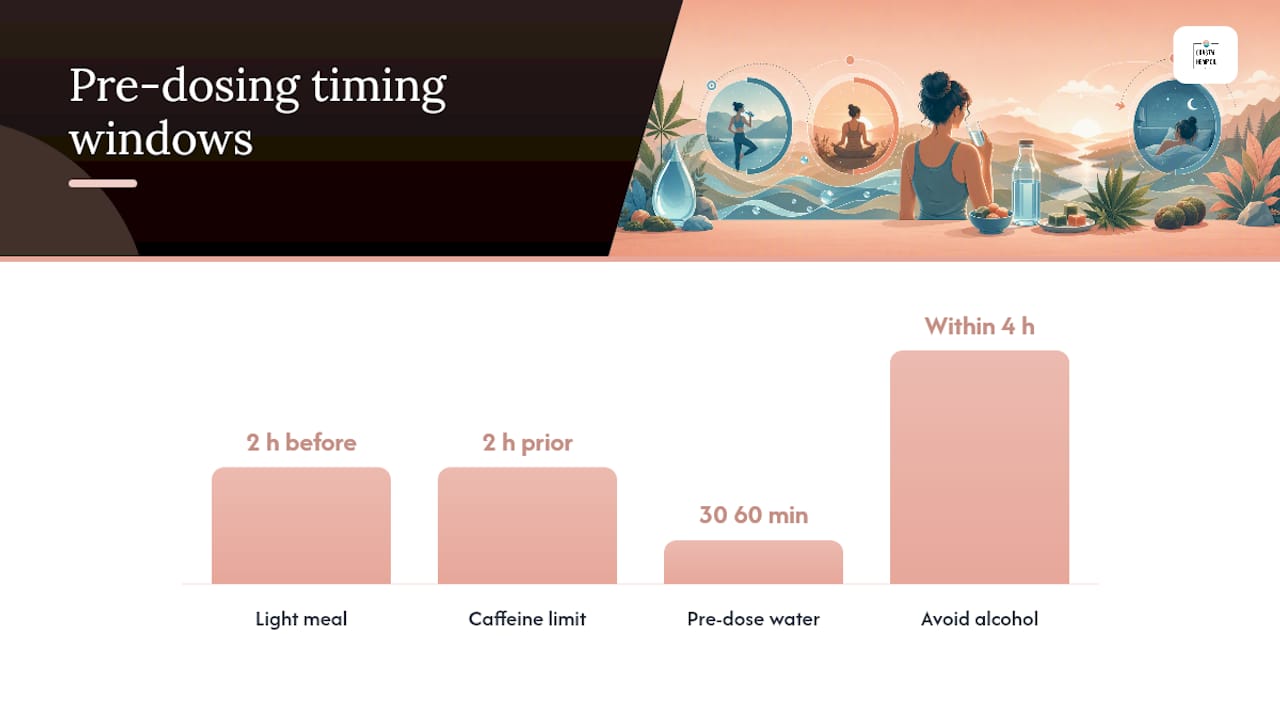
Repeatability is the goal. The same dose can feel dramatically different depending on what you ate, how much you drank, and whether you had coffee or alcohol beforehand. A structured routine removes most of that variability.
Step-by-step plan:
- Two hours before: Eat a light meal containing a modest healthy fat source — avocado, nut butter, olive oil, or a small handful of nuts. Avoid a heavy, high-fat meal, which can amplify intensity unpredictably and extend duration beyond what you want.
- 30–60 minutes before: Drink 250–500 mL of water. Avoid alcohol entirely. Limit caffeine to one moderate serving consumed at least two hours prior.
- At dosing time: Take your edible with a small additional sip of water. For a controlled dosing approach, start at the lower end of your target dose and wait the full onset window (60–120 minutes for most edibles) before considering a second dose.
- During the session: Keep water or a low-sugar electrolyte drink nearby. Sip steadily rather than gulping large amounts, which can cause gastric discomfort.
- For cottonmouth: Chew xylitol gum or suck on sugar-free sour candies. Both stimulate salivary reflexes more effectively than water alone, and xylitol carries dental benefits as a bonus.
- After the session: Rehydrate with 300–500 mL of water or an electrolyte drink, especially if you were active or in a warm environment.
What to avoid:
- Heavy, greasy meals immediately before dosing (unpredictable amplification)
- Alcohol within four hours of dosing
- Excessive caffeine, which can heighten anxiety and alter perceived effects
- Re-dosing before the full onset window has passed
Pro Tip: For consistent microdosing, replicate the same small meal and hydration routine every session. The specific fat source matters less than keeping it identical each time — your body’s response becomes far more predictable when the variables stay fixed.
Who should be especially careful with edibles and hydration
Most healthy adults tolerate hemp edibles well when they follow basic hydration practices. Certain groups face higher risk and should approach edibles with additional caution or clinician guidance.
- Older adults: reduced kidney function and a diminished thirst response mean fluid reserves are lower; dehydration risk is genuinely higher, and edible effects can be more pronounced
- Liver disease: edibles are metabolized hepatically into 11-hydroxy-THC; impaired liver function alters this pathway unpredictably, changing both intensity and duration
- Diuretic medications: furosemide, hydrochlorothiazide, and similar drugs already reduce fluid retention; combining them with edibles and inadequate hydration raises dehydration risk
- Anticoagulants and sedatives: cannabinoids can interact with CYP450 enzymes that metabolize warfarin, benzodiazepines, and certain antidepressants; altered metabolism can shift drug levels in either direction
- Pregnancy and breastfeeding: no safe dose of THC has been established for these populations; avoid entirely and consult an OB-GYN
- Alcohol co-use: combining alcohol with edibles increases sedation, impairment, and dehydration risk simultaneously
If you fall into any of these categories, speak with a clinician before using hemp edibles, regardless of how low the dose is.
Quick answers to common questions about hemp edibles
Are CBD gummies dehydrating? CBD gummies, like THC-containing edibles, can cause cottonmouth through CB1 receptor activity, but they do not cause systemic dehydration in healthy adults. Drink water to manage oral dryness.
Is a 10 mg edible equivalent to smoking a joint? No reliable equivalency exists. Oral THC converts to 11-hydroxy-THC through liver metabolism, a metabolite that tends to be more potent and longer-lasting than inhaled THC’s direct effects. Dose, onset, and duration differ substantially between the two methods, making mg-to-puff comparisons unreliable.
What are the downsides of hemp gummies? The most common are cottonmouth, delayed onset that can lead to accidental over-dosing, and variable absorption depending on meal composition and hydration status at the time of dosing. High-potency products like the Jelly KO Blend Gummies carry a higher risk of overconsumption if dosing is not carefully managed.
What organ is most affected by edibles? The liver is the primary site of edible metabolism. Oral THC undergoes first-pass hepatic processing that converts it to 11-hydroxy-THC, which is why edible effects differ so markedly from inhaled cannabis in both character and duration.
An editorial perspective on hydration and hemp edibles
The conversation around hydration and hemp edibles tends to collapse into two unhelpful extremes: either “just drink more water” as a cure-all, or a dismissal of hydration as irrelevant because edibles are not technically dehydrating. Neither framing serves the health-conscious consumer well.
What the evidence actually shows is more nuanced. Hydration’s real leverage is not preventing dehydration — it is stabilizing the conditions under which your edible absorbs. Gastric motility, micelle formation, and lymphatic transport are all influenced by the fluid and fat environment in your gut at the time of dosing. That means hydration is less about preventing a side effect and more about creating a repeatable physiological context. For anyone serious about daily wellness use or microdosing, that distinction is the difference between a consistent experience and a frustrating guessing game.
The 2.5–3× absorption finding with lipid-containing foods is striking, but the more practically important insight is this: the character of the effect changes too, not just the intensity. More lymphatic transport means less first-pass liver conversion, which means a different THC-to-11-hydroxy-THC ratio. You are not just getting more of the same thing — you are getting a somewhat different pharmacological profile depending on what you ate. Most consumers have no idea this is happening.
Coastalhemp carries products built for this kind of intentional use
If you are approaching hemp edibles with the hydration-first, consistency-focused mindset this guide describes, product quality and dosing transparency matter as much as your routine. Coastalhemp curates its catalog with exactly that consumer in mind: third-party tested products, clear cannabinoid profiles, and a range that spans from lower-psychoactivity wellness options to higher-potency formats.
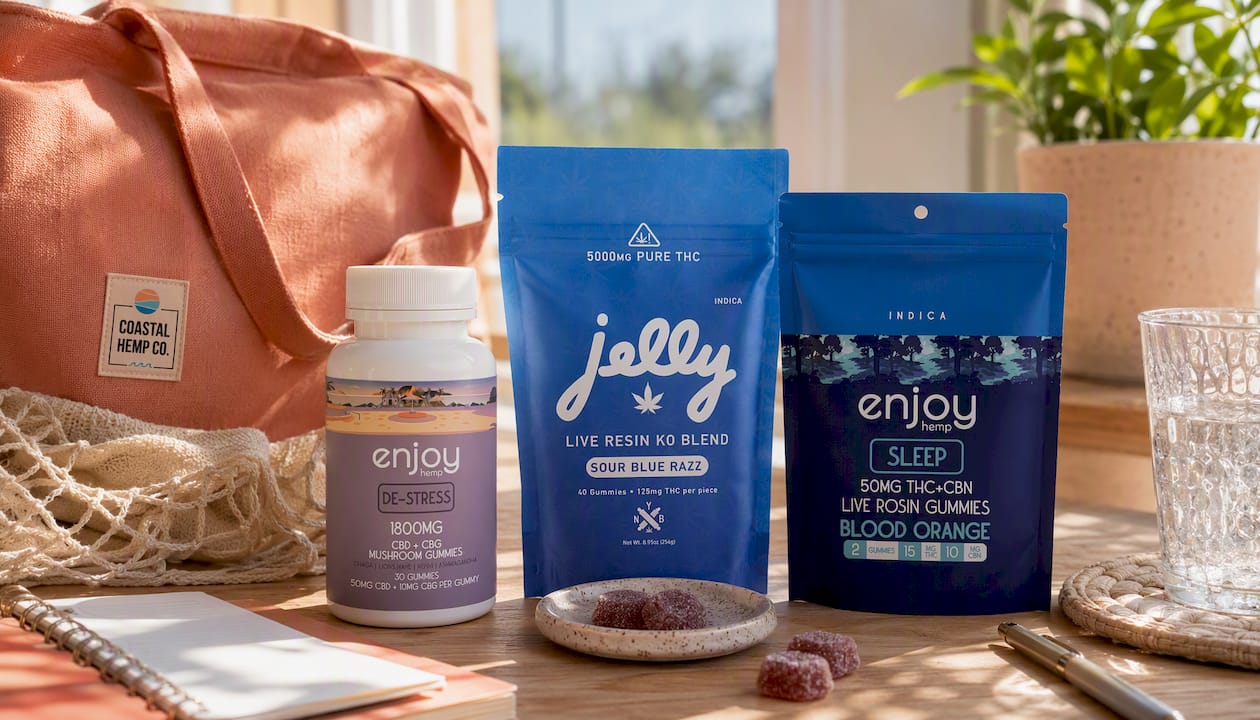
For evening microdosing paired with a consistent pre-sleep hydration routine, the Enjoy Sleep Gummies THC + CBN combine THC with CBN in a format designed for predictable, measured use. For daytime wellness without heavy psychoactivity, the Enjoy De-Stress Gummies blend CBD, CBG, and functional mushrooms into a lower-intensity option that pairs well with the hydration routines described above. Browse the full hemp-derived THC edibles catalog at Coastalhemp to find the format that fits your routine, and use the dosing guides on-site to calibrate your starting point.
Sources
- Doi
- High and dry: What causes cannabis cottonmouth and how do you treat it? | Leafly
- Why Does Weed Give You Cotton Mouth? The Salivary Gland Connection | RethinkTHC
- Ncbi
FAQ
Does drinking water reduce the effects of hemp edibles?
Water does not reduce edible potency. It relieves cottonmouth and supports gastric motility, which can actually improve absorption consistency rather than diminish it.
Are CBD gummies dehydrating?
CBD gummies are not systemically dehydrating. They can cause cottonmouth through CB1 receptor activity in salivary glands, but that is a localized effect, not a whole-body fluid deficit.
Is a 10 mg edible the same as smoking a joint?
No direct equivalency exists. Edibles convert THC to 11-hydroxy-THC via liver metabolism, producing effects that are typically stronger and longer-lasting than an equivalent inhaled dose — making mg-to-puff comparisons unreliable.
What organ is most affected by hemp edibles?
The liver processes oral THC into 11-hydroxy-THC during first-pass metabolism, making it the primary organ involved in how edibles produce their effects and why those effects differ from inhaled cannabis.
What are the main downsides of hemp gummies?
The most common issues are cottonmouth, delayed onset that can lead to accidental over-dosing, and variable absorption depending on meal composition and hydration status at the time of dosing.


Comments