

Hemp Edibles Metabolism Explained: What Happens Inside

Coastal Hemp Co

Hemp edibles metabolism is defined as the process by which the body breaks down cannabinoids from oral consumption through the digestive tract and liver, converting them into active and inactive compounds that determine their effects. When you eat a hemp gummy or infused treat, the cannabinoids do not enter your bloodstream the same way inhaled cannabis does. Instead, they travel through the gastrointestinal tract, pass through the liver, and get transformed by cytochrome P450 enzymes, specifically CYP2C9 and CYP3A4, into metabolites like 11-hydroxy-THC. That conversion is the reason edibles feel different from other consumption methods. Understanding this process helps you make smarter decisions about dosing, timing, and what to eat beforehand.

What happens to hemp edibles after you swallow them?

The hemp edibles digestion process begins the moment you swallow. Cannabinoids move from your mouth through the stomach and into the small intestine, where absorption begins. From there, they enter the portal vein and travel directly to the liver before reaching the rest of your body.

This liver stop is called first-pass metabolism. The liver’s cytochrome P450 enzymes, primarily CYP2C9 and CYP3A4, convert THC into metabolites including the active compound 11-hydroxy-THC and the inactive THC-COOH. First-pass metabolism is not just a filter. It is a transformation step that creates compounds with their own pharmacological properties.

Researcher studying liver enzyme metabolism diagrams

The result is that oral THC bioavailability reaches only about 5–10% of the original dose. Most of what you consume gets processed before it ever reaches your brain. That low absorption rate explains why edible dosing requires more precision than inhalation.

The timeline is also slower. Effects from hemp edibles typically take 45 minutes to 2 hours to appear, depending on your digestive speed, body composition, and what you ate beforehand. That delay catches many people off guard, leading them to take more before the first dose has fully activated.

  1. Ingestion: Cannabinoids enter the stomach and begin dissolving.
  2. Intestinal absorption: Cannabinoids cross the gut wall and enter the portal circulation.
  3. Liver metabolism: CYP enzymes convert THC and CBD into metabolites.
  4. Systemic circulation: Active metabolites reach the brain and other tissues.
  5. Elimination: Inactive metabolites are excreted through urine and feces.

Pro Tip: If you take a second dose because you feel nothing after an hour, you risk stacking two full doses. Wait at least 90 minutes before reconsidering your amount.

How do THC and CBD metabolism differ in hemp edibles?

THC and CBD follow distinct metabolic pathways, and those differences matter for how each cannabinoid makes you feel. Treating them as the same substance is a common mistake.

THC is primarily metabolized by CYP2C9 and CYP3A4 in the liver. The key product is 11-hydroxy-THC, which is pharmacologically active and crosses the blood-brain barrier readily. This metabolite is responsible for the stronger, longer-lasting effects that edibles produce compared to inhaled THC. The other major metabolite, THC-COOH, is inactive and used as a marker in drug testing.
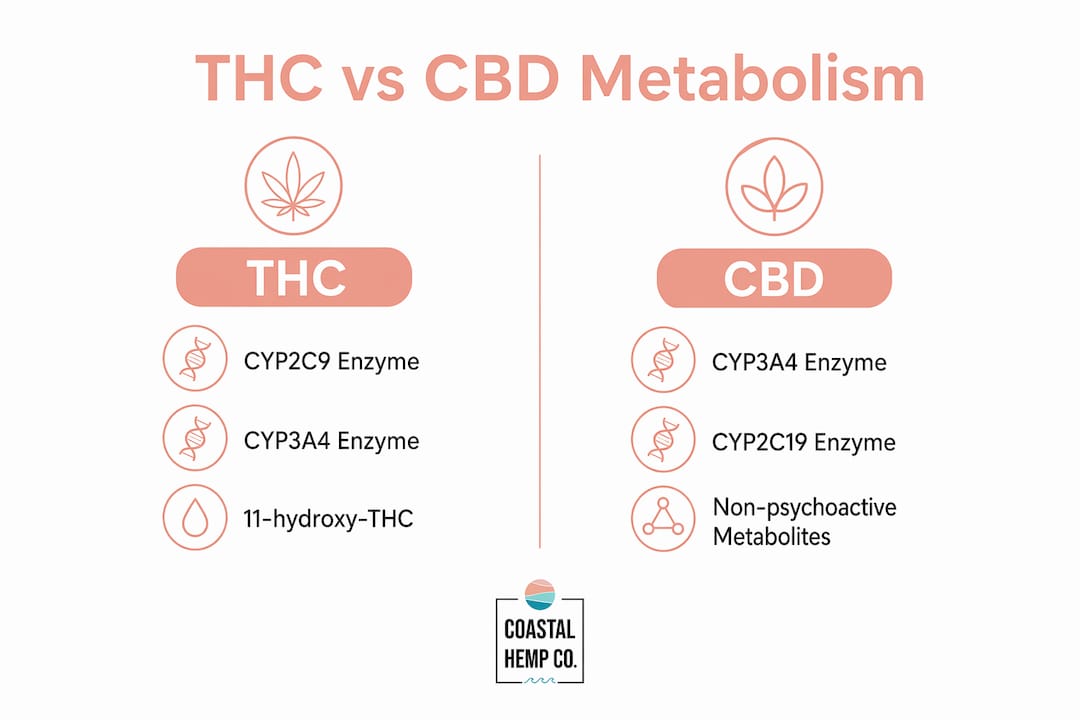
Infographic comparing THC and CBD metabolism

CBD takes a different route. It is metabolized mainly by CYP3A4 and CYP2C19, producing metabolites like 7-hydroxy-CBD. Unlike 11-hydroxy-THC, these CBD metabolites do not produce psychoactive effects. CBD’s oral bioavailability sits at 6–14%, making it even less predictable than THC in edible form. That low number reflects how aggressively the liver processes CBD before it reaches circulation.

Key distinctions between THC and CBD metabolism in edibles:

  • Primary enzymes: THC uses CYP2C9 and CYP3A4; CBD uses CYP3A4 and CYP2C19.
  • Active metabolites: THC produces 11-hydroxy-THC (psychoactive); CBD produces 7-hydroxy-CBD (non-psychoactive).
  • Bioavailability: THC reaches 5–10% oral bioavailability; CBD reaches 6–14%.
  • Effect profile: THC edibles produce stronger psychoactive effects due to active metabolites; CBD edibles produce non-intoxicating effects with variable absorption.
  • Dosing challenge: Both cannabinoids require careful dosing due to low and inconsistent bioavailability.
Factor THC metabolism CBD metabolism
Primary enzymes CYP2C9, CYP3A4 CYP3A4, CYP2C19
Key active metabolite 11-hydroxy-THC 7-hydroxy-CBD (non-psychoactive)
Oral bioavailability ~5–10% ~6–14%
Psychoactive effect Yes, via 11-hydroxy-THC No
Dosing predictability Low Low to moderate

The practical takeaway is that hemp edibles are not a single metabolic story. THC and CBD each require their own dosing logic and produce distinct effects through entirely different biochemical routes.

What role does dietary fat play in hemp edibles absorption?

Fat is the single most underappreciated variable in how hemp edibles affect metabolism. Cannabinoids are fat-soluble molecules, which means they behave very differently depending on what else is in your stomach.

When you consume cannabinoids alongside dietary fat, they get incorporated into structures called chylomicrons. These are lipid transport particles that enter the lymphatic system rather than the portal vein. That lymphatic route partially bypasses the liver’s first-pass metabolism, allowing more cannabinoids to reach systemic circulation intact. The result is higher bioavailability and a more pronounced effect from the same dose.

Research shows that a high-fat meal can delay peak THC plasma concentration by up to 4 hours while maintaining the same peak level. That means the effect arrives later but hits just as hard. Eating fat does not reduce potency. It shifts the timing.

How food intake shapes your edible experience:

  • Fasted state: Faster but lower absorption; more cannabinoids lost to first-pass metabolism.
  • Low-fat meal: Moderate improvement in absorption; modest reduction in first-pass loss.
  • High-fat meal: Slower onset, up to 4-hour delay in peak effects, but higher systemic exposure overall.
  • Fatty foods that help: Avocado, nuts, olive oil, full-fat dairy, and eggs all support cannabinoid absorption.
  • Empty stomach risk: Unpredictable absorption and faster but weaker effects.

Pro Tip: Eating a small, fat-containing snack like a handful of nuts or a piece of avocado toast 30 minutes before taking a hemp edible can meaningfully improve how consistently you feel its effects.

The fat-to-lymphatic pathway also explains why two people eating the same edible can report very different experiences. One person ate a burger beforehand; the other had nothing. Their bodies processed the same cannabinoid dose through entirely different routes.

How does metabolism explain the effects and health benefits of hemp edibles?

The effects of hemp on metabolism go beyond just getting high or feeling calm. The metabolic pathway itself shapes the entire experience, from intensity to duration to potential therapeutic value.

11-hydroxy-THC is the compound most responsible for what makes edibles feel distinct. Because it forms in the liver rather than being inhaled directly, it accumulates gradually and reaches the brain in waves rather than all at once. That gradual buildup produces effects that feel deeper and last longer than inhaled THC. The body is not just absorbing THC. It is absorbing a transformed version of it.

“Full cannabis extracts reversed metabolic impairments in obese mice, implicating non-THC components in metabolic effects.” — UCR News, 2026

That finding points to something significant. Whole-plant hemp extracts appear to influence glucose regulation and metabolic health markers in ways that THC alone cannot replicate. The interaction between multiple cannabis compounds, including minor cannabinoids and terpenes, may modulate insulin signaling and fat tissue communication with the pancreas. This is early-stage research in animal models, but the direction is clear.

Research area Finding Implication
Active metabolites 11-hydroxy-THC is pharmacologically active Edibles produce distinct effects from inhalation
Whole-plant extracts Improved glucose regulation in obese mice Non-THC compounds contribute to metabolic benefits
Bioavailability 5–14% oral absorption for cannabinoids Dosing must account for significant metabolic loss
Fat intake High-fat meals delay but sustain peak levels Dietary context changes the entire effect profile

For people asking whether hemp edibles will help with weight loss, the honest answer is that the research is promising but not yet conclusive in humans. What the science does confirm is that hemp compounds interact with metabolic systems in measurable ways. The benefits of hemp edibles extend beyond relaxation, touching on energy regulation, appetite signaling, and potentially glucose metabolism. Those effects are not incidental. They are built into the metabolic pathway itself.

Hemp edibles and energy levels are also connected through this system. The endocannabinoid system regulates energy homeostasis, and cannabinoid metabolites interact with receptors throughout the body that influence how cells use and store energy. That is not a marketing claim. It is basic endocannabinoid physiology.

Why metabolic knowledge changes how I think about edibles

I have spent years watching people misuse hemp edibles, not because they are careless, but because nobody explained the metabolic mechanics to them. The most common mistake is impatience. Someone takes a gummy, feels nothing after 45 minutes, takes another, and then gets hit by both doses simultaneously two hours later. That is not a product problem. It is a metabolism problem.

The second thing I have noticed is that people treat THC and CBD edibles as interchangeable. They are not. The enzyme pathways are different, the metabolites are different, and the effect profiles are entirely different. Lumping them together leads to confused expectations and inconsistent results. Separating the two metabolic stories, as the research clearly supports, gives people a much more accurate framework for what to expect.

Dietary fat is the variable most people never consider. I have seen the same product produce wildly different experiences in the same person simply because of what they ate beforehand. Once you understand that fat reroutes cannabinoids through the lymphatic system and bypasses some liver processing, the variability stops feeling random. It becomes predictable.

The emerging research on whole-plant extracts and metabolic health is the part I find most compelling. The idea that hemp compounds can interact with glucose regulation and fat tissue signaling goes well beyond recreational use. It suggests that how you formulate an edible, what cannabinoids you include, and how you consume it could have real implications for metabolic wellness. That is a conversation the hemp industry needs to take seriously. Coastalhemp’s approach of curating lab-tested products with clear cannabinoid profiles is exactly the kind of transparency that makes informed consumption possible. You can explore their THC tolerance guide for more on managing dosing over time.

— John

Coastalhemp’s edibles, built for what your body actually does

Understanding how your body processes hemp edibles makes product quality matter even more. Inconsistent cannabinoid content means inconsistent metabolic outcomes. That is why formulation and lab testing are not optional features.

https://coastalhemp.co

Coastalhemp carries a carefully selected range of hemp-derived THC edibles with clear dosing labels and third-party lab verification. For those interested in cannabinoid variety, the Celestial Wellness THCv Gummies offer a 200mg option with a distinct metabolic profile worth exploring. The Jelly THCA Live Sugar Blend Gummies deliver a potent, full-spectrum experience for those who want the full range of plant compounds working together. Every product in the Coastalhemp catalog is chosen with bioavailability and consistency in mind, so what you read on the label reflects what your body actually receives.

FAQ

What is first-pass metabolism in hemp edibles?

First-pass metabolism is the liver’s processing of cannabinoids before they reach systemic circulation. It converts THC into active 11-hydroxy-THC and reduces the total amount of cannabinoid that reaches your bloodstream.

Why do hemp edibles take so long to work?

Edibles must travel through the gastrointestinal tract and liver before cannabinoids enter circulation. That process takes 45 minutes to 2 hours, compared to seconds for inhaled cannabis.

Does eating fat before a hemp edible change the effect?

Yes. Dietary fat incorporates cannabinoids into chylomicrons that enter the lymphatic system, partially bypassing liver metabolism. A high-fat meal can delay peak effects by up to 4 hours while maintaining the same peak concentration.

Is CBD from edibles absorbed the same way as THC?

No. CBD is metabolized primarily by CYP3A4 and CYP2C19, producing non-psychoactive metabolites. Its oral bioavailability ranges from 6–14%, and its absorption varies more between individuals than THC does.

Can hemp edibles support metabolic health?

Early research shows that whole-plant cannabis extracts improved glucose regulation in obese mice beyond what THC alone achieved. Human research is ongoing, and no definitive clinical claims can be made yet.

Key takeaways

Hemp edibles produce their distinct effects because liver metabolism converts THC into 11-hydroxy-THC, an active metabolite that reaches the brain more gradually and with greater intensity than inhaled THC.

Point Details
First-pass metabolism defines edibles The liver converts THC into 11-hydroxy-THC, creating stronger and longer-lasting effects than inhalation.
THC and CBD follow different pathways CYP2C9 and CYP3A4 process THC; CYP3A4 and CYP2C19 process CBD, producing distinct metabolites and effects.
Dietary fat increases bioavailability Consuming edibles with fat reroutes cannabinoids through the lymphatic system, raising systemic exposure.
Oral bioavailability is low for both THC reaches 5–10% and CBD reaches 6–14% oral bioavailability, making precise dosing critical.
Whole-plant extracts show metabolic promise Research links full cannabis extracts to improved glucose regulation, pointing to benefits beyond THC alone.

Hemp edibles metabolism is defined as the process by which the body breaks down cannabinoids from oral consumption through the digestive tract and liver, converting them into active and inactive compounds that determine their effects. When you eat a hemp gummy or infused treat, the cannabinoids do not enter your bloodstream the same way inhaled cannabis does. Instead, they travel through the gastrointestinal tract, pass through the liver, and get transformed by cytochrome P450 enzymes, specifically CYP2C9 and CYP3A4, into metabolites like 11-hydroxy-THC. That conversion is the reason edibles feel different from other consumption methods. Understanding this process helps you make smarter decisions about dosing, timing, and what to eat beforehand.

What happens to hemp edibles after you swallow them?

The hemp edibles digestion process begins the moment you swallow. Cannabinoids move from your mouth through the stomach and into the small intestine, where absorption begins. From there, they enter the portal vein and travel directly to the liver before reaching the rest of your body.

This liver stop is called first-pass metabolism. The liver’s cytochrome P450 enzymes, primarily CYP2C9 and CYP3A4, convert THC into metabolites including the active compound 11-hydroxy-THC and the inactive THC-COOH. First-pass metabolism is not just a filter. It is a transformation step that creates compounds with their own pharmacological properties.

Researcher studying liver enzyme metabolism diagrams

The result is that oral THC bioavailability reaches only about 5–10% of the original dose. Most of what you consume gets processed before it ever reaches your brain. That low absorption rate explains why edible dosing requires more precision than inhalation.

The timeline is also slower. Effects from hemp edibles typically take 45 minutes to 2 hours to appear, depending on your digestive speed, body composition, and what you ate beforehand. That delay catches many people off guard, leading them to take more before the first dose has fully activated.

  1. Ingestion: Cannabinoids enter the stomach and begin dissolving.
  2. Intestinal absorption: Cannabinoids cross the gut wall and enter the portal circulation.
  3. Liver metabolism: CYP enzymes convert THC and CBD into metabolites.
  4. Systemic circulation: Active metabolites reach the brain and other tissues.
  5. Elimination: Inactive metabolites are excreted through urine and feces.

Pro Tip: If you take a second dose because you feel nothing after an hour, you risk stacking two full doses. Wait at least 90 minutes before reconsidering your amount.

How do THC and CBD metabolism differ in hemp edibles?

THC and CBD follow distinct metabolic pathways, and those differences matter for how each cannabinoid makes you feel. Treating them as the same substance is a common mistake.

THC is primarily metabolized by CYP2C9 and CYP3A4 in the liver. The key product is 11-hydroxy-THC, which is pharmacologically active and crosses the blood-brain barrier readily. This metabolite is responsible for the stronger, longer-lasting effects that edibles produce compared to inhaled THC. The other major metabolite, THC-COOH, is inactive and used as a marker in drug testing.

Infographic comparing THC and CBD metabolism

CBD takes a different route. It is metabolized mainly by CYP3A4 and CYP2C19, producing metabolites like 7-hydroxy-CBD. Unlike 11-hydroxy-THC, these CBD metabolites do not produce psychoactive effects. CBD’s oral bioavailability sits at 6–14%, making it even less predictable than THC in edible form. That low number reflects how aggressively the liver processes CBD before it reaches circulation.

Key distinctions between THC and CBD metabolism in edibles:

  • Primary enzymes: THC uses CYP2C9 and CYP3A4; CBD uses CYP3A4 and CYP2C19.
  • Active metabolites: THC produces 11-hydroxy-THC (psychoactive); CBD produces 7-hydroxy-CBD (non-psychoactive).
  • Bioavailability: THC reaches 5–10% oral bioavailability; CBD reaches 6–14%.
  • Effect profile: THC edibles produce stronger psychoactive effects due to active metabolites; CBD edibles produce non-intoxicating effects with variable absorption.
  • Dosing challenge: Both cannabinoids require careful dosing due to low and inconsistent bioavailability.
Factor THC metabolism CBD metabolism
Primary enzymes CYP2C9, CYP3A4 CYP3A4, CYP2C19
Key active metabolite 11-hydroxy-THC 7-hydroxy-CBD (non-psychoactive)
Oral bioavailability ~5–10% ~6–14%
Psychoactive effect Yes, via 11-hydroxy-THC No
Dosing predictability Low Low to moderate

The practical takeaway is that hemp edibles are not a single metabolic story. THC and CBD each require their own dosing logic and produce distinct effects through entirely different biochemical routes.

What role does dietary fat play in hemp edibles absorption?

Fat is the single most underappreciated variable in how hemp edibles affect metabolism. Cannabinoids are fat-soluble molecules, which means they behave very differently depending on what else is in your stomach.

When you consume cannabinoids alongside dietary fat, they get incorporated into structures called chylomicrons. These are lipid transport particles that enter the lymphatic system rather than the portal vein. That lymphatic route partially bypasses the liver’s first-pass metabolism, allowing more cannabinoids to reach systemic circulation intact. The result is higher bioavailability and a more pronounced effect from the same dose.

Research shows that a high-fat meal can delay peak THC plasma concentration by up to 4 hours while maintaining the same peak level. That means the effect arrives later but hits just as hard. Eating fat does not reduce potency. It shifts the timing.

How food intake shapes your edible experience:

  • Fasted state: Faster but lower absorption; more cannabinoids lost to first-pass metabolism.
  • Low-fat meal: Moderate improvement in absorption; modest reduction in first-pass loss.
  • High-fat meal: Slower onset, up to 4-hour delay in peak effects, but higher systemic exposure overall.
  • Fatty foods that help: Avocado, nuts, olive oil, full-fat dairy, and eggs all support cannabinoid absorption.
  • Empty stomach risk: Unpredictable absorption and faster but weaker effects.

Pro Tip: Eating a small, fat-containing snack like a handful of nuts or a piece of avocado toast 30 minutes before taking a hemp edible can meaningfully improve how consistently you feel its effects.

The fat-to-lymphatic pathway also explains why two people eating the same edible can report very different experiences. One person ate a burger beforehand; the other had nothing. Their bodies processed the same cannabinoid dose through entirely different routes.

How does metabolism explain the effects and health benefits of hemp edibles?

The effects of hemp on metabolism go beyond just getting high or feeling calm. The metabolic pathway itself shapes the entire experience, from intensity to duration to potential therapeutic value.

11-hydroxy-THC is the compound most responsible for what makes edibles feel distinct. Because it forms in the liver rather than being inhaled directly, it accumulates gradually and reaches the brain in waves rather than all at once. That gradual buildup produces effects that feel deeper and last longer than inhaled THC. The body is not just absorbing THC. It is absorbing a transformed version of it.

“Full cannabis extracts reversed metabolic impairments in obese mice, implicating non-THC components in metabolic effects.” — UCR News, 2026

That finding points to something significant. Whole-plant hemp extracts appear to influence glucose regulation and metabolic health markers in ways that THC alone cannot replicate. The interaction between multiple cannabis compounds, including minor cannabinoids and terpenes, may modulate insulin signaling and fat tissue communication with the pancreas. This is early-stage research in animal models, but the direction is clear.

Research area Finding Implication
Active metabolites 11-hydroxy-THC is pharmacologically active Edibles produce distinct effects from inhalation
Whole-plant extracts Improved glucose regulation in obese mice Non-THC compounds contribute to metabolic benefits
Bioavailability 5–14% oral absorption for cannabinoids Dosing must account for significant metabolic loss
Fat intake High-fat meals delay but sustain peak levels Dietary context changes the entire effect profile

For people asking whether hemp edibles will help with weight loss, the honest answer is that the research is promising but not yet conclusive in humans. What the science does confirm is that hemp compounds interact with metabolic systems in measurable ways. The benefits of hemp edibles extend beyond relaxation, touching on energy regulation, appetite signaling, and potentially glucose metabolism. Those effects are not incidental. They are built into the metabolic pathway itself.

Hemp edibles and energy levels are also connected through this system. The endocannabinoid system regulates energy homeostasis, and cannabinoid metabolites interact with receptors throughout the body that influence how cells use and store energy. That is not a marketing claim. It is basic endocannabinoid physiology.

Why metabolic knowledge changes how I think about edibles

I have spent years watching people misuse hemp edibles, not because they are careless, but because nobody explained the metabolic mechanics to them. The most common mistake is impatience. Someone takes a gummy, feels nothing after 45 minutes, takes another, and then gets hit by both doses simultaneously two hours later. That is not a product problem. It is a metabolism problem.

The second thing I have noticed is that people treat THC and CBD edibles as interchangeable. They are not. The enzyme pathways are different, the metabolites are different, and the effect profiles are entirely different. Lumping them together leads to confused expectations and inconsistent results. Separating the two metabolic stories, as the research clearly supports, gives people a much more accurate framework for what to expect.

Dietary fat is the variable most people never consider. I have seen the same product produce wildly different experiences in the same person simply because of what they ate beforehand. Once you understand that fat reroutes cannabinoids through the lymphatic system and bypasses some liver processing, the variability stops feeling random. It becomes predictable.

The emerging research on whole-plant extracts and metabolic health is the part I find most compelling. The idea that hemp compounds can interact with glucose regulation and fat tissue signaling goes well beyond recreational use. It suggests that how you formulate an edible, what cannabinoids you include, and how you consume it could have real implications for metabolic wellness. That is a conversation the hemp industry needs to take seriously. Coastalhemp’s approach of curating lab-tested products with clear cannabinoid profiles is exactly the kind of transparency that makes informed consumption possible. You can explore their THC tolerance guide for more on managing dosing over time.

— John

Coastalhemp’s edibles, built for what your body actually does

Understanding how your body processes hemp edibles makes product quality matter even more. Inconsistent cannabinoid content means inconsistent metabolic outcomes. That is why formulation and lab testing are not optional features.

https://coastalhemp.co

Coastalhemp carries a carefully selected range of hemp-derived THC edibles with clear dosing labels and third-party lab verification. For those interested in cannabinoid variety, the Celestial Wellness THCv Gummies offer a 200mg option with a distinct metabolic profile worth exploring. The Jelly THCA Live Sugar Blend Gummies deliver a potent, full-spectrum experience for those who want the full range of plant compounds working together. Every product in the Coastalhemp catalog is chosen with bioavailability and consistency in mind, so what you read on the label reflects what your body actually receives.

FAQ

What is first-pass metabolism in hemp edibles?

First-pass metabolism is the liver’s processing of cannabinoids before they reach systemic circulation. It converts THC into active 11-hydroxy-THC and reduces the total amount of cannabinoid that reaches your bloodstream.

Why do hemp edibles take so long to work?

Edibles must travel through the gastrointestinal tract and liver before cannabinoids enter circulation. That process takes 45 minutes to 2 hours, compared to seconds for inhaled cannabis.

Does eating fat before a hemp edible change the effect?

Yes. Dietary fat incorporates cannabinoids into chylomicrons that enter the lymphatic system, partially bypassing liver metabolism. A high-fat meal can delay peak effects by up to 4 hours while maintaining the same peak concentration.

Is CBD from edibles absorbed the same way as THC?

No. CBD is metabolized primarily by CYP3A4 and CYP2C19, producing non-psychoactive metabolites. Its oral bioavailability ranges from 6–14%, and its absorption varies more between individuals than THC does.

Can hemp edibles support metabolic health?

Early research shows that whole-plant cannabis extracts improved glucose regulation in obese mice beyond what THC alone achieved. Human research is ongoing, and no definitive clinical claims can be made yet.

Key takeaways

Hemp edibles produce their distinct effects because liver metabolism converts THC into 11-hydroxy-THC, an active metabolite that reaches the brain more gradually and with greater intensity than inhaled THC.

Point Details
First-pass metabolism defines edibles The liver converts THC into 11-hydroxy-THC, creating stronger and longer-lasting effects than inhalation.
THC and CBD follow different pathways CYP2C9 and CYP3A4 process THC; CYP3A4 and CYP2C19 process CBD, producing distinct metabolites and effects.
Dietary fat increases bioavailability Consuming edibles with fat reroutes cannabinoids through the lymphatic system, raising systemic exposure.
Oral bioavailability is low for both THC reaches 5–10% and CBD reaches 6–14% oral bioavailability, making precise dosing critical.
Whole-plant extracts show metabolic promise Research links full cannabis extracts to improved glucose regulation, pointing to benefits beyond THC alone.

Comments

Be the first to comment.
All comments are moderated before being published.