

Hemp Extraction Methods Explained: Choose the Right Process
Hemp extraction is the process of separating cannabinoids, terpenes, and other bioactive compounds from hemp biomass. Every method falls into one of two categories: solvent-based or solventless. Solvent-based approaches use chemical agents such as ethanol, supercritical CO2, butane, or propane. Solventless methods rely on heat, pressure, or mechanical agitation alone. The right hemp extraction method depends on your target product, throughput, budget, and terpene retention priorities.
The primary methods you’ll encounter across the industry:
- Ethanol extraction — high-yield, scalable, requires winterization
- Supercritical CO2 extraction — tunable selectivity, clean profile, high capital cost
- Hydrocarbon extraction (BHO/propane) — terpene-forward, live resin capable, explosion risk
- Rosin pressing — solventless, heat and pressure, craft scale
- Ice-water / bubble hash — solventless, mechanical agitation, artisan use
- Assisted methods (ultrasound, microwave, PEF) — emerging, lab to pilot scale
Understanding how each technique works, what it costs, and what product it produces is the foundation for any serious evaluation of hemp extraction techniques.
Key Takeaways
The most important principle in hemp extraction is matching the method to the target product: solventless for terpene-first artisan products, ethanol or CO2 for scalable consistent-potency production.
| Point | Details |
|---|---|
| Two primary categories | Hemp extraction methods are solvent-based (ethanol, CO2, hydrocarbons) or solventless (rosin, ice-water hash). |
| Ethanol yield and trade-offs | Ethanol extraction is preferred at large scale for high cannabinoid yield but requires winterization to remove chlorophyll and waxes. |
| CO2 yield range | Supercritical CO2 extraction yields roughly 5.8–12.0 wt%; adding ~5% ethanol co-solvent improves acid cannabinoid recovery. |
| Closed-loop safety | Modern closed-loop systems can produce solvent-based extracts with nondetectable residual solvents when properly engineered. |
| Coastalhemp sourcing | Coastalhemp carries COA-backed hemp products across extract types, from THCA live sugar blends to full-spectrum oils. |
Table of Contents
- How are hemp extraction methods classified?
- How does ethanol extraction work?
- How does supercritical CO2 extraction work?
- How does hydrocarbon extraction (BHO and propane) work?
- How do solventless methods work — rosin and bubble hash?
- What are the emerging assisted extraction techniques?
- Why does biomass preparation matter before extraction?
- What happens after extraction? Post-processing and purification
- What equipment and capital investment does each method require?
- What are the safety and regulatory standards for hemp extraction?
- Which extraction method should you choose for your product?
- What should you look for when sourcing hemp extracts?
- Environmental and sustainability considerations of each extraction technique
- When to favor craft solventless vs. scalable solvent-based approaches
- What Coastalhemp offers for hemp extract products
- Sources
- FAQ
How are hemp extraction methods classified?
The two-tier classification of hemp extraction techniques maps directly to commercial scale and product outcomes. Solvent-based methods dominate industrial hemp extraction because they are faster, more scalable, and produce consistent potency. Solventless methods are more labor-intensive but are prized for terpene fidelity and a “no-chemical” consumer perception.
Within solvent-based extraction, there are two subcategories:
- Pressurized gas solvents: supercritical/subcritical CO2, propane, butane
- Liquid solvents: ethanol, hexane, isopropyl alcohol, and other organic solvents
Solventless methods split into:
- Mechanical: ice-water agitation (bubble hash), dry sifting (kief)
- Thermal/mechanical: rosin pressing (heat + pressure)
Method → Outcome → Scale at a glance:
- Ethanol → full-spectrum, broad-spectrum, isolate → commercial/industrial
- Supercritical CO2 → fractionated extracts, distillate, terpene-rich oil → pilot to industrial
- Hydrocarbon (BHO/propane) → live resin, wax, shatter → boutique to mid-scale
- Rosin → full-spectrum rosin, hash rosin → craft to small commercial
- Ice-water hash → bubble hash, live rosin feedstock → craft
Solvent-based methods are more scalable for commercial production, while solventless approaches are more labor-intensive and harder to scale at volume. That trade-off is the central tension every operator navigates when choosing an extraction approach.
How does ethanol extraction work?
Ethanol extraction is preferred for large-scale cannabinoid production because ethanol’s polarity gives it high cannabinoid solubility, and it yields high extraction rates across the full cannabinoid spectrum. It is also considered lower toxicity than most organic solvents, which matters for ingestible products.
Process steps:
- Biomass is dried and milled to a target particle size.
- Chilled ethanol (often at –20°C to –40°C) is introduced to the biomass via maceration, soaking, or continuous-flow centrifugal extraction.
- The ethanol-plant mixture is agitated for a set contact time, then separated from spent biomass.
- The crude ethanol extract undergoes winterization: chilling to –20°C or below to precipitate waxes, lipids, and chlorophyll.
- Winterized extract is filtered, then the ethanol is recovered via rotary evaporation or falling-film evaporation.
- The crude oil proceeds to distillation or chromatography depending on the target product.
Temperature is the most important lever in ethanol extraction. Warm or room-temperature ethanol dissolves chlorophyll, flavonoids, and plant waxes aggressively alongside cannabinoids, which means more post-processing. Cold ethanol is more selective for cannabinoids and reduces the chlorophyll load significantly.
Pros:
- High cannabinoid yield across a broad spectrum
- GRAS (Generally Recognized as Safe) status for food applications
- Established solvent recovery infrastructure
- Compatible with full-spectrum, broad-spectrum, and isolate production
Cons:
- Co-extracts chlorophyll, waxes, and lipids requiring winterization
- Large solvent volumes at scale create handling and storage requirements
- Ethanol is flammable; EPA EPCRA reporting thresholds apply at commercial volumes
- Post-processing adds time and cost
Pro Tip: Run your ethanol at –40°C or below during initial contact. The selectivity gain at that temperature reduces chlorophyll co-extraction enough to cut winterization time and improve the color of your crude oil before it ever reaches the evaporator.
Ethanol extraction produces crude oil that can be refined into full-spectrum oil, broad-spectrum distillate, or CBD isolate depending on the downstream purification steps applied. It remains the workhorse of industrial hemp extraction for good reason.
How does supercritical CO2 extraction work?
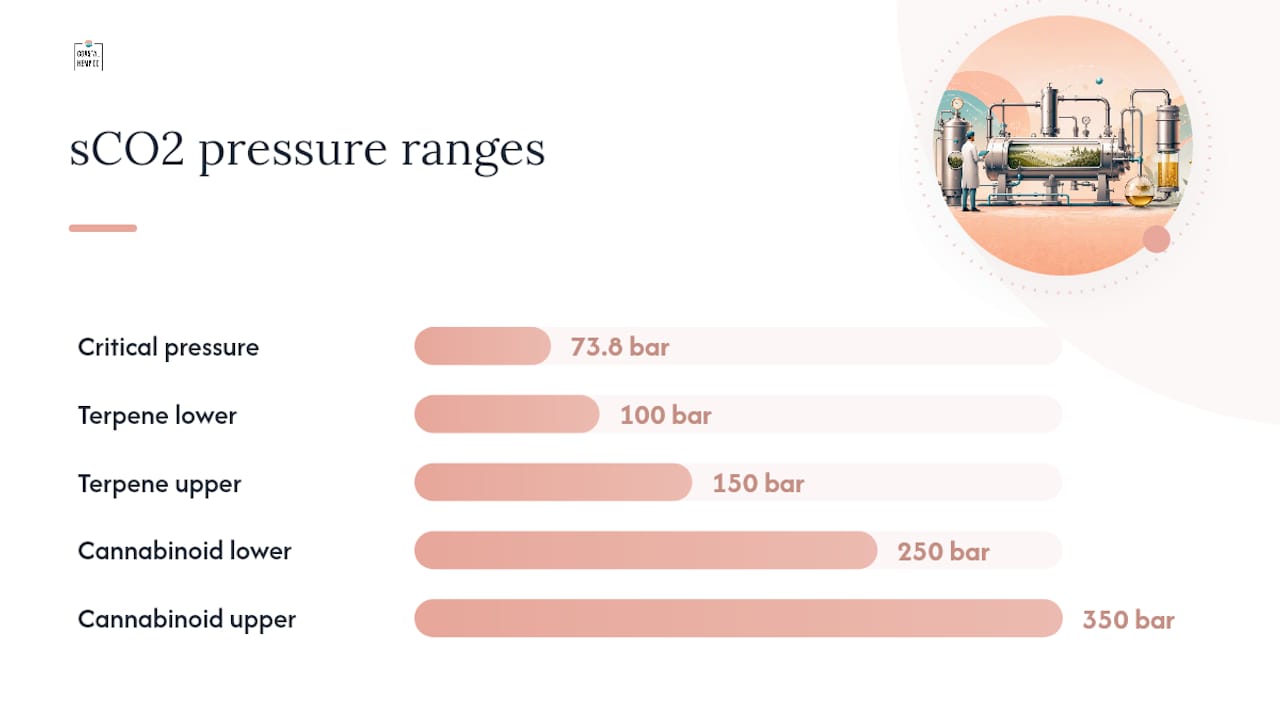
Supercritical CO2 (sCO2) extraction operates by pressurizing CO2 above its critical point (31.1°C, 73.8 bar), where it behaves simultaneously as a liquid and a gas. At that state, CO2 becomes a highly effective, tunable solvent. Adjusting pressure and temperature changes CO2 density and thus its selectivity for different cannabinoids and terpenes, making sCO2 one of the most precise hemp extraction techniques available.
Process steps:
- CO2 is compressed and heated to supercritical conditions in a pump/heat exchanger system.
- Supercritical CO2 flows through a packed extraction vessel containing milled hemp biomass.
- Pressure and temperature are tuned: lower pressures (~100–150 bar) favor terpenes; higher pressures (~250–350 bar) favor cannabinoids.
- The CO2-extract mixture passes through separators where pressure drops, CO2 returns to gas, and the extract precipitates.
- Fractionation across multiple separators allows selective collection of terpene-rich fractions separately from cannabinoid-rich fractions.
- Adding approximately 5% ethanol as a co-solvent enhances extraction of acid cannabinoid forms (CBDA, THCA) and shortens extraction time.
Comparative studies report CO2 extraction yields in a moderate range depending on conditions, depending on biomass quality, pressure settings, and whether ethanol co-solvent is used. Pulsatile co-solvent addition can outperform steady dosing in some experimental setups.
Pros:
- No permanent solvent residue in the final product (CO2 returns to gas)
- Tunable selectivity for terpenes vs. cannabinoids
- Considered a “green” extraction method with minimal environmental byproducts
- Fractionation capability allows collection of distinct compound classes
Cons:
- High capital cost for pressure-rated equipment
- Lower throughput per cycle compared to ethanol at industrial scale
- Requires skilled operators familiar with high-pressure systems
- Subcritical CO2 (below critical point) is gentler on terpenes but slower and lower-yield
Supercritical CO2 is the preferred method when product purity, clean flavor profile, and terpene fractionation are priorities. Each hemp cultivar behaves differently under sCO2 conditions, so operators benefit from running small factorial experiments to optimize pressure, temperature, and co-solvent ratios for their specific biomass.
How does hydrocarbon extraction (BHO and propane) work?
Light hydrocarbon extraction uses butane, propane, or blended butane/propane as the solvent. These solvents are non-polar, which makes them highly selective for cannabinoids and terpenes while leaving behind water-soluble compounds like chlorophyll. The result is a cleaner crude extract with less post-processing than ethanol, and exceptional terpene retention when run at low temperatures.
Process steps:
- Solvent is chilled to –20°C to –40°C (or lower for live resin workflows).
- Chilled solvent is passed through a column packed with hemp biomass (fresh-frozen for live resin, dried for conventional).
- Short contact times preserve volatile terpenes and prevent over-extraction of undesirable compounds.
- The solvent-extract solution is collected in a base vessel and warmed gently to evaporate the hydrocarbon.
- Residual solvent is purged under vacuum in a vacuum oven, typically at low temperatures to protect terpenes.
- Closed-loop systems recapture and recycle the solvent for reuse.
Comparative data show propane yields in the range of 4.8–8.2 wt%, generally lower than CO2 at peak conditions but producing extracts with a notably richer terpene profile. Live resin, wax, shatter, and budder are all typical hydrocarbon extraction outcomes.
Pros:
- Superior terpene preservation, especially in live resin workflows
- Non-polar selectivity reduces chlorophyll and water-soluble co-extraction
- Relatively lower capital cost than sCO2 at boutique scale
- Fast extraction cycles
Cons:
- Butane and propane are highly flammable and explosive; open-loop systems are dangerous
- Requires classified electrical areas, explosion-proof equipment, and gas detection systems
- Regulatory compliance varies by jurisdiction; many states require licensed facilities
- Lower throughput limits scalability compared to ethanol
Safety note: Hydrocarbon extraction must be conducted in a closed-loop system with proper engineering controls: continuous gas monitoring, explosion-proof ventilation, pressure relief valves, and trained operators. Open-loop or “open blast” extraction is illegal in most commercial contexts and poses severe fire and explosion risk.
How do solventless methods work — rosin and bubble hash?
Solventless extraction uses no chemical solvents. The two primary techniques are rosin pressing and ice-water (bubble hash) extraction. Both preserve a broad terpene profile and carry strong consumer appeal as “clean” products, but they require high-quality starting material and produce lower yields than solvent-based methods.
Rosin pressing:
- Dried flower, hash, or kief is placed between parchment paper and pressed between heated plates.
- Typical plate temperatures range from 70°C to 120°C depending on material and desired consistency.
- Pressure forces the resin through the trichome heads, collecting as rosin on the parchment.
- Yield varies widely: 10–25% from quality flower, higher from bubble hash feedstock (hash rosin).
Ice-water / bubble hash:
- Fresh or dried hemp biomass is submerged in ice water and agitated mechanically.
- Agitation breaks trichome heads from the plant material.
- The slurry is filtered through a series of bubble bags (screens of decreasing micron size).
- Each screen collects a different grade of hash based on trichome head size.
- The collected hash is dried thoroughly before pressing or sale.
Rosin and ice-water extracts retain a broader range of terpenes but are costlier per unit to produce at scale. Labor intensity is the primary constraint. Both methods require premium starting material; poor-quality biomass produces poor-quality hash and low rosin yields.
Pros:
- No solvent residues by definition
- Broad terpene preservation
- Consumer perception of purity
- Suitable for craft and artisan producers
Cons:
- Lower yields than solvent-based methods
- High labor cost per unit
- Difficult to scale without significant equipment investment
- Quality is highly dependent on input material quality
Solventless methods are the right choice when terpene fidelity and product differentiation are the primary goals, and when throughput demands are manageable at craft or small commercial scale.
What are the emerging assisted extraction techniques?
Assisted extraction methods use physical energy to improve mass transfer and cell disruption, often reducing solvent volumes or extraction time compared to conventional approaches. These techniques are primarily used at lab or pilot scale, though some are moving toward industrial application.
Key assisted methods:
- Ultrasound-assisted extraction (UAE): Acoustic cavitation creates micro-bubbles that disrupt plant cell walls, improving solvent penetration and cannabinoid release. Reduces extraction time and can lower solvent-to-biomass ratios.
- Microwave-assisted extraction (MAE): Microwave energy heats the plant matrix internally, rupturing cells and accelerating compound diffusion into the solvent. Faster than conventional maceration but requires careful temperature control to avoid terpene degradation.
- Pulsed electric field (PEF): High-voltage electric pulses create pores in cell membranes (electroporation), improving extractability without significant heat. Promising for preserving heat-sensitive compounds.
- Hydrodynamic cavitation: Pressure changes in a flowing liquid create cavitation bubbles that disrupt plant tissue. Scalable in principle and energy-efficient compared to ultrasound at larger volumes.
These methods are typically combined with a primary solvent (ethanol or CO2) rather than replacing it. The practical advantages are reduced solvent use, shorter cycle times, and potentially higher yields from the same biomass. Capital cost and patent complexity are the main barriers to widespread adoption. For operators focused on sustainability or processing difficult biomass, UAE and PEF are the most practically accessible entry points.
Why does biomass preparation matter before extraction?
Pretreatment is where yield and product quality are often won or lost before the solvent ever touches the plant. Three steps matter most: drying, milling, and decarboxylation.
Pretreatment steps and their effects:
- Drying: Target moisture content of 8–12% for most extraction methods. Excess moisture dilutes solvent efficiency in ethanol extraction and can cause emulsification. Over-drying degrades volatile terpenes.
- Milling and particle size: Reducing particle size increases surface area and improves solvent contact. Typical targets are 1–4 mm for ethanol extraction. Finer particles increase yield but complicate filtration.
- Decarboxylation: Heating biomass (typically 105–120°C for 30–60 minutes) converts CBDA to CBD and THCA to THC. Decarboxylation before extraction is used when neutral cannabinoid forms are the target. Extracting first and decarboxylating afterward preserves acid forms (CBDA, THCA) in the crude oil, which is preferred for certain product types and for THCA-containing products.
Pro Tip: Avoid over-milling your biomass to a powder. Fine particles pass through filter screens, clog clarification equipment, and increase the chlorophyll load in ethanol extracts. A consistent 2–3 mm grind hits the sweet spot between surface area and filterability for most ethanol workflows.
Decarboxylation timing is a strategic decision, not just a processing step. Operators targeting full-spectrum products with intact acid cannabinoids should extract first and decarboxylate post-extraction or skip it entirely depending on the product goal.
What happens after extraction? Post-processing and purification
Crude extract from any method contains cannabinoids alongside waxes, lipids, chlorophyll, residual solvent, and other plant compounds. Post-processing refines that crude into a finished product. The steps chosen determine whether the final product is full-spectrum oil, broad-spectrum distillate, or a pure isolate.
Standard purification steps:
- Winterization: Crude extract is dissolved in cold ethanol and chilled to –20°C or below. Waxes and lipids precipitate and are removed by filtration. Standard for ethanol crude and often applied to CO2 crude as well.
- Cold filtration: Winterized extract passes through filter media (celite, activated carbon, filter paper) to remove precipitated solids and reduce color.
- Rotary evaporation / falling-film evaporation: Removes the bulk of the ethanol or other solvent under reduced pressure and mild heat, recovering solvent for reuse.
- Short-path or wiped-film distillation: Separates cannabinoids from remaining impurities by boiling point under high vacuum. Produces distillate with cannabinoid concentrations typically in the 80–95% range.
- Chromatography (preparative HPLC or CPC): Separates individual cannabinoids with high precision. Used to produce isolates (>99% purity) or to remove THC for broad-spectrum products.
The review of conventional and alternative cannabinoid extraction techniques notes that hexane is treated as a solvent-to-limit under ICH pharmaceutical guidance (290 ppm residual limit), while ethanol carries a much higher permitted residual threshold, making it the preferred solvent when regulatory cleanliness is a priority for ingestible products.
Purification trade-offs:
- Winterization + distillation removes terpenes along with impurities; terpenes must be added back if desired.
- Chromatography raises purity but adds cost and processing time.
- Full-spectrum products require minimal post-processing to preserve the native compound profile.
- Isolate production requires distillation followed by crystallization or chromatography.
Understanding how hemp product formulation connects to extraction and purification choices helps explain why two products labeled “CBD oil” can have dramatically different compositions and effects.
What equipment and capital investment does each method require?
Equipment requirements scale with method complexity and throughput targets. The gap between a bench-scale lab setup and a full industrial plant is measured in orders of magnitude, both in footprint and cost.
Equipment classes:
- Bench/lab scale: Small rotary evaporators, 1–5L extraction vessels, basic filtration, and a vacuum oven. Suitable for R&D, small-batch rosin, or pilot CO2 work. Low capital entry point.
- Skid-mounted pilot units: Mid-scale closed-loop hydrocarbon systems, 20–100L ethanol centrifugal extractors, or pilot sCO2 systems (1–5L vessel). Throughput of tens to hundreds of pounds of biomass per day.
- Industrial closed-loop plants: Large-scale falling-film evaporators, wiped-film distillation trains, multi-vessel sCO2 systems, or continuous ethanol extraction lines. Throughput of hundreds to thousands of pounds per day.
Key cost drivers:
- Pressure ratings for CO2 systems (high-pressure vessels are expensive to certify and maintain)
- Number of separator stages in CO2 workflows
- Solvent reclaim and recovery systems (critical for ethanol economics at scale)
- Refrigeration capacity for hydrocarbon and cold-ethanol workflows
- QA/QC testing costs (COA panels per batch add up quickly at volume)
- Classified electrical area requirements for hydrocarbon facilities
The step-change in capital expenditure typically occurs when moving from pilot to full production. A pilot ethanol system might process 50–100 lbs of biomass per day; an industrial continuous system can process that in an hour. The CAPEX jump at that transition is substantial, and operators should model solvent recovery efficiency carefully, since solvent loss is one of the largest ongoing operational costs in ethanol extraction.
What are the safety and regulatory standards for hemp extraction?
Safety in hemp extraction is not optional, and the regulatory framework around solvent use, residual limits, and facility design is specific and enforceable. Understanding these standards is as important as understanding the chemistry.
Primary hazards and engineering controls:
- Explosion and fire (hydrocarbons): Butane and propane have low flash points and wide flammable ranges. Controls: closed-loop systems, continuous gas detection, explosion-proof electrical classification, pressure relief, and trained operators.
- Solvent toxicity: Hexane and other non-polar solvents carry significant toxicity risk; ethanol is lower risk but still requires ventilation and spill containment.
- Heavy metals: Can originate from soil contamination in hemp biomass or from equipment (stainless steel vs. cheaper alloys). Mitigated by sourcing tested biomass and using food-grade equipment.
- Microbial contamination: Wet biomass or poor facility hygiene can introduce mold and bacteria into crude extract.
Modern closed-loop extraction systems and professional purging protocols can produce solvent-based extracts with nondetectable residual solvents when properly engineered and validated. The idea that solvent-based extracts are inherently “dirty” is not supported by well-run operations.
Ethanol used at commercial scale in food or beverage contexts may trigger EPA EPCRA Tier II reporting requirements depending on storage quantities. Operators should confirm thresholds with their environmental compliance team.
Residual solvent expectations:
ICH pharmaceutical guidance categorizes solvents by risk. Hexane falls into the “solvents to limit” category with a 290 ppm guideline. Ethanol is in the lower-risk category with a much higher permitted residual threshold. Most state hemp programs and third-party labs screen for a panel of residual solvents; passing limits vary by jurisdiction but generally align with ICH or USP guidance.
Pro Tip: When reviewing a Certificate of Analysis (COA), look for a full residual solvent panel, not just a pass/fail notation. A COA that lists individual solvent results (ethanol, butane, propane, hexane, heptane) with quantified ppm values tells you far more about extraction quality than a single “pass” checkbox. Also confirm the COA includes heavy metals, microbial counts, pesticides, and a full cannabinoid profile.
Which extraction method should you choose for your product?
The right extraction method depends on the product you want to make, the scale you need to operate at, and the resources available. The comparison below maps those variables directly.
| Method | Best for | Selectivity | Cost and throughput | Equipment complexity | Safety/residue risk | Typical product outcomes |
|---|---|---|---|---|---|---|
| Ethanol | Large-scale, consistent potency | Broad (cannabinoids + chlorophyll) | Low cost/unit at scale; high throughput | Moderate; solvent recovery needed | Flammable; low residue risk with recovery | Full-spectrum, broad-spectrum, isolate |
| Supercritical CO2 | Fractionated, clean-profile products | High; tunable by pressure/temp | High capital; moderate throughput | High; pressure-rated systems | Minimal residue; non-toxic solvent | Fractionated extracts, distillate, terpene oil |
| Hydrocarbon (BHO/propane) | Terpene-rich, live resin products | High for terpenes and cannabinoids | Moderate capital; lower throughput | Moderate; closed-loop required | High explosion risk; low residue if purged | Live resin, wax, shatter, budder |
| Rosin (solventless) | Craft, artisan, terpene-first | Very high terpene retention | Low capital; low throughput | Low | No solvent risk | Full-spectrum rosin, hash rosin |
| Ice-water hash (solventless) | Craft, live rosin feedstock | High terpene retention | Low capital; labor-intensive | Low | No solvent risk | Bubble hash, live rosin input |
Checklist for choosing a method:
- What is your target product? (isolate, distillate, full-spectrum, live resin)
- What is your throughput requirement? (pounds per day)
- What is your capital budget?
- How important is terpene retention to your product?
- What are your regulatory requirements for solvent use and facility classification?
- What post-processing infrastructure do you have or plan to build?
For a deeper look at how extraction method affects CBD oil composition, the trade-offs between full-spectrum and isolate products are worth reviewing before committing to a processing approach.
What should you look for when sourcing hemp extracts?
For buyers rather than producers, the extraction method is most visible on the product label and the COA. Knowing what to look for helps you assess quality before purchase.
COA fields to confirm:
- Cannabinoid panel (CBD, CBDA, THC, THCA, CBG, CBN, and others relevant to the product)
- Residual solvent screen with individual compound results in ppm
- Pesticide panel (multi-residue screen)
- Heavy metals (lead, arsenic, cadmium, mercury)
- Microbial counts (total aerobic bacteria, yeast and mold, E. coli, Salmonella)
- Terpene profile (if the product claims terpene content)
The label often signals the extraction method. “CO2-extracted” typically indicates a cleaner terpene profile and fractionated extract. “Ethanol-extracted” is common for distillates and isolates. “Full-spectrum” with no extraction method listed warrants a closer look at the COA to confirm the cannabinoid and terpene breadth.
How extraction method shows up in the product experience:
CO2-extracted full-spectrum oils tend to have a cleaner, more neutral flavor. Ethanol-extracted products can carry a slight green or grassy note if winterization was incomplete. Hydrocarbon-extracted live resins have the most pronounced terpene aroma and flavor. Solventless rosin is often described as the most “whole-plant” in character.
Pro Tip: A simple red flag: if a full-spectrum oil is completely clear and odorless, it has likely been heavily distilled, stripping most terpenes and minor cannabinoids. Genuine full-spectrum extracts retain color (amber to dark gold) and a characteristic hemp aroma. Clarity and odorlessness in a “full-spectrum” product suggest the label may not match the processing.
Coastalhemp sources products with transparent COAs and partners with brands that prioritize extraction quality. The THCA flower and concentrates section of the site is a good starting point for seeing how extraction method translates into real product categories.
Environmental and sustainability considerations of each extraction technique
Extraction method choice has real environmental consequences, from solvent emissions to energy consumption to waste streams.
Ethanol is biodegradable and has GRAS status, but large-scale ethanol extraction generates significant solvent vapor emissions if recovery systems are not airtight. Energy consumption for chilling and evaporation is substantial.
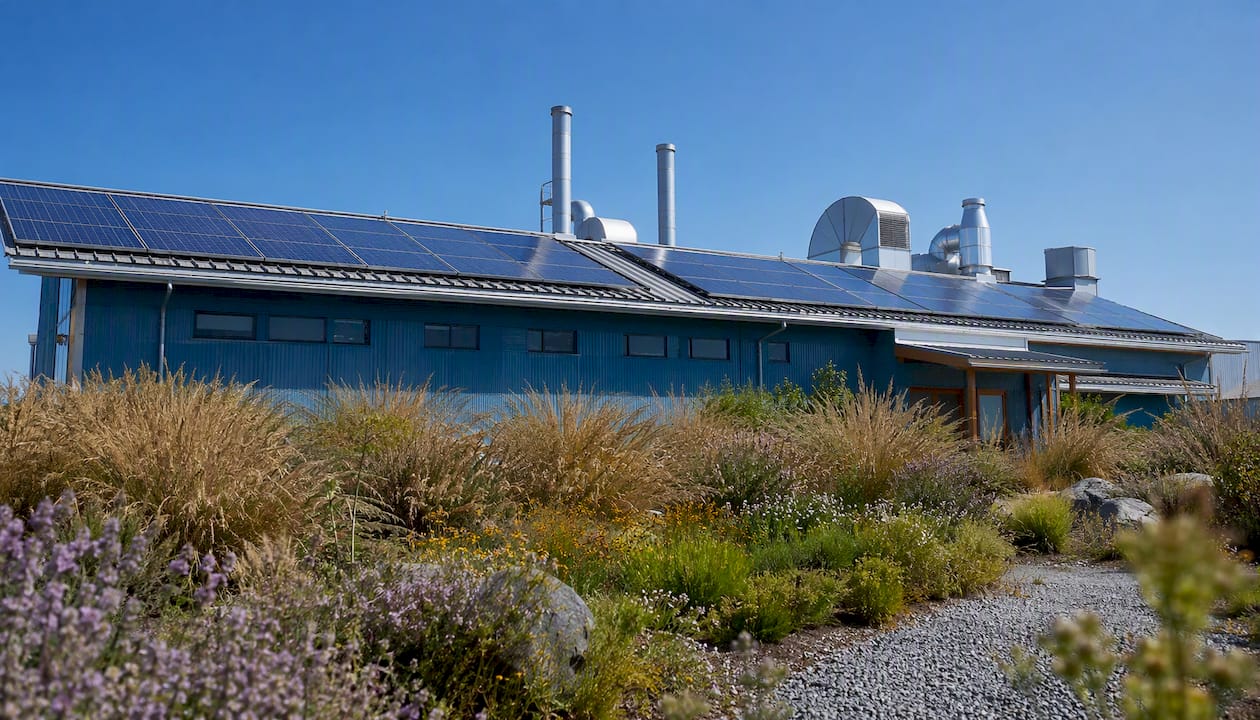
Supercritical CO2 is widely described as a green extraction method because CO2 returns to gas at ambient conditions, leaving no solvent residue and generating no liquid waste stream. The CO2 used is typically sourced as an industrial byproduct, so it does not represent new carbon emissions. The trade-off is the energy required to maintain supercritical pressure conditions throughout the extraction cycle.
Hydrocarbon extraction carries the highest environmental concern of the solvent-based methods. Butane and propane are volatile organic compounds (VOCs) that contribute to ground-level ozone if released. Closed-loop systems with high recovery rates mitigate this, but even small losses accumulate at scale. Proper solvent accounting and leak detection are standard practice in compliant facilities.
Solventless methods have the smallest environmental footprint. No solvents means no emissions, no solvent waste, and no recovery infrastructure. The energy inputs are modest: electricity for refrigeration (ice-water) and for press heating (rosin). Water use in bubble hash production is the primary resource consideration, and wastewater from the process requires proper disposal.
Assisted methods (UAE, MAE, PEF) generally reduce solvent consumption per unit of extract, which improves the environmental profile of ethanol-based workflows when combined. Their net environmental benefit depends on the energy intensity of the physical process relative to the solvent savings achieved.
For operators building a sustainability case, solventless and CO2-based methods offer the clearest story. For high-volume producers, optimizing ethanol recovery efficiency is the most practical path to reducing environmental impact.
When to favor craft solventless vs. scalable solvent-based approaches
The solvent vs. solventless debate often gets framed as a purity argument, but the more useful frame is a product-goal argument.
Solventless extraction is the right choice when terpene fidelity is the primary differentiator. Artisan producers making hash rosin or live rosin for a discerning market are not competing on price per milligram of CBD. They are competing on sensory experience, provenance, and the integrity of the plant profile. For that goal, no solvent-based method currently matches what a well-executed ice-water and rosin press workflow produces from premium fresh-frozen biomass.
Solvent-based methods win on every other axis. Ethanol extraction at scale produces consistent, high-potency distillate or isolate at a cost per milligram that solventless cannot approach. CO2 extraction offers a middle path: cleaner than ethanol crude, more terpene-selective than distillation, and scalable enough for mid-to-large operations. Hydrocarbon extraction occupies a specific niche: boutique live resin production where terpene richness justifies the safety infrastructure investment.
The sustainability angle is increasingly a real business consideration, not just a marketing claim. Brands that can credibly document their extraction method, solvent recovery rates, and COA transparency are building a durable competitive position as consumer sophistication grows. Solventless and CO2 methods offer the clearest sustainability narrative. Ethanol operations with high recovery rates and closed systems can make a credible case as well.
The practical summary: if you are buying a product rather than producing one, look for a COA that matches the label claim, a terpene profile that reflects the extraction method, and residual solvent results that are quantified, not just “passed.” That is the fastest way to assess whether the extraction method behind a product was executed well.
What Coastalhemp offers for hemp extract products

Coastalhemp curates hemp products from brands that take extraction quality seriously. Whether you are looking for a terpene-rich concentrate, a precisely dosed edible, or a full-spectrum oil, the selection reflects a real commitment to COA transparency and product integrity. The Jelly THCA Live Sugar Blend Gummies are a strong example of what high-quality extraction produces at the finished product level: a live sugar blend that retains the terpene and cannabinoid complexity that distillation alone cannot deliver. For those drawn to functional edibles, the FLOAT Mushroom Lollipops 50ct Box and Enjoyable Neuro Enhancer Gummies represent the breadth of what thoughtful formulation can produce when extraction is done right. Browse the full catalog at Coastalhemp and check the COA on anything that interests you. That is the standard the site is built around.
Sources
- Solvent-based cannabis extraction versus solventless methods — MJBizDaily
- Ethanol extraction advantages for cannabinoid production — MDPI (Agriculture)
- Simple Extraction of Cannabinoids from Female Inflorescences of Hemp — PMC
- Review of conventional and alternative cannabinoid extraction techniques — Frontiers in Natural Products
- Extraction of cannabinoids from hemp using high pressure solvents — ScienceDirect
FAQ
What does hemp extract do to you?
Hemp extract delivers cannabinoids such as CBD, CBG, and THCA into the body, where they interact with the endocannabinoid system. Effects depend on the cannabinoid profile, the extraction method used, and the dose.
How is CBD extracted from hemp?
CBD is most commonly extracted using ethanol or supercritical CO2, then purified through winterization, distillation, and sometimes chromatography to reach the desired purity and cannabinoid profile.
What are the three main hemp extraction methods?
The three primary hemp extraction methods are ethanol extraction, supercritical CO2 extraction, and hydrocarbon extraction (butane/propane). Solventless methods like rosin pressing and ice-water hash are a fourth category used primarily at craft scale.
Is hemp extract the same as CBD?
Not exactly. Hemp extract is the broader term for the full compound profile pulled from hemp biomass, which can include CBD, THCA, CBG, terpenes, and other cannabinoids. CBD isolate is a purified form of hemp extract containing only cannabidiol.


Comments