

Start at 2.5–5 mg: Indica vs Sativa Gummies, Read the COA
The word on the package, sativa or indica, tells you far less about how a gummy will feel than its cannabinoid dose and terpene profile do. Genomic research has found that these labels don’t reliably track with a product’s actual chemistry, so treating them as a guarantee is a mistake beginners make constantly. The smarter approach: start low (2.5 to 5 mg THC), read the certificate of analysis, and pay attention to terpenes rather than the strain name on the label.
TL;DR:
- Cannabinoid dose and terpene profile are more reliable indicators of a gummy’s effects than strain labels like sativa or indica.
- Genomic research shows that the sativa-indica classification does not correspond to distinct genetic or chemical differences, especially in hybrids.
- Effects depend on absorption rate, THC and CBD levels, and the entourage effect created by minor cannabinoids and terpenes, not the strain name.
- Starting with low doses of 2.5 to 5 mg THC and checking for third-party lab results helps avoid accidental overdoses and inconsistent experiences.
- Matching gummies to desired effects is best done by analyzing cannabinoid and terpene profiles rather than relying on traditional strain categories.
Table of Contents
- What “Sativa” and “Indica” Labels Actually Mean
- How Gummies Actually Produce Their Effects
- Why “Sativa Feels Energizing” and “Indica Feels Sedating” Isn’t Wrong, Just Unreliable
- How To Choose a Gummy: A Beginner’s Checklist
- Dosing Safety and the Legal Reality Worth Knowing
- How Coastalhemp Applies This Chemistry-First Approach
- Quick Takeaways
- Cannabinoid and Terpene Profiles: What Actually Differs Between Plants
- Hybrid Strains and What They Actually Change in a Gummy
- Why Your Response Might Differ From a Friend’s
- Choosing Gummies By Effect Instead of By Label
- Publisher Perspective: Building Buying Guidance Around Chemistry
- Coastalhemp Gummies Built Around the Chemistry, Not the Label
- Sources
- FAQ
What “Sativa” and “Indica” Labels Actually Mean
These terms started as botanical shorthand. Nineteenth and twentieth century growers and taxonomists used “sativa” and “indica” to describe plant shape: tall and narrow-leafed versus short and broad-leafed. The labels stuck around because they were easy to teach and easy to sell, not because they mapped cleanly onto chemistry.
Modern testing has undercut that shorthand pretty thoroughly. A genomic analysis of approximately three hundred cannabis samples found that plants labeled sativa and plants labeled indica were genetically indistinct at the genome-wide level. Among the measured terpenes and cannabinoids, only some correlated with the sativa-indica scale, with myrcene notable as the compound most related to the sedation associated with indica. That’s a narrow slice of chemistry carrying the weight of an entire marketing category.
Dr. Ethan Russo, one of the more widely cited voices in cannabis pharmacology, has called the sativa/indica distinction close to useless as a predictor and recommends consumers focus on cannabinoid and terpenoid profiles instead, sometimes referred to as a product’s chemovar.
What this means at checkout:
- A label tells you almost nothing reliable about total chemical makeup.
- Two gummies both marketed as “sativa” can contain wildly different terpene ratios.
- The name on the jar is a marketing convenience, not a lab result.
If you want a primer on how these categories evolved and why hybrids complicate things further, Coastalhemp’s breakdown of indica, sativa, and hybrid differences covers the history in more depth.
How Gummies Actually Produce Their Effects
Three things determine how a gummy makes you feel: how much THC and CBD it contains, what minor cannabinoids and terpenes ride along with them, and how your body absorbs it. None of the three has anything to do with the word “sativa” or “indica” printed on the label.
Start with absorption, because it’s the piece beginners get wrong most often. Edibles travel through the digestive system and liver before reaching the bloodstream, which delays onset to somewhere between 30 and 120 minutes, sometimes longer, depending on your metabolism, stomach contents, and the gummy’s formulation. That lag is the single biggest reason people overdo it. They feel nothing after 45 minutes, eat another gummy, and then get hit with both doses at once an hour later. Duration runs longer than smoking or vaping too, often four to eight hours.
Statistic Callout: Onset for an edible commonly falls in the 30 to 120 minute range, with peak effects and total duration both outlasting inhaled cannabis by a wide margin. Plan your evening around that window before you reach for a second piece.
THC dose and the THC to CBD ratio are the primary levers on intensity. A 5 mg THC gummy and a 50 mg THC gummy are not the same experience with a different label; they’re a different drug dose entirely. CBD tends to soften and modulate THC’s psychoactivity rather than cancel it out.
Minor cannabinoids and terpenes fill in the rest of the picture:
- Myrcene shows up often in gummies people describe as heavy or sedating.
- Limonene tends to show up in products associated with mood lift and mental clarity.
- Pinene is linked with alertness and is sometimes paired with daytime formulations.
- CBN and CBG are minor cannabinoids increasingly added for their own distinct contributions to a gummy’s overall feel.
This interaction between cannabinoids and terpenes is what researchers call the entourage effect. A review of terpene and cannabinoid interactions supports the idea that these compounds work together rather than in isolation, which is exactly why two products with the same THC count can produce noticeably different sensations.
Why “Sativa Feels Energizing” and “Indica Feels Sedating” Isn’t Wrong, Just Unreliable
The stereotype exists for a reason. Plenty of people genuinely report that sativa-labeled products feel more energizing and indica-labeled products feel more relaxing, and that pattern isn’t pure coincidence.
The genomic study mentioned earlier found a real, if narrow, statistical link between myrcene content and the indica side of the labeling scale, which lines up with myrcene’s reputation for producing a heavier, more sedating sensation. So the stereotype has a kernel of chemistry behind it. The problem is that the kernel is small, and it gets buried under everything else that varies between individual products.
Here’s where the rule breaks down in practice:
- Terpene variance. Two gummies labeled “sativa” can carry completely different terpene blends, one leaning myrcene-heavy despite the label, the other loaded with limonene.
- Dose differences. A 10 mg sativa gummy and a 40 mg sativa gummy from different brands will not feel remotely similar, regardless of what the label promises.
- Hybridization. Most commercial cannabis today comes from decades of cross-breeding. A “pure” sativa or indica plant is increasingly rare, and hybrid genetics scramble the traits people expect from either category.
National Geographic’s coverage of the sativa/indica myth reaches a similar conclusion: terpene-based chemotype clusters (myrcene-dominant, limonene-dominant, caryophyllene-dominant, and so on) map to sensory and effect differences far more consistently than the sativa/indica axis does. Group products by their dominant terpene instead of their strain family, and your predictions get noticeably better.
How To Choose a Gummy: A Beginner’s Checklist
Buying a gummy by chemistry instead of label sounds more complicated than it is. It comes down to five habits.
- Start low. Begin with 2.5 to 5 mg of THC and wait a full two hours before deciding whether to take more. That window covers most people’s onset delay.
- Read the label fully. Look for milligrams of THC and CBD per serving, total milligrams in the package, and a terpene list if the brand provides one.
- Check for full-spectrum versus isolate. Full-spectrum products carry a broader range of cannabinoids and terpenes, which is where the entourage effect comes into play; isolates are more stripped down and predictable in a narrower way.
- Confirm a certificate of analysis exists. A chemical analysis of dispensary products found that product names alone are unreliable predictors of what’s actually inside, and that batch-to-batch variation is real. A current COA from a third-party lab is the only way to know potency and purity for certain.
- Match terpenes to your goal, not the strain name. Daytime use tends to pair better with limonene or pinene-forward products at a lower THC dose; nighttime use tends to pair better with myrcene-forward products, sometimes with added CBN or a slightly higher CBD to THC ratio.
Pro Tip: Buy the smallest available package or a single-dose option the first time you try a new product. You’re testing the chemistry, not committing to a supply.
Keep a simple dose journal, even a note on your phone: product name, milligrams taken, time, and how you felt two and four hours later. After three or four entries, you’ll know your own tolerance far better than any label could tell you. Coastalhemp’s guide to THCA gummy effect types walks through this same chemistry-first approach in more detail if you want a deeper dive before your next order.
Dosing Safety and the Legal Reality Worth Knowing
Most gummy side effects trace back to dose, not strain. Dry mouth, mild anxiety, grogginess, and impaired coordination show up more often when someone takes too much or takes a second dose before the first one has finished kicking in. Reducing risk is mostly a matter of discipline: dose low, stay hydrated, and don’t drive or operate machinery until you know exactly how a product affects you.
Cannabinoids are processed through the liver’s CYP450 enzyme pathway, the same system that metabolizes a long list of prescription medications, so interactions are a real possibility. Public health guidance flags particular caution for pregnancy, breastfeeding, and anyone with a personal or family history of psychosis, and recommends checking with a clinician before combining cannabinoid products with other medications.
Statistic Callout: Of the terpenes and cannabinoids measured in the genomic labeling study cited earlier, only a subset showed any correlation with the sativa-indica scale, a reminder that most of a gummy’s chemical identity has nothing to do with its strain category at all.
On the legal side, keep it simple: the FDA has not approved most cannabis-derived products for general use, and state and federal rules on hemp-derived cannabinoids vary depending on where you live and what’s in the product. Check your local regulations before ordering, and store any edible product away from children and pets in its original, clearly labeled packaging.
How Coastalhemp Applies This Chemistry-First Approach
Coastalhemp built its catalog around the same checklist covered above. The company partners with growers and brands across several product categories, THCA, Delta 8, Delta 9, and live sugar formulations, rather than sticking to one strain family or one supplier, which gives shoppers more room to match a product to their actual goal instead of a label.
That curatorial approach shows up in a few concrete ways:
- Product listings emphasize lab testing and cannabinoid content rather than leaning on strain marketing alone.
- Multiple product lines let shoppers compare potency and format instead of guessing based on “sativa” or “indica” naming.
- Live sugar extraction methods preserve more of the original terpene profile, which matters given how much terpenes actually drive effect compared to strain labels.
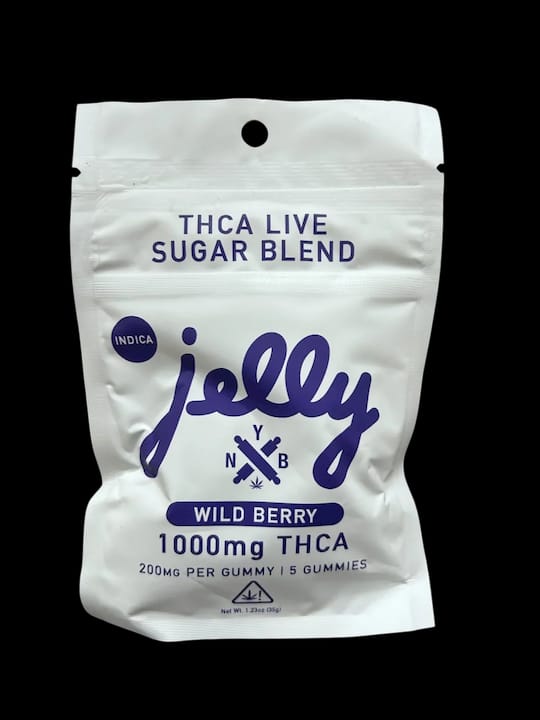
A few examples of how that plays out in the current lineup: the Jelly THCA Live Sugar Blend Gummies suit someone who already microdoses and wants a higher-potency option for careful titration. The Jelly KO Blend Gummies combine D8 and D9 THC at a strength meant for consumers who understand their own tolerance well. The Urb Live Sugar Gummies round out the category with another high-potency, live sugar formulation worth comparing against the other two before you decide which fits your dosing plan.
Quick Takeaways
- Chemistry and dose predict a gummy’s effects far better than the sativa or indica label ever will.
- Onset for edibles runs 30 to 120 minutes or longer, so patience prevents accidental overdosing.
- Terpenes like myrcene, limonene, and pinene are a more useful shopping filter than strain category.
Next steps: check the COA before you buy, order a low-dose sample to test your own response, keep a simple dose log for your first few tries, and talk to a clinician first if you’re on any regular medication.
Cannabinoid and Terpene Profiles: What Actually Differs Between Plants
Where a real, measurable difference exists between indica-type and sativa-type cannabis plants, it shows up in terpene concentration, not in a clean genetic split. The genomic labeling study found that indica-associated samples trended toward higher myrcene content, while some sativa-associated samples leaned toward limonene or terpinolene. Cannabinoid ratios (THC relative to CBD, or the presence of minor cannabinoids like CBG) showed even less consistent separation between the two labels.
For gummy shoppers, this translates into a practical point: the raw plant material behind a product can carry a genuine terpene tilt, but that tilt is modest, inconsistent across brands, and easily overwhelmed by extraction methods, added terpenes, or blending during manufacturing. A brand can start with sativa-leaning flower and still produce a gummy that leans sedating if they add myrcene-rich terpene isolates during formulation, or skip terpenes altogether and rely on flavoring instead.
This is also why full-spectrum extracts behave differently than isolate-based products even when both start from similarly labeled plants. Full-spectrum gummies carry over more of the original terpene and minor cannabinoid content, so whatever chemical tilt existed in the source plant has a better chance of surviving into the final product. Isolate-based gummies strip most of that away, leaving THC or CBD as close to isolated compounds, which is part of why isolate products tend to feel more uniform from batch to batch regardless of what the original plant was labeled.
Hybrid Strains and What They Actually Change in a Gummy
Hybrids dominate commercial cannabis cultivation at this point, and that matters more for gummy shoppers than most labels let on. A hybrid plant is the product of deliberate cross-breeding between sativa-leaning and indica-leaning genetics, aimed at combining specific traits, faster flowering, higher yield, particular terpene combinations, rather than preserving a “pure” lineage.
For the finished gummy, a hybrid source doesn’t average out to some predictable middle ground between energizing and relaxing. It depends entirely on which parent traits the breeder selected for and which terpenes came along with them. A hybrid bred for high limonene content can feel more alert and mood-lifting than a plant labeled pure sativa with a heavier myrcene profile. The hybrid label tells you even less than “sativa” or “indica” alone, because it doesn’t specify which direction the cross leaned chemically.
This is precisely why the practical advice in this article keeps returning to the same point: terpene listing and lab results matter more than any breeding history. If a hybrid gummy’s certificate of analysis shows a limonene-forward profile with a moderate THC dose, that tells you more about the likely experience than knowing it came from a 70/30 hybrid cross. Coastalhemp’s terpene profile guide breaks down which specific terpenes tend to show up across hybrid formulations and what each one is commonly associated with, which is a more useful reference than trying to reverse-engineer effects from a strain’s parentage.
Why Your Response Might Differ From a Friend’s
Two people can eat the exact same gummy and walk away with different experiences, and tolerance is usually the biggest reason. Regular cannabis users build tolerance to THC over time, requiring higher doses to reach the same subjective effect, while an infrequent user or first timer can feel a strong response from a dose a regular user wouldn’t notice.
Metabolism plays a nearly equal role, especially with edibles. Because gummies pass through the liver before reaching the bloodstream, individual differences in liver enzyme activity change how quickly THC converts into its more potent metabolite, 11-hydroxy-THC. Body weight, what you’ve eaten that day, and even genetics affecting CYP450 enzyme activity all shift how intense and how long an edible’s effects last.
Other variables compound on top of those two. Consuming a gummy on an empty stomach tends to speed absorption and can intensify the initial hit. Existing anxiety or a stressful setting can make a mild dose feel overwhelming, while a relaxed environment can make the same dose feel gentle. Even the specific terpenes in a product interact differently depending on a person’s own body chemistry, which is part of why some people report myrcene-heavy products as deeply relaxing while others barely notice a difference.
None of this is predictable from a strain label, and most of it isn’t fully predictable at all until you’ve tried a specific product yourself. That’s the entire argument for starting low, going slow, and keeping notes on your own reactions rather than trusting someone else’s account of how a particular gummy made them feel.
Choosing Gummies By Effect Instead of By Label
Once you set the sativa/indica framework aside, choosing a gummy becomes a matter of matching chemistry to a specific goal. Want something for daytime use that won’t leave you drowsy at your desk? Look for a lower THC dose (5 to 10 mg), a limonene or pinene-forward terpene listing, and skip anything advertising heavy myrcene content.
Want help winding down at night? A myrcene-forward terpene profile, a slightly higher THC dose or a THC to CBD ratio that leans toward more CBD, and sometimes added CBN, tend to align with the relaxing, sleep-supportive effects people are after. None of that requires knowing whether the product started as sativa, indica, or hybrid genetics.
Stress relief and general wellness use cases benefit from a different lens entirely: full-spectrum products with a broad terpene and minor cannabinoid range, taken at a moderate, consistent dose, tend to produce a steadier effect than trying to chase a specific “energizing” or “sedating” label. Consistency of dosing, not strain selection, is what makes a gummy reliable for ongoing use.
The short version: define what you actually want the gummy to do, then shop the certificate of analysis and terpene listing for the profile that matches. That’s a more reliable filter than the sativa/indica axis, hybrid percentages, or even strain names borrowed from flower products that may share little chemically with the gummy on the shelf.
Publisher Perspective: Building Buying Guidance Around Chemistry
Most cannabis content still leans on the sativa/indica frame because it’s familiar and easy to write. Coastalhemp’s editorial approach starts from a different place: what does the genomic and pharmacology research actually support, and how does that translate into a checklist a first-time buyer can use at checkout. That’s the lens behind this article, and it’s the same lens applied to how products get described across the site, terpene content, cannabinoid dose, and lab verification first, strain category as a footnote at best.
The goal isn’t to tell shoppers strain names are meaningless in every context. It’s to make sure a beginner doesn’t walk away thinking a sativa label guarantees energy or an indica label guarantees sleep, when the actual chemistry inside two products with the same label can point in opposite directions.
— John
Coastalhemp Gummies Built Around the Chemistry, Not the Label
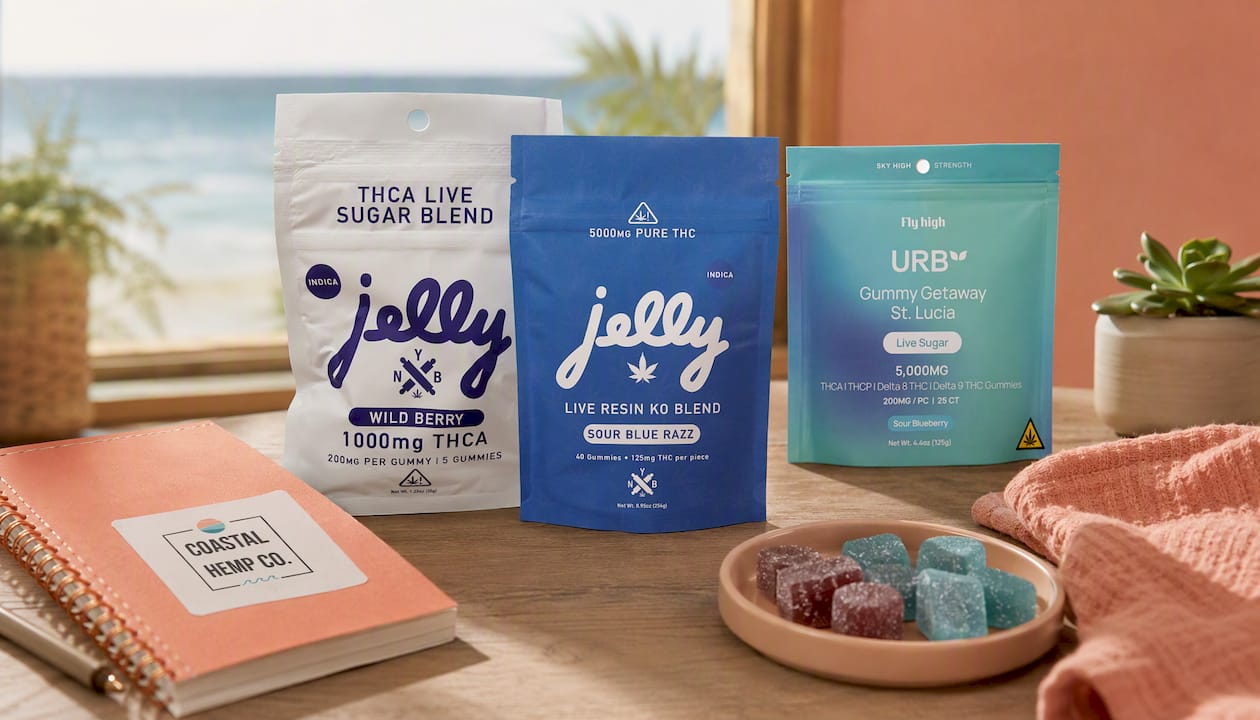
If you’ve already worked out your tolerance and want a higher-potency option for careful microdose titration, the Jelly THCA Live Sugar Blend Gummies fit that use case directly. For a stronger dual-cannabinoid experience once you’re confident in your dosing, the Jelly KO Blend Gummies combine D8 and D9 THC at 5000 mg total. And if you want to compare live sugar extraction across brands before settling on one, the Urb Live Sugar Gummies give you a second formulation to weigh against the first. Whichever you start with, check the certificate of analysis on the product page, start with a partial serving, and log how it feels before you reorder. Browse the full Coastalhemp catalog to compare potency and terpene listings side by side before you check out.
This article is general information, not a substitute for advice from a qualified doctor. Consult a qualified healthcare professional about your own circumstances before acting on anything here.
Sources
- Cannabis labelling is associated with genetic variation in terpene synthase genes
- The Cannabis sativa Versus Cannabis indica Debate: An Interview with Ethan Russo, MD
- CDC — Cannabis (Marijuana) and Public Health
FAQ
Is Indica or Sativa Better for Anxiety Relief?
Neither label reliably predicts anxiety relief; terpenes like limonene and a moderate, well-controlled THC dose matter more than whether a gummy is marketed as indica or sativa.
Do Hybrid Gummies Feel Different From Pure Indica or Sativa Gummies?
Hybrid gummies vary based on which parent traits and terpenes the breeder selected, so they can feel more energizing or more relaxing than either “pure” category depending on the specific terpene profile.
How Long Does It Take for a Gummy To Kick In?
Most people feel effects within 30 to 120 minutes, with peak intensity and total duration both lasting longer than inhaled cannabis.
What Should a Beginner’s First Gummy Dose Be?
Start with 2.5 to 5 mg of THC and wait at least two hours before considering more, since delayed onset is the main cause of accidental overdosing with edibles.
Does Coastalhemp Test Its Gummies for Potency and Purity?
Coastalhemp emphasizes lab-tested products across its THCA, D8/D9, and live sugar gummy lines, with certificates of analysis available to verify cannabinoid content before purchase.


Comments