

Before You Buy THCA: Verify These Side Effects in Lab Tests
Raw THCA is non-intoxicating, but heat converts it to THC, which produces the same effects and safety risks as regular cannabis. Expect the usual short-term list: dry mouth, drowsiness, mild stomach upset, a racing heart, and occasionally anxiety—especially at higher doses or with an unfamiliar product. The bigger safety concerns are not THCA itself but what happens during conversion and what might be contaminating the product you bought.
TL;DR:
- Heating THCA converts it into THC, which has the same intoxicating effects and safety risks as regular cannabis, regardless of label claims.
- Most side effects, such as dry mouth, drowsiness, and increased heart rate, result from THC formed during decarboxylation, not from raw THCA itself.
- Product labels showing THCA percentage do not reliably indicate psychoactive potential, as decarboxylation and contamination can significantly alter effects.
- Using untested or poorly tested products increases the risk of contamination, potency spikes, or unintended psychoactivity, especially in products without third-party COAs.
- Starting with low doses, waiting for effects to fully develop before redosing, and choosing products with transparent lab testing are key steps to minimize adverse reactions.
Table of Contents
- Understanding THCA Side Effects Starts With the Chemistry
- What the Evidence Says About THCA Benefits and Risks
- Common Short-Term THCA Side Effects to Expect
- Rare but Serious THCA Side Effects and Allergic Reactions
- Long-Term Concerns With Repeated THCA Exposure
- What Determines How Strongly THCA Affects You
- How Decarboxylation Changes the THCA Safety Equation
- Safety Steps to Reduce THCA Side Effects
- What to Do If You Experience THCA Side Effects
- Our Take: Evidence Uncertainty Is the Real Risk, Not THCA Itself
- How Coastalhemp Approaches Safer THCA Shopping
- Sources
- FAQ
Understanding THCA Side Effects Starts With the Chemistry
THCA, or tetrahydrocannabinolic acid, is the acidic precursor cannabis plants produce naturally. It doesn’t bind to your brain’s cannabinoid receptors the way THC does, so eating raw cannabis leaves or juicing fresh flower shouldn’t get you high. The moment you apply heat, though, THCA loses a carboxyl group in a process called decarboxylation, and it becomes Delta 9 THC, the compound responsible for the classic cannabis high, along with its side effect profile. This is why THCA flower marketed as “non-intoxicating” can absolutely intoxicate you once it hits a lighter, a dab rig, or an oven.
The CDC notes that THC produces effects like altered memory, impaired attention, and elevated heart rate once converted, and that vaping or smoking carries added respiratory risk. A few things to keep in mind about labeling:
- “THCA percentage” on a label tells you almost nothing about how intoxicating a product will be once heated.
- Regulatory testing increasingly reports “total THC,” a calculated figure that accounts for the THC a product will yield after decarboxylation.
- A flower labeled under the legal 0.3% Delta 9 THC threshold can still convert into a strongly psychoactive product once smoked.
If you’re comparing product types, our breakdown of hemp-derived THCA product examples walks through how this plays out across flower, concentrates, and edibles.
What the Evidence Says About THCA Benefits and Risks
The interest in THCA isn’t baseless. Preclinical research shows Δ9‑THCA binds to PPARγ receptors and demonstrates anti‑inflammatory and neuroprotective effects in animal models. Separate research on THCA in murine seizure models found mixed anticonvulsant and proconvulsant effects, meaning the same compound calmed seizures in some conditions and worsened them in others depending on dose and formulation.
The gap that matters: these are animal and cell studies. Human clinical trials on THCA specifically are scarce, and claims about safety or therapeutic benefit should be treated as preliminary rather than proven.
What this means practically:
- Don’t treat anecdotal “THCA cures X” claims as settled science.
- Favor sellers who show batch-specific COAs over vague wellness claims.
- Assume unknowns until human data catches up with the lab findings.
Common Short-Term THCA Side Effects to Expect
Most people who react to a THCA product are really reacting to the THC it converted into. Here’s what shows up most often, roughly in order of frequency:
- Dry mouth. THC affects saliva production; this is nearly universal and usually mild.
- Drowsiness or fatigue. More common with indica-leaning strains or higher doses, and pronounced with edibles several hours after eating.
- GI upset. Nausea, stomach tightness, or mild cramping, particularly on an empty stomach.
- Transient anxiety or paranoia. More likely at higher doses, in inexperienced users, or with high-THC concentrates.
- Increased heart rate. THC is a mild stimulant to the cardiovascular system; the CDC lists tachycardia among documented effects.
- Impaired coordination and short-term memory. Expect slower reaction time and difficulty with working memory for several hours.
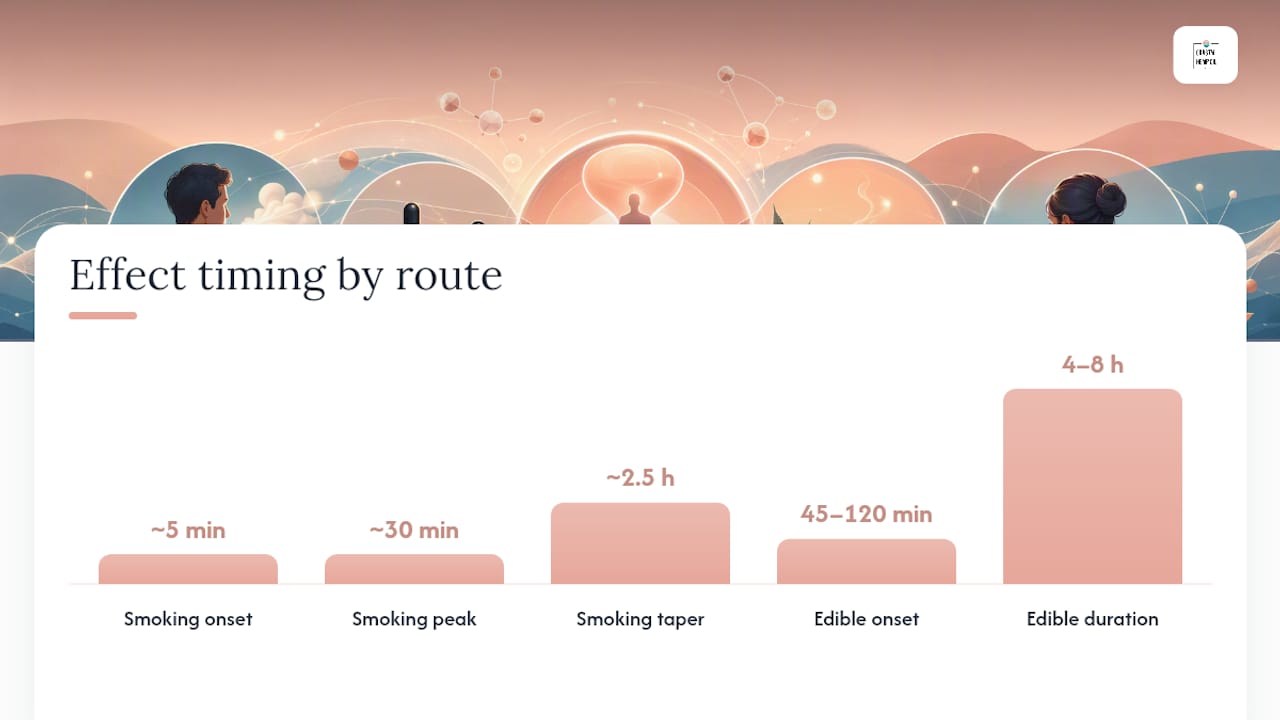
Timing depends heavily on route. Smoking or vaping THCA flower converts it almost instantly, and effects onset within minutes, peaking around 30 minutes and tapering over two to three hours. Edibles work differently: THCA in a gummy or capsule requires digestion and liver metabolism, so onset can take 45 minutes to two hours, but the effects last four to eight hours and hit harder per milligram because of how the liver processes THC.
Unheated THCA, taken as a raw tincture or juice without ever hitting a flame, shouldn’t produce most of this list at all since it stays non-intoxicating. But as lab data consistently shows, truly pure THCA is rare. Most retail products carry some baseline THC already, which is why sensitive people occasionally feel mild effects from “raw” products.
Pro Tip: If you’re new to THCA edibles, wait a full two hours before considering a second dose. The delayed onset is the number one reason people accidentally overdo it.
Rare but Serious THCA Side Effects and Allergic Reactions
Most THCA reactions are uncomfortable, not dangerous. But a smaller set of outcomes deserves real attention.
- Severe intoxication events, including panic attacks or psychosis-like symptoms, tend to show up with very high-potency concentrates or in people with a personal or family history of psychotic disorders.
- Respiratory injury has been tied to vaping, especially with the EVALI outbreak the CDC documented, where vitamin E acetate and other additives in illicit vape cartridges caused serious lung damage.
- Allergic reactions, ranging from skin rashes to respiratory symptoms, can occur with any cannabinoid product, though they’re uncommon.
- Contamination from pesticides, heavy metals, residual solvents, or mold is a genuine risk in unregulated or poorly tested products, not a theoretical one.
Certain groups face higher stakes from any of the above: pregnant people, adolescents whose brains are still developing, people with existing heart conditions, and anyone taking medications that interact with cannabinoids (blood thinners and certain psychiatric medications are common culprits). If you fall into one of these categories, talk to a healthcare provider before trying any THCA product, heated or not.
Long-Term Concerns With Repeated THCA Exposure
Long-term data specifically on THCA doesn’t exist yet in any meaningful volume. Most of what we know about extended cannabis use comes from THC-focused research and heavy-use cohorts, so treat the following as informed extrapolation rather than THCA-specific fact.
- Cognitive and developmental effects, particularly in adolescents, are the most consistently flagged concern in the broader cannabis literature.
- Dependence risk is real, though generally lower than substances like alcohol or opioids, and rises with frequency and potency of use.
- Chronic respiratory issues are tied almost entirely to smoking or vaping as the delivery method, not to cannabinoids themselves.
- Neurological outcomes from long-term heavy use remain an active area of research with no firm consensus.
One clear signal from the Johns Hopkins pharmacokinetics study is that even products with low nominal THC content produced dose-related cognitive impairment in a controlled human trial. That finding alone argues for regular self-monitoring, not casual daily use, if you’re a frequent consumer. If you use THCA products often, periodic check-ins with a healthcare provider are worth the effort, especially if you’re combining it with other medications long-term.
What Determines How Strongly THCA Affects You
Two people can use the identical product and walk away with entirely different experiences. A handful of variables explain most of that gap.
- Dose and frequency are the biggest levers. More product, more often, means a higher chance of side effects and a lower chance your tolerance stays low.
- Route of administration changes both intensity and timing, as covered above: inhalation hits fast and hard, oral products build slowly and last longer.
- Product purity varies enormously between brands. A product without third-party testing could contain more THC than labeled, plus contaminants that never show up on the shelf.
- Medication interactions matter more than most people assume, particularly with blood thinners, sedatives, and certain antidepressants.
- Individual susceptibility, including a personal history of anxiety, cardiovascular disease, or psychotic disorders, changes your risk profile independent of the product itself.
Of these, purity and dosing are the two you actually control at the point of purchase.
How Decarboxylation Changes the THCA Safety Equation
The method you choose to consume THCA determines almost everything about how it will feel and what it will cost you in side effects.
- Smoking or vaping triggers immediate decarboxylation. THC hits your bloodstream through the lungs within minutes, producing the fastest, most intense onset and the highest bioavailability. This is also the route tied to the respiratory injury outbreaks the CDC has tracked.
- Oral products like gummies or capsules require the body to decarboxylate and metabolize THCA through digestion, delaying onset by an hour or more but extending the effects for several hours. This delay is exactly why edible overdoses happen. People take a second dose before the first one has kicked in.
- Topical or non-heated raw preparations, such as tinctures made from raw plant material, avoid conversion almost entirely and should stay non-intoxicating, assuming the product truly contains minimal THC to begin with.
The catch across all three is that many retail flowers labeled “THCA” are tested for total THC precisely because regulators know smoking converts nearly all of it. For a deeper look at how this plays out with specific product types, our guide to hemp-derived intoxicating effects breaks down the numbers by category.
Safety Steps to Reduce THCA Side Effects
Most bad experiences with THCA come down to two mistakes: taking too much too fast, or buying a product with no real testing behind it. Both are avoidable.
- Start low and go slow. Take the smallest available dose and wait out the full onset window before taking more, especially with edibles.
- Choose non-inhalation methods if you’re specifically trying to avoid intoxication or lung exposure.
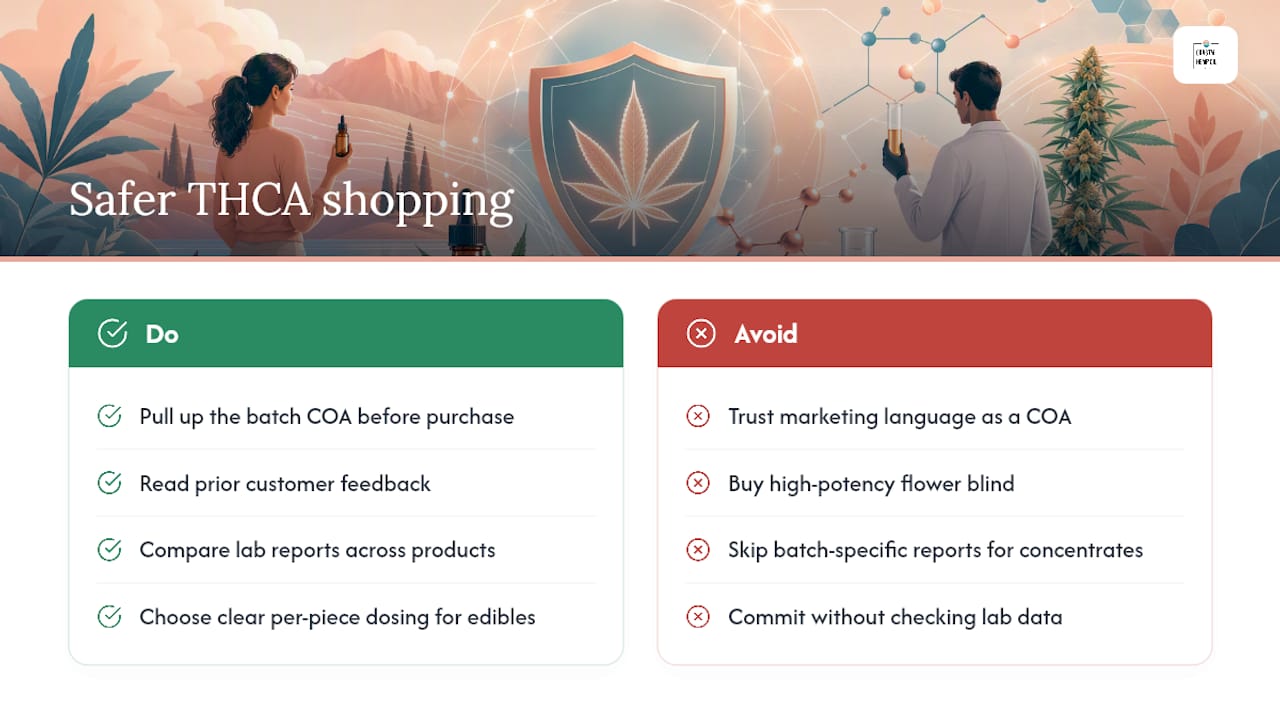
- Verify third-party COAs for every batch, not just the product line generally. Potency and contamination can vary batch to batch even under the same label.
- Never mix with alcohol, benzodiazepines, or opioids. Combined depressant effects on the central nervous system can be dangerous.
- Store products away from children and pets, and keep the original packaging so dosing information is available if something goes wrong.
- Buy from transparent sellers who post lab reports openly and provide clear dosing guidance, not just marketing copy.
If you want a walkthrough on what a proper lab report should actually show, this partner guide on reading a COA covers the six checks worth doing before you trust any potency number on a label.
Pro Tip: Ask whether a seller’s COA reports both raw THCA and post-decarboxylation total THC. If they only show one number, you’re not getting the full picture of what you’re about to consume.
What to Do If You Experience THCA Side Effects
Most reactions are uncomfortable, not dangerous, and resolve with basic care.
- For mild symptoms like dry mouth, drowsiness, or a racing heart, hydrate, move somewhere calm and quiet, and avoid driving or operating machinery until the effects fully pass. A small snack can help take the edge off nausea.
- For severe symptoms including chest pain, difficulty breathing, seizures, uncontrolled vomiting, or extreme confusion, call 911 or get to an emergency room immediately. Don’t wait it out.
- If a child or pet ingests a THCA product, call Poison Control right away and bring the product packaging and any available COA with you. Fast, specific information helps responders act quickly.
Our Take: Evidence Uncertainty Is the Real Risk, Not THCA Itself
The conventional advice on THCA treats it like a binary question: safe or not safe. That framing misses the point. The honest answer is that THCA’s own risk profile is barely studied, while the THC it becomes has a well-documented one. The people getting hurt aren’t usually reacting to THCA chemistry. They’re reacting to contaminated concentrates, unlabeled potency spikes, or edibles they redosed too soon.
What gets underestimated is how much control a buyer actually has here. Dose, route, and product transparency account for most of the variance in how someone’s experience goes. That’s not a footnote. It’s the entire safety strategy. Skip the products without visible COAs, start with the smallest dose on the label, and treat any “non-intoxicating” claim on a smokable product with real skepticism.
Where the evidence is thin, as it is for most THCA-specific human research, the right response is caution paired with better information, not avoidance and not blind trust in marketing. Buy from sellers who show their testing. Read what the label actually says. Everything else follows from there.
— John
How Coastalhemp Approaches Safer THCA Shopping
Coastalhemp is the alternative to guessing at potency labels: every product on our shelves ships with lab documentation you can actually check before you buy, not marketing language standing in for a COA. If dry mouth and racing hearts are the trade-off you’re trying to manage smartly, start with something dosed for predictability rather than rolled dice.

Our Jelly THCA Live Sugar Blend Gummies come in a 3-pack bundle with clear per-piece dosing, which matters far more with edibles than with flower given the delayed onset covered earlier. If you’re looking at concentrates, the Trippy Sugar THCA Diamonds and the Habit THCA Sauce Ceramic Coil Cartridge both carry batch-specific lab reports, worth reviewing given the inhalation risks discussed above. Prefer a starter setup instead? The Modern Herb THCa Live Resin Pod Starter Kit is built for people testing the waters, not committing to a full setup blind.
Not everyone wants intoxication at all. Our Enjoy Sleep Gummies with THC and CBN target rest without the unpredictability of high-potency THCA flower. Before checkout on any product, pull up the batch COA and read prior customer feedback. Then browse our THCA flower and concentrate catalog to compare lab reports directly against what you’re considering.
This article is general information, not a substitute for advice from a qualified doctor. Consult a qualified healthcare professional about your own circumstances before acting on anything here.
Sources
- Cannabis Frequently Asked Questions | Cannabis and Public Health | CDC
- Δ9‑THCA research article (PMC5731255)
- Johns Hopkins pharmacokinetics/pharmacodynamics hemp-derived study
FAQ
What are the most common THCA side effects?
Dry mouth, drowsiness, mild nausea, transient anxiety, and an elevated heart rate are the most frequently reported effects, and they mostly come from the THC that THCA converts into once heated.
Is THCA safe to use?
Raw, unheated THCA appears non-intoxicating and low-risk, but human clinical data specific to THCA remains limited, and most retail products contain enough baseline THC or convert enough on heating to carry standard THC risks.
Can THCA cause anxiety or paranoia?
Yes, particularly at higher doses, with high-potency concentrates, or in people prone to anxiety, since the effect comes from the THC produced during decarboxylation rather than from THCA itself.
What’s the difference between THCA and THC side effects?
THCA in its raw, unheated form generally doesn’t produce psychoactive side effects; once smoked, vaped, or cooked, it converts to THC and produces the same side effect profile as regular cannabis, including impaired coordination and increased heart rate.
How do I reduce the risk of THCA side effects?
Start with the lowest available dose, choose products with third-party COAs showing both THCA and total THC values, avoid combining with alcohol or sedatives, and wait out the full onset window before redosing, especially with edibles like Coastalhemp’s Jelly gummies.
When should I seek medical help for THCA side effects?
Seek emergency care immediately for chest pain, breathing difficulty, seizures, uncontrolled vomiting, or severe confusion; for a child’s accidental ingestion, call Poison Control right away and bring the product packaging.


Comments