

The Role of Terpenes in Hemp: A Wellness Guide
Terpenes are volatile aromatic compounds stored in hemp’s resin glands, and they define far more than just how a product smells. The role of terpenes in hemp extends to shaping flavor, influencing mood, and potentially modifying how cannabinoids like CBD and THCA interact with your body. Key terpenes found in hemp include myrcene, limonene, α-pinene, and β-caryophyllene, each with a distinct aroma and a unique set of properties. Understanding what terpenes do gives you a real advantage when choosing hemp products for stress relief, relaxation, or general wellness.
What is the role of terpenes in hemp products?
Terpenes are the compounds responsible for hemp’s recognizable scent and taste. Myrcene delivers the earthy, musky notes common in many hemp strains. Limonene produces a bright citrus aroma. α-Pinene smells like fresh pine needles, and β-caryophyllene carries a spicy, peppery character. These are not just pleasant side effects. Terpene aroma and sensory experience can influence mood and perceived wellness before any biological receptor activity even occurs.
The delivery method you choose affects how much terpene activity you actually experience. Inhaled hemp products, such as flower or concentrates, deliver terpenes rapidly and at higher concentrations. Oral products like gummies pass terpenes through digestion, which changes their bioavailability and may reduce the intensity of sensory effects. Neither method is superior across the board. The right choice depends on your wellness goals and personal preference.
Terpene profiles also vary widely across product types. A full-spectrum CBD product retains the plant’s natural terpene blend because supercritical CO₂ extraction preserves these compounds. Isolate-based products strip terpenes out entirely. If you want the full sensory and potential therapeutic benefit of hemp’s chemistry, full-spectrum formulations are the more complete option.
- Myrcene: earthy, musky; associated with relaxation
- Limonene: citrus; linked to mood elevation and stress relief
- α-Pinene: pine; studied for alertness and memory support
- β-Caryophyllene: spicy, peppery; the only terpene known to activate cannabinoid receptors directly
Pro Tip: When browsing hemp products, look for a Certificate of Analysis (COA) that lists individual terpenes, not just cannabinoid percentages. A detailed terpene panel tells you far more about the likely sensory experience and potential effects.
Does the entourage effect actually work?
The entourage effect is defined as the proposed synergy between cannabinoids and terpenes, where the combined compounds produce effects greater than any single compound alone. The concept is widely cited in hemp and cannabis wellness circles. The scientific reality is more nuanced.
A 2026 systematic review concluded that terpene-cannabinoid synergy lacks sufficient clinical trial evidence to confirm meaningful therapeutic outcomes in humans. Preclinical studies in animals and cell models suggest interactions are biologically plausible. That is not the same as proven clinical benefit.
“Synergy claims in entourage-effect literature are hypotheses, not universally validated outcomes.” — The Entourage Effect in Cannabis Medicinal Products: A Comprehensive Review
The distinction matters for consumers. Sensory synergy, where terpenes enhance the smell and flavor of a product and influence mood through aroma, is well-supported. Therapeutic synergy, where terpenes measurably amplify cannabinoid treatment outcomes, still requires more rigorous human trials. Assuming that a product with more terpenes automatically delivers stronger effects is a common misconception the current evidence does not support.
What the research does confirm is that clinical outcomes depend on dosing and formulation. Biological plausibility of terpene receptor activity must be separated from demonstrated therapeutic results. This is not a reason to dismiss terpenes. It is a reason to approach product claims with informed skepticism.
Key hemp terpenes and their wellness properties
Four terpenes appear consistently across hemp varieties and carry the strongest body of research for wellness applications.
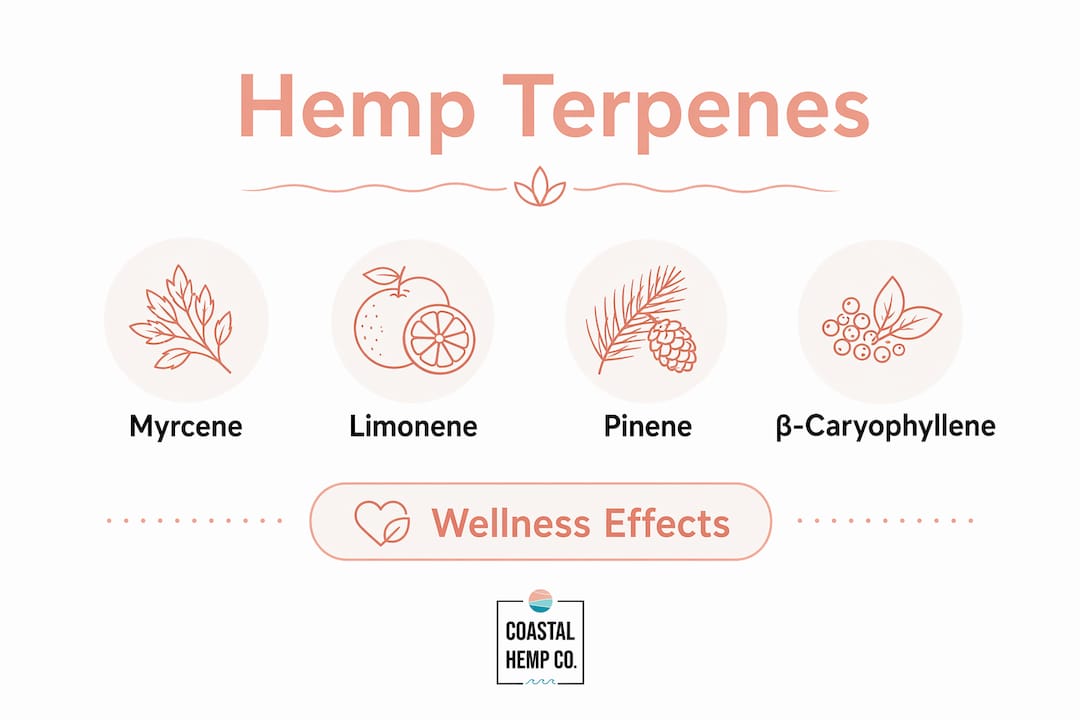
| Terpene | Aroma | Natural Sources | Attributed Effects |
|---|---|---|---|
| Myrcene | Earthy, musky, herbal | Mango, hops, lemongrass | Relaxation, sedation support |
| Limonene | Bright citrus, lemon | Citrus peel, juniper | Mood elevation, stress relief |
| α-Pinene | Fresh pine, woody | Pine trees, rosemary | Alertness, memory support |
| β-Caryophyllene | Spicy, peppery, woody | Black pepper, cloves, basil | Anti-inflammatory, anxiety reduction |

β-Caryophyllene stands apart from every other terpene in this list. It is the only terpene confirmed to directly activate CB2 receptors, which makes it function as a dietary cannabinoid. CB2 receptors are found primarily in the immune system and peripheral tissues. Activating them produces anti-inflammatory effects without psychoactivity. Animal studies show β-caryophyllene also reduces anxiety-related behavior. No other common hemp terpene binds cannabinoid receptors in this way.
Myrcene is the most abundant terpene in most hemp varieties. Its association with relaxation is well-known among hemp consumers, though direct human clinical evidence remains limited. Limonene appears in citrus-forward hemp strains and is studied for its potential to reduce stress and support mood. α-Pinene is notable because it may counteract some of the short-term memory effects associated with THC, which makes it a relevant compound in hemp products that contain trace THC levels.
Pro Tip: If you are specifically looking for anti-inflammatory support, prioritize hemp products with a high β-caryophyllene content. Check the COA terpene panel for this compound by name before purchasing.
How do terpene profiles vary across hemp products?
Terpene composition in hemp is not fixed. GWAS studies link terpene synthesis genes to specific genetic markers, which means each hemp variety produces a distinct terpene fingerprint based on its genetics. Growing conditions, harvest timing, and post-harvest handling all shift that fingerprint further. Two products with identical CBD percentages can deliver completely different experiences because their terpene profiles differ.
This genetic variability has a practical implication for consumers. You cannot rely on cannabinoid content alone to predict how a product will feel or perform. A hemp gummy with 25mg of CBD and a dominant myrcene profile will feel different from one with the same CBD dose and a limonene-forward profile. The terpene blend in full-spectrum products creates the distinct character of each product, not just the cannabinoid concentration.
Reading a COA well means looking beyond THC and CBD numbers. A multi-terpene panel gives you a more complete picture of what you are actually consuming. Brands that publish detailed terpene data are signaling transparency and product quality. Those that only list cannabinoids are giving you an incomplete story.
Key factors that shape terpene profiles in hemp products:
- Genetics: Each hemp cultivar has a baseline terpene expression determined by its genome
- Growing conditions: Soil quality, climate, and light exposure shift terpene concentrations
- Harvest timing: Terpenes degrade as the plant matures; early harvest preserves volatile compounds
- Extraction method: Supercritical CO₂ extraction retains terpenes; ethanol and isolate methods reduce them
- Formulation: Added terpene blends in manufactured products may not replicate natural plant profiles
Exploring how terpene profiles affect wellness outcomes is one of the most practical steps you can take as a hemp consumer. It moves you from guessing to making informed choices based on chemistry, not just marketing language.
Key Takeaways
Terpenes define the sensory character of hemp products and contribute to wellness through both aromatic and receptor-level pathways, with β-caryophyllene being the only terpene confirmed to activate cannabinoid receptors directly.
| Point | Details |
|---|---|
| Terpenes shape sensory experience | Aroma and flavor from myrcene, limonene, pinene, and β-caryophyllene influence mood before receptor activity occurs. |
| Entourage effect is plausible, not proven | Clinical evidence for terpene-cannabinoid synergy in humans remains limited as of 2026 systematic reviews. |
| β-Caryophyllene is uniquely active | It directly activates CB2 receptors, producing anti-inflammatory effects without psychoactivity. |
| Terpene profiles vary by genetics and process | GWAS research confirms genetic markers drive terpene composition; extraction method also affects what survives in the final product. |
| COA terpene panels guide better choices | Reading multi-terpene lab results gives more useful product insight than cannabinoid percentages alone. |
Why I think most people are reading terpene labels wrong
Most consumers scan a hemp product’s COA for THC and CBD numbers, then stop. That habit misses the most interesting part of the chemistry. After spending years paying attention to how different hemp products actually perform, the terpene panel is where the real differentiation lives.
The mistake I see most often is fixating on a single dominant terpene, usually myrcene, and treating it like a guarantee of relaxation. Terpene effects are not that linear. The full chemical mixture and metabolism determine the actual experience, not one compound in isolation. A product with a complex, balanced terpene profile almost always delivers a more nuanced and consistent experience than one with a single terpene spiked to high levels.
The other thing worth saying plainly: the entourage effect is real as a sensory phenomenon. The smell of a limonene-rich product genuinely shifts your mood before you absorb a single milligram of CBD. That is not placebo. Aroma has measurable physiological effects. But that is different from claiming terpenes will treat anxiety or inflammation at clinical levels. Both things can be true at once, and holding that nuance makes you a smarter consumer.
My practical advice is to experiment methodically. Try a myrcene-dominant product for evening relaxation. Try a limonene-forward product for daytime stress. Keep notes. Your response to terpene profiles is partly personal, partly genetic, and partly about the delivery method you choose. No article, including this one, can tell you exactly what will work for your body. What it can do is give you the framework to find out.
— John
Coastalhemp’s terpene-rich hemp products
Coastalhemp sources products from growers and brands that prioritize full-spectrum extraction, which means the terpene profiles you read about here are actually present in the final product, not processed out.

For consumers focused on terpene-rich experiences, the Jelly THCA Live Sugar Blend Gummies use a live sugar extraction process that preserves volatile terpene compounds at levels isolate products cannot match. The Enjoyable Neuro Enhancer Gummies feature full-spectrum hemp extracts formulated for cognitive wellness, with terpene profiles intact. Every product on the Coastalhemp site includes lab documentation so you can verify the terpene panel before you buy. That transparency is the standard, not the exception.
FAQ
What are terpenes in hemp?
Terpenes are aromatic compounds produced in hemp’s resin glands that define its scent, flavor, and may influence how cannabinoids interact with the body. Common examples include myrcene, limonene, α-pinene, and β-caryophyllene.
How do terpenes affect hemp’s wellness properties?
Terpenes influence wellness through sensory pathways, primarily aroma and flavor, and through potential receptor activity. β-Caryophyllene is the only hemp terpene confirmed to directly activate CB2 receptors, producing anti-inflammatory effects without psychoactivity.
Is the entourage effect proven?
A 2026 systematic review found that clinical evidence for meaningful terpene-cannabinoid synergy in humans remains limited. Preclinical evidence suggests biological plausibility, but confirmed therapeutic outcomes require further clinical trials.
Why do terpene profiles differ between hemp products?
Terpene composition is shaped by hemp genetics, growing conditions, harvest timing, and extraction method. GWAS research confirms that genetic markers strongly determine each variety’s baseline terpene expression.
How do I choose a hemp product based on terpenes?
Request a COA that lists individual terpene concentrations, not just cannabinoids. Look for full-spectrum products using CO₂ extraction, and match the dominant terpene to your wellness goal, such as myrcene for relaxation or limonene for mood support.

Recommended
- Exploring Hemp Terpene Profiles for Wellness Results
- Why Hemp Product Variety Matters for Your Wellness
- Hemp Relaxation Product Comparisons: 2026 Buyer’s Guide
- Hemp THC Tolerance Management: A Practical Guide
Terpenes are volatile aromatic compounds stored in hemp’s resin glands, and they define far more than just how a product smells. The role of terpenes in hemp extends to shaping flavor, influencing mood, and potentially modifying how cannabinoids like CBD and THCA interact with your body. Key terpenes found in hemp include myrcene, limonene, α-pinene, and β-caryophyllene, each with a distinct aroma and a unique set of properties. Understanding what terpenes do gives you a real advantage when choosing hemp products for stress relief, relaxation, or general wellness.
What is the role of terpenes in hemp products?
Terpenes are the compounds responsible for hemp’s recognizable scent and taste. Myrcene delivers the earthy, musky notes common in many hemp strains. Limonene produces a bright citrus aroma. α-Pinene smells like fresh pine needles, and β-caryophyllene carries a spicy, peppery character. These are not just pleasant side effects. Terpene aroma and sensory experience can influence mood and perceived wellness before any biological receptor activity even occurs.
The delivery method you choose affects how much terpene activity you actually experience. Inhaled hemp products, such as flower or concentrates, deliver terpenes rapidly and at higher concentrations. Oral products like gummies pass terpenes through digestion, which changes their bioavailability and may reduce the intensity of sensory effects. Neither method is superior across the board. The right choice depends on your wellness goals and personal preference.
Terpene profiles also vary widely across product types. A full-spectrum CBD product retains the plant’s natural terpene blend because supercritical CO₂ extraction preserves these compounds. Isolate-based products strip terpenes out entirely. If you want the full sensory and potential therapeutic benefit of hemp’s chemistry, full-spectrum formulations are the more complete option.
- Myrcene: earthy, musky; associated with relaxation
- Limonene: citrus; linked to mood elevation and stress relief
- α-Pinene: pine; studied for alertness and memory support
- β-Caryophyllene: spicy, peppery; the only terpene known to activate cannabinoid receptors directly
Pro Tip: When browsing hemp products, look for a Certificate of Analysis (COA) that lists individual terpenes, not just cannabinoid percentages. A detailed terpene panel tells you far more about the likely sensory experience and potential effects.
Does the entourage effect actually work?
The entourage effect is defined as the proposed synergy between cannabinoids and terpenes, where the combined compounds produce effects greater than any single compound alone. The concept is widely cited in hemp and cannabis wellness circles. The scientific reality is more nuanced.
A 2026 systematic review concluded that terpene-cannabinoid synergy lacks sufficient clinical trial evidence to confirm meaningful therapeutic outcomes in humans. Preclinical studies in animals and cell models suggest interactions are biologically plausible. That is not the same as proven clinical benefit.
“Synergy claims in entourage-effect literature are hypotheses, not universally validated outcomes.” — The Entourage Effect in Cannabis Medicinal Products: A Comprehensive Review
The distinction matters for consumers. Sensory synergy, where terpenes enhance the smell and flavor of a product and influence mood through aroma, is well-supported. Therapeutic synergy, where terpenes measurably amplify cannabinoid treatment outcomes, still requires more rigorous human trials. Assuming that a product with more terpenes automatically delivers stronger effects is a common misconception the current evidence does not support.
What the research does confirm is that clinical outcomes depend on dosing and formulation. Biological plausibility of terpene receptor activity must be separated from demonstrated therapeutic results. This is not a reason to dismiss terpenes. It is a reason to approach product claims with informed skepticism.
Key hemp terpenes and their wellness properties
Four terpenes appear consistently across hemp varieties and carry the strongest body of research for wellness applications.

| Terpene | Aroma | Natural Sources | Attributed Effects |
|---|---|---|---|
| Myrcene | Earthy, musky, herbal | Mango, hops, lemongrass | Relaxation, sedation support |
| Limonene | Bright citrus, lemon | Citrus peel, juniper | Mood elevation, stress relief |
| α-Pinene | Fresh pine, woody | Pine trees, rosemary | Alertness, memory support |
| β-Caryophyllene | Spicy, peppery, woody | Black pepper, cloves, basil | Anti-inflammatory, anxiety reduction |

β-Caryophyllene stands apart from every other terpene in this list. It is the only terpene confirmed to directly activate CB2 receptors, which makes it function as a dietary cannabinoid. CB2 receptors are found primarily in the immune system and peripheral tissues. Activating them produces anti-inflammatory effects without psychoactivity. Animal studies show β-caryophyllene also reduces anxiety-related behavior. No other common hemp terpene binds cannabinoid receptors in this way.
Myrcene is the most abundant terpene in most hemp varieties. Its association with relaxation is well-known among hemp consumers, though direct human clinical evidence remains limited. Limonene appears in citrus-forward hemp strains and is studied for its potential to reduce stress and support mood. α-Pinene is notable because it may counteract some of the short-term memory effects associated with THC, which makes it a relevant compound in hemp products that contain trace THC levels.
Pro Tip: If you are specifically looking for anti-inflammatory support, prioritize hemp products with a high β-caryophyllene content. Check the COA terpene panel for this compound by name before purchasing.
How do terpene profiles vary across hemp products?
Terpene composition in hemp is not fixed. GWAS studies link terpene synthesis genes to specific genetic markers, which means each hemp variety produces a distinct terpene fingerprint based on its genetics. Growing conditions, harvest timing, and post-harvest handling all shift that fingerprint further. Two products with identical CBD percentages can deliver completely different experiences because their terpene profiles differ.
This genetic variability has a practical implication for consumers. You cannot rely on cannabinoid content alone to predict how a product will feel or perform. A hemp gummy with 25mg of CBD and a dominant myrcene profile will feel different from one with the same CBD dose and a limonene-forward profile. The terpene blend in full-spectrum products creates the distinct character of each product, not just the cannabinoid concentration.
Reading a COA well means looking beyond THC and CBD numbers. A multi-terpene panel gives you a more complete picture of what you are actually consuming. Brands that publish detailed terpene data are signaling transparency and product quality. Those that only list cannabinoids are giving you an incomplete story.
Key factors that shape terpene profiles in hemp products:
- Genetics: Each hemp cultivar has a baseline terpene expression determined by its genome
- Growing conditions: Soil quality, climate, and light exposure shift terpene concentrations
- Harvest timing: Terpenes degrade as the plant matures; early harvest preserves volatile compounds
- Extraction method: Supercritical CO₂ extraction retains terpenes; ethanol and isolate methods reduce them
- Formulation: Added terpene blends in manufactured products may not replicate natural plant profiles
Exploring how terpene profiles affect wellness outcomes is one of the most practical steps you can take as a hemp consumer. It moves you from guessing to making informed choices based on chemistry, not just marketing language.
Key Takeaways
Terpenes define the sensory character of hemp products and contribute to wellness through both aromatic and receptor-level pathways, with β-caryophyllene being the only terpene confirmed to activate cannabinoid receptors directly.
| Point | Details |
|---|---|
| Terpenes shape sensory experience | Aroma and flavor from myrcene, limonene, pinene, and β-caryophyllene influence mood before receptor activity occurs. |
| Entourage effect is plausible, not proven | Clinical evidence for terpene-cannabinoid synergy in humans remains limited as of 2026 systematic reviews. |
| β-Caryophyllene is uniquely active | It directly activates CB2 receptors, producing anti-inflammatory effects without psychoactivity. |
| Terpene profiles vary by genetics and process | GWAS research confirms genetic markers drive terpene composition; extraction method also affects what survives in the final product. |
| COA terpene panels guide better choices | Reading multi-terpene lab results gives more useful product insight than cannabinoid percentages alone. |
Why I think most people are reading terpene labels wrong
Most consumers scan a hemp product’s COA for THC and CBD numbers, then stop. That habit misses the most interesting part of the chemistry. After spending years paying attention to how different hemp products actually perform, the terpene panel is where the real differentiation lives.
The mistake I see most often is fixating on a single dominant terpene, usually myrcene, and treating it like a guarantee of relaxation. Terpene effects are not that linear. The full chemical mixture and metabolism determine the actual experience, not one compound in isolation. A product with a complex, balanced terpene profile almost always delivers a more nuanced and consistent experience than one with a single terpene spiked to high levels.
The other thing worth saying plainly: the entourage effect is real as a sensory phenomenon. The smell of a limonene-rich product genuinely shifts your mood before you absorb a single milligram of CBD. That is not placebo. Aroma has measurable physiological effects. But that is different from claiming terpenes will treat anxiety or inflammation at clinical levels. Both things can be true at once, and holding that nuance makes you a smarter consumer.
My practical advice is to experiment methodically. Try a myrcene-dominant product for evening relaxation. Try a limonene-forward product for daytime stress. Keep notes. Your response to terpene profiles is partly personal, partly genetic, and partly about the delivery method you choose. No article, including this one, can tell you exactly what will work for your body. What it can do is give you the framework to find out.
— John
Coastalhemp’s terpene-rich hemp products
Coastalhemp sources products from growers and brands that prioritize full-spectrum extraction, which means the terpene profiles you read about here are actually present in the final product, not processed out.
For consumers focused on terpene-rich experiences, the Jelly THCA Live Sugar Blend Gummies use a live sugar extraction process that preserves volatile terpene compounds at levels isolate products cannot match. The Enjoyable Neuro Enhancer Gummies feature full-spectrum hemp extracts formulated for cognitive wellness, with terpene profiles intact. Every product on the Coastalhemp site includes lab documentation so you can verify the terpene panel before you buy. That transparency is the standard, not the exception.
FAQ
What are terpenes in hemp?
Terpenes are aromatic compounds produced in hemp’s resin glands that define its scent, flavor, and may influence how cannabinoids interact with the body. Common examples include myrcene, limonene, α-pinene, and β-caryophyllene.
How do terpenes affect hemp’s wellness properties?
Terpenes influence wellness through sensory pathways, primarily aroma and flavor, and through potential receptor activity. β-Caryophyllene is the only hemp terpene confirmed to directly activate CB2 receptors, producing anti-inflammatory effects without psychoactivity.
Is the entourage effect proven?
A 2026 systematic review found that clinical evidence for meaningful terpene-cannabinoid synergy in humans remains limited. Preclinical evidence suggests biological plausibility, but confirmed therapeutic outcomes require further clinical trials.
Why do terpene profiles differ between hemp products?
Terpene composition is shaped by hemp genetics, growing conditions, harvest timing, and extraction method. GWAS research confirms that genetic markers strongly determine each variety’s baseline terpene expression.
How do I choose a hemp product based on terpenes?
Request a COA that lists individual terpene concentrations, not just cannabinoids. Look for full-spectrum products using CO₂ extraction, and match the dominant terpene to your wellness goal, such as myrcene for relaxation or limonene for mood support.




Comments