

Mixing Edibles and Caffeine: What Actually Happens in Your Body
Combining edibles and caffeine is common, and the science says it’s dose-dependent: caffeine can extend or intensify a THC high rather than cancel it out, and stacking high doses of either substance raises your risk of anxiety, a racing heart, or an edible that hits harder than you planned. Three rules cut that risk fast:
- Start low. A 2.5 to 5 mg THC dose paired with a normal cup of coffee behaves nothing like a 25 mg edible on top of an energy drink.
- Wait long. Edibles typically take 30 to 90 minutes to kick in and can take up to two hours to peak, so judging effects too early leads people to stack doses that later collide.
- Skip the combo entirely if you’re reaching for a high-CBD, high-THC product alongside a large caffeine dose. Clinical data shows CBD can inhibit the liver enzyme that clears caffeine, which means your body may be holding onto both substances longer than you’d expect.
Key Takeaways
Edibles and caffeine can be combined safely for many adults, but CBD content, dose size, and wait time determine whether the result is mild relaxation or an unwanted spike in anxiety and heart rate.
| Point | Details |
|---|---|
| CBD drives the main interaction | CBD, not THC, inhibits CYP1A2 and can raise plasma caffeine levels by roughly 39% in clinical testing. |
| Caffeine doesn’t sober you up | Research shows caffeine barely changes THC’s subjective effects and doesn’t reverse impairment. |
| Dose and timing control risk | Start with 2.5 to 5 mg THC, wait up to two hours before adding caffeine, and read CBD content on labels. |
| Some populations should avoid the combo | Pregnant individuals, people with heart conditions, and those on CYP1A2 medications face added risk. |
| Coastalhemp offers lower-risk formats | Options like Slightly Elevated Adapt Gummies and FLOAT Mushroom products support microdosing and non-THC alternatives. |
This article is general information, not a substitute for advice from a qualified doctor. Consult a qualified healthcare professional about your own circumstances before acting on anything here.
Table of Contents
- How Do Caffeine and Cannabinoids Interact in the Brain?
- What Are the Reported Benefits of Combining Edibles and Caffeine?
- What Risks Should You Watch for When Mixing Edibles and Caffeine?
- Do CBD and THC Change How Caffeine Gets Metabolized?
- How Should You Dose and Time Edibles With Caffeine?
- Does Combining Edibles and Caffeine Cause Long-Term Problems?
- Who Should Avoid Mixing Edibles and Caffeine Entirely?
- Is Combining Edibles and Caffeine Legal Where You Live?
- Can Combining Cannabinoids and Caffeine Offer Real Benefits?
- Why Evidence-Led Caution Beats Both Extremes
- Safer Ways to Combine Edibles and Caffeine
- Sources
- FAQ
How Do Caffeine and Cannabinoids Interact in the Brain?
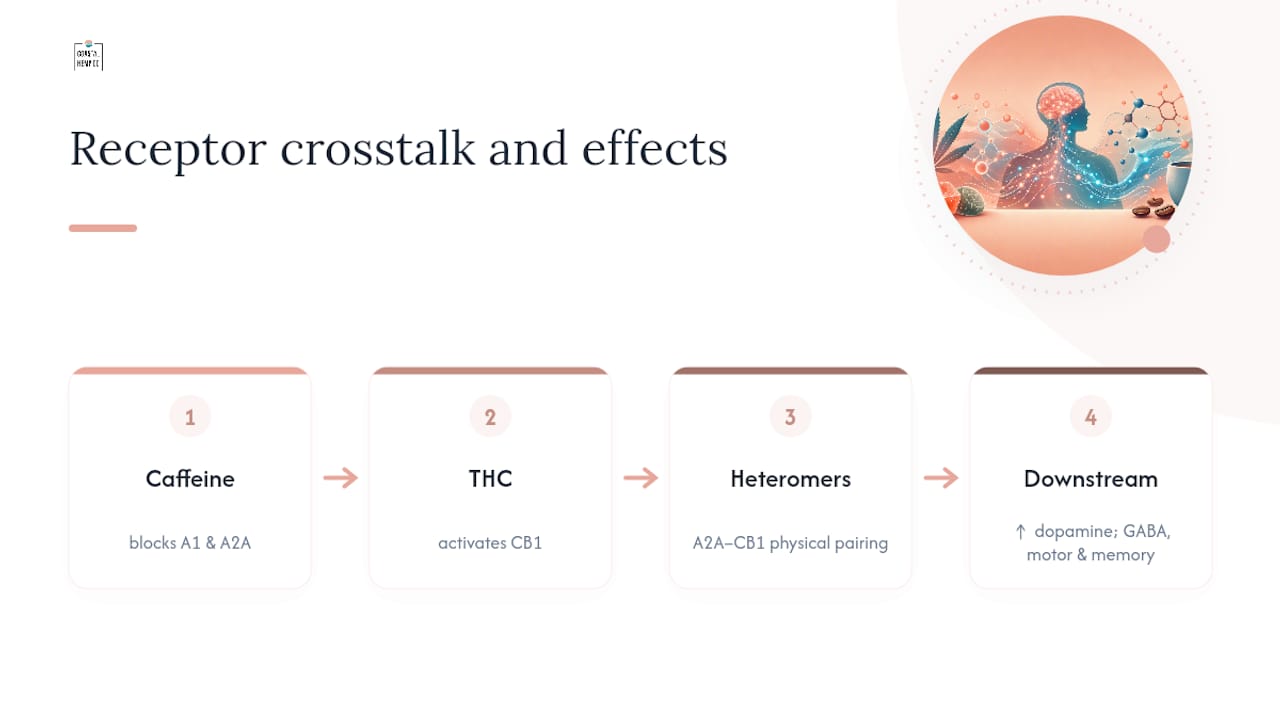
Caffeine and THC take aim at two different receptor systems, and where those systems overlap is where things get interesting. Caffeine blocks adenosine A1 and A2A receptors, the ones responsible for making you feel drowsy. THC, meanwhile, activates CB1 receptors, the primary docking site for cannabinoids in the central nervous system. On their own, that’s a simple story: one wakes you up, one gets you high. But A2A and CB1 receptors physically pair up in certain brain regions, forming what researchers call heteromers, structures where activating one receptor changes how the other one signals.
That crosstalk explains why combining the two doesn’t just layer “awake” on top of “high.” It can shift dopamine release in ways that amplify feelings of reward or euphoria, since both adenosine blockade and CB1 activation touch overlapping dopamine circuits. Neuroscience literature on adenosine-cannabinoid interactions also points to striatal GABAergic modulation as part of the mechanism, meaning the combination can affect motor control and memory processing beyond a simple mood lift.
Dose matters more here than with most substance combinations. Both caffeine and THC show biphasic effects: small amounts tend to ease anxiety and sharpen mood, while larger doses of either substance commonly increase anxiety and jitteriness. Combine two substances that each flip from calming to agitating at higher doses, and the tipping point arrives faster than most people expect.
Statistic Callout: A clinical pharmacokinetic study found that a CBD-dominant extract (640 mg CBD plus 20 mg THC) raised plasma caffeine concentrations by approximately 39% compared to placebo, while a THC-only dose did not produce that same enzyme inhibition. That’s a receptor-and-metabolism effect, not a coincidence.
Regular users also build tolerance to both substances independently, which changes the math over time. Someone who drinks coffee daily and uses edibles occasionally will feel a different combined effect than someone new to both.
What Are the Reported Benefits of Combining Edibles and Caffeine?
People who mix the two often describe a state some call “alert relaxation,” the sense of being physically calm from THC while staying mentally sharp from caffeine. Others report a creativity boost, a feeling that ideas connect more easily, or a sense of improved focus during low-stakes tasks.
None of that is guaranteed, and the strength of the effect depends heavily on dose and formulation:
- Low-THC, CBD-present edibles paired with moderate caffeine tend to produce milder, more balanced effects than THC-heavy products.
- High-THC edibles stacked with caffeine are more likely to tip into overstimulation rather than the “alert relaxation” people are chasing.
- Individual chemistry varies widely. What feels productive to one person feels jittery and scattered to another at the exact same doses.
A meaningful share of these benefits may also be placebo-driven or simply a byproduct of expectation, since no large controlled trial has confirmed a reliable “focus boost” from the combination. Treat anecdotal reports as a starting hypothesis, not a guarantee.
Pro Tip: Try your usual caffeine amount with a low-dose edible on a day with no responsibilities, then repeat the same combination a few days later. That comparison tells you far more about how your body actually responds than any single experience does.
What Risks Should You Watch for When Mixing Edibles and Caffeine?
Anxiety is the most commonly reported downside, and it doesn’t always show up at the dose you expect. Because both substances share a biphasic anxiety curve, a caffeine dose that’s normally fine for you can push a moderate THC dose from pleasant into uncomfortable. Cardiovascular strain compounds that risk: caffeine raises heart rate and blood pressure on its own, and higher THC doses can do the same, so the two together add up rather than cancel out.
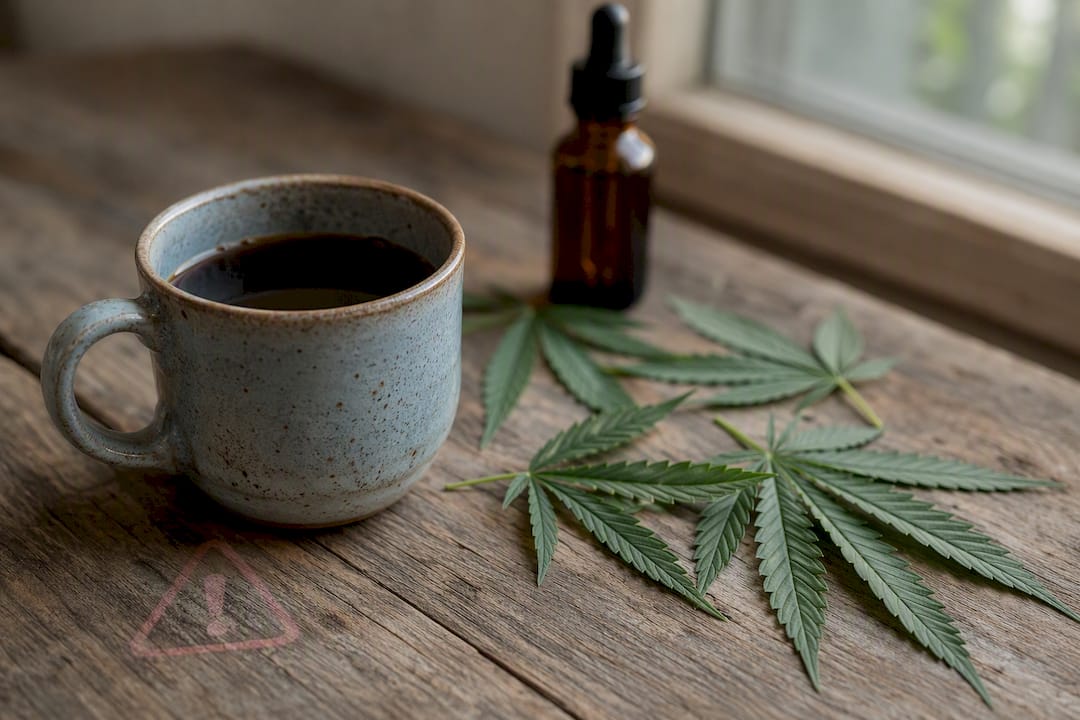
A common myth is that caffeine sobers you up from an edible. It doesn’t. Research shows caffeine produces minimal change in THC’s subjective effects, and preclinical evidence suggests the combination can actually worsen short-term memory deficits rather than improve cognitive clarity.
Watch for these red flags:
- Racing heart or chest tightness that doesn’t ease within a few minutes of sitting down and breathing slowly.
- Escalating anxiety or panic rather than the mild edge caffeine usually gives.
- Any plan to drive. Impairment guidance from federal health resources makes clear that feeling “alert” from caffeine doesn’t restore driving safety after THC.
- Underlying heart conditions, pregnancy, or medication use — these populations should treat the combination as higher risk by default.
If symptoms escalate to chest pain, severe confusion, or a heart rate that won’t settle, seek medical care rather than waiting it out.
Do CBD and THC Change How Caffeine Gets Metabolized?
Yes, and the direction of that interaction depends on what’s actually in the edible. Caffeine is broken down primarily by the liver enzyme CYP1A2. A controlled human trial found that a CBD-dominant extract inhibited that enzyme enough to raise plasma caffeine levels by about 39%, while a THC-only brownie at a comparable dose did not produce the same effect.
A separate Johns Hopkins laboratory study found something worth flagging in the other direction: caffeine alone barely moved the needle on THC’s subjective high, but adding CBD to the THC and caffeine combination raised plasma THC and 11-OH-THC markers, along with some measures tied to abuse liability.
Caffeine co-administration produced minimal change in THC’s subjective effects on its own, but CBD added to that mix increased both plasma THC markers and certain subjective measures of drug effect, according to findings published through Johns Hopkins researchers.
In plain terms, a high-CBD edible plus caffeine can mean a longer, stronger exposure to both substances than either one alone. Ongoing clinical trials are testing these combinations more precisely, but the practical takeaway now is straightforward: if you take medications cleared by CYP1A2, including some antidepressants and asthma drugs, talk to a clinician before regularly combining CBD-forward edibles with caffeine.
How Should You Dose and Time Edibles With Caffeine?
Conservative numbers work better than round ones here. A reasonable starting point for a microdose edible is 2.5 to 5 mg of THC, and for caffeine, FDA consumer guidance frames roughly 400 mg per day as a commonly cited upper limit for most healthy adults, with any single episode well below that.
- Take your edible first, then wait. Edible onset varies with gut absorption and whether you’re fed or fasted, so give it a full 90 minutes to two hours before deciding whether to add caffeine or another dose of anything.
- Check the label for four things: THC mg per serving, whether CBD is present, full-spectrum versus isolate, and declared caffeine mg if the product is a beverage-style edible.
- Be skeptical of labeled caffeine content on newer combination products. Mixed cannabinoid-caffeine formulations are still a relatively new category, and mg claims aren’t always precisely calibrated.
- If anxiety or a racing heart shows up, sit down, focus on slow exhales longer than your inhales, drink water, and avoid driving or operating machinery until symptoms fully resolve.
Pro Tip: Keep your caffeine and your edible on separate days for the first few tries. You’ll learn your baseline reaction to each one individually, which makes it far easier to tell what’s actually happening when you eventually combine them.
Why Trust This Guidance
This article draws on clinical pharmacokinetic research, including the CYP1A2 findings above, and neuroscience literature on receptor-level cannabinoid-caffeine interactions rather than anecdote alone. John, a contributor at Coastal Hemp Company, focuses on translating that clinical research into practical dosing guidance for hemp product users.
- Coastalhemp partners with established growers and brands to curate tested edible formats, from THCA gummies to functional mushroom products.
- For more on how absorption timing affects dosing decisions, see how edible metabolism actually works and how CBD tolerance builds over time.
Does Combining Edibles and Caffeine Cause Long-Term Problems?
Regular co-use changes your relationship with both substances gradually, and one pattern shows up again and again: caffeine disrupts sleep, cannabis gets used to counteract that disrupted sleep, and the resulting sleep architecture problems drive people back to caffeine the next morning. That cycle can accelerate tolerance to both substances, meaning you need higher doses over time to get the same effect, which itself raises the odds of anxiety or cardiovascular symptoms at doses that once felt comfortable.
Mental health effects are harder to pin down with certainty, since most of the direct interaction research covers single-session lab studies rather than months or years of regular combined use. What is better established is that both caffeine and THC, used heavily and independently, are linked to anxiety sensitivity over time. Layering them daily doesn’t cancel that risk out. It likely compounds it, particularly for anyone already prone to anxious thought patterns.
Dependence dynamics also differ between the two substances in a way worth understanding. Caffeine withdrawal is well documented, showing up as headaches and fatigue within a day or two of stopping. Cannabis dependence tends to build more slowly but can involve sleep disruption and irritability during a break. Combined regular use can mask early signs of either developing dependence, since the stimulant effect of caffeine can temporarily cover cannabis-related grogginess, and vice versa.
The practical fix isn’t total avoidance. It’s periodic breaks from one substance at a time, which resets tolerance and makes it easier to notice whether either substance alone is driving a symptom you’d otherwise blame on the combination.
Who Should Avoid Mixing Edibles and Caffeine Entirely?
Some groups face meaningfully higher stakes than the general population, and the guidance for them is more binary than “start low and go slow.”
Pregnant individuals should avoid cannabis use altogether per most public health guidance, and that caution extends fully to any edible-caffeine combination, since neither substance’s fetal safety profile improves when paired with the other. People with existing cardiovascular conditions, including arrhythmia, hypertension, or a history of heart attack, face a compounding risk: both caffeine and THC can raise heart rate and blood pressure independently, and combining them stacks that cardiovascular load rather than diluting it.
Teens and young adults face a separate concern tied to brain development timelines, since both substances interact with dopamine and reward circuitry during a period when that circuitry is still maturing. Anyone on medications metabolized through CYP1A2, a list that includes certain antidepressants, antipsychotics, and asthma medications, should treat high-CBD edibles paired with caffeine as a genuine interaction risk worth a conversation with a pharmacist or physician, not just a footnote.
People managing anxiety disorders specifically should be cautious with high doses of either substance, given the biphasic anxiety curve both drugs share. A low-dose edible without caffeine is a more predictable starting point for this group than any combined product.
Is Combining Edibles and Caffeine Legal Where You Live?
Legal status runs on two separate tracks that don’t always move together. Caffeine is unregulated as a substance for adults in food and beverages across the United States, with FDA guidance addressing safe intake levels rather than legality. Cannabis and hemp-derived THC products follow an entirely different framework that varies by state and by product type, hinging on whether a product falls under the 2018 Farm Bill’s hemp definition (0.3% THC by dry weight or less) or exceeds that threshold and falls under state-specific cannabis law.
That distinction matters for combination products specifically. A hemp-derived THCA or Delta 9 edible that’s legally compliant in one state may face different restrictions in another, and a caffeine-infused hemp beverage sits at the intersection of food and beverage law plus hemp compliance law, both of which can vary by jurisdiction. There’s no federal statute that separately regulates “mixing” caffeine and cannabis. The relevant legal questions are whether the cannabinoid product itself is legally available where you’re located and whether the caffeine content on a mixed beverage label meets standard food labeling accuracy requirements.
If you’re buying a combination product, or an edible you plan to pair with caffeine, check your state’s current hemp and cannabis regulations directly rather than relying on a product label alone, since state rules on THC content and sales channels change more frequently than most buyers expect.
Can Combining Cannabinoids and Caffeine Offer Real Benefits?
The clearest documented benefit isn’t recreational. It shows up in the mechanism research on mood and focus. Because caffeine blocks adenosine receptors tied to fatigue and THC activates CB1 receptors tied to relaxation, some people use low, deliberate doses of both to counter the grogginess that can come with daytime cannabis use, particularly with CBD-forward or low-THC formats designed for functional use rather than intoxication.
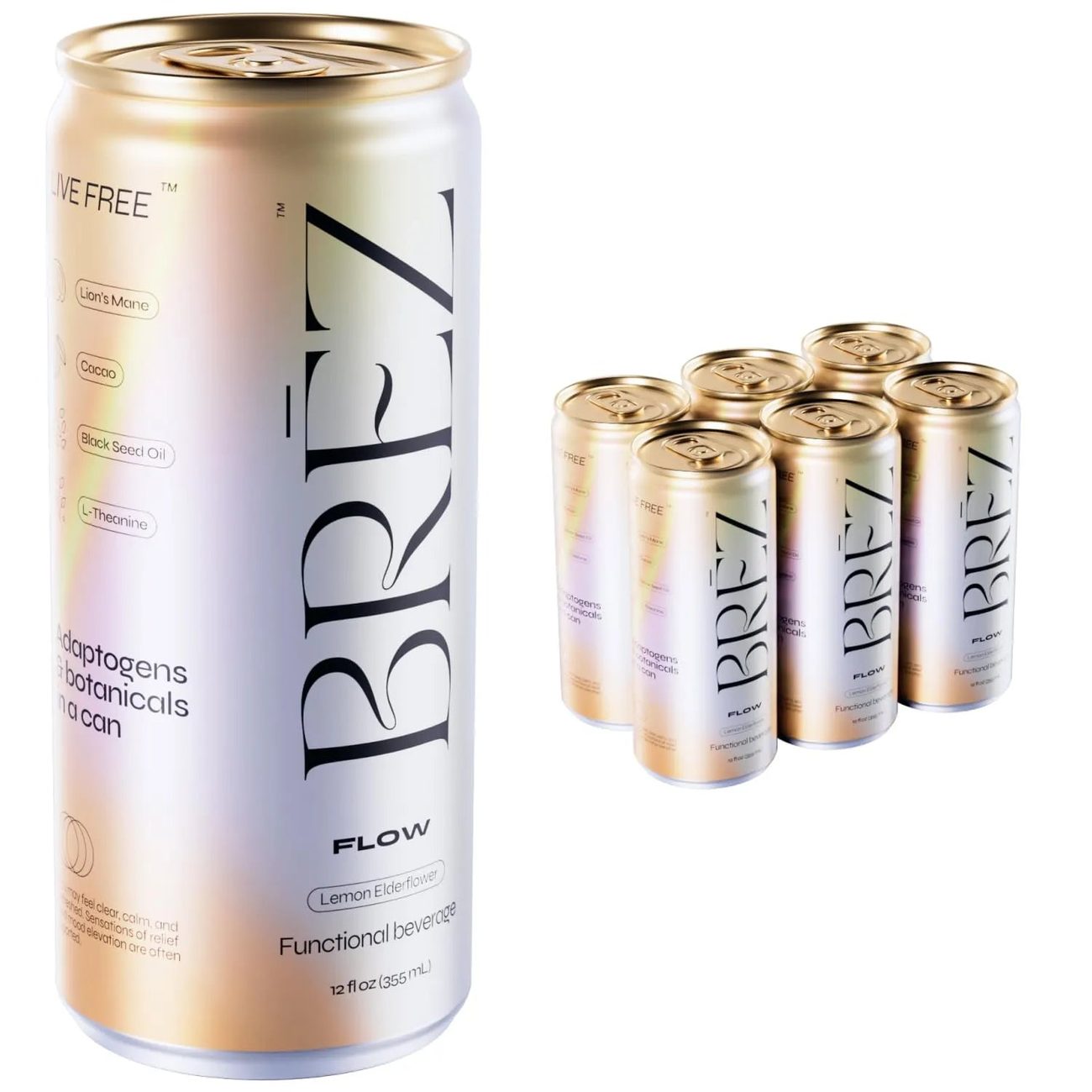
Functional mushroom edibles that skip THC entirely offer a related but distinct path. Products built around adaptogenic mushroom blends pair naturally with caffeine without the CYP1A2 interaction concerns tied to CBD, since they don’t involve cannabinoids at all. That makes them a more predictable option for someone chasing focus or calm-alertness without navigating THC dosing math.
The therapeutic research on deliberate cannabinoid-caffeine combinations specifically is still thin. Most of what’s documented comes from pharmacokinetic and receptor-interaction studies designed to flag risk, not efficacy trials designed to prove benefit. That’s an important distinction: the mechanism for a potential benefit is plausible and grounded in real neuroscience, but no large controlled trial has confirmed a reliable therapeutic effect from combining the two on purpose. Anyone exploring this route is better served treating it as careful self-experimentation within conservative dosing limits, not a proven protocol.
Why Evidence-Led Caution Beats Both Extremes
The loudest voices on this topic tend to fall into two unhelpful camps: people who insist caffeine “cancels out” a high, and people who treat any combination as automatically dangerous. Neither holds up against the actual pharmacokinetic data. Caffeine doesn’t reverse THC impairment in any meaningful way, but the risk isn’t uniform either. It’s concentrated specifically in CBD-heavy products interacting with caffeine metabolism, not in every edible-coffee pairing a person might try.
What gets underrated is how much the type of edible changes the risk profile. A THC-only edible behaves differently in your body than a CBD-dominant one, and most consumer advice treats “edibles” as one category when the CYP1A2 data says otherwise. If I had to pick the single highest-value habit for readers to adopt, it wouldn’t be a dosing chart. It would be reading the CBD content on the label before assuming caffeine is a safe add-on.
The conventional advice to “just be careful” is too vague to act on. Specific numbers work better: know your milligrams, know your wait window, and know whether CBD is in the formula you’re using. That’s a standard Coastalhemp holds its own product guidance to, and it’s the standard worth applying to whatever you’re combining, regardless of where you bought it.
— John
Safer Ways to Combine Edibles and Caffeine
If the science above tells you anything practical, it’s that formulation matters as much as dosage. Coastalhemp’s own catalog includes several formats built specifically around the microdosing and non-intoxicating principles this article covers.

For readers who want the “alert relaxation” effect without complicated THC math, the Slightly Elevated Adapt Gummies 30ct are built for controlled, repeatable serving sizes rather than guesswork. If you’re specifically trying to avoid THC-caffeine interaction risk altogether, FLOAT Mushroom Hard Candy and the FLOAT Mushroom Lollipops 50ct Box offer functional, non-intoxicating formats that pair with caffeine without any CYP1A2 concerns. The Jelly THCA Live Sugar Blend Gummies 3-Pack Bundle work well for experienced users who want a measured, labeled THC dose rather than an unpredictable one.
If you’re newer to this altogether and want a lower-commitment way to sample formats, the Monthly Mystery Hot Box delivers a rotating mix so you can find what fits your tolerance without overbuying a single product. Browse the full range and pick a starting point that matches the conservative dosing guidance above.
Sources
- Evaluation of Cytochrome P450–Mediated Cannabinoid-Drug Interactions in Healthy Adult Participants
- Effect of caffeine and cannabidiol (CBD) co-administration on Δ9-THC subjective effects, performance impairment, and pharmacokinetics (Johns Hopkins)
- A Double-Blind, Randomized, Placebo-Controlled, Within-Subject Crossover Study of the Effects of Combinations of Cannabinoids and Caffeine (Johns Hopkins)
- Spilling the beans: How much caffeine is too much? (FDA)
FAQ
What Should You Avoid Mixing With Edibles?
Avoid combining edibles with alcohol, sedative medications, or large caffeine doses on top of high-CBD products, since CBD can slow caffeine metabolism and alcohol compounds impairment risk in ways neither substance alone produces.
Does Coffee Sober You Up From Edibles?
No. Clinical research found caffeine produces minimal change in THC’s subjective effects, and it does not restore driving safety or reverse cognitive impairment from an edible.
How Long Should You Wait Between an Edible and Caffeine?
Give an edible at least 90 minutes to two hours to fully take effect before adding caffeine, since onset varies significantly based on digestion and whether you’ve eaten.
Can Caffeine Make an Edible’s Effects Worse?
Yes, in some cases. Preclinical research suggests the combination can worsen short-term memory deficits compared to using either substance alone, and both drugs share an anxiety-increasing effect at higher doses.
Are There Caffeine-Free Alternatives to Try Instead?
Yes. Functional mushroom edibles like FLOAT Mushroom Hard Candy skip cannabinoids entirely, avoiding the CYP1A2 interaction concern tied to CBD-caffeine combinations altogether.


Comments