

Hemp Cortisol Reduction Benefits: What You Need to Know
Hemp cortisol reduction benefits are defined as the measurable and subjective changes in stress hormone activity that occur when hemp-derived cannabinoids interact with the body’s endocannabinoid system (ECS). The ECS is a regulatory network that directly influences the hypothalamic-pituitary-adrenal (HPA) axis, the biological pathway responsible for cortisol secretion. Research as of 2026 shows that hemp products, particularly CBD-dominant formulas, reliably reduce subjective anxiety and stress markers, though their direct effect on salivary cortisol levels is more nuanced than most people expect. Understanding that distinction is the first step toward using hemp products effectively for stress management.
1. How hemp interacts with the endocannabinoid system to influence cortisol
The ECS functions as a fine-tuning regulatory network rather than a simple on/off switch for cortisol. This explains why human cortisol responses to hemp products vary so widely from person to person.
CB1 receptors, distributed throughout the hypothalamus, regulate excitatory and inhibitory inputs to corticotropin-releasing hormone (CRH) neurons. CRH is the upstream trigger for cortisol secretion. When CB1 receptors are activated, they modulate HPA axis overactivation by reducing excitatory signals to CRH neurons, which shapes cortisol output contextually rather than suppressing it outright.
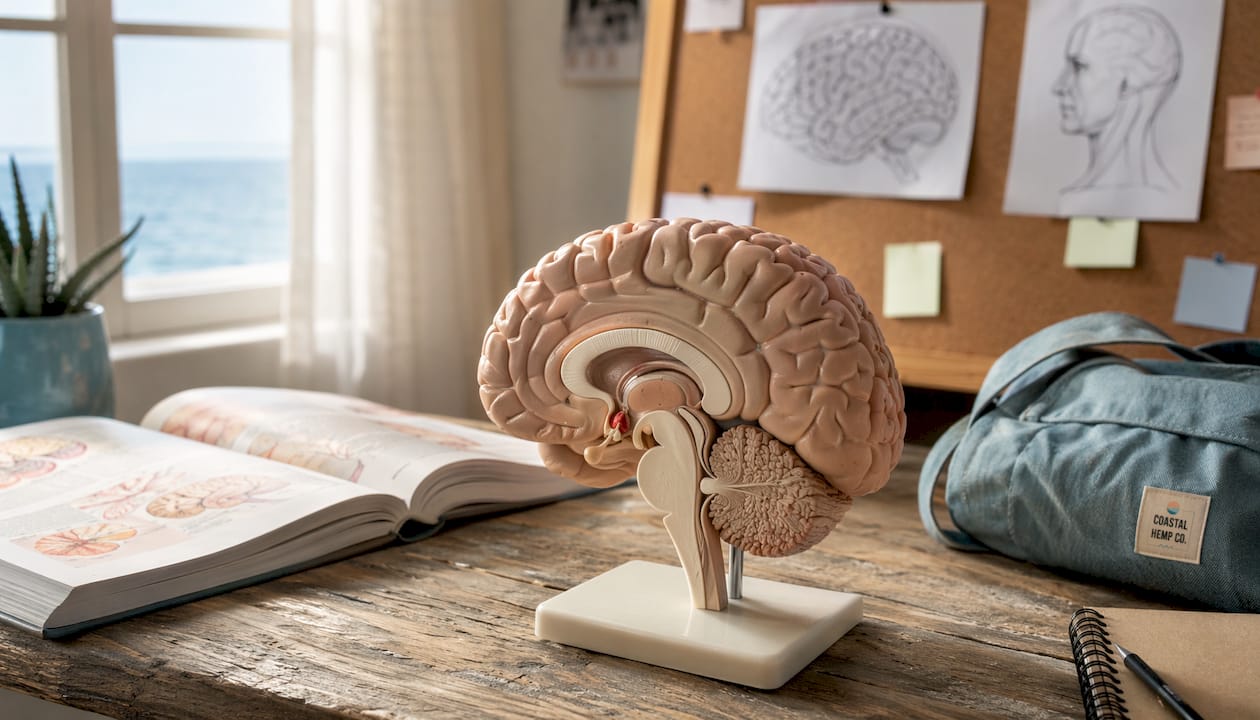
CBD, the primary cannabinoid in hemp, works through two key pathways. First, it inhibits the FAAH enzyme, which raises anandamide levels. Elevated anandamide gates the HPA axis to prevent cortisol spikes during stress. Second, CBD activates serotonin 5-HT1A receptors, which contribute to anxiety reduction and provide a complementary pathway for stress relief beyond the ECS alone.
THC, by contrast, has a biphasic relationship with cortisol. Low doses may reduce stress, while higher doses can increase cortisol or produce anxiety. Hemp-derived CBD products contain less than 0.3% THC by federal standard, which limits this risk significantly.
Pro Tip: If you are new to hemp for stress management, start with a CBD-dominant product and a low dose. The biphasic nature of cannabinoids means that more is not always better for cortisol control.
2. Top hemp product types for stress relief and cortisol support
Different hemp product formats produce different onset times, durations, and cannabinoid profiles. Choosing the right format matters for consistent stress management.
- CBD-dominant oils and tinctures: Absorbed sublingually within 15–45 minutes. Full-spectrum oils retain terpenes and minor cannabinoids that may enhance the overall calming effect through what researchers call the entourage effect.
- CBD edibles and gummies: Onset takes 45–90 minutes but effects last 4–6 hours. A 2026 naturalistic study found CBD-dominant edibles associated with a 24.9% average reduction in self-reported anxiety after 30 days. That is a meaningful shift for people managing daily stress.
- Hemp flower (inhaled): Fastest onset, under 10 minutes. Useful for acute stress episodes, but harder to dose consistently and carries respiratory considerations.
- CBG products: Cannabigerol (CBG) is an emerging cannabinoid with preliminary findings suggesting anxiolytic properties. Research is early, but CBG-dominant products are gaining traction among people who want non-intoxicating options beyond CBD.
- Full-spectrum vs. broad-spectrum vs. isolate: Full-spectrum products include trace THC and a wider terpene profile. Broad-spectrum removes THC. Isolate contains CBD only. For cortisol and hemp mood regulation, full-spectrum products tend to show stronger subjective effects in real-world use.
The CBD:THC ratio matters. Products with a high CBD:THC ratio (10:1 or greater) tend to produce calming effects without the cortisol-spiking risk associated with THC-dominant products.
3. What current research says about hemp’s effectiveness in reducing cortisol
The research picture in 2026 is promising but requires careful interpretation. Hemp reliably reduces subjective stress. Its direct effect on salivary cortisol is less consistent.
A 2026 pilot study of 40 participants found a significant decrease in salivary amylase (p=0.0103) following high-dose hemp extract. Salivary amylase is a stress biomarker linked to sympathetic nervous system activation. However, the same study found no significant change in salivary cortisol levels. This tells us hemp may calm the nervous system response to stress without always producing a measurable drop in cortisol itself.
A separate concern comes from chronic use data. A june 2026 study of 82 subjects found that frequent cannabis users had elevated basal cortisol at awakening compared to controls (p=0.047). This suggests long-term, high-frequency use may dysregulate the HPA axis rather than support it.
Placebo effects also play a documented role. Controlled studies show that CBD expectancy alone blunts cortisol responses to acute stress, particularly in males. This does not invalidate hemp’s benefits. It does mean that psychological factors contribute meaningfully to the outcomes people experience.
| Study type | Key finding | Implication |
|---|---|---|
| 2026 pilot study (40 subjects) | Salivary amylase decreased significantly; cortisol unchanged | Hemp reduces nervous system stress markers but may not lower cortisol directly |
| 2026 naturalistic study (CBD edibles) | 24.9% anxiety reduction over 30 days | Subjective stress relief is reliable with consistent use |
| June 2026 chronic use study (82 subjects) | Frequent users showed elevated basal cortisol | Long-term heavy use may impair cortisol regulation |
| Placebo expectancy research | CBD belief blunts cortisol stress response | Psychological factors amplify hemp’s measurable effects |
The dose-response relationship adds another layer. Low to moderate cannabinoid doses tend to reduce stress and support cortisol balance, while high doses can neutralize or increase cortisol. This non-linear pattern is why personalized dosing matters more than simply taking more product.
4. Natural strategies that work alongside hemp for cortisol management
Hemp works best as part of a broader approach to stress and cortisol control. Relying on hemp alone, without addressing lifestyle factors, limits how much benefit you will see.
- Sleep: Cortisol follows a circadian rhythm, peaking in the morning and declining through the day. Poor sleep disrupts this pattern and raises baseline cortisol. Consistent sleep schedules are one of the most direct ways to support healthy cortisol rhythms.
- Outdoor activity: Moderate aerobic exercise reduces cortisol acutely and improves HPA axis sensitivity over time. Even 20–30 minutes of walking outdoors combines physical activity with light exposure, both of which support cortisol regulation.
- Mindfulness and meditation: Mindfulness-based stress reduction (MBSR) has a documented track record for lowering cortisol in clinical settings. Pairing a hemp extract for stress relief with a daily mindfulness practice creates a compounding effect on the stress response.
- Nutritional support: Magnesium, omega-3 fatty acids, and adaptogenic herbs like ashwagandha each have evidence supporting cortisol modulation. These work through different pathways than hemp and can complement rather than duplicate its effects.
- Avoiding overuse: Chronic high-dose hemp use carries the risk of HPA axis dysregulation, as the 2026 chronic use data shows. Cycling hemp use or taking periodic breaks helps maintain receptor sensitivity and prevents tolerance buildup.
Pro Tip: Track your stress and sleep quality in a simple journal for two weeks before starting hemp products. This baseline makes it much easier to identify which product type and dose actually works for your body.
You can also explore hemp calming effects in more depth to understand why reduced anxiety does not always equal lower cortisol, and what that means for your wellness routine.
Key takeaways
Hemp reduces subjective stress and anxiety reliably, but its direct effect on cortisol levels depends on dose, product type, frequency of use, and individual biology.
| Point | Details |
|---|---|
| ECS modulates, not overrides, cortisol | Hemp supports HPA axis balance contextually rather than suppressing cortisol outright. |
| Subjective relief is well-documented | CBD-dominant edibles produced a 24.9% anxiety reduction over 30 days in 2026 research. |
| Dose matters more than most people realize | Low to moderate doses support cortisol balance; high doses can increase cortisol. |
| Chronic heavy use carries risk | Frequent long-term use may elevate basal cortisol rather than lower it. |
| Lifestyle factors amplify hemp’s benefits | Sleep, exercise, and mindfulness compound the stress-relief effects of hemp products. |
My honest read on hemp and cortisol
I have spent years watching people approach hemp products with the expectation that they will simply lower cortisol the way a medication lowers blood pressure. That framing leads to disappointment and, sometimes, overuse.
What hemp actually does is support the body’s own stress regulation system. The ECS is a modulator. It does not replace healthy sleep, it does not cancel out a chronically overloaded schedule, and it does not produce the same cortisol response in every person. The 2026 research makes this clear: stress biomarkers like salivary amylase respond to hemp, but cortisol itself is more stubborn.
The people I see getting the most out of hemp for stress are using low to moderate doses consistently, pairing it with real lifestyle changes, and choosing CBD products for anxiety based on evidence rather than marketing claims. They are also not using hemp every single day indefinitely. Periodic breaks matter for keeping the ECS responsive.
My honest recommendation: treat hemp as a support tool, not a solution. It works best when you are also sleeping well, moving your body, and managing your mental load. Used that way, it is genuinely useful.
— John
Coastalhemp’s selection for stress relief and wellness
Coastalhemp carries a curated range of hemp products designed for people who take their wellness seriously.

For those focused on stress relief and cortisol support, the Jelly THCA Live Sugar Blend Gummies offer consistent dosing in a convenient format, making them easy to incorporate into a daily routine. Coastalhemp also stocks full-spectrum CBD oils and specialty cannabinoid options for people who want to fine-tune their approach. Every product in the catalog comes from vetted growers and top-tier brands, so you know exactly what you are getting. Browse the full range at Coastalhemp and find the format that fits your stress management goals.
FAQ
Does hemp actually lower cortisol levels?
Hemp reliably reduces subjective stress and anxiety, but a 2026 pilot study found no significant change in salivary cortisol with high-dose hemp extract, even as other stress biomarkers improved. Direct cortisol reduction depends heavily on dose, product type, and individual biology.
What is the best hemp product for cortisol management?
CBD-dominant edibles and full-spectrum oils are the most studied formats for stress relief. A 2026 naturalistic study found CBD edibles produced a 24.9% reduction in self-reported anxiety over 30 days, which indirectly supports healthier cortisol patterns.
Can too much hemp raise cortisol?
Yes. A june 2026 study found frequent cannabis users had significantly elevated basal cortisol compared to non-users. High doses of cannabinoids can also increase cortisol due to the biphasic dose-response relationship, making moderate dosing the safer approach.
How does CBD interact with the stress hormone system?
CBD inhibits the FAAH enzyme, raising anandamide levels, which helps regulate HPA axis activity and prevent cortisol spikes. CBD also activates serotonin 5-HT1A receptors, providing a secondary pathway for anxiety and stress reduction.
How long does it take for hemp to affect stress levels?
Subjective stress relief from CBD edibles typically appears within 45–90 minutes per dose and builds over weeks of consistent use. The 2026 naturalistic study measured meaningful anxiety reductions after 30 days of regular CBD edible use.


Comments