

Hemp Tolerance Explained: What Every User Should Know
Hemp tolerance is defined as the progressive reduction in your body’s response to cannabinoids like THC, caused by repeated use and leading to diminished effects over time. The standard pharmacological term for this process is cannabinoid tolerance, and understanding hemp tolerance explained in plain terms means recognizing that your body adapts to repeated cannabinoid exposure by changing how it processes those compounds at the receptor level. Federal law defines hemp as Cannabis sativa L. containing no more than 0.3% delta-9 THC, which means hemp products carry lower THC loads than marijuana but can still trigger tolerance with consistent use. Knowing how this works gives you real control over your wellness routine.
What is hemp tolerance explained: the core definition
Tolerance is defined as the progressive reduction in a substance’s effectiveness due to repeated dosing, requiring larger amounts to achieve the same effect. This is not a sign that hemp products have stopped working. It is a predictable biological response that every regular user will encounter to some degree.
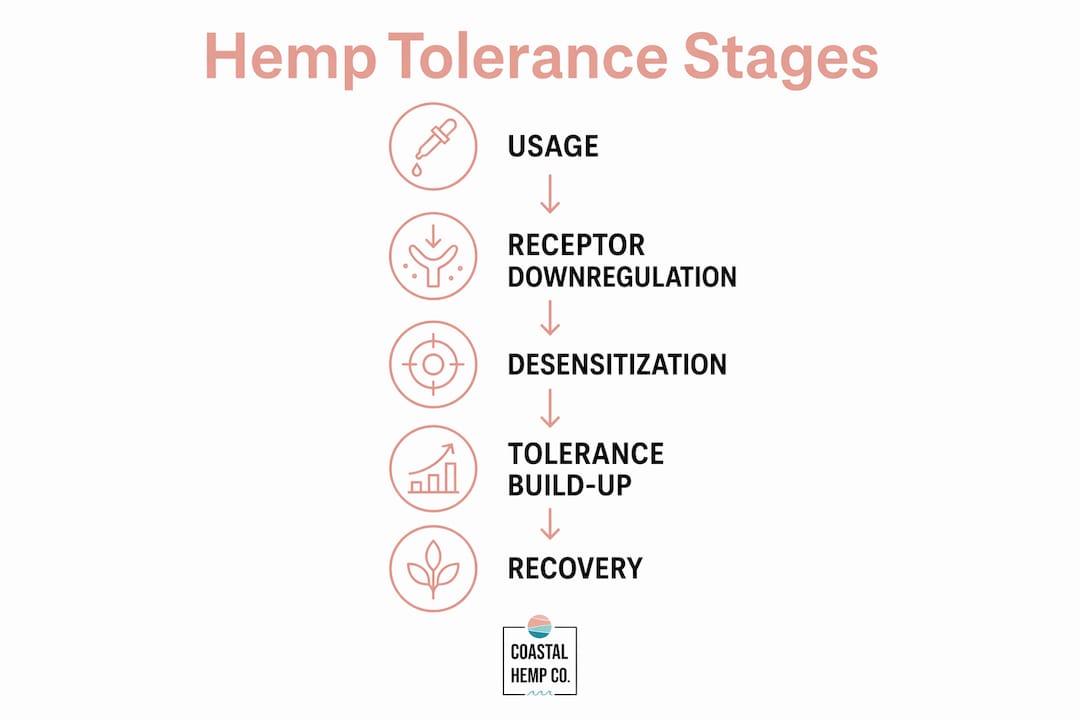
The primary driver of cannabinoid tolerance is CB1 receptor downregulation. CB1 receptors are the main binding sites for THC in the brain and nervous system. When THC repeatedly activates these receptors, the body responds by reducing their number and sensitivity. Research shows a 15–20% decrease in CB1 receptor density after 30 days of daily cannabinoid use above 50mg. That receptor reduction is what makes your usual dose feel weaker over time.

Desensitization is a related but distinct process. Where downregulation reduces the number of receptors, desensitization reduces how well each remaining receptor responds to THC. Both processes happen simultaneously in chronic users, compounding the tolerance effect.
How does hemp tolerance develop in the body?
CB1 receptor downregulation and desensitization are the two primary mechanisms driving tolerance to THC in hemp products. Research shows roughly 20% receptor downregulation in chronic users, with receptor density returning near baseline after approximately four weeks of abstinence. That recovery timeline is one of the most clinically useful data points for anyone planning a tolerance break.
THC and CBD behave very differently when it comes to tolerance development. THC drives clear receptor downregulation with consistent use. CBD, by contrast, does not appear to build tolerance the same way. A 2011 Brazilian study found no increased tolerance to CBD in either acute or chronic dosing. Some researchers describe a “reversed tolerance” effect with CBD, where the body becomes more sensitive to it over time rather than less. This distinction matters when choosing between THC-dominant and CBD-dominant hemp products.
The timeline for tolerance development depends heavily on dose and frequency. Occasional users who consume hemp products a few times per week may notice minimal tolerance changes over months. Daily users consuming above 50mg of THC-equivalent cannabinoids can experience measurable receptor changes within weeks. Tolerance develops over days to weeks of regular use, with subjective effects diminishing noticeably before physiological markers fully shift.
| Cannabinoid | Tolerance Pattern | Receptor Effect | Recovery Timeline |
|---|---|---|---|
| THC | Progressive buildup | CB1 downregulation and desensitization | ~4 weeks abstinence |
| CBD | Minimal to none | No significant CB1 downregulation | Not applicable |
| THCA | Similar to THC when converted | CB1 activation post-decarboxylation | ~4 weeks abstinence |
Pro Tip: If you use a full-spectrum hemp product, the THC component drives most of your tolerance buildup. Switching to a CBD-isolate product during a break can help you maintain some wellness benefits while your CB1 receptors recover.
What factors influence individual hemp tolerance levels?
Individual tolerance development varies widely, influenced by dosing frequency, cannabinoid profile, administration route, genetics, and underlying health conditions. No two people build tolerance at the same rate. That variability is why clinical monitoring matters more than following a generic dosing schedule.
The key variables that shape your personal tolerance levels include:
- Dosing frequency: Daily use accelerates receptor downregulation far faster than occasional use. Users who consume hemp products three or more times per day are at the highest risk of rapid tolerance buildup.
- Cannabinoid profile: THC-dominant products drive stronger tolerance than CBD-dominant ones. Broad-spectrum and full-spectrum products containing multiple cannabinoids may produce a more complex tolerance pattern than single-cannabinoid isolates.
- Route of administration: Inhaled cannabinoids reach peak blood concentration faster and produce stronger receptor activation than edibles or tinctures. Faster onset generally means faster tolerance development at equivalent doses.
- Genetics and metabolism: Cytochrome P450 enzymes, particularly CYP2C9 and CYP3A4, control how quickly your body breaks down THC. Faster metabolizers clear THC sooner, which may slow tolerance buildup. Slower metabolizers experience prolonged receptor activation, potentially accelerating it.
- Lifestyle and environment: Sleep quality, stress levels, and diet all influence endocannabinoid system function. Chronic stress, for example, alters baseline CB1 receptor expression, which changes how quickly tolerance sets in.
Understanding your personal profile across these variables is the first step toward managing hemp tolerance rather than just reacting to it. Coastalhemp’s terpene profile resources offer useful context on how product composition interacts with these individual factors.
How can hemp users manage and reset tolerance effectively?
Clinical experts recommend viewing tolerance as a signal to adjust therapy rather than a reason to keep escalating doses. Dose rotation, strategic breaks, and regular reassessment are the preferred tools. Indefinite dose escalation is the least effective long-term approach and carries the greatest risk of deepening tolerance.
A structured tolerance management plan follows these steps:
- Track your baseline effects. Before adjusting anything, document your current dose, product type, and the effects you experience. This gives you a reference point to measure against after any changes.
- Take a structured tolerance break. Tolerance breaks of around 3 weeks are generally required for significant CB1 receptor recovery. A full four weeks returns receptor density near baseline for most users. Plan the break during a lower-stress period to reduce discomfort.
- Use short breaks strategically. Short 2–3 day breaks can partially restore cannabinoid sensitivity but do not fully reset tolerance, especially for heavy users. They work best as maintenance tools between longer breaks, not as a substitute for them.
- Rotate cannabinoid profiles. After a break, reintroduce hemp products with a different cannabinoid profile than before. If you were using a THC-dominant product, try a CBD-dominant or broad-spectrum option for several weeks before returning to higher-THC formats.
- Adjust your administration route. Switching from inhalation to edibles or tinctures lowers peak receptor activation and can slow re-tolerance development after a break.
- Reassess efficacy every 4–6 weeks. Regular reassessment and user education about tolerance development improve adherence and therapeutic outcomes. Set a calendar reminder to evaluate whether your current dose is still delivering the effects you need.
- Consult a clinician if escalation continues. If you find yourself consistently needing higher doses despite breaks and rotation, a healthcare provider familiar with cannabinoid therapy can help identify underlying factors.
Pro Tip: Keep a simple hemp journal. Note your product, dose, time of use, and effect rating on a 1–10 scale. After four weeks, patterns become obvious and adjustments become easier to make with confidence.
For a deeper look at dose management, Coastalhemp’s controlled dosing guide covers practical frameworks for 2026.
How does hemp tolerance impact wellness outcomes and product choice?
Tolerance directly reduces the perceived benefit of hemp products over time. Tolerance affects subjective, cognitive, and physiological effects of THC, often resulting in a need for higher doses or altered consumption patterns to achieve desired wellness outcomes. For someone using hemp for stress relief or sleep support, this means the product that worked well in month one may feel noticeably weaker by month three without any change in routine.
Product selection becomes a tolerance management tool in its own right. Choosing products with varied cannabinoid spectrums, different potency levels, and distinct delivery formats gives you more options to rotate through without always escalating your dose.
| Wellness Goal | Lower Tolerance Risk Option | Higher Tolerance Risk Option |
|---|---|---|
| Stress relief | CBD-dominant tincture, daily low dose | High-THC gummies, multiple daily doses |
| Sleep support | Broad-spectrum edible, occasional use | THC concentrate, nightly high dose |
| General wellness | CBD isolate or low-THC product | Full-spectrum high-potency product daily |
| Energy and focus | THCv-based product, moderate frequency | High-THC inhalation, frequent use |
THCv is a cannabinoid worth noting in the context of tolerance. It interacts with CB1 receptors differently than delta-9 THC, and some users report it produces distinct effects at lower doses. Products like THCv gummies from Coastalhemp offer an alternative cannabinoid profile for users looking to rotate away from standard THC-dominant formats. Rotating product types based on your wellness goals is one of the most practical ways to stay ahead of tolerance without sacrificing results.
Key takeaways
Hemp tolerance is a manageable biological process, not a permanent barrier. The most effective approach combines structured breaks, cannabinoid rotation, and regular efficacy tracking.
| Point | Details |
|---|---|
| Tolerance definition | Tolerance is the body’s progressive reduction in cannabinoid response due to repeated CB1 receptor activation. |
| THC vs. CBD tolerance | THC drives clear CB1 downregulation; CBD shows minimal tolerance buildup and may increase sensitivity over time. |
| Break duration matters | Short 2–3 day breaks offer partial relief; full receptor recovery requires approximately 4 weeks of abstinence. |
| Individual variation is real | Genetics, dose frequency, and administration route all shape how fast tolerance develops for each person. |
| Product rotation works | Switching cannabinoid profiles and delivery formats slows re-tolerance and extends the life of your wellness routine. |
What I’ve learned about tolerance that most articles get wrong
Most articles treat hemp tolerance as a problem to solve. I see it differently. Tolerance is information. When your usual product stops delivering the same effect, your body is telling you something has shifted, and that signal is worth paying attention to rather than overriding with a higher dose.
The biggest misconception I encounter is that a two-day break fixes everything. It does not. Short breaks reduce tolerance at the margins, but they do not restore CB1 receptor density to baseline. Users who rely on weekend breaks to “reset” are often surprised when their tolerance keeps climbing month after month. A genuine reset takes closer to four weeks, and that timeline is non-negotiable for heavy users.
The second misconception is that all hemp products build tolerance equally. They do not. CBD-dominant products carry a fundamentally different tolerance profile than THC-dominant ones. Users who understand this can build a rotation strategy that keeps their endocannabinoid system responsive without requiring constant dose increases.
My honest recommendation: treat your hemp routine like a training program. Periodize it. Cycle through different cannabinoid profiles, take planned breaks, and track your results. The users who get the most consistent wellness benefit from hemp are not the ones who find one product and stick with it forever. They are the ones who stay curious and adjust.
— John
Coastalhemp’s product range for smarter tolerance management

Coastalhemp carries a curated selection of lab-tested hemp products designed to support varied dosing and cannabinoid rotation. Whether you are coming off a tolerance break or looking to shift your cannabinoid profile, the catalog includes options across THCv gummies, THCA concentrates, broad-spectrum formats, and functional mushroom edibles. Each product comes with transparent cannabinoid profiles so you can make informed choices rather than guessing at potency. Explore THCA flower and concentrates for high-potency rotation options, or browse the full selection at Coastalhemp to find the right fit for your current tolerance level and wellness goals.
FAQ
What is hemp tolerance in simple terms?
Hemp tolerance is your body’s reduced response to cannabinoids after repeated use. It happens because CB1 receptors decrease in number and sensitivity with consistent THC exposure.
How long does a full tolerance reset take?
Full CB1 receptor recovery takes approximately four weeks of abstinence. Short 2–3 day breaks offer only partial improvement and do not fully reset tolerance for regular users.
Does CBD cause tolerance the same way THC does?
CBD does not build tolerance the way THC does. A 2011 study found no increased tolerance to CBD with either acute or chronic dosing, and some evidence points to a reversed tolerance effect where sensitivity increases over time.
What is the fastest way to lower hemp tolerance levels?
The fastest effective method is a structured break of at least three to four weeks combined with cannabinoid profile rotation when you resume use. Dose escalation without a break does not lower tolerance.
How do I know if my hemp tolerance is too high?
The clearest sign is needing significantly more product to achieve the same effect you once got at a lower dose. Tracking your dose and effect rating weekly makes this pattern easy to spot early.



Comments