

The Role of Hemp in Sleep: A 2026 Science Guide
Hemp is defined as a source of bioactive compounds that influence sleep through multiple biological pathways, not through direct sedation. The role of hemp in sleep centers on two primary constituents: cannabidiol (CBD) and hemp seed oil (HSO). CBD modulates neural circuits tied to stress and arousal, while HSO provides polyunsaturated fatty acids that support metabolic and inflammatory balance. Together, these compounds address the physiological conditions that most commonly disrupt sleep. Clinical research in 2026 continues to refine our understanding of how these mechanisms translate into real outcomes for people managing insomnia and sleep disturbances.
How do hemp compounds like CBD and hemp seed oil improve sleep?
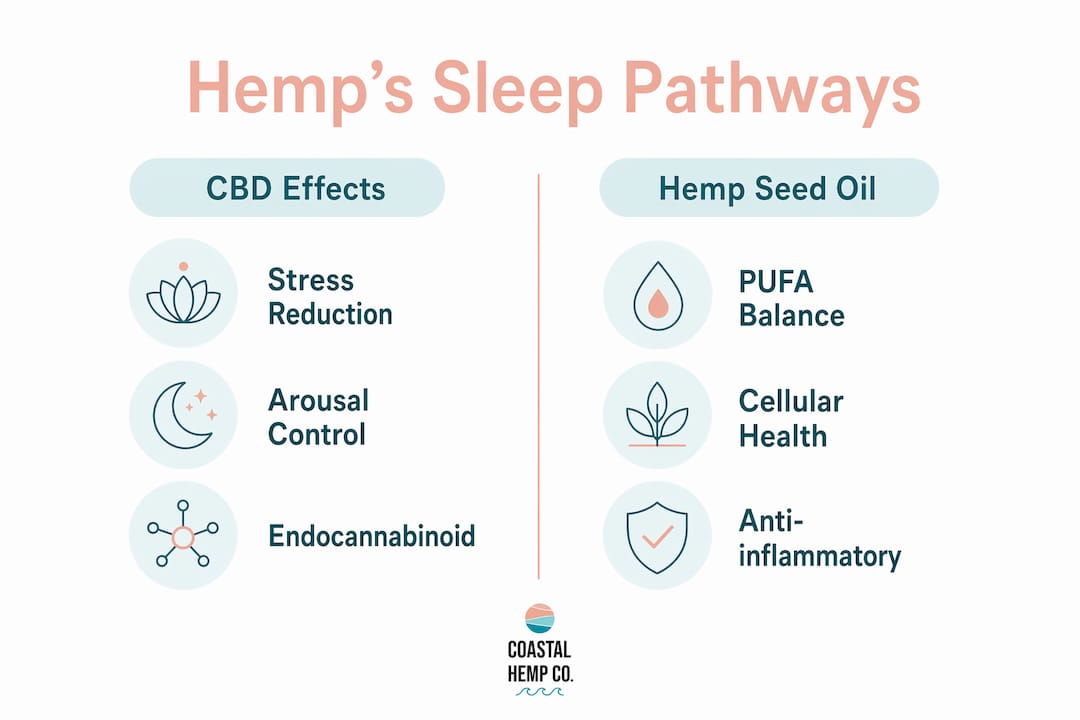
CBD and hemp seed oil work through distinct but complementary pathways to support sleep quality. Understanding both is the foundation for using hemp effectively.
CBD’s effect on the nervous system
CBD modulates the endocannabinoid and serotonergic systems to reduce stress-induced arousal that contributes to insomnia. The endocannabinoid system regulates mood, stress response, and sleep-wake cycles. By acting on this system, CBD reduces the neurobiological hyperarousal that keeps people awake at night. Serotonergic signaling also plays a role, since serotonin is a precursor to melatonin, the hormone that governs sleep onset.
Hemp seed oil’s systemic role
Hemp seed oil contains omega-3 and omega-6 polyunsaturated fatty acids (PUFAs) in a ratio that supports cellular health. These fatty acids reduce inflammation and support mitochondrial function, both of which are biologically relevant to sleep-wake regulation. Chronic low-grade inflammation is a known driver of poor sleep continuity. By addressing inflammation at the cellular level, HSO creates a more stable internal environment for restorative sleep.

The table below contrasts the primary roles of each hemp-derived compound:
| Compound | Primary mechanism | Sleep-related benefit |
|---|---|---|
| CBD | Endocannabinoid and serotonergic modulation | Reduces arousal, supports sleep onset |
| Hemp seed oil PUFAs | Anti-inflammatory, mitochondrial support | Promotes sleep continuity and metabolic stability |
| CBN (cannabinol) | Mild sedative properties | May support deeper sleep phases |
- CBD targets the neural circuits that generate stress-driven wakefulness.
- Hemp seed oil addresses systemic inflammation that disrupts sleep architecture.
- CBN, often paired with CBD in sleep formulations, adds mild sedative effects without significant psychoactivity.
Pro Tip: Take CBD-containing products 60–90 minutes before bed to allow absorption and let the compound reach peak plasma levels during your target sleep window.
What does clinical research say about hemp’s effectiveness for insomnia?
The clinical picture for hemp as a sleep aid is promising but still developing. The most relevant 2026 data comes from controlled trials and scoping reviews that reveal both the potential and the limits of current evidence.
A 2026 double-blind randomized controlled trial found that 300 mg daily CBD decreased sleep disturbances more than a 50 mg dose, though neither dose performed significantly better than placebo. The trial enrolled 63 participants with an average age of 29.27 and ran for two weeks, with no cognitive impairment noted. This result does not mean CBD is ineffective. It means that dose, population, and trial duration all shape outcomes in ways that single studies cannot fully capture.
A scoping review of 20 peer-reviewed studies found that sleep benefits are most pronounced among adults with baseline anxiety or depression. People without these conditions show less consistent improvement. This distinction matters because insomnia rarely exists in isolation. For people whose sleep problems are rooted in anxiety or mood dysregulation, hemp-derived compounds may offer meaningful relief.
Cannabinoid-based interventions show potential to improve subjective sleep continuity across multiple sleep disorder types, though no consensus on optimal formulations currently exists. That lack of consensus reflects the early stage of clinical standardization, not a failure of the compounds themselves.
“Despite promising preclinical data, the gap in clinical sleep architecture evidence and lack of therapeutic protocols means hemp should be considered adjunctive for sleep, not a standalone hypnotic. Managed care experts also highlight the dangers of unsupervised hemp use due to the lack of drug interaction screening, underlining the need for medical consultation.” Mechanistic Pathways Review | AJMC Managed Care
Key limitations in current research include:
- No standardized dosing protocols across clinical trials.
- Most trials rely on subjective sleep quality measures rather than polysomnography.
- Safety concerns around chronic high-dose CBD include potential hepatotoxicity, requiring liver function monitoring.
- CBD inhibits CYP450 enzymes, creating drug interaction risks for people on prescription medications.
How do individual factors and product quality affect hemp’s sleep benefits?
Hemp does not produce uniform results across all people. The variability in sleep response reflects differences in baseline physiology, circadian timing, and the quality of the product used.
Baseline anxiety and depression are the strongest predictors of who benefits most from hemp-based sleep support. People with physiological hyperarousal, elevated cortisol, or mood dysregulation respond more consistently than those with primary insomnia unrelated to stress. This is not a limitation of hemp. It reflects the specificity of CBD’s mechanism, which targets stress-driven arousal rather than sleep drive itself.
Product quality introduces a separate layer of variability. Retail CBD products often contain undisclosed Delta-9 THC levels and inconsistent CBD:THC ratios. These inconsistencies produce unpredictable effects and can cause unintended psychoactivity or failed drug tests. Choosing products with verified cannabinoid profiles is not optional. It is the baseline requirement for reliable outcomes.
The following factors determine how effectively hemp supports sleep for any individual:
- Baseline stress and anxiety level. Higher baseline arousal correlates with stronger response to CBD’s calming effects.
- Timing of intake. Circadian timing critically influences outcomes. Taking hemp compounds too early or too late relative to your sleep window reduces efficacy.
- Route of administration. Sublingual oils absorb faster than gummies. Gummies provide longer, more gradual release, which suits people who wake during the night.
- Metabolic state. Body weight, liver function, and concurrent medications all affect how CBD is processed and how long it remains active.
- Product formulation. Full-spectrum products containing CBD, CBN, and trace THC may produce stronger sleep effects than CBD isolate alone, due to the entourage effect.
Pro Tip: Keep a simple sleep log for the first two weeks of using any hemp product. Note intake time, dose, and how you feel in the morning. This data helps you adjust timing and dose with precision rather than guesswork.
What are the practical steps for using hemp as a sleep aid safely?
Using hemp for better sleep requires a structured approach. Starting without a plan leads to inconsistent results and missed safety checks.
- Start low and titrate gradually. Begin with 25–50 mg of CBD per night. Increase by 25 mg every five to seven days until you notice a consistent effect or reach a dose your physician approves.
- Consult a pharmacist or physician before starting. CBD inhibits CYP450 enzymes, which metabolize many common medications including blood thinners, antidepressants, and antiepileptics. A pharmacist can screen for interactions in minutes.
- Choose products with a certificate of analysis (COA). A COA from an independent lab confirms the cannabinoid profile and screens for contaminants. Never use a product without one.
- Monitor liver health during long-term use. Clinical experts flag hepatotoxicity risks at chronic high doses. A routine liver panel every three to six months is a reasonable precaution for daily users.
- Pair hemp with sleep hygiene basics. CBD and HSO work best when combined with consistent sleep timing, reduced blue light exposure after 9:00 PM, and a cool sleep environment. Hemp is an adjunct, not a replacement for behavioral sleep practices.
- Avoid alcohol on nights you use hemp. Both compounds affect the central nervous system. Combining them amplifies sedation unpredictably and reduces sleep quality in the second half of the night.
For people building a CBD nighttime routine, pairing a consistent intake schedule with the behavioral steps above produces the most reliable results.
Key Takeaways
Hemp compounds support sleep through neuromodulatory and anti-inflammatory pathways, making them most effective for people whose insomnia is driven by stress, anxiety, or systemic inflammation.
| Point | Details |
|---|---|
| CBD targets arousal, not sedation | CBD reduces stress-driven wakefulness via endocannabinoid and serotonergic modulation. |
| HSO supports systemic stability | Hemp seed oil’s PUFAs reduce inflammation and support mitochondrial function relevant to sleep. |
| Benefits are strongest with anxiety | Clinical reviews show sleep improvements are most consistent in people with baseline anxiety or depression. |
| Product quality determines reliability | Choose COA-verified products to avoid undisclosed THC and inconsistent cannabinoid ratios. |
| Safety requires medical oversight | CBD interacts with CYP450-metabolized drugs and carries hepatotoxicity risk at high chronic doses. |
Hemp for sleep: what the evidence actually tells us
I have spent years tracking the wellness supplement space, and hemp’s trajectory in sleep science is one of the more honest stories in the category. Most supplements promise more than the evidence supports. Hemp is different in an interesting way: the preclinical data is genuinely compelling, but the clinical trials keep running into the same wall. Placebo responses in sleep research are notoriously strong, and hemp has not yet cleared that bar consistently.
What I find more credible than the trial data is the mechanistic logic. CBD’s action on the endocannabinoid system is not speculative. The serotonergic connection to melatonin production is well-established. Hemp seed oil’s anti-inflammatory profile is supported by solid nutritional science. The biology makes sense. The clinical standardization just has not caught up yet.
The practical implication is this: hemp works best as one part of a larger sleep strategy, not as a nightly pill you take and forget about. People who see real results tend to combine it with consistent sleep timing, stress management, and a product they have vetted for quality. The people who are disappointed usually grabbed the cheapest option off a shelf and expected a miracle.
The future of hemp in sleep medicine depends on better trials with objective endpoints and standardized formulations. Until that evidence arrives, treat hemp as a well-supported adjunct with real biological rationale, and approach it with the same care you would any active compound.
— John
Coastalhemp’s sleep gummies for restful nights
Coastalhemp carries a curated selection of hemp sleep products formulated specifically for sleep support, not general wellness. The THC and CBN sleep gummies combine two cannabinoids with complementary mechanisms: THC for sleep onset and CBN for sustained rest through the night. For people who prefer a THC-free option, the CBD and CBN gummies deliver 220 mg per pack with the same focus on sleep continuity. Those seeking a higher-potency option can find the Delta 9 THC and CBN 25-count pack, which offers 625 mg total for consistent nightly use. Every product ships with transparent labeling and third-party verification so you know exactly what you are taking.
FAQ
What is the role of hemp in sleep regulation?
Hemp compounds like CBD and hemp seed oil regulate sleep by reducing neurobiological arousal and systemic inflammation. CBD acts on the endocannabinoid and serotonergic systems, while hemp seed oil’s fatty acids support metabolic stability linked to sleep-wake cycles.
Does CBD actually help with insomnia?
Clinical evidence shows CBD reduces sleep disturbances, with benefits most consistent in people who have baseline anxiety or depression. A 2026 randomized controlled trial found 300 mg daily CBD outperformed 50 mg, though neither dose significantly exceeded placebo in a general population sample.
How does hemp oil for insomnia differ from prescription sleep aids?
Hemp oil works through neuromodulatory and anti-inflammatory pathways rather than direct sedation, making it an adjunct rather than a replacement for clinical hypnotics. It carries fewer dependency risks but also lacks the standardized dosing protocols that prescription medications provide.
Is it safe to use hemp sleep products long term?
Long-term CBD use carries potential hepatotoxicity risk at high doses and can interact with CYP450-metabolized medications. Routine liver function monitoring and consultation with a physician or pharmacist are advised for daily users.
What hemp product format works best for sleep?
Gummies provide a slower, more sustained cannabinoid release compared to sublingual oils, making them well-suited for people who wake during the night. Sublingual oils absorb faster and suit people who struggle with sleep onset.


Comments