

Caffeine vs. Hemp for Energy: Which One Actually Works?
Caffeine remains the more reliable stimulant for immediate alertness. Hemp-derived products like CBD or low-THC formulations work differently: they’re dose-dependent, slower to show effects, and better suited to smoothing out anxiety or supporting a calmer kind of focus than delivering a jolt. If you need to be sharp in the next 20 minutes, caffeine wins. If you’re managing jitters or want a steadier baseline without a crash, hemp deserves a look.
- Onset and duration: Caffeine kicks in within about an hour and holds on for hours, with a plasma half-life around 5 hours. Hemp-derived cannabinoids act more gradually and their timeline varies by person, dose, and formulation.
- Trade-off to know: Caffeine is predictable but has a firm ceiling. The FDA flags high daily intake as a real risk, while hemp products are gentler on the nervous system but far less consistent from person to person.
Coastalhemp builds its formulations around that lower, more controlled end of the spectrum.
Key Takeaways
Caffeine delivers fast, predictable alertness through direct receptor action, while hemp-derived products offer a slower, dose-sensitive alternative better suited to steady focus than sharp stimulation.
| Point | Details |
|---|---|
| Caffeine wins on speed | Onset within about an hour and a well-documented mechanism make it the reliable choice for immediate alertness. |
| Hemp is dose-dependent | CBD’s biphasic response means low and high doses can feel completely different in the same person. |
| Mixing carries real risk | CBD can raise THC plasma levels and intensify impairment, so combinations deserve caution, not casual experimentation. |
| Quality control reduces guesswork | Lab-tested, COA-backed hemp products cut down the unpredictability that gives the category a bad name. |
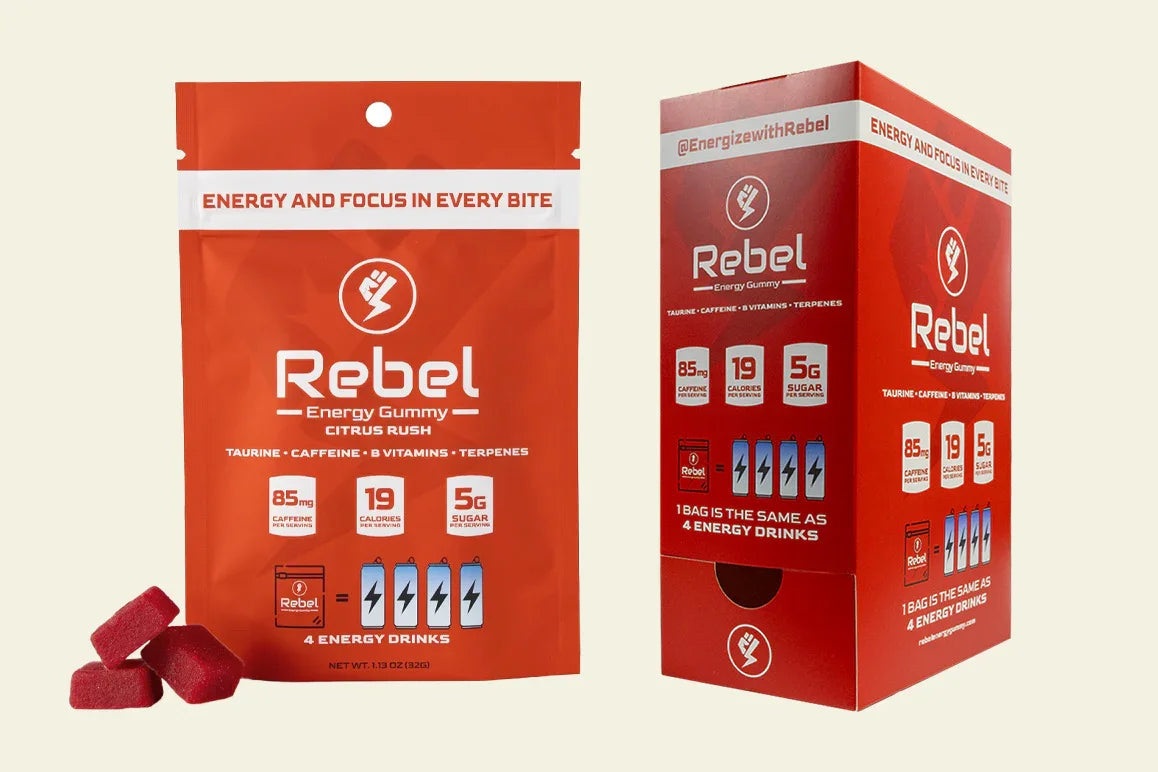
| Coastalhemp supports smoother dosing | Rebel Energy Gummies (8ct) offer a lab-tested, low-dose entry point for readers who want steadier focus without a caffeine crash. |
This article is general information, not a substitute for advice from a qualified doctor. Consult a qualified healthcare professional about your own circumstances before acting on anything here.
Table of Contents
- Hemp vs. Caffeine Energy Comparison: How Each One Works in Your Body
- Do Hemp Products Actually Boost Alertness Like Caffeine?
- Is Caffeine or Hemp Safer for Daily Use?
- What Happens When You Mix Hemp and Caffeine?
- How Do You Choose the Right Dose for Energy or Focus?
- Why Product Quality Matters More With Hemp Than Caffeine
- What This Comparison Gets Wrong in Most Guides
- Rebel Energy Gummies: A Smoother Way to Try Hemp for Focus
- Sources
- FAQ
Hemp vs. Caffeine Energy Comparison: How Each One Works in Your Body
Caffeine and hemp-derived cannabinoids don’t just differ in strength. They work through completely different systems, and that’s the real reason their effects feel so different.
Caffeine is a classic central nervous system stimulant. It blocks adenosine receptors, mainly A1 and A2A, which is the mechanism that stops you from feeling drowsy. With those receptors blocked, dopamine and norepinephrine activity rises, and you feel more alert almost immediately. Absorption happens within roughly an hour, and the average half-life runs about 5 hours, though that range swings from 1.5 to nearly 10 hours depending on genetics, liver function, and even pregnancy status. That predictability is caffeine’s biggest strength: you know roughly what you’re getting and when.
CBD and other hemp-derived compounds don’t work that way. There’s no direct receptor blockade producing a stimulant surge. Instead, CBD interacts indirectly with several systems, and its effects follow what’s called a biphasic dose response, meaning low doses and high doses can produce nearly opposite outcomes in the same person. A low dose might sharpen focus slightly; a high dose of the same product might feel sedating.
- Caffeine: fast, direct, receptor-based stimulation with a known timeline.
- CBD and hemp cannabinoids: slower, indirect action shaped heavily by dose and individual body chemistry.
- Caffeine is a stimulant by definition. CBD is not, even though marketing sometimes implies otherwise.
A 2024 meta-analysis backs this up, finding that acute CBD produces only small subjective sedation effects and no meaningful objective performance gains compared with a placebo. The practical takeaway: caffeine is the more predictable lever, and hemp is the one that rewards patience and careful dosing.
Do Hemp Products Actually Boost Alertness Like Caffeine?
Not in the way most people expect. Caffeine has decades of research behind it showing measurable improvements in wakefulness, reaction time, and short-term attention, particularly in people who are sleep-deprived or fatigued. Those effects show up on objective tests, not just in how people say they feel.
Hemp-derived products tell a more nuanced story. The same 2024 meta-analysis found that while some users report subjective sensations of calm or mild sedation after CBD, objective performance measures rarely move much. That doesn’t mean hemp does nothing. It means the benefit tends to be a smoother mental state rather than a measurable spike in cognitive speed.
- Caffeine timeline: onset around 30 to 60 minutes, peak effects near the 1 hour mark, duration of several hours, with fairly low variability between people.
- Hemp/CBD timeline: onset can range from 20 minutes to over an hour depending on the product, peak effects are harder to pin down, and duration varies widely by dose and formulation.
That variability is the core distinction. Coffee behaves like clockwork. Hemp behaves more like a dial that different people need to turn to different settings before finding their spot.
Is Caffeine or Hemp Safer for Daily Use?
Both have real side effects, and neither is risk-free at high doses.
Caffeine’s downsides are well documented: jitters, a racing heart, disrupted sleep, and at high intakes, more serious cardiovascular strain. The FDA warns that excessive daily intake carries genuine risk, and regular heavy users can also develop tolerance, meaning withdrawal headaches and fatigue show up when they cut back.
Hemp-derived products carry a different risk profile. Common complaints include drowsiness and mild stomach upset. More notably, a randomized clinical trial found that some CBD doses increased attention lapses during long vigilance tasks compared with a placebo, even though other cognitive measures looked normal. That’s a meaningful flag for anyone doing sustained-focus work like driving.
- Caffeine risks: jitteriness, elevated heart rate, insomnia, dependency and withdrawal at heavy use.
- Hemp risks: drowsiness, digestive discomfort, reduced vigilance on long attention tasks, and altered THC metabolism when combined with other cannabinoids.
- Vulnerable groups for both: pregnant individuals, people on prescription medications, and anyone operating a vehicle shortly after use.
Pro Tip: If you’re sensitive to caffeine or prone to anxiety, don’t just swap your coffee for a hemp product cold turkey. Try it on a low-stakes day first, at a low dose, so you learn how your body responds before it matters.
What Happens When You Mix Hemp and Caffeine?
Combining the two isn’t automatically dangerous, but it isn’t automatically better either, and the lab data is worth knowing before you experiment.
Johns Hopkins researchers found that CBD co-administration can raise plasma THC levels and intensify subjective “high” and impairment when THC is also present, while caffeine on its own produced smaller direct changes but showed some signal for perceived driving impairment. Science summaries from ProjectCBD echo this, noting there’s no clear evidence that mixing caffeine and CBD delivers a straightforward benefit, despite how it’s often marketed.
If you’re going to experiment anyway, follow a simple order of operations:
- Start with one variable at a time. Try hemp alone before adding caffeine, or vice versa.
- Microdose the hemp component first, especially if any THC is present.
- Wait several hours and track how you feel before deciding to combine them.
- Avoid driving or operating machinery for several hours after testing a new combination.
- Never stack either one with alcohol or other sedatives while you’re still learning your response.
How Do You Choose the Right Dose for Energy or Focus?
Start by naming your actual goal, because caffeine and hemp solve different problems.
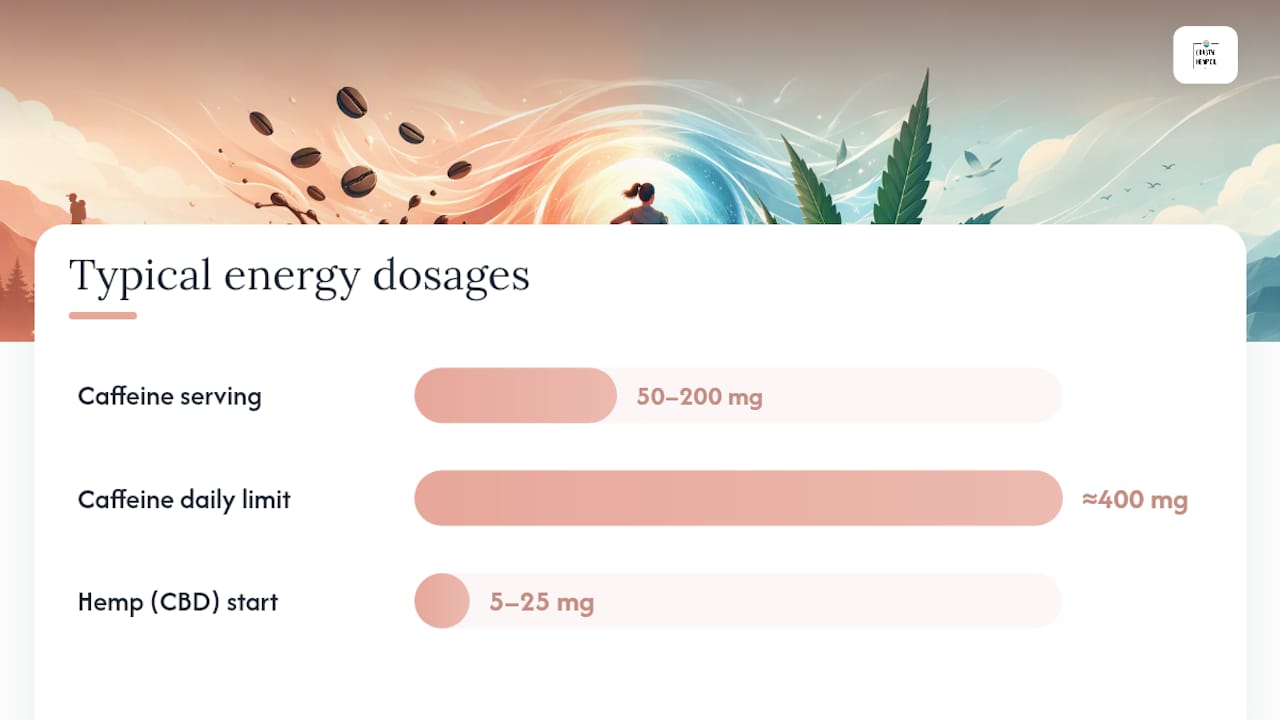
If you need sharp, immediate alertness, caffeine is the tool built for that job. Common serving sizes run 50 to 200 milligrams, and most healthy adults can tolerate up to around 400 milligrams a day, per FDA guidance. If you’re anxiety-prone or already sensitive to stimulants, staying at the lower end or skipping an afternoon dose entirely makes a real difference.
If your goal is a smoother, sustained sense of focus without the jitters, hemp-derived products are worth exploring, but they reward a slow start. A common starting range is 5 to 25 milligrams of CBD, or a comparably low-THC microdose, with several days between adjustments so you can actually tell what’s working. Coastalhemp’s microdosing guide walks through this pacing in more detail.
- Check the label for total cannabinoid content, not just a vague “hemp extract” listing.
- Look for a third-party Certificate of Analysis (COA); no COA is a red flag worth walking away from.
- Confirm serving size language is specific milligrams, not “one gummy” with no dosage stated.
Pro Tip: Treat your first week with any new hemp product like an experiment, not a routine. Log how you feel two hours after each dose, and adjust in small steps rather than doubling up when nothing seems to happen right away.
Why Product Quality Matters More With Hemp Than Caffeine
Caffeine is chemically consistent no matter where you buy it. Hemp is not. Formulation, extraction method, and cannabinoid ratios all affect how a product performs, which is exactly why quality control matters more here than with a bag of coffee beans.
Coastalhemp partners directly with growers and vetted brands, and every product line is built around lab-tested formulations rather than guesswork. That reduces a lot of the unpredictability that gives hemp products a bad reputation among newcomers. Our hemp productivity and focus guide and controlled dosing guide go deeper into how we think about consistency and consumer education.
- Sourcing from vetted growers reduces variability in cannabinoid concentration between batches.
- Independent lab testing confirms what’s actually in the product, not just what’s on the label.
- Education-first content helps new users start low and adjust with confidence instead of trial and error.
Consumers vary widely in sensitivity because everyone’s endocannabinoid system responds a little differently. What feels energizing to one person can feel sedating to another, which is exactly why cannabis science experts consistently recommend starting with a microdose rather than guessing.
What This Comparison Gets Wrong in Most Guides
Most articles frame this as a competition, hemp versus caffeine, as if one is destined to replace the other. That framing misses the point. Caffeine earns its reputation because it’s mechanically simple and remarkably consistent. Nothing about hemp changes that, and no honest guide should pretend a CBD gummy will out-perform a cup of coffee for sheer immediate alertness.
Where conventional advice falls short is in treating hemp like a lesser caffeine substitute instead of a different tool entirely. The real value in hemp-derived products shows up in the hours caffeine doesn’t cover well, like when you want to stay level and clear-headed without the crash that follows a stimulant peak. That’s a complementary role, not a competing one.
What I’d prioritize first: dose discipline. Most people who feel let down by CBD took too much on day one, expecting a caffeine-like hit, then wrote off the entire category. Start low, track your response over days rather than hours, and choose lab-tested products so at least the unpredictability you’re managing is biological, not manufacturing-related.
Rebel Energy Gummies: A Smoother Way to Try Hemp for Focus
If you’ve read this far, you already know hemp isn’t a caffeine swap, it’s a different kind of tool for a different kind of day. That’s exactly the gap Rebel Energy Gummies (8ct) are built to fill: a hemp-derived formulation dosed for people who want a steadier, clearer feeling without stacking on more caffeine.
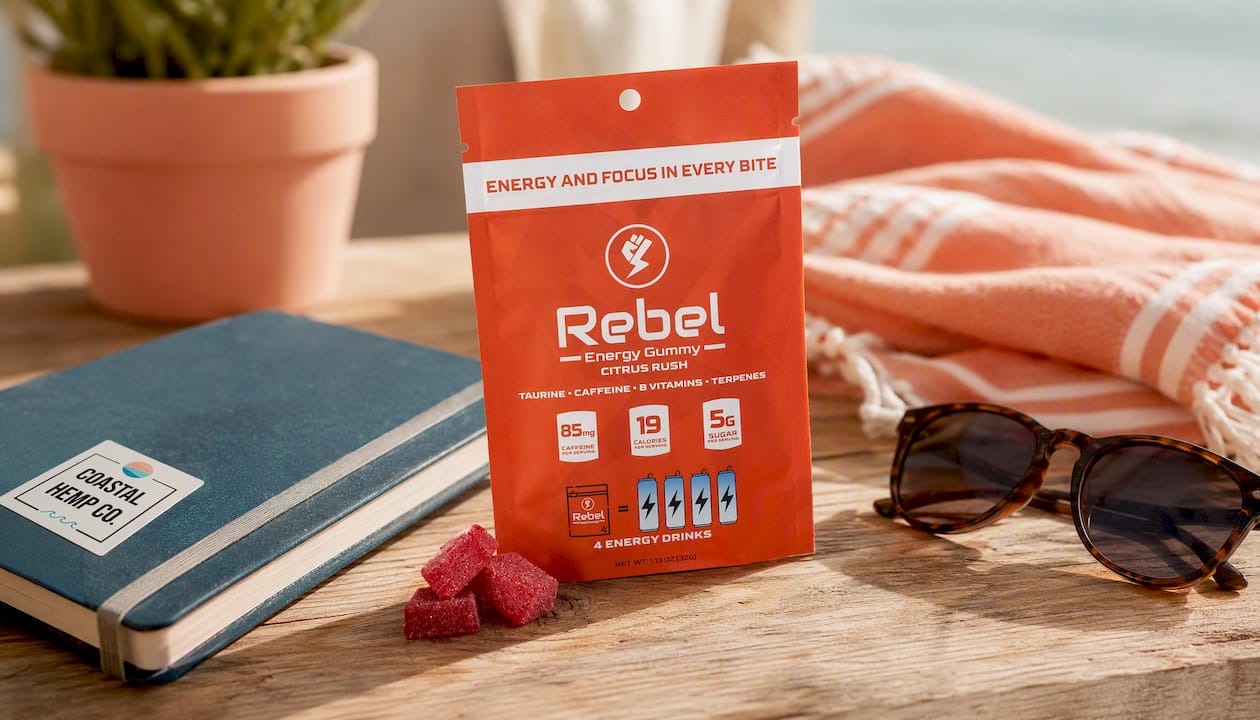
They’re best suited to anyone who’s already caffeine-sensitive, prone to jitters, or simply looking to microdose their way into hemp instead of guessing at a random product off a gas station shelf. Every batch ships with the lab transparency this guide keeps circling back to: check the COA, start with a single gummy, and give it time before adjusting. Coastalhemp backs its orders with fast shipping and straightforward support, so if something’s off with your order, getting it sorted isn’t a hassle. Ready to try a lower, steadier approach to energy? Check out Rebel Energy Gummies and start with the dose the label recommends.
Sources
- Pharmacology of Caffeine - Caffeine for the Sustainment of Mental Task Performance - NCBI Bookshelf
- Does acute cannabidiol (CBD) use impair performance? A meta-analysis and comparison with placebo and delta-9-tetrahydrocannabinol (THC) | Neuropsychopharmacology
- Effect of caffeine and cannabidiol (CBD) co-administration on Δ9-THC subjective effects, performance impairment, and pharmacokinetics - Johns Hopkins
- Spilling the beans: How much caffeine is too much? | FDA
- The effects of cannabidiol on subjective states, cognition, and psychomotor function in healthy adults: A randomized clinical trial
FAQ
How Many Coffees Equal One Energy Drink?
It depends on the specific products, but most energy drinks pack roughly the same caffeine as one to two cups of brewed coffee, typically in the range around 50 to 400 milligrams per the FDA’s consumer guidance.
What’s Considered the Healthiest Energy Option?
There’s no single “healthiest” pick, but options with moderate, clearly labeled caffeine amounts or well-dosed hemp-derived formulations tend to carry fewer risks than high-sugar, high-caffeine energy drinks marketed for extreme boosts.
What Makes an Energy Drink Unhealthy?
Excessive caffeine combined with high sugar content and stacked stimulant additives is the usual culprit, since the FDA notes that intake well above 400 milligrams a day raises real health risks.
Can You Combine Hemp Products With Caffeine Safely?
You can, but lab data shows the combination changes impairment and subjective effects compared with either one alone, so start low, test one variable at a time, and avoid driving until you know your response.
Is Hemp a Good Caffeine Alternative for Anxious Users?
For people who get jittery or anxious on caffeine, low-dose hemp-derived products like Coastalhemp’s Rebel Energy Gummies can offer a steadier feeling, though results vary by individual and dose.


Comments