

Hemp and Hormone Balance: What the Evidence Says
Hemp foods and hemp seed oil may support hormone-related symptoms for some women, but the strongest evidence is preclinical — not yet definitive in humans. Here is what you need to know before adding hemp to your routine.
The role of hemp in hormone balance centers on a few plausible biological pathways: the endocannabinoid system, the HPA (hypothalamic-pituitary-adrenal) axis, and the HPO (hypothalamic-pituitary-ovarian) axis. Animal research published on PubMed shows hemp seed oil can modulate both axes in ovariectomized rat models, improving estradiol levels and reducing stress hormones. Human clinical trials are sparse, so the honest verdict is: promising, food-first, and worth discussing with your clinician.
Three practical next steps:
- Start with whole hemp seeds as a dietary addition, not a supplement
- Track symptom changes over 4–12 weeks using a simple journal: mood, sleep quality, hot flash frequency, or PMS severity
- Consult a clinician or pharmacist before using concentrated hemp supplements if you take hormone replacement therapy (HRT), are pregnant, or manage a complex endocrine condition
Coastalhemp carries third-party tested hemp wellness products for those ready to explore hemp’s calming effects as part of a broader wellness approach.
Table of Contents
- What nutrients in hemp seeds and oil actually matter for hormones
- How hemp could influence your hormone systems
- What the research actually shows: animal data vs. human evidence
- Practical ways to use hemp for hormone support
- Who should be careful: safety, drug interactions, and when to consult a clinician
- How hemp affects specific hormones: estrogen, progesterone, and cortisol
- How hemp compares to other natural options for PMS and menopause
- Is hemp right for you? Matching your health history to the evidence
- Key Takeaways
- Hemp, hormones, and what actually matters
- Coastalhemp’s hemp wellness products, quality-tested and ready to explore
- Useful sources
- FAQ
What nutrients in hemp seeds and oil actually matter for hormones
Hemp seeds and hemp seed oil carry a specific nutrient profile that makes them relevant to hormone synthesis and signaling. Understanding what each form supplies helps you choose the right one.
Key hormone-relevant nutrients in hemp:
| Nutrient | Primary Role | Best Source |
|---|---|---|
| GLA (gamma-linolenic acid) | Prostaglandin balance, anti-inflammatory | Hemp seed oil |
| ALA (alpha-linolenic acid) | Omega-3 precursor, anti-inflammatory | Seeds and oil |
| Omega-6:omega-3 ratio (~3:1) | Reduces systemic inflammation | Seeds and oil |
| Complete plant protein | Amino acid supply for hormone synthesis | Hemp seeds, protein powder |
| Magnesium | Supports progesterone production, reduces PMS cramps | Hemp seeds |
| Zinc | Involved in estrogen and testosterone metabolism | Hemp seeds |
| B vitamins (B1, B2, B6) | Cofactors for steroid hormone pathways | Hemp seeds |
| Vitamin E | Antioxidant protection for endocrine tissue | Hemp seed oil |
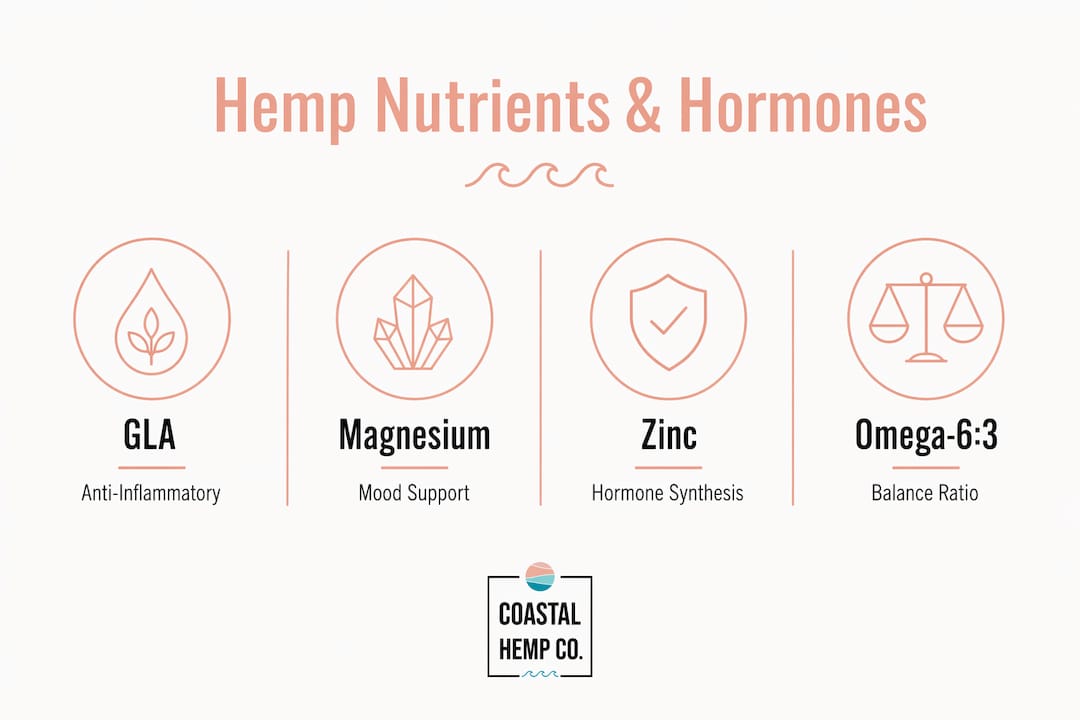
The omega-6:omega-3 ratio and GLA content in hemp seed oil are particularly relevant to PMS and menopause because they feed into prostaglandin synthesis pathways that regulate uterine contractions and inflammatory signaling.
One point worth addressing directly: hemp seeds and hemp protein powder are not a phytoestrogen source. Unlike soy or flaxseed, hemp does not contain lignans or isoflavones that mimic estrogen in the body. For women who are cautious about estrogenic plant compounds, that distinction matters.
Pro Tip: Whole hemp seeds supply more magnesium and zinc than hemp seed oil alone. If PMS cramping or mood shifts are your primary concern, seeds or protein powder may serve you better than oil as a daily food addition.
How hemp could influence your hormone systems
Hemp interacts with hormone regulation through at least three overlapping pathways. None of them are simple cause-and-effect, but the biology is plausible enough to explain why researchers keep studying it.

The endocannabinoid system (ECS) is the starting point. The ECS runs throughout the hypothalamus and pituitary gland, the control centers for both the HPA axis (stress and cortisol) and the HPO axis (estrogen, progesterone, LH, FSH). Hemp-derived cannabinoids and the fatty acids in hemp seed oil can modulate ECS receptor activity, which in turn influences how those axes signal downstream.
The anti-inflammatory pathway is the third mechanism. GLA and ALA from hemp convert into anti-inflammatory prostaglandins (PGE1 and PGE3 series) rather than pro-inflammatory ones (PGE2). Elevated PGE2 is associated with painful menstrual cramps and some menopausal symptoms, so shifting that balance through dietary PUFAs is a plausible route to symptom relief.
On the phytoestrogen question: hemp seeds do not contain estrogen-mimicking compounds at clinically meaningful levels. Some in vitro studies show weak estrogenic activity in isolated cell lines, but that is not the same as clinical estrogen activity in a living person. The distinction between a lab signal and a real hormonal effect is one researchers are careful to maintain.
What the research actually shows: animal data vs. human evidence
The evidence base for hemp and hormonal health is real but uneven. Separating what animal models show from what human trials confirm is the most important thing you can do before drawing conclusions.
Preclinical and animal findings
A 2023 study in ovariectomized rats found that hemp seed oil improved depression-like behaviors associated with perimenopause by modulating both the HPO and HPA axes. Specifically, it increased serum estradiol, decreased FSH and LH, reduced cortisol (CORT), ACTH, and CRH, and upregulated estrogen receptor expression (ERα/ERβ). Neurotransmitter markers (norepinephrine and serotonin) also improved. A separate line of animal nutrition research found that diets containing hempseed modified plasma lipids and helped normalize 17-beta-estradiol levels in ovariectomized rats, suggesting protective effects against estrogen deficiency.
Human evidence: what exists and what is missing
Human clinical trials on hemp and hormone balance are scarce. Healthline’s review of hemp seed benefits frames GLA’s anti-inflammatory effects as preliminary and food-based, not therapeutic. A ScienceDirect review of cannabinoids and the endocrine system notes that human results are inconsistent and that tolerance to endocannabinoid modulation can develop over time. Most positive signals for hormone modulation remain in animal or in vitro models.
| Evidence Type | What It Shows | Strength |
|---|---|---|
| Animal models (OVX rats) | Estradiol normalization, HPA axis suppression, mood improvement | Moderate (preclinical only) |
| In vitro cell studies | Reduced pro-inflammatory cytokines; shifted E2:P4 ratios | Low (not in living humans) |
| Human observational data | GLA may reduce PMS/menopause inflammation | Very low; no RCTs |
| Human RCTs | None identified for hemp and hormone balance specifically | Absent |
The clinician’s question: Any prescribing clinician will ask about dose, formulation, cannabinoid profile, and potential liver enzyme induction before recommending hemp alongside HRT. The current evidence does not yet answer those questions with precision, which is why food-based amounts remain the safest starting point.
Practical ways to use hemp for hormone support
Food-first is the right frame here. Concentrated hemp supplements carry more uncertainty around dosing and interactions than whole seeds or cold-pressed oil.
Suggested starting servings:
- Whole hemp seeds: 1–2 tablespoons daily, sprinkled on yogurt, oatmeal, or salads
- Hemp seed oil: 1 teaspoon daily in a salad dressing or drizzled over cooked vegetables (do not heat it; high heat degrades the PUFAs)
- Hemp protein powder: 2–3 tablespoons blended into a smoothie, supplying both protein and trace minerals
Timeline and tracking:
- Allow 4–12 weeks before assessing changes; fatty acid shifts in cell membranes take time
- Track at least two measurable symptoms: hot flash frequency, PMS severity score (1–10), sleep quality, or mood rating
- A simple daily journal entry takes under two minutes and gives you real data to share with your clinician
What to avoid: Raw, untested hemp supplements with no third-party certificate of analysis, products that do not list cannabinoid content, and any supplement that claims to “balance hormones” without citing specific evidence. For hemp dosage best practices, Coastalhemp’s guide covers product selection and serving guidance in more detail.
Who should be careful: safety, drug interactions, and when to consult a clinician
Food amounts of hemp seeds are generally well tolerated. Concentrated hemp supplements are a different conversation.
Red flags and contraindications:
- Pregnancy or breastfeeding: Avoid concentrated hemp supplements; food amounts may be acceptable but confirm with your OB-GYN
- Active HRT (estradiol, medroxyprogesterone): Hemp may theoretically induce CYP3A4 and CYP1A2 enzymes, potentially altering how your body clears exogenous estrogens or progestins; HelloPharmacist rates this a moderate interaction requiring pharmacist consultation
- Immunosuppressants or anticoagulants: CYP enzyme induction could affect drug clearance; flag this with your prescriber
- Severe liver disease: Avoid concentrated extracts; the liver metabolizes both hemp compounds and most hormonal medications
- Planned surgery: Discontinue concentrated hemp supplements at least two weeks prior
Quality checklist for choosing hemp products:
- Third-party certificate of analysis (COA) from an independent lab
- Clear cannabinoid profile (CBD, THC, and minor cannabinoids listed by mg)
- Transparent serving size with actual mg per dose, not just “proprietary blend”
- No unlisted additives, artificial fillers, or undisclosed botanical extracts
Pro Tip: Routine food amounts of hemp seeds are unlikely to cause clinically meaningful interactions with hormone therapy. The concern rises sharply with concentrated supplements. If you are on HRT, bring the product’s COA to your pharmacist — not just the label.
For a broader look at hemp’s safety profile, Coastalhemp’s harm reduction guide covers interaction categories in plain language.
How hemp affects specific hormones: estrogen, progesterone, and cortisol
Hemp’s influence on individual hormones is not a single-switch mechanism. The effects observed in research involve multiple hormones shifting together, which reflects how interconnected the endocrine system actually is.
Estrogen: Animal studies show hempseed diets can help normalize estradiol in estrogen-deficient states (post-ovariectomy). The proposed mechanism involves PUFA-mediated support of steroidogenesis and ECS modulation of hypothalamic GnRH signaling, which drives LH and FSH. Lower FSH and LH in the animal models corresponded with higher estradiol, suggesting upstream HPO axis normalization rather than direct estrogenic activity.
Progesterone: GLA’s role in PGE1 synthesis is relevant here. PGE1 supports corpus luteum function, which is the primary source of progesterone in the luteal phase. Dietary GLA may therefore support the conditions for adequate progesterone production indirectly, though no human trial has confirmed this pathway specifically for hemp.
Cortisol: The HPA axis findings from the 2023 OVX-CUMS rat study are notable: hemp seed oil reduced CORT, ACTH, and CRH simultaneously, suggesting it dampened HPA hyperactivation rather than targeting cortisol alone. Chronic cortisol elevation suppresses reproductive hormones, so reducing HPA overdrive could indirectly support estrogen and progesterone balance. This multi-pathway effect, covering neurotransmitters and endocrine markers together, is what makes hemp seed oil an interesting research subject rather than a simple hormone supplement.
How hemp compares to other natural options for PMS and menopause
Hemp is one of several food-based and herbal options studied for hormonal symptoms. Knowing where it fits helps you make an informed choice.
Black cohosh has the most human clinical data for menopause symptom relief, particularly hot flashes, though its mechanism remains debated (it does not appear to act as a phytoestrogen). Phytoestrogen-rich foods like soy isoflavones and flaxseed lignans directly bind estrogen receptors, which makes them effective for some women but a concern for those with estrogen-sensitive conditions. Hemp, by contrast, does not carry phytoestrogen activity, making it a different kind of option.
Magnesium supplementation has solid human evidence for reducing PMS-related mood symptoms and cramps. Hemp seeds supply meaningful magnesium per serving, so they deliver this benefit as a whole food rather than an isolated supplement. Evening primrose oil (EPO) is the closest comparator to hemp seed oil in terms of GLA content; in vitro research found that combining EPO and hemp seed oil reduced pro-inflammatory cytokines and shifted estrogen-to-progesterone ratios in endometrial cell models more effectively than either oil alone.
Hemp’s advantage over most herbal interventions is its safety profile at food amounts and its nutrient density. It is not a replacement for black cohosh or phytoestrogen therapy in women with significant menopause symptoms, but it fits naturally into a food-first approach alongside those options.
For women interested in how hemp interacts with mood regulation pathways, that connection to the HPA axis and neurotransmitter balance is covered in more depth separately.
Is hemp right for you? Matching your health history to the evidence
Not every woman is an equally good candidate for hemp as a hormone support tool. Your medical history shapes both the potential benefit and the risk profile.
Hemp is likely a reasonable food-based addition if you:
- Have mild-to-moderate PMS symptoms (bloating, mood shifts, cramping) with no complex endocrine diagnosis
- Are perimenopausal and looking for food-first approaches alongside lifestyle changes
- Are not on prescription HRT or other medications metabolized by CYP3A4/CYP1A2
- Have no history of estrogen-sensitive cancers (hemp is not estrogenic, but any new supplement warrants a conversation with your oncologist)
Proceed with more caution if you have:
- Polycystic ovary syndrome (PCOS): Hemp’s effect on LH/FSH ratios is interesting in theory, but no human PCOS trials exist; do not substitute hemp for evidence-based PCOS management
- Thyroid conditions: Some hemp proteins are considered compatible with thyroid health, but concentrated extracts and CYP interactions deserve pharmacist review
- Endometriosis: The anti-inflammatory PUFA pathway is plausible for symptom support, but endometriosis management requires clinical oversight; hemp is not a standalone treatment
- A history of hormone-sensitive cancers: Consult your oncologist before adding any new supplement, even food-based ones
The clearest signal from the research is that hemp works best as a supportive, food-based addition to a broader wellness approach, not as a primary intervention for diagnosed hormonal conditions. Individual response will vary, and tracking your own symptoms over 4–12 weeks remains the most practical way to assess whether it is working for you.
This article is general educational information, not medical advice. Confirm any supplement changes with your clinician or pharmacist, especially if you manage a hormone-related condition or take prescription medications.
Key Takeaways
Hemp foods offer a plausible, food-safe route to supporting hormone-related symptoms, but human clinical trials are absent and the strongest evidence remains preclinical.
| Point | Details |
|---|---|
| Evidence is preclinical | Animal models show estradiol normalization and HPA axis suppression; no human RCTs confirm these effects. |
| Food amounts are the safest start | 1–2 tablespoons of hemp seeds or 1 teaspoon of hemp seed oil daily is a reasonable food-first approach. |
| Hemp is not a phytoestrogen | Unlike soy or flaxseed, hemp seeds do not contain estrogen-mimicking compounds at clinically meaningful levels. |
| HRT users need pharmacist review | Hemp may induce CYP3A4/CYP1A2 enzymes, potentially altering estrogen or progestin clearance at supplement doses. |
| Coastalhemp for quality-tested options | Coastalhemp carries third-party tested hemp wellness products for those ready to add hemp to their routine responsibly. |
Hemp, hormones, and what actually matters
The conversation around hemp and hormonal health tends to swing between overclaiming and dismissing. Neither is useful. The animal data is genuinely interesting, particularly the multi-axis effects on estrogen, cortisol, and neurotransmitters observed in the OVX-CUMS research. But interesting preclinical data is not the same as a proven treatment, and presenting it that way does a disservice to women trying to make real decisions about their health.
What I find more compelling than the hormone-specific findings is hemp’s overall nutrient profile. Magnesium, GLA, complete protein, and a favorable omega ratio are all things most women do not get enough of, and all of them have independent evidence for supporting menstrual and menopausal wellbeing. You do not need to wait for a hemp-specific RCT to benefit from those nutrients. The food-first approach is not a consolation prize. It is genuinely the most defensible starting point given what the evidence currently supports.
The phytoestrogen question also deserves more clarity than it usually gets. Women with estrogen-sensitive conditions are often told to avoid all plant-based supplements out of caution. Hemp does not belong in that category. Its lack of estrogenic activity is actually a feature for women who want nutritional support without the phytoestrogen concern.
Coastalhemp’s hemp wellness products, quality-tested and ready to explore
If you have read this far, you understand that quality and transparency matter more than marketing claims when it comes to hemp and hormonal health. Coastalhemp partners with vetted brands and growers to carry products that come with third-party lab testing and clear cannabinoid profiles, so you know exactly what you are getting.

For those exploring hemp edibles as part of a wellness routine, Coastalhemp carries a range of options: the Jelly THCA Live Sugar Blend Gummies and Celestial Wellness THCv Gummies are popular choices for women focused on stress and mood support. Functional mushroom options like the Gushrooms Magic Gummies and Road Trip Mushroom Chocolate Bar are available for those interested in adaptogenic support alongside hemp. For neuro-focused wellness, the Enjoyable Neuro Enhancer Gummies offer a targeted option. If you are considering concentrates, the Trippy Sugar THCa Diamonds are an example of a higher-potency product where the interaction cautions in this article apply most directly.
None of these products are clinical hormone treatments. They are wellness options for adults who choose hemp as part of a broader health routine. If you take HRT or manage a hormone-related condition, review your choices with your clinician or pharmacist before purchasing. Browse Coastalhemp’s full selection and check product COAs at coastalhemp.co.
Useful sources
| Source | What it supports |
|---|---|
| PubMed: Hemp seed oil and perimenopausal depression (2023) | Animal model evidence for HPA/HPO axis modulation and estradiol normalization with hemp seed oil |
| PubMed: Hempseed in ovariectomized rat model of menopause | Preclinical data on dietary hempseed, plasma lipids, and estradiol levels; animal study only |
| ScienceDirect: Hemp seed nutraceutical review | Nutrient profile of hemp seeds and oil, including GLA, ALA, and omega ratios |
| ScienceDirect: Endocannabinoid system and endocrine interactions | Review-level synthesis of cannabinoid effects on gonadal steroids and HPA/HPO axes; notes inconsistent human results |
| Healthline: Health benefits of hemp seeds | Consumer-facing summary of GLA benefits; frames evidence as preliminary and food-based |
| HelloPharmacist: Hemp and estradiol interaction | Moderate interaction rating for hemp with estradiol/medroxyprogesterone; recommends pharmacist consultation |
| IJRPR: Evening primrose and hemp seed oils in PMS (in vitro) | In vitro evidence for synergistic anti-inflammatory and E2:P4 effects of combined EPO and hemp seed oil |
| Discovery Researcher: HSO perimenopausal depression summary | Summary of HPA axis reversal and neurotransmitter improvements in OVX-CUMS rat model |
FAQ
Is hemp good for hormones?
Hemp seeds and hemp seed oil contain GLA, magnesium, and balanced omega fatty acids that may support hormone-related symptoms, but the strongest evidence comes from animal models, not human clinical trials.
What is hemp good for in women’s health?
Hemp seeds supply complete plant protein, GLA, magnesium, and zinc, all of which are relevant to menstrual health, PMS symptom management, and general anti-inflammatory support during perimenopause.
Does hemp affect estrogen levels?
Animal studies show dietary hempseed can help normalize estradiol in estrogen-deficient states, but hemp is not a phytoestrogen and does not directly mimic estrogen; human evidence for this effect is currently absent.
Are hemp seeds high in estrogen?
No. Hemp seeds do not contain phytoestrogens like those found in soy or flaxseed. They lack the lignans and isoflavones that bind estrogen receptors, making them a suitable option for women cautious about estrogenic plant compounds.
Can you take hemp with hormone replacement therapy?
Concentrated hemp supplements may theoretically induce CYP3A4 and CYP1A2 enzymes, potentially altering how your body clears estradiol or medroxyprogesterone. Food amounts of hemp seeds are unlikely to cause meaningful interactions, but consult your pharmacist before adding any hemp supplement to an HRT regimen.


Comments