

Study Session Hemp Edible Options for Focused Microdosing
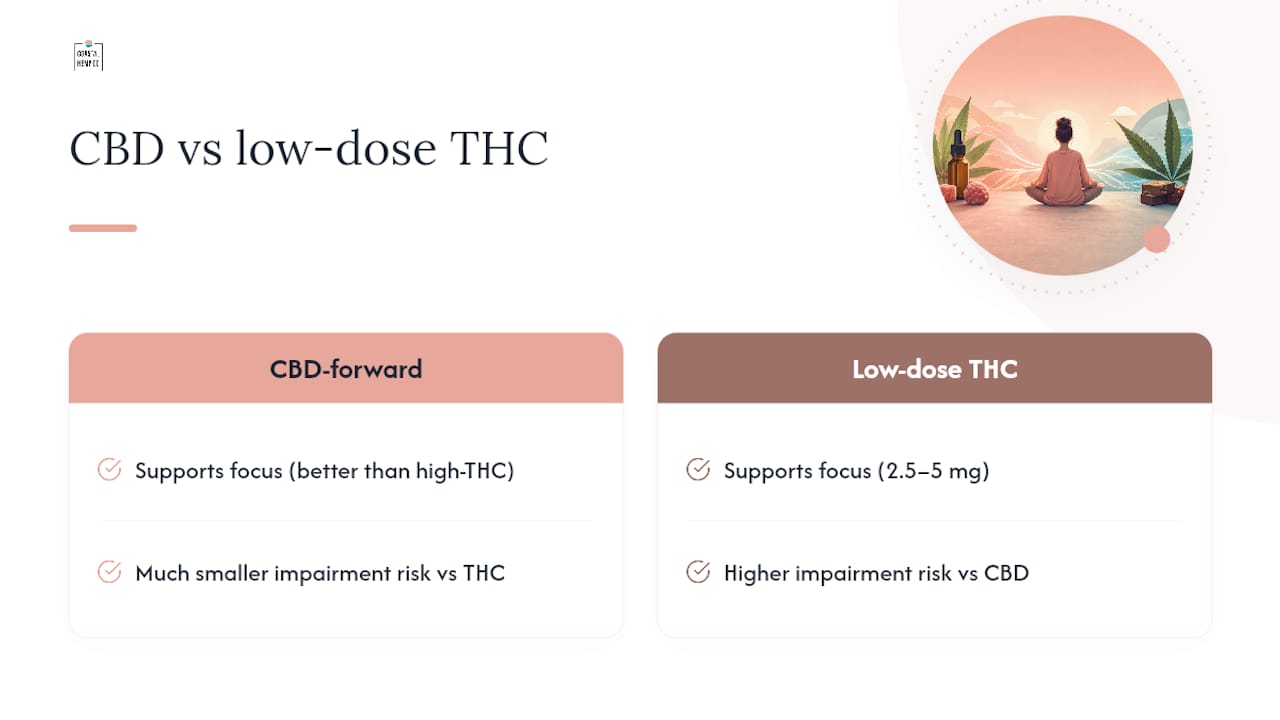
For most students, low-dose THC (2.5 to 5 mg) or CBD-forward hemp edibles taken with a consistent microdosing protocol give the best chance at focused, productive study time without heavy impairment. This works because low doses and balanced CBD:THC profiles tend to keep cognitive impairment minimal while still easing the restlessness or anxiety that makes it hard to sit down and concentrate. Higher THC doses do the opposite: they reliably impair processing speed and attention in controlled trials.
Before you reach for anything, a few precautions matter more than the product itself:
- If you’re under 25, know that cannabis can still affect how your brain wires attention, memory, and learning, according to the CDC.
- Start low, go slow. Your first dose should always be smaller than you think you need.
- Never pair an edible with driving, lab work, exams, or anything safety-sensitive.
- Always check the certificate of analysis (COA) and actual serving size before you eat or drink anything.
Statistic to remember: a meta-analysis of controlled human trials found acute CBD produced only a small increase in subjective sedation with no consistent objective cognitive impairment, while THC produced meaningfully larger impairment. That gap is the whole argument for choosing CBD-forward or low-dose THC products over anything stronger when you actually need to think clearly.
Key Takeaways
Low-dose THC or CBD-forward hemp edibles, taken with a logged microdosing protocol, offer the most reliable path to focused studying without significant cognitive impairment.
| Point | Details |
|---|---|
| Start low | Try 2.5 to 5 mg THC or 10 to 25 mg CBD for your first session, and log the results. |
| Wait for onset | Edibles take 45 minutes to 2 hours to kick in; never re-dose early if effects feel delayed. |
| Choose predictable formats | Single-serving gummies, mints, and tinctures beat multi-serving candies for dose control. |
| Check the COA | Verify cannabinoid content and contaminant screening before trusting any new product. |
| Respect age and context | Under-25 users and anyone with medication interactions should stay especially conservative, and Coastalhemp’s Lumi Delta 9 Gummies can be quartered into a microdose while its Crumble Delta-9 edibles stay reserved for experienced users only. |
Table of Contents
- What edible types work best for study sessions?
- How do you microdose an edible for a study session?
- When should you take an edible before studying?
- What are the safety and legal risks students should know?
- How do you choose a study-friendly hemp edible?
- What should you do if a dose is too weak, too strong, or delayed?
- What does the research say about CBD, THC, and focus?
- Which Coastalhemp options fit a study-focused microdose?
- Sources
- FAQ
What edible types work best for study sessions?
Not every hemp edible behaves the same way once you’re staring down a stack of flashcards. The format you pick affects how predictable the onset is, how easy it is to control your dose, and how discreet you can be in a library or dorm room.
- Gummies (small-dose, single-serving): Predictable dosing, easy to split further if needed, and simple to carry. The tradeoff is a slower onset since they pass through digestion.
- Mints and lozenges: Fast-dissolving formats offer quicker absorption and are among the most discreet study-friendly hemp snacks you can slip into a backpack.
- Sublingual tinctures: Held under the tongue, these skip some digestive delay and let you titrate dose drop by drop, which is useful for cannabis study aids where precision matters.
- Capsules: Extremely consistent dosing since the mg amount is fixed and swallowed whole, but onset timing mirrors gummies, meaning slower and less predictable than tinctures.
- Low-dose functional chews: Often blended with adaptogens or nootropic-style ingredients, these can double as snack options for study sessions when formulated with modest cannabinoid amounts.
Formats to avoid entirely when you’re on a study clock: homemade edibles with unknown potency, and multi-serving candies where it’s easy to eat “just one more” without realizing you’ve doubled your dose.
Pro Tip: Buy the smallest single-serving package available. It removes the temptation to eyeball a dose from a shared bar or bag, which is where most accidental overconsumption happens.
How do you microdose an edible for a study session?
Microdosing for focus works only if you treat it like a protocol, not a snack. Here’s a straightforward escalation plan for cannabis-naive or infrequent users:
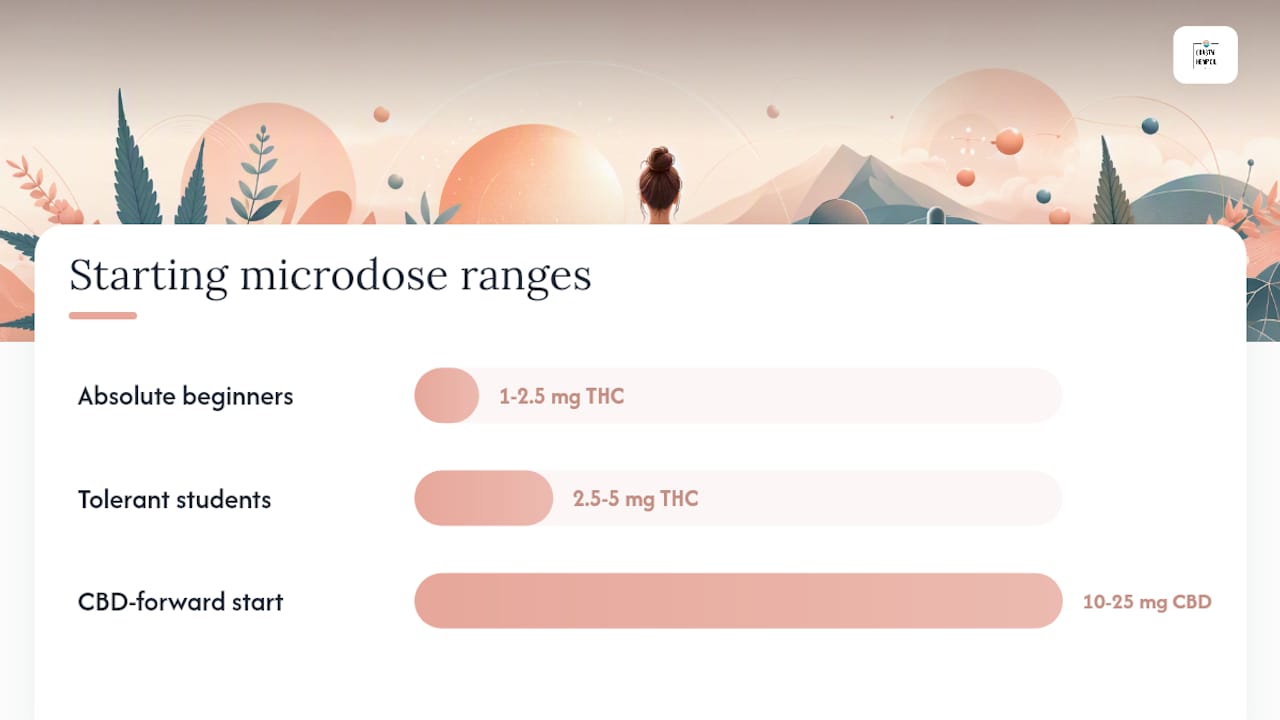
- Pick a starting range. Absolute beginners should try 1 to 2.5 mg THC. Most students who already tolerate cannabinoids reasonably well can start at 2.5 to 5 mg THC. If you’d rather avoid THC’s impairment risk altogether, a CBD-forward product in the 10 to 25 mg CBD range is a reasonable starting point.
- Wait it out. Give any edible a full 90 to 120 minutes before deciding whether it’s working. Edibles are metabolized through the liver, so onset is slower and less predictable than smoking or vaping.
- Log the results. Write down the dose, time taken, what you ate beforehand, and how you felt at 30-minute intervals for 24 hours. This turns guesswork into a personal baseline over two or three sessions.
- Cap your re-dose. If effects are underwhelming, do not take a second dose within the same window. Wait for the full 2 to 3 hour edible cycle before considering more.
A single-serve gummy at 2.5 mg THC, a 5 mg CBD:THC 1:1 chew, or 10 to 15 drops of a labeled 25 mg/mL CBD tincture are typical real-world examples of what these ranges look like on a shelf. Never exceed the labeled serving size on your first attempt, even if a friend tells you their tolerance is higher.
One more caution: don’t mix any hemp edible with alcohol, sedatives, or a heavy dose of caffeine. Alcohol and sedatives compound the sedation risk, and too much caffeine on top of THC can spike anxiety instead of focus, undercutting the entire point of a study-focused microdose.
Pro Tip: Take your edible on a lightly full stomach, not empty. A completely empty stomach delays and sometimes exaggerates absorption, while a heavy meal can blunt or unpredictably extend onset.
When should you take an edible before studying?
Oral edibles typically take 45 minutes to 2 hours to kick in, with effects peaking around hour 2 to 3 and tapering off over 4 to 6 hours total. Sublingual tinctures move faster, often producing noticeable effects in 15 to 45 minutes because some absorption happens before the substance even reaches your stomach. Eating beforehand changes this math. Bioavailability research shows a high-fat meal can significantly increase how much CBD your body absorbs, which means the same dose can feel stronger, and slower, on a fuller stomach.
A practical session template looks like this:
- Pre-dose check (T-minus 10 minutes): Confirm your dose, log it, and clear your study space of distractions.
- Dose time (T=0): Take the edible and start a low-stakes task like organizing notes or reviewing flashcards you already know well.
- 30 to 60 minute checkpoint: Note any early effects. This is not the time to start a new, difficult concept.
- 90 minute checkpoint: Onset should be established. If you feel clear and calm, shift into your hardest material now, during the peak window.
- End-of-session cooldown: Build in a 10 to 15 minute break every hour, and plan your last focused block to end before the peak fully fades.
Avoid high-stakes exams, driving, or anything safety-sensitive during the intoxication window, and set a phone alarm at each checkpoint so you’re not relying on memory to reassess how you feel.
What are the safety and legal risks students should know?
The biggest developmental concern applies to anyone under roughly 25. The CDC notes that cannabis use can affect the brain connections tied to attention, memory, and learning, with younger, still-developing brains more susceptible to that disruption. This isn’t a reason to panic, but it is a reason to lean toward the lowest effective dose, or skip THC products altogether in favor of CBD-only options if you’re in that age range.
On the cognition question specifically: acute CBD alone tends to produce only mild subjective sedation with no consistent objective impairment on performance tasks, while THC reliably produces larger measurable effects on attention and processing speed, according to a meta-analysis of controlled trials. A separate placebo-controlled study found an oral THC dose impaired processing speed and attention, while a high CBD dose alone showed no measurable cognitive effect in the tested setting, and didn’t even blunt THC’s impairment when combined, according to randomized trial data. That’s a meaningful gap, and it’s the core reason this guide leans CBD-forward or low-dose THC rather than anything stronger.
A quick risk checklist before you use any hemp edible for studying:
- Never use during exams or anything with real stakes attached to performance.
- Check your campus policy and your state’s law before bringing THC products onto school property.
- Never combine with alcohol or benzodiazepines.
- Consider drug-testing policies if you’re subject to one through work, athletics, or school.
- Skip it entirely if you’re pregnant, have a personal or family history of psychosis, or take medications that interact with cannabinoids, and talk to a doctor first if you’re unsure.
Legal hemp-derived products are intended for adults of legal age only, and rules vary by state, so confirm your local law before ordering anything.
How do you choose a study-friendly hemp edible?
The label tells you most of what you need before you even open the package. Look for milligrams per serving, total servings per package, a clear CBD:THC ratio, and a full ingredient list that flags common allergens.
- COA (certificate of analysis): Confirms the actual cannabinoid profile matches the label and screens for heavy metals, pesticides, and residual solvents. Reputable sellers post COAs directly on the product page or make them available by QR code or batch number.
- Serving size clarity: A product that clearly marks “5 mg per gummy” is far easier to microdose than one listing only a total package amount.
- Terpene content: Full-spectrum products retain terpenes that some users find add subtle mood or focus effects, but they also introduce more variability between batches. Isolate-based products are more consistent but skip whatever terpenes might offer.
- Ingredient transparency: Avoid anything vague like “proprietary blend” without a milligram breakdown.
If you want a deeper look at how cannabinoid profiles differ across product types, this breakdown of THCa edible benefits walks through the distinctions in more detail. For a general primer on edible dosing fundamentals from outside the hemp space, this beginner’s dosing guide is a useful supplementary read.
Pro Tip: Always buy the smallest single-serving size the brand offers for a new product. You can always work up. You can’t easily undo a dose that’s too strong.
What should you do if a dose is too weak, too strong, or delayed?
Dose felt too weak: Log what you took and wait out the full 2 to 3 hour window before considering anything else. Don’t re-dose early just because nothing happened after 45 minutes.
Dose felt too strong: Stay calm, hydrate, and rest somewhere safe and familiar. Some people find a small amount of CBD helps counter an uncomfortable THC experience, though it won’t reverse it. If symptoms feel severe (racing heart, panic, vomiting), contact a friend, campus health services, or poison control.
Onset seems delayed: This is the most common mistake. Do not take more. Distract yourself with a low-stakes task and wait. Edibles are notoriously slow, and doubling up “just in case” is how mild sessions turn into rough ones.
A short do-not list worth memorizing:
- Do not drive or operate machinery.
- Do not mix with alcohol or sedatives.
- Do not use on exam day or before anything high-stakes.
- Do not assume a stronger dose will “kick in faster.” It won’t. It just means more of it hits at once.
What does the research say about CBD, THC, and focus?
The clearest signal across controlled studies is a dose-and-compound split. Acute CBD alone shows only a small increase in subjective sedation with no consistent objective impairment, while THC shows meaningfully larger impairment effect sizes on attention and processing tasks. Separate attention research found cannabis use increases spontaneous mind-wandering and response-time variability, which is essentially the opposite of what you want mid-study-session. A vaporized-dose comparison also found higher THC doses impaired divergent thinking, while low doses showed no measurable creativity benefit at all.
Across these trials, one pattern holds: low and moderate cannabinoid doses in inexperienced or infrequent users tend to leave objective performance closer to baseline than high THC doses do, though results vary by task and individual tolerance.
The practical takeaway favors low-dose THC or CBD-forward products paired with conservative, logged protocols. Most of this research relies on infrequent or cannabis-naive volunteers, so your personal tolerance may shift the numbers, but the direction of the evidence is consistent.
Coastalhemp’s take on responsible study use
We recommend starting with lab-tested, single-serve, low-dose products, and treating every new one as an experiment worth logging before you trust it on a big study night. Safety and gradual pacing matter more than chasing a stronger effect, and campus rules and legal age limits aren’t optional details. If you’re managing a medication regimen or a chronic condition, talk to a doctor before adding hemp edibles into the mix.
Which Coastalhemp options fit a study-focused microdose?
Matching a product to a microdosing protocol is easier when the label already does half the work for you. Coastalhemp’s catalog includes a few options that map directly onto the dosing ranges covered above, though not every product on the shelf belongs in a study routine.
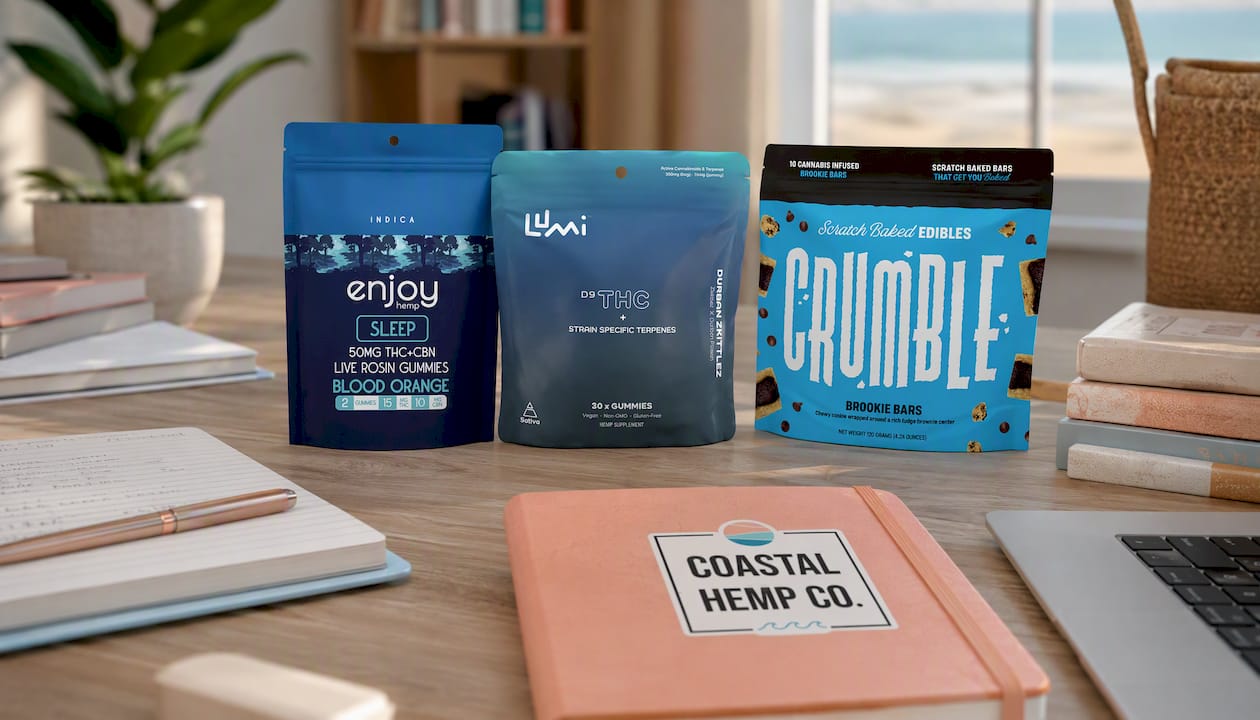
The Enjoy Sleep Gummies THC + CBN 2-Pack is not a daytime study pick. It’s built for winding down, not focusing up, so treat it as an evening-only option and skip it entirely if you’re planning a study block. The Lumi Delta 9 Gummies 30-count at 300 mg works out to roughly 10 mg per gummy, which is higher than our recommended starting range. Split a single gummy into quarters for a true 2.5 mg microdose, and always check the COA before you cut into a new batch. The Crumble Scratched Baked Delta-9 Edibles is a stronger, concentrate-style product built for experienced users, not beginners, and it should stay off the list if you’re new to hemp edibles or studying while cannabis-naive.
Every product page lists third-party lab results, so pull up the COA before your first attempt and confirm the cannabinoid profile matches what’s on the label. If you want a broader rundown of study-oriented cannabinoid options first, this hemp study supplement guide is a good next stop before you check out.
Sources
- Cannabis and Brain Health | Cannabis and Public Health | CDC
- Does acute cannabidiol (CBD) use impair performance? A meta-analysis and comparison with placebo and delta-9-tetrahydrocannabinol (THC)
- Effects of Cannabidiol and Delta-9-Tetrahydrocannabinol on Emotion, Cognition, and Attention: A Double-Blind, Placebo-Controlled, Randomized Experimental Trial
This article is general information, not a substitute for advice from a qualified doctor. Consult a qualified healthcare professional about your own circumstances before acting on anything here.
FAQ
Is a 10 mg edible equivalent to a joint?
Not directly. A 10 mg THC edible generally produces a stronger, longer-lasting effect than a typical single puff, since edibles metabolize into a more potent compound through the liver, though comparisons vary widely by individual tolerance and smoking method.
What edibles are good for focus?
CBD-forward edibles or low-dose THC products in the 2.5 to 5 mg range tend to support focus better than high-THC options, since controlled trials show CBD carries a much smaller impairment risk than THC at comparable doses.
Are edibles as hard on the liver as alcohol?
No. Cannabis edibles and alcohol affect the liver through different mechanisms, and heavy alcohol use carries well-documented long-term liver damage risks that acute cannabis edible use doesn’t mirror; that said, anyone with existing liver conditions should talk to a doctor before using either.
What are the best edibles for ADHD?
There’s no established edible specifically proven for ADHD, and research on cannabinoids and attention is mixed at best. Some people report subjective focus benefits from low-dose CBD-forward products, but anyone managing ADHD should treat hemp edibles as a personal experiment, not a medication substitute, and check with a doctor first.
Can Coastalhemp help me find a study-friendly dose?
Yes. Coastalhemp’s product pages list milligram-per-serving details and COA links so you can match a product to the low-dose ranges described in this guide before you order.


Comments