

What Are Hemp Study Supplements? A Student's Guide
Hemp study supplements are products derived from the hemp plant designed to support focus, reduce study-related stress, or provide nutritional benefits during academic performance periods. The category spans two distinct product families: cannabinoid-based supplements containing compounds like CBD (cannabidiol) and CBG (cannabigerol), and hemp seed nutritional products rich in fatty acids and minerals. Understanding which type you are buying, what the science actually supports, and how regulatory status affects labeling is the foundation for using these products safely and effectively.
The term “hemp study supplements” is a descriptive, consumer-facing phrase. The recognized industry terms are hemp-derived cannabinoid supplements for CBD and CBG products, and hemp seed oil supplements for the nutritional category. Both fall under the broader umbrella of hemp-derived cognitive enhancers, though their mechanisms and evidence profiles differ significantly.
What are the main types of hemp supplements used for studying?
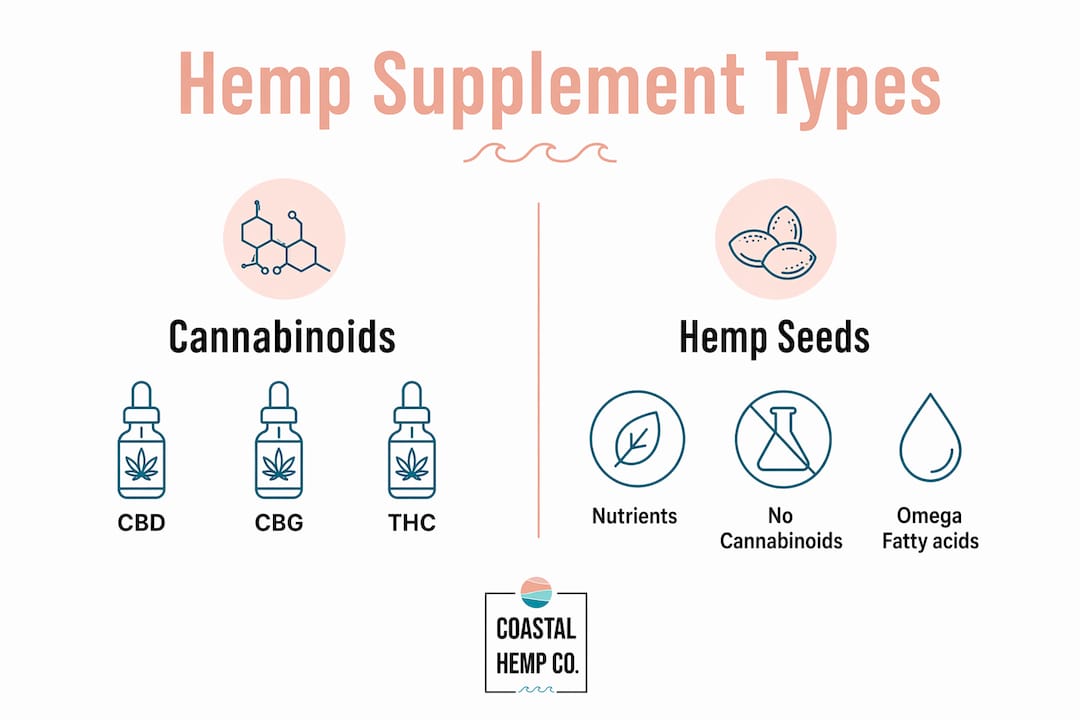
Hemp supplements marketed for cognitive support fall into two categories that are frequently confused with each other. Knowing the difference determines whether you are buying an anxiolytic cannabinoid product or a nutritional fatty acid supplement.
Cannabinoid-based supplements contain active compounds extracted from hemp flowers and leaves. CBD oils, CBD capsules, CBG isolate products, and terpene-infused gummies all belong here. These products interact with the body’s endocannabinoid system and carry the most direct evidence for anxiety and stress reduction. Full-spectrum products contain trace amounts of THC alongside CBD and other cannabinoids. Broad-spectrum products remove THC while retaining other cannabinoids. CBD isolate contains only cannabidiol. For study use, broad-spectrum or isolate products are the safest choice because THC impairs memory encoding and can negatively affect academic outcomes.

Hemp seed oil supplements are nutritional products pressed from hemp seeds. They contain no cannabinoids at all. Their value lies in omega-3 and omega-6 fatty acids, magnesium, and zinc. A 2026 Food & Function RCT found improved plasma fatty acid levels after four weeks of hemp seed consumption in healthy adults, which supports brain health nutritionally but does not produce anxiolytic effects.
| Supplement Type | Key Compounds | Primary Benefit | THC Risk |
|---|---|---|---|
| CBD oil (full-spectrum) | CBD, trace THC, terpenes | Anxiety reduction | Low but present |
| CBD oil (broad-spectrum) | CBD, CBG, no THC | Anxiety reduction | None |
| CBG isolate | CBG only | Stress reduction | None |
| Hemp seed oil | Fatty acids, minerals | Nutritional brain support | None |
| Terpene-infused gummies | CBD, botanical terpenes | Focus and calm | Varies by product |
Pro Tip: When reading a product label, look for the phrase “hemp extract” or “cannabidiol” to confirm you are buying a cannabinoid product. “Hemp seed oil” on the label means no cannabinoids are present, regardless of how the product is marketed.
What does research say about hemp supplements and academic performance?
The scientific evidence for hemp study supplements is specific and worth reading carefully, because marketing claims often outrun what clinical data actually supports.
CBD’s most documented benefit in study-relevant contexts is anxiety reduction, not cognitive enhancement. A 2025 MDPI pilot study demonstrated that acute 300 mg CBD reduced anxiety and perceived exertion without producing gains in cognitive performance or task outcomes. This finding is consistent across multiple studies: CBD reliably lowers subjective anxiety in stress scenarios, but it does not improve memory, processing speed, or exam scores directly.
CBG shows a similar profile. A 2024 placebo-controlled trial using 20 mg CBG isolate found reduced anxiety in a standardized stress test with no cognitive impairment and no intoxication. The sample size was small, which limits generalizability, but the direction of evidence is consistent with CBD findings.
THC presents the opposite picture. Research links THC with encoding disruption and poor academic outcomes, making THC-containing products counterproductive for study use. This contrast between THC and non-psychoactive cannabinoids is the single most important distinction for students to understand.
| Compound | Study-Relevant Effect | Evidence Quality | Dosing Protocol |
|---|---|---|---|
| CBD (300 mg acute) | Anxiety reduction, no cognitive gain | Pilot RCT (2025) | Single dose, 2 hrs pre-task |
| CBG (20 mg acute) | Anxiety reduction, no impairment | Small RCT (2024) | Single dose, controlled setting |
| THC (any dose) | Memory impairment, worse academic outcomes | Multiple longitudinal studies | Not recommended for study use |
| Hemp seed oil | Improved fatty acid profile | RCT (2026) | Daily use over 4+ weeks |
Pro Tip: The benefits of hemp study aids for academic contexts are primarily indirect. Reducing anxiety before an exam or study session can improve focus and retention, even if the supplement itself does not directly enhance cognition.
How do hemp supplements work in the body to support studying?
The biological mechanisms behind cannabinoid supplements and hemp seed products are distinct, and understanding both helps set realistic expectations.
Cannabinoids like CBD and CBG interact with the endocannabinoid system (ECS), a network of receptors distributed throughout the brain and nervous system. The ECS regulates mood, stress response, and sleep. CBD modulates CB1 and CB2 receptors indirectly and also interacts with serotonin receptors, which explains its anxiolytic effects. CBG binds more directly to CB1 receptors at low doses without producing psychoactive effects. Neither compound impairs cognition at the doses studied in clinical trials, which is what separates them from THC.
Here is how the mechanisms translate to practical study support:
- Anxiety modulation: CBD and CBG reduce the physiological stress response, lowering cortisol-related interference with working memory. This is the primary pathway through which these supplements may support studying.
- No direct nootropic effect: Neither CBD nor CBG increases dopamine, acetylcholine, or other neurotransmitters associated with memory formation. The cognitive benefit is indirect, through reduced anxiety rather than enhanced brain chemistry.
- Timing matters: Study protocols suggest acute CBD effects on anxiety are measurable approximately two hours after dosing, making timing relative to a study session or exam a practical consideration.
- Hemp seed fatty acids: Omega-3 fatty acids, particularly alpha-linolenic acid found in hemp seeds, support neuronal membrane integrity and anti-inflammatory signaling in the brain. These effects accumulate over weeks of consistent use rather than appearing acutely.
- No psychoactive interference: Broad-spectrum CBD and CBG isolate products do not impair reaction time, working memory, or executive function at clinically studied doses, unlike THC-containing products.
The practical takeaway is that cannabinoid supplements work best as stress management tools during high-pressure study periods, not as direct memory or focus enhancers. Combining them with good sleep, nutrition, and structured study habits produces better outcomes than relying on any single supplement.
What should you know before buying hemp study supplements?
Selecting a quality hemp supplement requires more scrutiny than buying a standard vitamin. The FDA does not classify CBD as a dietary supplement, which means labeling and marketing are not subject to the same pre-market review as conventional supplements. This regulatory gap creates real variation in product quality.
Follow these steps to avoid the most common pitfalls:
- Verify the mg per serving. Look for a specific milligram amount of CBD or CBG per serving, not just “hemp extract.” ConsumerLab’s review of CBD products found significant discrepancies between labeled and actual cannabinoid content across brands.
- Request a Certificate of Analysis (COA). A COA from an independent third-party lab confirms cannabinoid potency and verifies THC content is below legal thresholds. Any reputable brand makes COAs publicly available or provides them on request.
- Choose broad-spectrum or isolate for study use. Full-spectrum products contain trace THC that can accumulate with regular use and may trigger a positive drug test. For academic settings, THC-free formulations are the responsible choice.
- Time your dose appropriately. Based on study protocols, taking CBD or CBG approximately two hours before a stress task aligns with the window of peak anxiolytic effect.
- Start with a low dose and assess response. Clinical trials used 20 mg CBG and 300 mg CBD in controlled settings. Consumer products vary widely. Starting at a lower dose and adjusting based on personal response is the standard approach recommended by ConsumerLab.
- Check your institution’s policies. Some academic institutions and athletic programs test for cannabinoids. Even THC-free products carry a small cross-contamination risk if manufacturing standards are not verified by COA.
Pro Tip: Check the dosage best practices guide at Coastalhemp for specific guidance on cannabinoid serving sizes and how to read product labels accurately.
Key takeaways
Hemp study supplements reduce study-related anxiety through cannabinoid-ECS interaction, but they do not directly improve memory, grades, or cognitive performance.
| Point | Details |
|---|---|
| Two distinct product types | Cannabinoid products (CBD, CBG) and hemp seed oil serve different purposes and work through different mechanisms. |
| Anxiety reduction is the core benefit | Clinical trials confirm CBD and CBG reduce stress without impairing cognition; direct academic performance gains are not supported. |
| THC is counterproductive for studying | THC disrupts memory encoding and is linked to worse academic outcomes; avoid THC-containing products for study use. |
| COA verification is non-negotiable | Third-party lab reports confirm actual cannabinoid content and THC levels, protecting both efficacy and legal safety. |
| Timing and consistency matter | Dose cannabinoid supplements approximately two hours before high-stress study sessions; hemp seed oil benefits accumulate over weeks. |
Why I think most students are asking the wrong question about hemp supplements
Most people searching for hemp study supplements want to know whether these products will make them smarter or help them retain more information. That is the wrong question, and the answer will always disappoint. The right question is: what is actually getting in the way of your studying?
For a significant number of students, the answer is anxiety. Pre-exam stress, performance pressure, and chronic low-grade worry disrupt working memory and make it harder to absorb material. That is where CBD and CBG have a genuine, evidence-backed role. Reducing that interference is a real and meaningful benefit, even if it does not show up as a direct grade improvement in a clinical trial.
What I have found is that students who get the most out of hemp supplements treat them as one component of a broader wellness approach, not a standalone solution. Pairing a quality broad-spectrum CBD product with consistent sleep, structured study blocks, and adequate nutrition produces compounding benefits that no single supplement can replicate alone.
The other thing worth saying plainly: product quality in this category is inconsistent. The gap between a well-formulated, COA-verified CBD product and a mislabeled one is not trivial. Spending time verifying a COA before you buy is not optional if you want predictable results. Brands that make their lab reports easy to find are signaling something important about how they operate.
The research on hemp-derived cognitive enhancers is still maturing. Larger trials with longer durations are needed before anyone can make strong claims about long-term academic benefits. For now, the evidence supports using these supplements for what they demonstrably do: reduce anxiety, support calm focus, and provide nutritional brain support through hemp seed products. That is a useful set of benefits. Just do not expect them to replace studying.
— John
Explore hemp focus products at Coastalhemp
Students looking for quality-tested hemp supplements designed for calm focus and stress management will find a curated selection at Coastalhemp. Every product in the catalog is sourced from trusted growers and brands, with accurate cannabinoid dosing and third-party lab verification.

For a purpose-built option, the Enjoyable Neuro Enhancer Gummies combine hemp-derived cannabinoids in a convenient format designed specifically to support cognitive clarity and study focus. Coastalhemp also carries the Mielos Focus Blend Gummies, a botanical terpene-infused option for those who prefer a plant-forward formulation. Both products come with accessible COA documentation, so you know exactly what you are taking before your next study session.
FAQ
What are hemp study supplements exactly?
Hemp study supplements are hemp-derived products marketed to support focus, reduce stress, or provide nutritional benefits during studying. They include cannabinoid products like CBD and CBG oils or gummies, as well as hemp seed oil supplements that provide fatty acids and minerals.
Can hemp supplements improve concentration and grades?
Clinical evidence shows CBD and CBG reduce anxiety without impairing cognition, but no trials confirm direct improvements in memory, concentration, or academic grades. The benefit is indirect: lower anxiety during study sessions can improve focus and information retention.
How do hemp supplements work for stress during studying?
CBD and CBG interact with the endocannabinoid system to modulate the stress response, reducing cortisol-related interference with working memory. A 2024 CBG placebo-controlled trial confirmed anxiety reduction without intoxication or cognitive impairment.
Is hemp seed oil the same as CBD oil?
Hemp seed oil and CBD oil are different products. Hemp seed oil contains no cannabinoids and provides nutritional fatty acids only. CBD oil contains active cannabinoids extracted from hemp flowers and has documented anxiolytic effects.
Are hemp study supplements safe for students to use?
Broad-spectrum CBD and CBG isolate products are generally well-tolerated at clinically studied doses and do not impair cognition. Students should verify THC content via COA, check institutional drug testing policies, and consult a healthcare provider before starting any new supplement regimen.



Comments