
Hemp Legal Campus Use: What Students Need to Know
What is hemp legal campus use, and what does it actually permit?
Hemp legal campus use refers almost exclusively to authorized, licensed research. Personal possession or consumption of hemp products, including CBD oils, gummies, or flower, is prohibited on most U.S. college campuses. Understanding this distinction upfront can save you from serious academic consequences.
Here is the core framework:
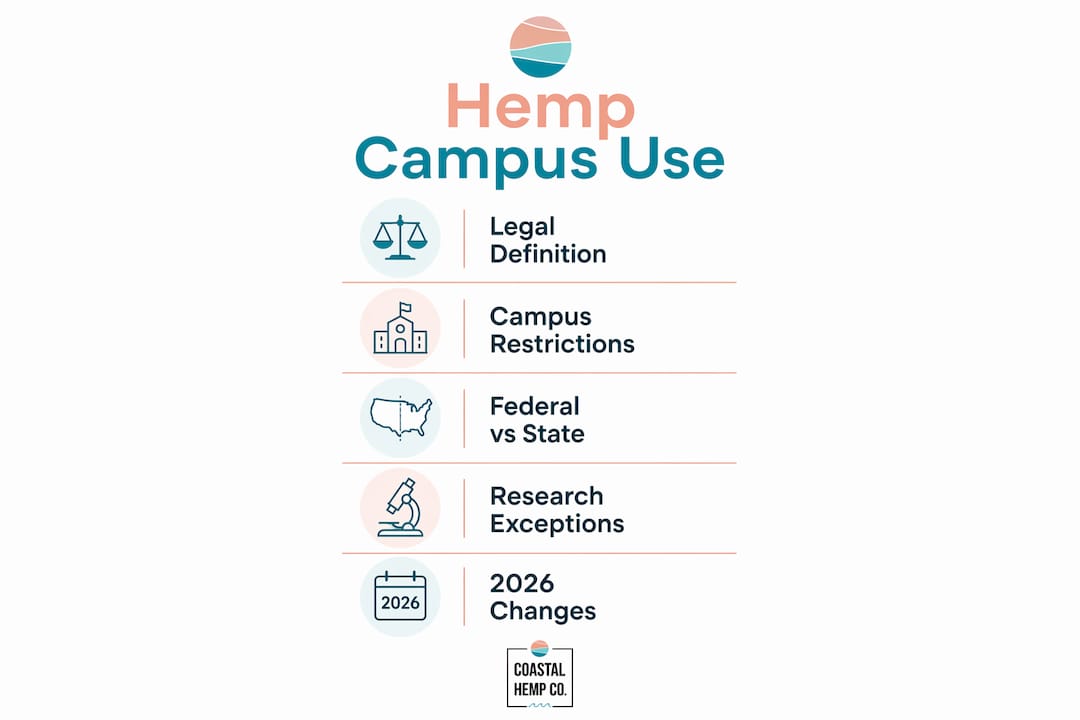
- Federal definition: Hemp is cannabis with no more than 0.3% delta-9 THC on a dry-weight basis, as established by the 2018 Farm Bill.
- Campus reality: Most universities prohibit all cannabis products, including legal hemp-derived CBD, to comply with the Drug-Free Schools and Communities Act and protect federal funding eligibility.
- Research exception: Hemp activities on campus are permitted only under officially sanctioned research programs with strict licensing and regulatory oversight.
- Drug test risk: Legal hemp products can still trigger positive drug tests, leading to disciplinary action regardless of the product’s off-campus legality.
- 2026 changes: Starting November 12, 2026, federal rules tighten hemp THC limits, banning final hemp-derived cannabinoid products containing more than a very small amount of THC per container, which will push campus policies to become even stricter.
The bottom line: being legal off campus does not make a hemp product permitted on campus.
How hemp and marijuana actually differ under the law
Botanically, hemp and marijuana are both Cannabis sativa. The legal distinction comes down entirely to THC concentration. Hemp contains no more than 0.3% delta-9 THC by dry weight; anything above that threshold is legally classified as marijuana and regulated as a Schedule I controlled substance under the Controlled Substances Act.
The 2018 Farm Bill removed hemp from the CSA’s definition of marijuana, opening the door for legal cultivation, research, and commerce. That was a significant shift. But the law also preserved FDA authority over hemp-derived products, and it did not remove all regulatory friction.
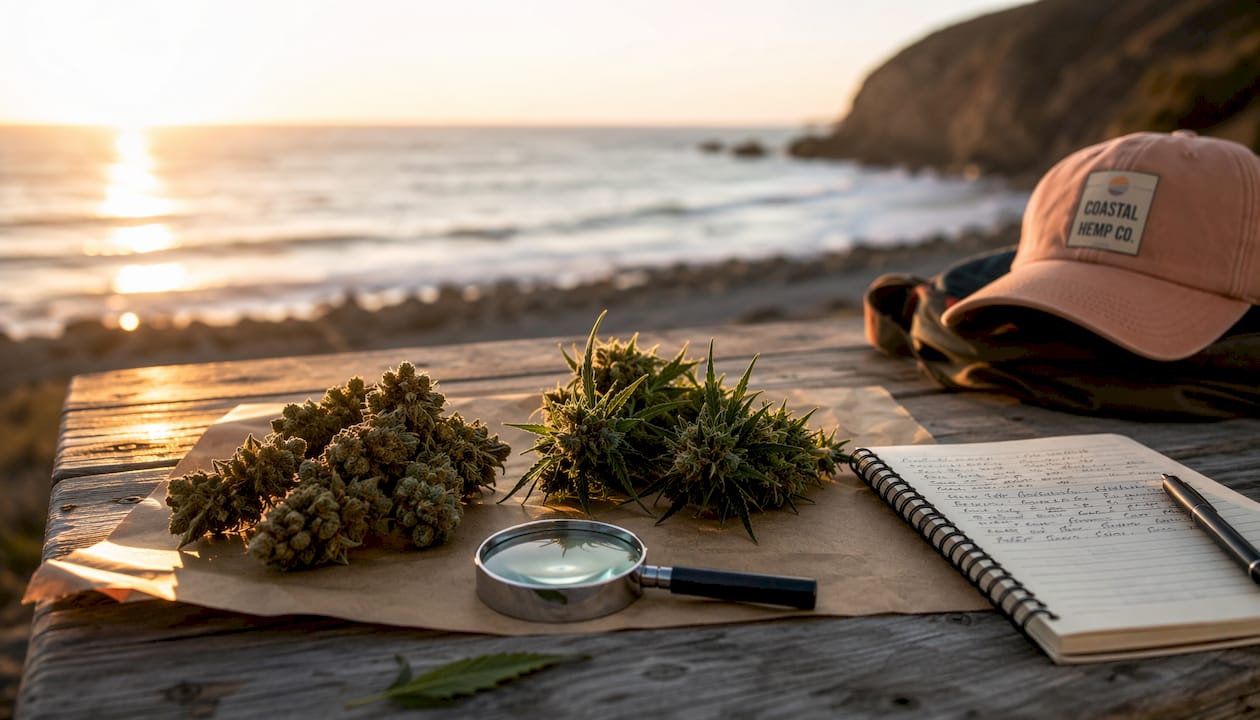
What complicates campus enforcement is that hemp flower and marijuana flower are physically identical. Campus police cannot distinguish them visually, and standard field tests do not reliably confirm THC concentration. Labs can, but that takes time. So when an officer encounters what looks like cannabis, the practical response is to treat it as marijuana until proven otherwise.
Labeling inconsistency adds another layer. Many hemp products on the market are mislabeled or intoxicating, which has pushed universities toward blanket prohibitions rather than product-by-product assessments. For a deeper look at the legal and administrative distinctions, Coastalhemp’s guide on hemp vs. marijuana differences breaks it down clearly.
Why campus hemp policies are stricter than state law
Most U.S. colleges maintain zero-tolerance policies for all cannabis products, including hemp-derived CBD, regardless of what state law permits. The reason is federal funding. Universities that receive Title IV federal financial aid must comply with the Drug-Free Schools and Communities Act. Failure to comply risks loss of that federal funding, which is a consequence no institution is willing to absorb.
Campus rules typically prohibit:
- Possession of any cannabis product, including hemp flower, CBD oil, or edibles
- Use or consumption of hemp or marijuana in any form on university property
- Sale or distribution of hemp-derived products on campus
- Smoking or vaping of any substance, including hemp-derived products, in campus buildings or open areas
Disciplinary consequences for violations range from written warnings to suspension or expulsion, depending on the institution and the nature of the offense. Even legally purchased hemp products are subject to confiscation and conduct review if found on campus.
Pro Tip: Check your university’s student conduct code specifically for language around “cannabis-derived products” or “cannabinoids.” Many policies now use broader language that covers hemp products even when they are not explicitly named.
How federal and state law interact on campus
State cannabis laws and federal law operate on parallel tracks, and campuses sit squarely under federal jurisdiction. Colorado, Washington, and California may permit recreational cannabis use for adults, but universities in those states still follow federal mandates because their funding depends on it. Washington State University’s cannabis research guidance makes this explicit: despite Washington’s legalization of high-THC cannabis, WSU research activities remain subject to the same federal rules as before state legalization.
The practical implication for students is straightforward. You may legally purchase a CBD tincture at a shop two blocks from campus. The moment you bring it onto university property, you are potentially in violation of campus policy, regardless of what state law says.
The 2026 federal rule change adds another dimension. Under P.L. 119-37, enacted in November 2025, the definition of hemp now requires total THC concentration (including THCA) to stay at or below 0.3% on a dry-weight basis, not just delta-9 THC. Final hemp-derived cannabinoid products containing more than 0.4 mg of THC per container will be reclassified as marijuana under the CSA when the rule takes effect November 12, 2026. Many products currently sold as legal hemp will no longer qualify. Campus policies will need to update accordingly, and enforcement will likely tighten further.
Hemp research on campus: what is actually permitted
University hemp research is legal under the 2018 Farm Bill, but it operates within a tightly controlled framework. Colorado State University’s policy illustrates the standard: hemp research is permitted under the Agricultural Improvement Act of 2018, with research materials required to contain no more than 0.3% delta-9 THC on a dry-weight basis. Any research involving cannabis above that threshold requires Schedule I clearance from the DEA.
Key requirements for campus hemp research include:
- A valid state hemp producer license or inclusion under a university blanket license
- Compliance with USDA and state regulatory plans for hemp cultivation
- Certificate of analysis confirming THC levels at or below the legal threshold for any hemp material brought onto campus
- Institutional review and approval before any cultivation or study begins
- Prohibition on felony convictions related to controlled substances within the past 10 years for anyone participating in cultivation
One point that trips up students and outside companies: university research exemptions apply only to the institution. A private company or individual cannot partner with a university to gain access to those exemptions for personal or commercial purposes. Individual researchers must work through their institution’s authorized offices, not directly with hemp companies.
Common questions students have about hemp on campus
Can you bring CBD products onto campus? Technically, hemp-derived CBD is federally legal, but most campuses prohibit it under blanket cannabis policies. Even a product purchased legally off campus can result in confiscation and a conduct violation on university property.
Will hemp products show up on a drug test? Yes. Standard drug tests cannot distinguish hemp THC from marijuana THC, and broad-spectrum or mislabeled hemp products are particularly likely to produce a positive result. A positive test can trigger disciplinary measures regardless of the product’s legal status.
Is smoking hemp flower allowed anywhere on campus? No. Smoking and vaping of any substance, including hemp flower, are prohibited across campus at virtually every U.S. university. This applies to outdoor areas, residence halls, and all university buildings.
What changes in 2026? Starting November 12, 2026, hemp products with more than 0.4 mg of THC per container will be reclassified as marijuana under federal law. Many products currently marketed as legal hemp will no longer qualify. Coastalhemp’s 2026 federal update guide covers what this means for consumers in practical terms.
Expert perspective on campus hemp compliance
Legal experts and university counsel consistently emphasize one point: legality off campus does not equal permission on campus. Campus counsel tends to favor prohibiting all cannabis products regardless of THC content, because the enforcement challenge of distinguishing hemp from marijuana in real time is simply too great, and the financial risk of a federal funding violation is too high.
The ambiguity around intoxicating hemp-derived cannabinoids, including delta-8 THC and THCO, has accelerated this trend. Unclear intoxicating properties of hemp-derived cannabinoids cause universities to default to zero-tolerance rather than attempt nuanced product-by-product assessments. From a policy standpoint, that is a rational institutional response.
Students who are involved in hemp research must also understand that their institutional status does not extend to personal activity. University research exemptions are strictly institutional. A graduate student working on a licensed hemp cultivation study cannot use that affiliation to justify possessing hemp products in their dorm room.
Pro Tip: Before bringing any hemp-derived product onto campus, consult your university’s Office of General Counsel or Dean of Students office. A five-minute conversation can prevent a conduct violation that follows you for years.
Coastalhemp: quality hemp products for life off campus
Coastalhemp partners with leading growers and brands to bring you lab-verified hemp products built for wellness, not guesswork. Whether you are looking for functional mushroom edibles like the Gushrooms Magic Gummies or a concentrated option like Trippy Sugar THCa Diamonds, Coastalhemp’s catalog is built around quality, transparency, and real results. Enjoy them responsibly, in the right setting, and always in compliance with local rules.
Key Takeaways
Hemp legal campus use is almost entirely restricted to licensed institutional research; personal possession or consumption of hemp products is prohibited on most U.S. campuses to protect federal funding under the Drug-Free Schools and Communities Act.
| Point | Details |
|---|---|
| Federal hemp definition | Hemp is cannabis with no more than 0.3% delta-9 THC by dry weight under the 2018 Farm Bill. |
| Campus prohibition scope | Most universities ban possession, use, and sale of all cannabis products, including legal hemp-derived CBD. |
| Research is the exception | Hemp activities on campus are permitted only under officially sanctioned, licensed research programs. |
| Drug test risk is real | Standard tests cannot distinguish hemp THC from marijuana THC, and a positive result can trigger disciplinary action. |
| 2026 rule tightens limits | Starting November 12, 2026, final hemp-derived products with more than 0.4 mg THC per container are reclassified as marijuana. |
FAQ
What is the difference between legal hemp and illegal hemp?
Legal hemp contains no more than 0.3% delta-9 THC by dry weight under the 2018 Farm Bill; anything above that threshold is classified as marijuana and regulated as a Schedule I controlled substance under the Controlled Substances Act.
Will hemp products fail a drug test?
Yes. Standard drug tests detect THC metabolites and cannot distinguish hemp-level THC from marijuana-level THC, so legal hemp products, especially broad-spectrum or mislabeled ones, can produce a positive result and trigger campus disciplinary action.
Is hemp going to be illegal in 2026?
Hemp itself is not being banned, but Starting November 12, 2026, final hemp-derived cannabinoid products containing more than 0.4 mg of THC per container will be reclassified as marijuana under federal law, effectively removing many current hemp products from the legal market.
How strong is legal hemp?
Legal hemp must contain no more than 0.3% delta-9 THC, which is not enough to produce the intoxicating effect associated with marijuana. However, some hemp-derived products exploit other cannabinoids like delta-8 THC, which is why the 2026 rule shifts to a total THC threshold rather than delta-9 alone.


Comments