

Hemp Biohacking Beginner Guide: Start Smart in 2026
Before adding any hemp supplement to your routine, stabilize your sleep schedule and establish baseline metrics — HRV, sleep quality, and a basic blood panel — so you can actually measure whether hemp is helping.
Three immediate actions:
- Set a consistent sleep and wake time for 14 days before introducing any hemp product.
- Record your resting HRV each morning using a wearable like Garmin, Whoop, or Oura Ring.
- Order a baseline blood panel (CBC, CMP, CRP, fasting glucose) through your primary care provider or a service like LabCorp.
Legal note for 2026: Under H.R. 5371, effective November 12, 2026, the federal definition of hemp excludes chemically converted cannabinoids and limits final hemp-derived cannabinoid products to a strict federal limit on the amount of total THC and equivalent cannabinoids allowed per retail container. Products containing cannabinoids synthesized outside the cannabis plant are no longer federally classified as hemp. Verify compliance before purchasing.
Quick do/don’t list for beginners:
- ✅ Do establish sleep and HRV baselines first.
- ✅ Do require a third-party Certificate of Analysis (COA) for every product.
- ✅ Do check both federal and your state’s hemp rules.
- ❌ Don’t stack multiple hemp products at once.
- ❌ Don’t skip the COA because a label looks clean.
- ❌ Don’t assume “hemp-derived” means federally unrestricted after November 12, 2026.
Table of Contents
- What foundations should you set up before using hemp?
- What hemp products are legal in the U.S. right now?
- How do you choose a safe, lab-tested hemp product?
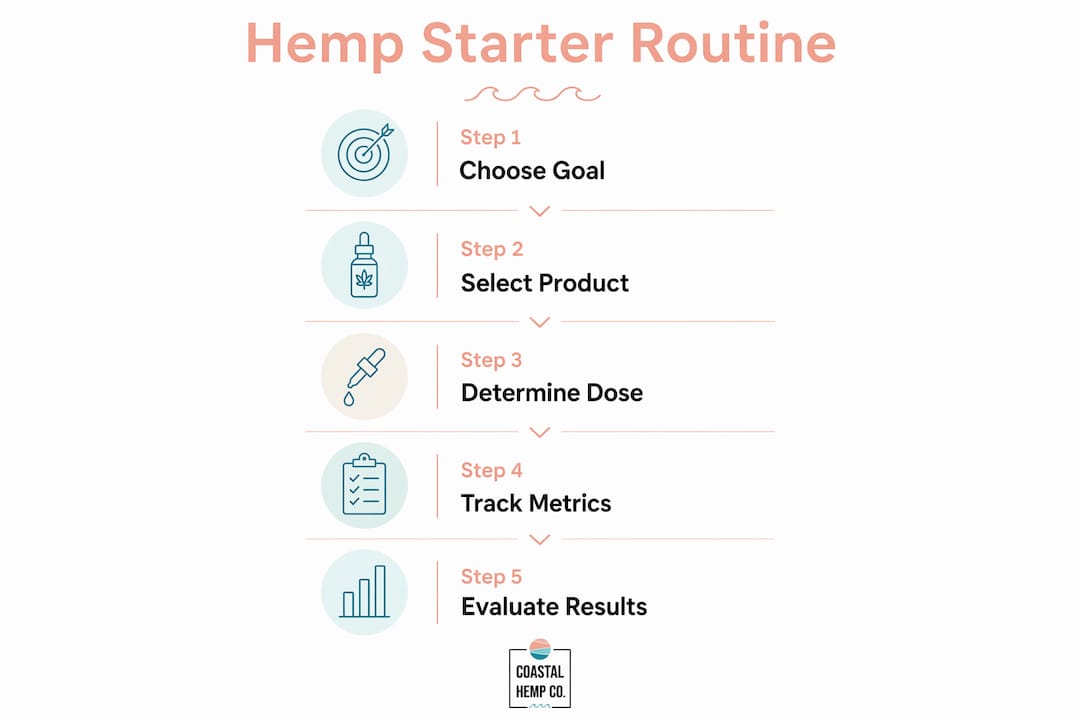
- What does a practical hemp biohacking starter routine look like?
- What safety risks and drug interactions should beginners know?
- How do you measure whether hemp is actually working?
- Key Takeaways
- A grounded perspective on hemp biohacking for beginners
- Where to find tested hemp products for your first protocol
- Useful sources and further reading
- FAQ
What foundations should you set up before using hemp?
Biohacking guidance consistently points to three non-negotiable starting points: a stable sleep schedule, an HRV baseline, and a baseline blood panel. Without these, you cannot tell whether a hemp product is producing a real effect or whether you are just experiencing normal day-to-day variation.
Run a simple 30-day measurement timeline before introducing hemp:
- Days 1–14: Lock in a consistent bedtime and wake time (within 30 minutes). Track sleep duration and subjective quality each morning.
- Days 1–30: Record resting HRV every morning before getting out of bed.
- Week 2: Complete your baseline blood panel.
- Days 15–30: Introduce one lifestyle variable at a time (morning light exposure, caffeine timing) and note any HRV or sleep changes.
Daily habit checklist:
- Get 10 minutes of natural light within 30 minutes of waking.
- Delay your first caffeine by 90 minutes after waking.
- Keep your bedroom below 68°F and dark.
- Log mood and focus on a simple 1–5 scale each evening.
Pro Tip: Wait at least two full weeks after stabilizing sleep before adding any hemp product. Changing two variables at once makes it impossible to attribute any change to hemp specifically — that is bio-guessing, not biohacking.
What hemp products are legal in the U.S. right now?
Hemp covers a wide range of products, and the distinctions matter legally and biologically. Common categories include:
- Hemp seed and hull fiber: Rich in insoluble fiber, PUFAs, and phenolic amides (NCT and NFT). Approved as food additives by FDA. No cannabinoid content.
- CBD isolate: Pure cannabidiol, no THC. Non-intoxicating.
- Broad-spectrum: Multiple cannabinoids with THC removed or reduced. For a clear breakdown of what “broad spectrum” labeling typically means, this consumer guide is worth reading.
- Full-spectrum: Contains the full cannabinoid profile including trace THC. Subject to the 0.4 mg per-container limit under the 2026 update.
- THCa: Tetrahydrocannabinolic acid, the non-decarboxylated precursor to delta-9 THC. Converts to THC when heated.
- THCv: Tetrahydrocannabivarin, associated with appetite suppression and energy modulation.
- Chemically converted cannabinoids (e.g., delta-8, delta-10, THCO): Synthesized or manufactured outside the cannabis plant. Excluded from the federal definition of hemp as of November 12, 2026 under P.L. 119-37.
0.4 mg per container: Final hemp-derived cannabinoid products may contain no more than 0.4 mg combined total THC (including THCA) and equivalent cannabinoids per retail container under the updated federal definition.
The Baker Institute’s policy analysis highlights that state-level rules vary significantly. A product compliant in one state may be restricted in another. Always check your state’s rules alongside the federal standard.
Products available through Coastalhemp — including the Jelly THCA Live Sugar Blend Gummies, Celestial Wellness THCv Gummies 200mg, Trippy Sugar THCa Diamonds 2G, Crumble Scratched Baked Delta-9 Edibles, Enjoyable Neuro Enhancer Gummies 2pk, FLOAT Mushroom Hard Candy, and FLOAT Mushroom Lollipops 50ct Box — must each be evaluated against your state’s rules and reviewed for a current COA before use. For a detailed breakdown of the 2026 changes, Coastalhemp’s hemp-derived THC legality guide is a practical starting point.
How do you choose a safe, lab-tested hemp product?
The single most important step is requiring a recent third-party COA with clearly labeled cannabinoid contents before buying anything. Clinical and policy reviews confirm that many commercial hemp products lack rigorous validation — quality and testing matter more than marketing claims.
Product evaluation checklist:
- COA date is within 12 months and issued by an accredited third-party lab.
- Full cannabinoid panel (CBD, THC, THCA, THCv, delta-8, delta-10 listed separately).
- Terpene profile present (optional but useful for full-spectrum products).
- Heavy metals panel (lead, arsenic, cadmium, mercury).
- Residual solvents and pesticides tested.
- Microbial contaminants screened.
- Batch/Lot ID on COA matches the product label.
Common red flags: a missing batch ID, results showing chemically converted cannabinoid byproducts, or unusually high minor-cannabinoid claims with no explanation of extraction method. Many intoxicating hemp derivatives are produced via chemical conversion processes that may use catalysts not commonly tested for in standard COAs — an important gap to watch for.
Coastalhemp’s hemp product certifications guide explains how to read COA results and what third-party accreditation actually means.

Pro Tip: When reviewing a COA, cross-reference the Lot ID on the physical product packaging against the Lot ID on the lab report. If they do not match, do not use the product.
What does a practical hemp biohacking starter routine look like?
Start with one protocol tied to a single measurable goal. The table below outlines three beginner-appropriate options.
| Goal | Product type | Sample dose range | Primary metric | Evaluation window |
|---|---|---|---|---|
| Sleep support | CBD isolate or broad-spectrum | 15 mg CBD, 30 min before bed | Sleep duration, HRV | 4–6 weeks |
| Daytime focus | THCv gummy (low dose) | Per product label, morning | Mood/focus 1–5 scale | 3–4 weeks |
| Recovery/inflammation | Hemp hull fiber | 2–4 g daily with meals | Subjective soreness, CRP | 6–8 weeks |
For sleep support, Coastalhemp’s CBD for sleep guide provides a practical nighttime routine framework. For dosing principles across formats, the hemp alternative dosage guide covers conservative titration in detail.
Note that research on hemp hull fiber found no significant gut-permeability changes after two weeks of supplementation combined with intensive exercise, though metabolomic shifts in lipid, bile acid, and amino acid pathways were observed. Set realistic expectations: some effects take months, not days.
Pro Tip: Keep a daily journal with three data points: dose taken, primary metric score, and one sentence on how you felt. After four weeks, patterns become visible. Without this record, you are guessing.
What safety risks and drug interactions should beginners know?
Stop use and consult a clinician immediately if you experience unexpected sedation, cognitive changes, mood swings, or new cardiac symptoms after starting any hemp product.
Prescription drug classes with known CBD interactions:
- Blood thinners (e.g., warfarin): CBD inhibits CYP2C9 enzymes, potentially raising drug plasma levels.
- Anticonvulsants (e.g., clobazam, valproate): documented interactions requiring dose monitoring.
- Immunosuppressants metabolized via CYP3A4.
- Sedatives and benzodiazepines: additive CNS depression risk.
When to see a clinician before starting:
- You take any prescription medication metabolized by the liver.
- You have a cardiovascular condition or arrhythmia history.
- You are pregnant or breastfeeding.
- You have a history of psychosis or anxiety disorders.
Clinical reminder: Always disclose hemp supplement use to your prescribing clinician before starting. Hemp-derived cannabinoids can alter how your body processes certain medications, and your clinician needs complete information to manage your care safely.
Chemically converted cannabinoids carry additional risk: contamination from incomplete synthesis is a documented concern, and standard COAs may not screen for all conversion byproducts.
This article is general information, not medical advice. Confirm current rules and any supplement decisions with a qualified healthcare provider for your specific situation.
How do you measure whether hemp is actually working?
Prioritize HRV, sleep stage metrics, subjective sleep quality, mood and focus ratings, and one relevant blood marker (CRP for inflammation, fasting glucose for metabolic goals). Ethical biohacking guidance emphasizes measurement-first, incremental change using validated tools before drawing conclusions.
| Evaluation window | What to assess | Expected signal |
|---|---|---|
| 2 weeks | Subjective sleep quality, daily mood/focus score | Early directional signal only |
| 4–8 weeks | HRV trend, sleep stage data, subjective ratings | Meaningful pattern detection |
| 3+ months | Blood markers (CRP, fasting glucose), sustained HRV | Reliable outcome data |
Decision rules:
- Increase dose: Only if no adverse effects and no measurable change after 4 weeks at the starting dose.
- Maintain: HRV stable or improving, sleep quality improving, no side effects.
- Pause: Any new side effect, unexpected mood change, or sleep disruption.
- Stop: Persistent adverse effects, drug interaction concern, or no signal after 8 weeks.
Short interventions may shift metabolomic markers before subjective effects appear — patience and consistent logging are the tools that separate real signal from noise.
Key Takeaways
Hemp biohacking done right requires a measurement baseline before any supplement is introduced, strict product quality checks, and multi-week evaluation periods to distinguish real effects from placebo.
| Point | Details |
|---|---|
| Stabilize sleep first | Lock in a consistent sleep schedule for 14 days before adding any hemp product. |
| Require a COA | Every product needs a recent third-party COA with batch ID, cannabinoid panel, and contaminant testing. |
| Know the 2026 legal limit | Final hemp-derived cannabinoid products are capped at 0.4 mg combined total THC (including THCA and equivalent cannabinoids) per container under federal law effective November 12, 2026. |
| Start low and track | Begin at the lowest labeled dose and log HRV, sleep, and mood daily for at least 4 weeks before adjusting. |
| Coastalhemp as a starting point | Coastalhemp offers lab-tested hemp products and educational resources to help beginners evaluate options safely. |
A grounded perspective on hemp biohacking for beginners
The hemp wellness space has a credibility problem that beginners rarely hear about upfront. Most guides skip straight to product recommendations without acknowledging that the clinical evidence base for many hemp-derived compounds is still thin. Peer-reviewed research supports hemp seed nutrition and shows early metabolomic signals from fiber supplementation, but double-blind RCT validation for specific health claims remains limited across most product categories. That gap is not a reason to avoid hemp. It is a reason to approach it the way any honest biohacker should: with baselines, single-variable testing, and realistic timelines.
The 2026 federal definition change is actually useful for beginners. It removes the most ambiguous products from the legal hemp category and forces the market toward clearer labeling. Chemically converted cannabinoids were always the hardest category to evaluate safely, and their exclusion from the federal hemp definition simplifies the decision tree considerably. Focus on well-characterized compounds — CBD, THCv, THCa from compliant sources — and require COAs that actually match the product in your hand.
Where to find tested hemp products for your first protocol
Coastalhemp carries a curated selection of hemp products suited to beginners who want clearly labeled, tested options. For a low-dose starting point, the Enjoyable Neuro Enhancer Gummies 2pk and Celestial Wellness THCv Gummies 200mg are two products worth reviewing alongside their COAs. If you are exploring THCa formats, the Jelly THCA Live Sugar Blend Gummies are available with product testing documentation. Higher-potency options like the Trippy Sugar THCa Diamonds 2G and Crumble Scratched Baked Delta-9 Edibles are better suited to experienced users who have already established a baseline and understand their state’s rules.

Coastalhemp also provides compliance guidance through its hemp-derived THC edibles page, where you can review product categories alongside legal context. Start with one low-dose product, pull its COA, and run your first four-week protocol before expanding your stack.
Useful sources and further reading
- H.R. 5371, 119th Congress: Primary source for the November 12, 2026 federal hemp definition update, including the 0.4 mg per-container THC limit and chemically converted cannabinoid exclusions.
- CRS Insight IN12620: Congressional Research Service analysis of enforcement implications under the new hemp definition.
- Biohacker Alliance beginner protocol: Foundational guidance on sleep stabilization, HRV baseline, and measurement-first supplement introduction.
- PMC: Hemp fiber and gut permeability: Two-week hemp hull fiber study showing metabolomic shifts but no gut-permeability change — sets realistic expectations for short-term fiber protocols.
- PMC: Hemp as a nutraceutical source: Reviews hemp seed’s fatty acid profile and calls for standardized clinical trials.
- Baker Institute hemp policy brief: Explains the patchwork of state hemp rules and why consumers must verify both federal and state compliance.
Always check your state’s current hemp rules in addition to federal guidance, and verify COAs directly with the issuing lab when possible.
FAQ
What is the 0.4 mg THC limit for hemp products?
Under the federal update effective November 12, 2026, final hemp-derived cannabinoid products may contain no more than 0.4 mg combined total THC (including THCA and equivalent cannabinoids) per retail container.
Are chemically converted cannabinoids like delta-8 still legal hemp?
No. As of November 12, 2026, cannabinoids synthesized or manufactured outside the cannabis plant are excluded from the federal definition of hemp and are subject to regulation as controlled substances under the CSA.
How long should a beginner run a hemp protocol before evaluating results?
Run at least 4–6 weeks for sleep and mood endpoints, and 3 or more months for blood marker changes. Two-week trials can show early directional signals but are rarely sufficient to draw reliable conclusions.
What is the most important thing to check before buying a hemp product?
Require a third-party COA dated within 12 months that includes a full cannabinoid panel, heavy metals, residual solvents, and a batch ID matching the product label.
Can hemp products interact with prescription medications?
Yes. CBD in particular inhibits liver enzymes (CYP2C9, CYP3A4) that metabolize blood thinners, anticonvulsants, and immunosuppressants. Disclose all hemp supplement use to your prescribing clinician before starting.


Comments