

Hemp Beauty Benefits for Skin, Hair, and Wellness
Hemp seed oil and CBD-rich hemp extracts each deliver real, measurable benefits — but for different reasons and through different mechanisms. Hemp seed oil is a nutrient-dense topical and dietary ingredient that moisturizes, supports the skin barrier, and delivers essential fatty acids with a favorable omega-6 to omega-3 ratio. Cannabinoid-rich extracts like CBD work through the endocannabinoid system and are studied for stress relief, sleep support, and pain management. Knowing which is which determines whether you get the results you’re after.
- Moisture and barrier support: Hemp seed oil’s polyunsaturated fats reinforce the skin’s lipid barrier and reduce transepidermal water loss.
- Anti-inflammatory effects: Both hemp seed oil and topical CBD can reduce inflammatory markers, with clinical signals for eczema and acne.
- Essential nutrients: Hemp seeds supply all 10 essential amino acids, gamma-linolenic acid (GLA), and magnesium, with 30 g of hemp seeds containing about 210 mg of magnesium — relevant for ingestible and topical use.
- Stress, sleep, and pain: CBD interacts with endocannabinoid receptors and shows preliminary evidence for reducing anxiety, improving sleep onset, and easing localized pain.
Safety note: If you take prescription medications, consult a healthcare professional before adding any cannabinoid product. See the safety and quality sections below for full guidance.
Table of Contents
- How hemp-derived ingredients differ: seed oil vs. cannabinoid extracts
- What the science says about hemp for skin and hair
- CBD for stress, sleep, and pain: what the evidence actually supports
- Safety, U.S. legal basics, and how to evaluate product quality
- How to choose hemp products that match your wellness and beauty goals
- Simple ways to add hemp to your daily routine
- Allergenic reactions and skin sensitivity with hemp products
- Key Takeaways
- A more honest take on hemp for wellness and beauty
- Coastalhemp products worth considering
- Useful sources and further reading
- FAQ
How hemp-derived ingredients differ: seed oil vs. cannabinoid extracts
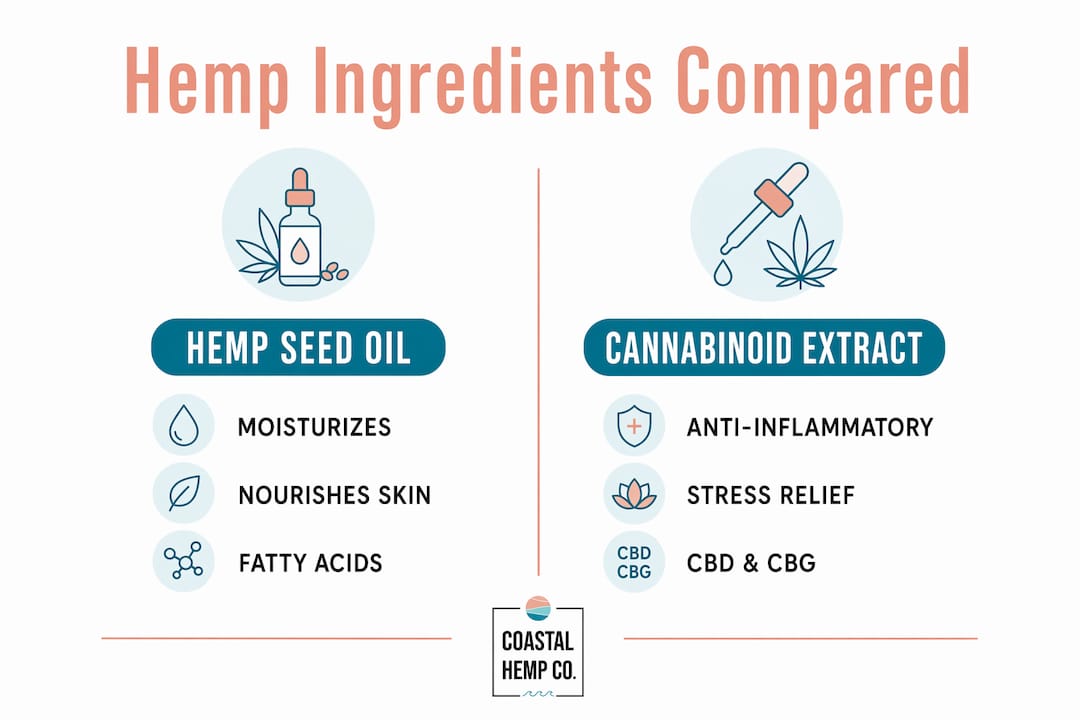
The single most important distinction in hemp beauty and wellness is the difference between hemp seed oil and cannabinoid-rich extracts. Conflating them leads to buying the wrong product for your goal.
Hemp seed oil is cold-pressed from hemp seeds only. The seeds themselves do not produce THC; trace amounts in commercial oil come from contact with resinous plant parts during harvest. The FDA has reviewed GRAS notices for hulled hemp seed, hemp seed protein, and hemp seed oil for certain food uses. Its value is nutritional: roughly 77% polyunsaturated fat, with linoleic acid (omega-6) at 50.9% and alpha-linolenic acid (omega-3) at 16.7%, plus GLA and stearidonic acid.
Cannabinoid-rich extracts (CBD, CBG, THCV, and others) come from hemp flowers and leaves, not seeds. They are produced via CO2 or ethanol extraction and interact with the body’s endocannabinoid system. The FDA treats these differently from seed-derived ingredients — cannabinoid products face a separate and still-evolving regulatory framework.
| Hemp seed oil | Cannabinoid extract (CBD) | |
|---|---|---|
| Composition | Fatty acids, amino acids, GLA, tocopherols | CBD, minor cannabinoids, terpenes, flavonoids |
| Common uses | Topical moisturizer, cooking oil, dietary supplement | Tinctures, topicals, gummies, capsules |
| Regulatory status | GRAS-notified for certain food uses (FDA) | Subject to FDA oversight; not approved as food additive |
| Evidence for benefit | Strong for moisturizing/barrier; moderate for anti-inflammatory | Preliminary to moderate for stress, sleep, pain |
| Storage | Cool, dark place; oxidizes readily due to high PUFA content | Away from heat and light; check expiration |
Hemp plants also contain terpenes and flavonoids with antioxidant and antimicrobial properties. From a sustainability standpoint, hemp is a high-yield crop that requires minimal pesticides and can be grown without irrigation in many U.S. climates — a meaningful advantage for consumers who factor environmental impact into purchasing decisions.
What the science says about hemp for skin and hair
The strongest evidence for hemp in skincare centers on moisturizing, barrier repair, and anti-inflammatory activity. A peer-reviewed MDPI review of cutaneous hemp applications found that hemp actives modulate CB1, CB2, TRPV channels, and PPARs in the skin’s own endocannabinoid system, producing anti-inflammatory, antioxidant, and lipostatic effects. One clinical study cited in that review showed a hydrogel containing 0.5–1.0% hemp extract restored skin moisture after SLS-induced barrier disruption, with the 1.0% concentration increasing moisture above baseline by up to 10%.
For acne, CBD regulates sebocyte lipogenesis, reduces sebocyte proliferation, and lowers pro-inflammatory cytokines — without affecting cell viability. Small in vivo studies also show improvement in atopic dermatitis measures with topical hemp seed oil formulations. Anti-aging signals exist too: a clinical trial using a topical cream with CBD and eicosapentaenoic acid showed a time-dependent reduction in wrinkles and improved skin firmness, with most participants reporting satisfaction. That said, much of the mechanistic data remains in vitro or from small trials. Larger, standardized clinical studies are still needed.
Compared to other natural oils, hemp seed oil’s GLA content sets it apart from jojoba (which lacks GLA) and argan (lower omega-3). Rosehip oil offers similar anti-aging signals but lacks hemp’s amino acid profile. For hair, a case series of 35 subjects with androgenetic alopecia applying a hemp inflorescence oil formulation for six months reported a 74.1% increase in hair count in men and 55.2% in women in the temporal area.
- Moisturizing and barrier repair: best-supported outcome, backed by clinical data
- Acne and sebum control: promising, with mechanistic evidence from CBD’s lipostatic effects
- Anti-aging: early clinical signals; more trials needed
- Hair growth: preliminary case series data; not yet confirmed in randomized controlled trials
Pro Tip: When selecting a topical hemp product, look for formulations that list hemp seed oil or CBD concentration explicitly, include a stabilizer (vitamin E or rosemary extract), and carry a batch-specific COA. A product that only says “hemp extract” without a milligram amount is giving you no useful dosing information.
CBD for stress, sleep, and pain: what the evidence actually supports
CBD may support stress relief, sleep quality, and localized pain management for some people, but the evidence varies by outcome and product type. Its primary mechanism runs through the endocannabinoid system, where CBD modulates CB1 and CB2 receptors, TRPV channels, and serotonin pathways without producing psychoactive effects. For sleep, some studies suggest effects comparable to low-dose melatonin for improving sleep onset latency. For anxiety and stress, interaction with serotonin 5-HT1A receptors appears to be a key pathway. Pain relief evidence is strongest for localized, topical application and for neuropathic pain in small trials.
Caveats matter here:
- CBD can interact with medications metabolized by cytochrome P450 enzymes, including blood thinners and some antidepressants.
- Product quality varies widely; the U.S. hemp market reached roughly $6.9 billion in retail sales, and market growth has outpaced testing standards.
- Study designs differ significantly, making direct comparisons difficult.
If you want to try CBD for wellness, follow these steps:
- Start with a low dose (5–10 mg for ingestibles) and hold that dose for at least one week before adjusting.
- Track your response in a simple log: sleep quality, mood, or pain level on a 1–10 scale each day.
- Request and review the COA for your product before the first dose — confirm cannabinoid profile and contaminant results.
- Consult your healthcare provider if you take any prescription medication, particularly anticoagulants or antiepileptics.
For deeper context on hemp’s calming effects and how CBD interacts with sleep physiology, Coastalhemp’s editorial library covers the mechanisms in detail.
Safety, U.S. legal basics, and how to evaluate product quality
Under the 2018 Farm Bill, hemp is federally defined as Cannabis sativa L. with no more than 0.3% total THC on a dry-weight basis. That threshold determines whether a product is legal hemp or controlled marijuana under federal law. Congressional analyses note that definitional updates affecting total THC metrics and certain hemp-derived cannabinoids are ongoing — consumers should monitor these changes, particularly for products containing THCV, delta-8 THC, or other converted cannabinoids.
State law adds another layer. Some states restrict hemp-derived cannabinoids beyond the federal floor, so a product legal at the federal level may face restrictions where you live. For a current breakdown, Coastalhemp’s THC legality guide tracks federal updates as they develop.
Quality checklist before you buy:
- Third-party COA with cannabinoid profile (CBD, THC, minor cannabinoids) and contaminant panel (heavy metals, pesticides, microbials)
- Extraction method disclosed (CO2 or ethanol preferred over solvent-based)
- Batch number on label that matches the COA
- Clear THC-per-serving figure, not just total-product THC
- Sourcing transparency: U.S.-grown hemp with named farm or region
For topical products, always patch-test on a small skin area for 24 hours before full application. Hemp seed oil oxidizes readily due to its high polyunsaturated fat content; store all hemp oils in a cool, dark location and discard any product that smells rancid. If you are on prescription drugs, consult a clinician before adding any cannabinoid product.
This article is general information, not medical or legal advice. Confirm current regulations and product suitability with a qualified professional for your specific situation.
How to choose hemp products that match your wellness and beauty goals
Match the product format to the outcome you want. For skin moisture, barrier support, and hair nourishment, hemp seed oil applied topically is the right starting point. For stress, sleep, or systemic anti-inflammatory support, a cannabinoid-rich extract in tincture, capsule, or gummy form is more appropriate. Mixing both is reasonable for consumers with overlapping goals.
Label items to verify before purchasing:
- Full ingredient list (hemp seed oil and CBD are different ingredients — confirm which is present)
- Cannabinoid concentrations in milligrams per serving, not just per container
- COA link or QR code on packaging
- THC per serving (should be under 0.3% of total product weight for federal compliance)
- Extraction method and solvent disclosure
- Expiration or best-by date
For ingestibles, start conservative: 5–10 mg CBD per dose, once daily, for a minimum two-week trial. Log your response. If no effect is observed after two weeks at a consistent dose, increase by 5 mg and repeat the tracking window. Avoid escalating quickly — individual response to cannabinoids varies considerably based on body weight, metabolism, and the condition being addressed.
Hemp farming itself carries sustainability advantages: the crop requires fewer pesticides than conventional alternatives and can sequester carbon. For consumers who factor environmental claims into buying decisions, look for brands that disclose farming practices alongside their COAs. Coastalhemp’s product variety guide maps product formats to specific wellness goals if you want a format-by-format breakdown.
Simple ways to add hemp to your daily routine
Topical use: Apply hemp seed oil to damp skin after cleansing, before your moisturizer. This layering approach locks in the oil’s fatty acids while the moisturizer seals hydration. For hair, work a few drops through mid-lengths and ends as a pre-shampoo treatment or leave-in conditioner. Always patch-test a new product on your inner forearm for 24 hours first.
Ingestible rituals:
- Morning: Add a tablespoon of hemp seed oil to a smoothie for omega-3 and GLA intake alongside your usual breakfast.
- Post-workout: Apply a CBD salve or warming topical gel to sore muscles within 30 minutes of exercise for localized relief.
- Bedtime: A low-dose CBD tincture (5–10 mg) taken 30–60 minutes before sleep is the format most studied for sleep-onset support. Coastalhemp’s CBD and sleep guide covers dosing protocols in detail.
Quick routine reference:
- Morning skin: cleanse, apply hemp seed oil, moisturize, SPF
- Post-workout: CBD salve or warming gel on target muscles
- Bedtime wind-down: low-dose CBD tincture, cool dark storage for all products
Storage: Keep hemp seed oil and CBD products away from heat, light, and humidity. Refrigeration extends shelf life for oils. Check expiration dates at purchase and again before each use.
Allergenic reactions and skin sensitivity with hemp products
Hemp is generally well-tolerated, but it is not universally non-irritating. People with cannabis or tree nut sensitivities may react to hemp seed oil, since cross-reactivity has been documented in allergy literature. Topical CBD formulations can cause mild skin irritation in some users, particularly at higher concentrations or in formulations with additional active ingredients.
The most common reactions are contact dermatitis (redness, itching, localized swelling) and follicular irritation when oils are applied to acne-prone skin without patch testing. Ingestible hemp products can occasionally cause gastrointestinal discomfort, particularly at higher doses. If you have a known sensitivity to Cannabis sativa pollen or seeds, consult an allergist before using any hemp-derived topical or ingestible product.
Key Takeaways
Hemp seed oil and CBD-rich extracts each serve distinct roles: seed oil delivers nutritional and moisturizing benefits for skin and hair, while cannabinoid extracts work through the endocannabinoid system for stress, sleep, and pain support.
| Point | Details |
|---|---|
| Seed oil vs. extract | Hemp seed oil moisturizes and nourishes; CBD extracts target stress, sleep, and pain via the endocannabinoid system. |
| Skin evidence | Clinical data supports moisturizing and barrier repair; acne and anti-aging signals are promising but still preliminary. |
| Safety basics | Always verify a third-party COA, check THC per serving, and consult a clinician if you take prescription medications. |
| Legal threshold | U.S. federal law defines hemp as ≤0.3% THC; state rules vary and definitional updates are ongoing. |
| Coastalhemp products | Coastalhemp carries COA-verified topicals and ingestibles matched to specific wellness goals, from skin support to sleep. |
Action items: Patch-test a topical hemp seed oil this week. If trying CBD for sleep, start at 5–10 mg nightly and track your response for two weeks. Always check the COA before your first dose.
A more honest take on hemp for wellness and beauty
Most hemp content online treats “hemp beauty benefits” as a monolithic category, which is exactly the wrong frame. The nutrient story (omega-3, GLA, amino acids) belongs almost entirely to hemp seed oil. The stress and sleep story belongs to cannabinoids. Conflating them produces marketing copy, not useful guidance.
What gets underreported is how much product quality variation exists in the U.S. market. A $15 “hemp oil” face serum and a $60 COA-verified CBD topical are not comparable products, even if both say “hemp” on the label. The difference in actual cannabinoid content can be enormous. Consumers who skip the COA step are essentially buying blind.
The other underappreciated point: topical hemp actives work best when the formulation is designed for penetration. A hemp seed oil in a well-stabilized serum with complementary actives will outperform a poorly formulated product at twice the concentration. Ingredient quality and formulation science matter as much as the hemp content itself.
Coastalhemp products worth considering
Coastalhemp sources from vetted growers and partners with brands that publish third-party lab results, so you can verify what you’re buying before it arrives.
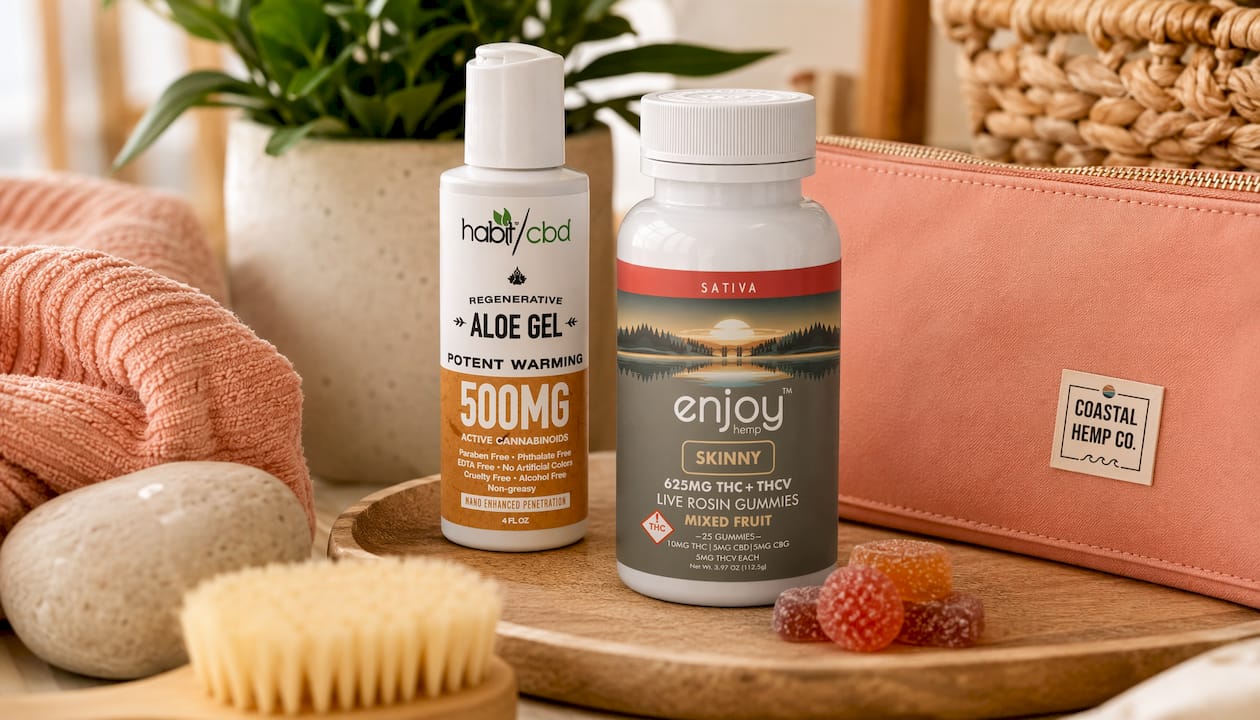
For topical relief, the Habit Regenerative Aloe Gel Warming 500mg combines 500 mg of hemp extract with warming botanicals — a practical option for post-workout muscle care or targeted soothing. For ingestible wellness, the Enjoy Skinny Gummies THC + THCV offer a cannabinoid blend worth reviewing if your goals include appetite management alongside general wellness. Note that these gummies contain THC and THCV; confirm your state’s current rules before ordering, and consult a healthcare professional if you are on medication.
COAs for all products are available on each product page. If you want to browse the full range by wellness goal, visit coastalhemp.co and filter by category. Coastalhemp encourages consulting a health professional for any medical concern before starting a new hemp regimen.
For regional product availability, 562 Go Green offers cannabis and hemp delivery in the Whittier area if you prefer local sourcing.
Useful sources and further reading
- FDA GRAS notices for hemp seed ingredients: The primary federal document confirming hemp seed oil’s GRAS status for certain food uses and its fatty acid composition data.
- FDA regulation of cannabis and CBD: Explains why cannabinoid-rich extracts face different oversight than seed-derived ingredients — essential reading before buying any CBD product.
- MDPI review: cutaneous hemp applications: Peer-reviewed synthesis of topical hemp research covering anti-inflammatory, moisturizing, and anti-aging mechanisms. The most comprehensive single source for skin-focused evidence.
- PMC: storage and oxidation of high-PUFA oils: Explains why hemp seed oil degrades without proper storage — directly relevant to product care.
- Baker Institute policy brief on U.S. hemp policy: Covers market scale, regulatory gaps, and recommendations for potency limits and testing standards.
- Congress.gov: changes to the federal hemp definition: Tracks ongoing definitional updates affecting THC metrics and certain hemp-derived cannabinoids — check this if you are buying products with delta-8 THC or THCV.
- WebMD: hemp seed oil health benefits: Consumer-facing summary of nutritional and topical benefits, useful for cross-referencing claims.
Policy changes affecting hemp product definitions continued into 2025–2026. Prefer brands that update their COAs with each new batch and disclose their compliance approach openly — that transparency is the clearest signal of a trustworthy product.
FAQ
What are the main hemp beauty benefits for skin?
Hemp seed oil moisturizes, supports the skin barrier, and delivers anti-inflammatory fatty acids including GLA and omega-3. Topical CBD extracts add antioxidant and sebum-regulating effects, with clinical signals for eczema and acne improvement.
Is hemp seed oil the same as CBD oil?
No. Hemp seed oil comes from pressed seeds and contains no significant cannabinoids; CBD oil is extracted from hemp flowers and leaves and contains cannabinoids that interact with the endocannabinoid system. They serve different purposes and face different FDA oversight.
How do I know if a hemp product is legal in the U.S.?
Federally, hemp products must contain no more than 0.3% THC by dry weight under the 2018 Farm Bill. State rules vary and are changing; always check your state’s current regulations and confirm THC-per-serving figures on the product’s COA before purchasing.
Can CBD help with stress and sleep?
CBD shows preliminary evidence for reducing anxiety and improving sleep onset through interactions with serotonin and endocannabinoid receptors. Start at 5–10 mg, track your response for at least two weeks, and consult a clinician if you take any prescription medication.
What should I look for on a hemp product label?
Verify the cannabinoid concentration in milligrams per serving, a scannable COA link, the extraction method, THC per serving, and a batch number. Products that omit any of these details offer no reliable way to confirm what you are actually consuming.


Comments